Kirjailija
Eric Klinenberg
Kirjat ja teokset yhdessä paikassa: 15 kirjaa, julkaisuja vuosilta 2008–2025, suosituimpiin kuuluu Modern Romance. Vertaile teosten hintoja ja tarkista saatavuus suomalaisista kirjakaupoista.
15 kirjaa
Kirjojen julkaisuvuodet: 2008–2025.
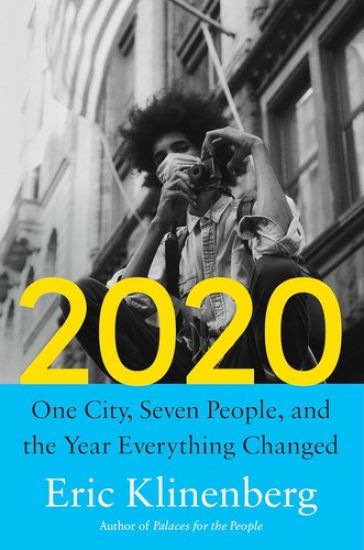
A meticulously reported, character-driven, unforgettable investigation of a time when nothing was certain and everything was at stake, by the acclaimed sociologist and best-selling author Eric Klinenberg "A gripping, deeply moving account of a signal year in modern history, told through the stories of seven ordinary people. Klinenberg's narrative shows how the legacy of that year continues to shape us, our politics and our personal lives."--Siddhartha Mukherjee, Pulitzer Prize-winning author of The Emperor of All Maladies - "I can easily see this book being invaluable in the future."--Stuart Miller, Los Angeles Times 2020 will go down alongside 1914, 1929, and 1968 as one of the most consequential years in history. This riveting and affecting book is the first attempt to capture the full human experience of that fateful time. At the heart of 2020 are seven vivid profiles of ordinary New Yorkers--including an elementary school principal, a bar manager, a subway custodian, and a local political aide--whose experiences illuminate how Americans, and people across the globe, reckoned with 2020. Through these poignant stories, we revisit our own moments of hope and fear, the profound tragedies and losses in our communities, the mutual aid networks that brought us together, and the social movements that hinted at the possibilities of a better world. Eric Klinenberg vividly captures these stories, casting them against the backdrop of a high-stakes presidential election, a surge of misinformation, rising distrust, and raging protests. We move from the epicenter in New York City to Washington and London, where political leaders made the crisis so much more lethal than it had to be. We bear witness to epidemiological battles in Wuhan and Beijing, along with the initiatives of scientists, citizens, and policy makers in Australia, Japan, and Taiwan, who worked together to save lives. Klinenberg allows us to see 2020--and, ultimately, ourselves--with unprecedented clarity and empathy. His book not only helps us reckon with what we lived through, but also with the challenges we face before the next crisis arrives.

Renowned sociologist and best-selling author Eric Klinenberg turns a year of devastation into a year of revelation in this wise, deeply researched and cathartic account of the pandemic.'A gripping, deeply moving account' SIDDHARTHA MUKHERJEE, author of The Song of the CellWhat unites us? What divides us? What do we value? Sociologist Eric Klinenberg had been studying what crises reveal about societies for over two decades when his home of New York became the deadliest hot spot of the global pandemic. In this book he tells the deeply reported stories of seven ordinary people trying to survive at the epicentre of the crisis, and combines them with data gathered from around the world to provide unprecedented insights into what societies are made of, why they come together or fall apart, and how they shape our lives.'Compellingly reveals what the pandemic laid bare about our culture, our institutions, and ourselves' Matthew Desmond, author of Evicted'A book that's at once intimate and far-ranging, that reveals the importance of social solidarity and also its fragility' Elizabeth Kolbert, author of The Sixth Extinction
2020: One City, Seven People, and the Year Everything Changed
Eric Klinenberg
Knopf Publishing Group
2024
sidottu
A meticulously reported, character-driven, unforgettable investigation of a time when nothing was certain and everything was at stake, by the acclaimed sociologist and best-selling author Eric Klinenberg "A gripping, deeply moving account of a signal year in modern history, told through the stories of seven ordinary people. Klinenberg's narrative shows how the legacy of that year continues to shape us, our politics and our personal lives."--Siddhartha Mukherjee, Pulitzer Prize-winning author of The Emperor of All Maladies - "I can easily see this book being invaluable in the future."--Stuart Miller, Los Angeles Times 2020 will go down alongside 1914, 1929, and 1968 as one of the most consequential years in history. This riveting and affecting book is the first attempt to capture the full human experience of that fateful time. At the heart of 2020 are seven vivid profiles of ordinary New Yorkers--including an elementary school principal, a bar manager, a subway custodian, and a local political aide--whose experiences illuminate how Americans, and people across the globe, reckoned with 2020. Through these poignant stories, we revisit our own moments of hope and fear, the profound tragedies and losses in our communities, the mutual aid networks that brought us together, and the social movements that hinted at the possibilities of a better world. Eric Klinenberg vividly captures these stories, casting them against the backdrop of a high-stakes presidential election, a surge of misinformation, rising distrust, and raging protests. We move from the epicenter in New York City to Washington and London, where political leaders made the crisis so much more lethal than it had to be. We bear witness to epidemiological battles in Wuhan and Beijing, along with the initiatives of scientists, citizens, and policy makers in Australia, Japan, and Taiwan, who worked together to save lives. Klinenberg allows us to see 2020--and, ultimately, ourselves--with unprecedented clarity and empathy. His book not only helps us reckon with what we lived through, but also with the challenges we face before the next crisis arrives. "A masterful piece of rigorous journalism, rigorous sociology, and incredible story-telling."--Chris Hayes, MSNBC News

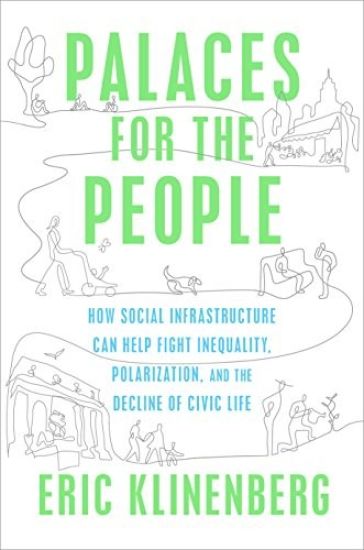
Because wherever people cross paths and linger, wherever we gather informally, strike up a conversation and get to know one another, relationships blossom and communities emerge - and where communities are strong, people are safer and healthier, crime drops and commerce thrives, and peace, tolerance and stability take root.
Palaces for the People: How Social Infrastructure Can Help Fight Inequality, Polarization, and the Decline of Civic Life
Eric Klinenberg
Crown Publishing Group (NY)
2019
nidottu
Halvin toimitettuna 21,50 €
NATIONAL BESTSELLER - "A comprehensive, entertaining, and compelling argument for how rebuilding social infrastructure can help heal divisions in our society and move us forward."--Jon Stewart NAMED ONE OF THE BEST BOOKS OF THE YEAR BY NPR - "Engaging."--Mayor Pete Buttigieg, The New York Times Book Review (Editors' Choice) We are living in a time of deep divisions. Americans are sorting themselves along racial, religious, and cultural lines, leading to a level of polarization that the country hasn't seen since the Civil War. Pundits and politicians are calling for us to come together and find common purpose. But how, exactly, can this be done? In Palaces for the People, Eric Klinenberg suggests a way forward. He believes that the future of democratic societies rests not simply on shared values but on shared spaces: the libraries, childcare centers, churches, and parks where crucial connections are formed. Interweaving his own research with examples from around the globe, Klinenberg shows how "social infrastructure" is helping to solve some of our most pressing societal challenges. Richly reported and ultimately uplifting, Palaces for the People offers a blueprint for bridging our seemingly unbridgeable divides. LONGLISTED FOR THE ANDREW CARNEGIE MEDAL FOR EXCELLENCE IN NONFICTION "Just brilliant "--Roman Mars, 99% Invisible "The aim of this sweeping work is to popularize the notion of 'social infrastructure'--the 'physical places and organizations that shape the way people interact'. . . . Here, drawing on research in urban planning, behavioral economics, and environmental psychology, as well as on his own fieldwork from around the world, Eric Klinenberg] posits that a community's resilience correlates strongly with the robustness of its social infrastructure. The numerous case studies add up to a plea for more investment in the spaces and institutions (parks, libraries, childcare centers) that foster mutual support in civic life."--The New Yorker "Palaces for the People--the title is taken from the Scottish-American industrialist and philanthropist Andrew Carnegie's description of the hundreds of libraries he funded--is essentially a calm, lucid exposition of a centuries-old idea, which is really a furious call to action."--New Statesman "Clear-eyed . . . fascinating."--Psychology Today
The #1 New York Times Bestseller "An engaging look at the often head-scratching, frequently infuriating mating behaviors that shape our love lives." --Refinery 29 A hilarious, thoughtful, and in-depth exploration of the pleasures and perils of modern romance from Aziz Ansari, the star of Master of None and one of this generation's sharpest comedic voices At some point, every one of us embarks on a journey to find love. We meet people, date, get into and out of relationships, all with the hope of finding someone with whom we share a deep connection. This seems standard now, but it's wildly different from what people did even just decades ago. Single people today have more romantic options than at any point in human history. With technology, our abilities to connect with and sort through these options are staggering. So why are so many people frustrated? Some of our problems are unique to our time. "Why did this guy just text me an emoji of a pizza?" "Should I go out with this girl even though she listed Combos as one of her favorite snack foods? Combos? " "My girlfriend just got a message from some dude named Nathan. Who's Nathan? Did he just send her a photo of his penis? Should I check just to be sure?" But the transformation of our romantic lives can't be explained by technology alone. In a short period of time, the whole culture of finding love has changed dramatically. A few decades ago, people would find a decent person who lived in their neighborhood. Their families would meet and, after deciding neither party seemed like a murderer, they would get married and soon have a kid, all by the time they were twenty-four. Today, people marry later than ever and spend years of their lives on a quest to find the perfect person, a soul mate. For years, Aziz Ansari has been aiming his comic insight at modern romance, but for Modern Romance, the book, he decided he needed to take things to another level. He teamed up with NYU sociologist Eric Klinenberg and designed a massive research project, including hundreds of interviews and focus groups conducted everywhere from Tokyo to Buenos Aires to Wichita. They analyzed behavioral data and surveys and created their own online research forum on Reddit, which drew thousands of messages. They enlisted the world's leading social scientists, including Andrew Cherlin, Eli Finkel, Helen Fisher, Sheena Iyengar, Barry Schwartz, Sherry Turkle, and Robb Willer. The result is unlike any social science or humor book we've seen before. In Modern Romance, Ansari combines his irreverent humor with cutting-edge social science to give us an unforgettable tour of our new romantic world.
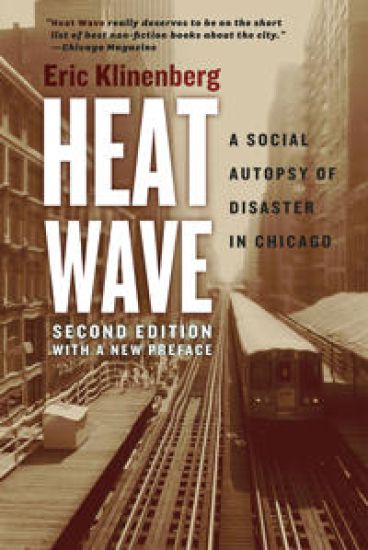
On Thursday, July 13, 1995, Chicagoans awoke to a blistering day on which the temperature would eventually climb to 106 degrees. It was the start of an unprecedented heat wave that would last a full week - and leave more than seven hundred people dead. Rather than view these deaths as the inevitable consequence of natural disaster, sociologist Eric Klinenberg decided to figure out why so many people - and, specifically, so many elderly, poor, and isolated people - died, and to identify the social and political failures that together made the heat wave so deadly. Published to coincide with the twentieth anniversary of the heat wave, this new edition of Klinenberg's groundbreaking book includes a new foreword by the author that reveals what we've learned in the years since its initial publication in 2002, and how in coming decades the effects of climate change will intensify the social and environmental pressures in urban areas around the world.
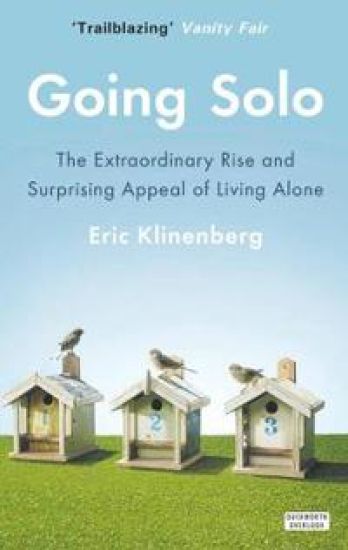
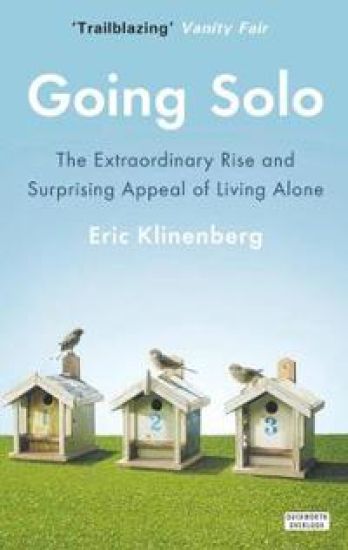
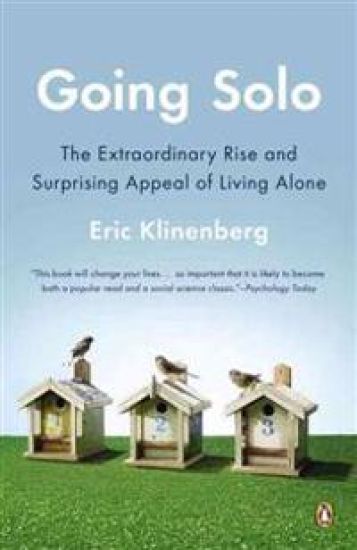
In 1950, only 22% of adults were single. Today, more than 50% of adults are. Though conventional wisdom tells us that living by oneself leads to loneliness and isolation, most solo dwellers - compared with their married counterparts - are more likely to eat out and exercise, sign up for art and music classes, attend public events and lectures, and volunteer. Drawing on over three hundred in-depth interviews with men and women of all ages and from across every class, Eric Klinenberg reaches some startling conclusions about the seismic impact solo living is having on our culture, business and politics.
In 1950, only 22% of adults were single. Today, more than 50% of adults are. Though conventional wisdom tells us that living by oneself leads to loneliness and isolation, most solo dwellers, compared with their married counterparts, are more likely to eat out and exercise, sign up for art and music classes, attend public events and lectures, and volunteer. Drawing on over three hundred in-depth interviews with men and women of all ages and every class, Eric Klinenberg reaches some startling conclusions about the seismic impact solo living is having on our culture, business and politics.
Going Solo: Going Solo: The Extraordinary Rise and Surprising Appeal of Living Alone
Eric Klinenberg
PENGUIN BOOKS
2013
nidottu
With eye-opening statistics, original data, and vivid portraits of people who live alone, renowned sociologist Eric Klinenberg upends conventional wisdom to deliver the definitive take on how the rise of going solo is transforming the American experience. Klinenberg shows that most single dwellers--whether in their twenties or eighties--are deeply engaged in social and civic life. There's even evidence that people who live alone enjoy better mental health and have more environmentally sustainable lifestyles. Drawing on more than three hundred in-depth interviews, Klinenberg presents a revelatory examination of the most significant demographic shift since the baby boom and offers surprising insights on the benefits of this epochal change.
Fighting for Air: The Battle to Control America's Media
Eric Klinenberg
Holt Paperbacks
2008
nidottu
Describes how the impact of corporate ownership and control of local media has transformed American political and cultural life, leading to an age of canned programming and virtual DJs, arguing that the demise of local media can be linked to the policies of the federal government, which have ceded control to media conglomerates. Reprint. 30,000 first printing.