Kirjojen hintavertailu – 12 903 725 kirjaa ja 27 kauppaa

Kirjailija

Eric Simpson

Kirjat ja teokset yhdessä paikassa: 12 kirjaa, julkaisuja vuosilta 2000–2021, suosituimpiin kuuluu Inverkeithing & North Queensferry Through Time. Vertaile teosten hintoja ja tarkista saatavuus suomalaisista kirjakaupoista.

12 kirjaa

Kirjojen julkaisuvuodet: 2000–2021.

Highways to the Highlands

Highways to the Highlands

Eric Simpson

Amberley Publishing
2021
nidottu
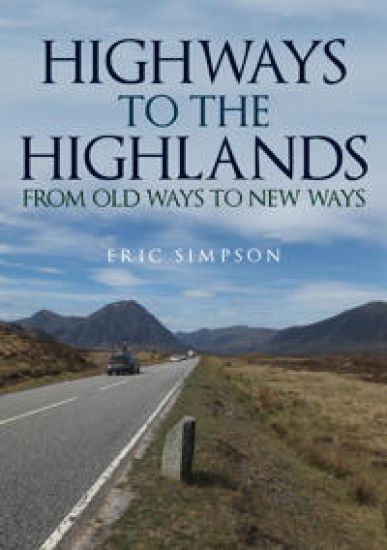
For centuries tourists and other travellers have been travelling north to the Highlands of Scotland. This book follows the main thoroughfares north, using vintage and contemporary images to illustrate how they and the people using them have changed over time. The book starts as many visitors to Scotland have done over the years, by following the Great North Road from Edinburgh to Inverness. The reader continues north from the Highland capital by the east coast, thus joining the highly popular North Coast 500 tourist route going around the North of Scotland from east to west. The return journey south follows the spectacular west coast route all the way to Glasgow. Many of the old picture postcards and other images feature the beautiful scenery and way of life of the people of the Highlands. Illustrating the changes that came about during the twentieth-century transport revolution, this is an affectionate lavishly illustrated tribute to how travel around the Highlands has changed over time.

The Way of the Peacemaker

The Way of the Peacemaker

Eric Simpson

Independently Published
2019
nidottu
The Beatitudes are primarily an announcement by Jesus of a paradigm shift, a new kingdom or country or community - whatever metaphor we use is less important than the point that is being made: the old guard is over, the new kingdom has arrived. If you were poor and stigmatized and rejected by society in the former paradigm, you are uniquely blessed by God and all things are yours in the new paradigm. The Beatitudes are not only as an expression of a promise, and therefore also a consolation, but they describe one's passage from earthly patterns of thinking and concerns to the paradigm of the kingdom, where an entirely new pattern of thinking can begin to occur. The path of the peacemaker is essentially paradoxical; there are miles to go but we are constantly arriving, participating in fullness while still being poured out. In seeking God, we seek peace, and in finding peace in God, we become peacemakers, which is the summit of the blessings which Jesus pronounces. One moves from possessing the kingdom of heaven, which denotes the opportunity to enter into the present reality that is at hand, to not only inheriting the earth, being filled, obtaining mercy, and seeing God, but having entered and having allowed the kingdom of God to possess us, we evolve to that status that is not natural to us, contrary to the popular notion - we are called children of God. We become, as St. Peter writes, "partakers of the divine nature," which is precisely who we are meant to be as human persons.
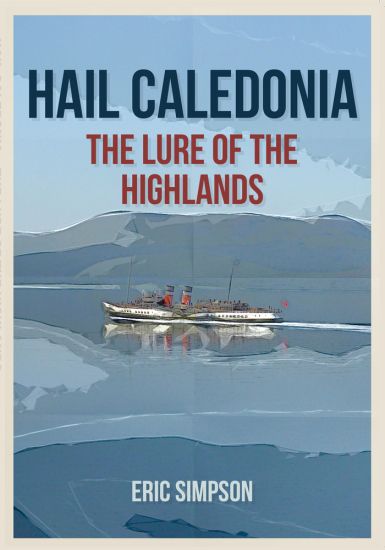
Hail Caledonia

Hail Caledonia

Eric Simpson

Amberley Publishing
2017
nidottu
The Highlands and Islands today are a magnet for tourists from all over the world, but go back a few hundred years and it was a very different picture. Then, the Highlands were seen as remote and dangerous, and the Highlanders warlike and barbarous. By the 1800s, views had changed. Sir Walter Scott and Queen Victoria made the Highlands popular. For sportsmen, the Highlands offered shooting and fishing and for the ordinary tourist dramatic scenery and cultural difference. The steamship and the railways, and then the motor coach, opened up the Highlands and the islands, both northern and western, even to those of limited means. Famous travellers like Johnson and Boswell feature here, but so too do an assortment of less well-known figures who include pioneer map-makers, canoeists, climbers, cyclists, campers, cavers and scientists. They helped to make the Highlands, once a playground for the rich, a holiday destination for all classes. Eric Simpson’s new book tells this story – the story of the growth of tourism in the Highlands and Islands.
Dunfermline Through Time

Dunfermline Through Time

Eric Simpson; George Robertson

Amberley Publishing
2012
nidottu
Dunfermline is an ancient royal burgh which has played an important role in the history of Scotland. With its medieval abbey and attached royal palace, it was for long a seat of royalty. The royals with a close association with Dunfermline included the saintly Queen Margaret and King Robert the Bruce, and Charles I was born there. When handloom weaving gave way to the power loom and the factory system. the auld grey toun underwent a veritable revolution. In the twentieth century, the town has undergone further significant change. In the early part of that century it benefited from the generous benefactions of its most famous son Andrew Carnegie. Thanks to its proximity to booming Edinburgh, the auld grey toun has grown in size and population. The images in Dunfermline Through Time illustrate some of the many ways that social and industrial change has transformed the auld royal burgh.
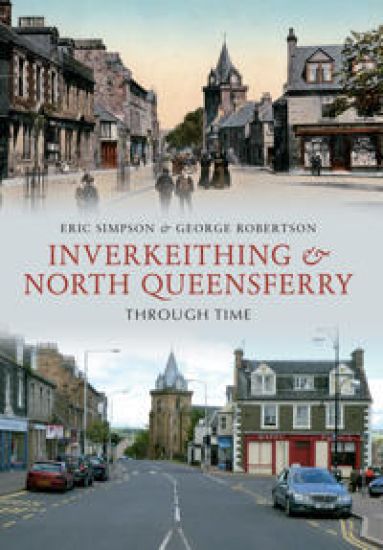
Inverkeithing & North Queensferry Through Time

Inverkeithing & North Queensferry Through Time

Eric Simpson; George Robertson

Amberley Publishing
2011
nidottu
Inverkeithing was created a royal burgh in the twelfth century owing to its importance as a port and its strategic position on the King's Highway linking north and south. This strategic position owed much to its proximity to its wee neighbour of North Queensferry at the northern end of the Queensferry Passage. From the time of Queen Margaret the Queensferry Passage, now replaced by rail and road bridges, has been a vital artery of traffic. Inverkeithing, now bereft of other former industries of paper-making, pottery manufacture and ship-building is now largely a residential town. But it retains at its core, its medieval plan and many of the features of a historic Scottish burgh. These include a traditional Scottish tolbooth, a fine auld mercat cross and the essential wide central square. North Queensferry is home to a popular sea life centre, appropriately housed in an old quarry.
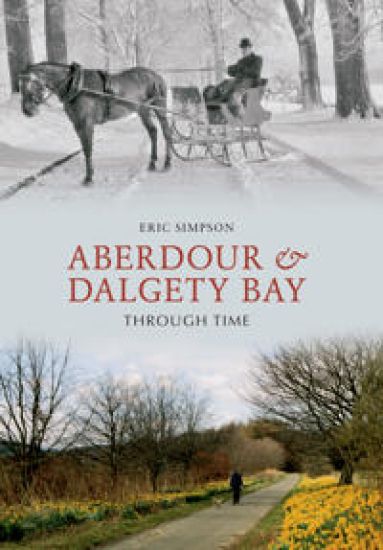
Aberdour and Dalgety Bay Through Time

Aberdour and Dalgety Bay Through Time

Eric Simpson

Amberley Publishing
2010
nidottu
In the 1800s, Aberdour, a sleepy village on the Firth of Forth, was revived when it was 'discovered' as a retreat for sea-bathing and restful holidays. When day-trippers in their hundreds spilled out of excursion steamers, it wasn't so peaceful. As a residential village nowadays, it is a quiet, douce wee place again, but one that still appeals to the type of visitor who appreciates the atmosphere that first brought 'strangers and sea-bathers' to this part of the Fife Riviera. Dalgety Bay couldn't be more different. A 1960s private enterprise 'new town', Dalgety Bay is though a new town with surprising links to the past from the medieval through the wartime years to the present era of rapid change. Incorporated in the town since the 1980s are the inland villages of Hillend and St Davids Harbour. The latter was once a busy wee port as the outlet for coal from nearby Fordell carried there by a railroad dated back to the eighteenth century.