Kirjojen hintavertailu – 12 903 725 kirjaa ja 27 kauppaa

Kirjailija

Erica Chenoweth

Kirjat ja teokset yhdessä paikassa: 10 kirjaa, julkaisuja vuosilta 2011–2024, suosituimpiin kuuluu On Revolutions. Vertaile teosten hintoja ja tarkista saatavuus suomalaisista kirjakaupoista.

10 kirjaa

Kirjojen julkaisuvuodet: 2011–2024.

On Revolutions

On Revolutions

Colin J. Beck; Mlada Bukovansky; Erica Chenoweth; George Lawson; Sharon Erickson Nepstad; Daniel P. Ritter

OXFORD UNIVERSITY PRESS INC
2022
nidottu
A cutting-edge appraisal of revolution and its future. On Revolutions, co-authored by six prominent scholars of revolutions, reinvigorates revolutionary studies for the twenty-first century. Integrating insights from diverse fields--including civil resistance studies, international relations, social movements, and terrorism--they offer new ways of thinking about persistent problems in the study of revolution. This book outlines an approach that reaches beyond the common categorical distinctions. As the authors argue, revolutions are not just political or social, but they feature many types of change. Structure and agency are not mutually distinct; they are mutually reinforcing processes. Contention is not just violent or nonviolent, but it is usually a mix of both. Revolutions do not just succeed or fail, but they achieve and simultaneously fall short. And causal conditions are not just domestic or international, but instead, they are dependent on the interplay of each. Demonstrating the merits of this approach through a wide range of cases, the authors explore new opportunities for conceptual thinking about revolution, provide methodological advice, and engage with the ethical issues that exist at the nexus of scholarship and activism.

On Revolutions

On Revolutions

Colin J. Beck; Mlada Bukovansky; Erica Chenoweth; George Lawson; Sharon Erickson Nepstad; Daniel P. Ritter

OXFORD UNIVERSITY PRESS INC
2022
sidottu
A cutting-edge appraisal of revolution and its future. On Revolutions, co-authored by six prominent scholars of revolutions, reinvigorates revolutionary studies for the twenty-first century. Integrating insights from diverse fields--including civil resistance studies, international relations, social movements, and terrorism--they offer new ways of thinking about persistent problems in the study of revolution. This book outlines an approach that reaches beyond the common categorical distinctions. As the authors argue, revolutions are not just political or social, but they feature many types of change. Structure and agency are not mutually distinct; they are mutually reinforcing processes. Contention is not just violent or nonviolent, but it is usually a mix of both. Revolutions do not just succeed or fail, but they achieve and simultaneously fall short. And causal conditions are not just domestic or international, but instead, they are dependent on the interplay of each. Demonstrating the merits of this approach through a wide range of cases, the authors explore new opportunities for conceptual thinking about revolution, provide methodological advice, and engage with the ethical issues that exist at the nexus of scholarship and activism.
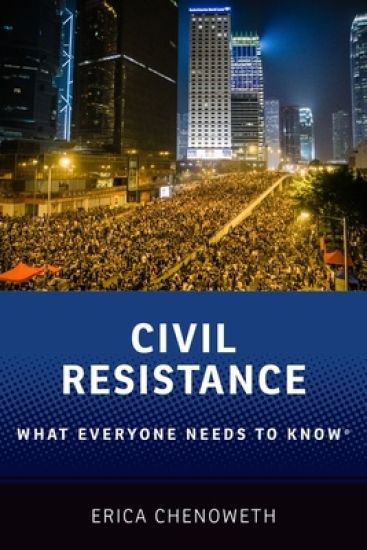
Civil Resistance

Civil Resistance

Erica Chenoweth

Oxford University Press Inc
2021
nidottu

Halvin toimitettuna 22,30 €

A sweeping overview of civil resistance movements around the world that explains what they are, how they work, why they are often effective, and why they can fail. Civil resistance is a method of conflict through which unarmed civilians use a variety of coordinated methods (strikes, protests, demonstrations, boycotts, and many other tactics) to prosecute a conflict without directly harming or threatening to harm an opponent. Sometimes called nonviolent resistance, unarmed struggle, or nonviolent action, this form of political action is now a mainstay across the globe. It was a central form of resistance in postwar anti-colonial movements, the 1989 revolutions, and the Arab Awakenings, and people are practicing civil resistance at higher rates than ever before around the world, including in the United States. If we want to understand the manifold protest movements emerging around the globe, we need a thorough understanding of civil resistance and its many dynamics and manifestations. In Civil Resistance: What Everyone Needs to KnowR , Erica Chenoweth--one of the worlds leading scholars on the topic--explains what civil resistance is, how it works, why it sometimes fails, how violence and repression affect it, and the long-term impacts of such resistance. Featuring both historical cases of civil resistance and more contemporary examples such as the Arab Awakenings and various ongoing movements in the United States, this book provides a comprehensive yet pithy overview of this enormously important subject.
Civil Resistance

Civil Resistance

Erica Chenoweth

Oxford University Press Inc
2021
sidottu
A sweeping overview of civil resistance movements around the world that explains what they are, how they work, why they are often effective, and why they can fail. Civil resistance is a method of conflict for which unarmed civilians use a variety of coordinated methods (strikes, protests, demonstrations, boycotts, and many other tactics) to prosecute a conflict without directly harming or threatening to harm an opponent. Sometimes called nonviolent resistance, unarmed struggle, or nonviolent action, this form of political action is now a mainstay across the globe. Without a thorough understanding of civil resistance and its many dynamics and manifestations, one would be hard-pressed to make sense of the world that we live in today. Civil resistance is an idea whose time has come. Civil Resistance: What Everyone Needs to Know® explains what civil resistance is, how it works, why it sometimes fails, how violence and repression affect civil resistance movements, and the long-term impacts of civil resistance. Featuring both historical cases of civil resistance and more contemporary examples such as the Arab Awakenings and various ongoing movements in the United States, this book provides a comprehensive and engaging review of the current field of knowledge.
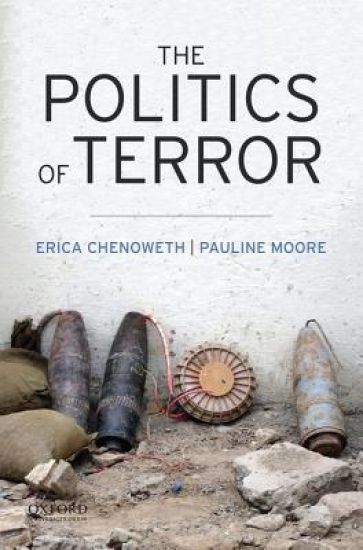
The Politics of Terror

The Politics of Terror

Erica Chenoweth; Pauline L. Moore

Oxford University Press Inc
2018
nidottu
Bringing together both classic and contemporary research, The Politics of Terror provides a systematic introduction to the theory, politics, and practice of terrorism. In addition to offering a comprehensive, evidence-based overview of the subject, Chenoweth and Moore challenge readers to think critically. The book is oriented around a set of empirical, theoretical, and methodological puzzles that arise in the study of terrorism. By encouraging students to engage with these puzzles, and equipping them with the resources to do so thoughtfully, the authors present a nuanced introduction to a complex and crucially important field.
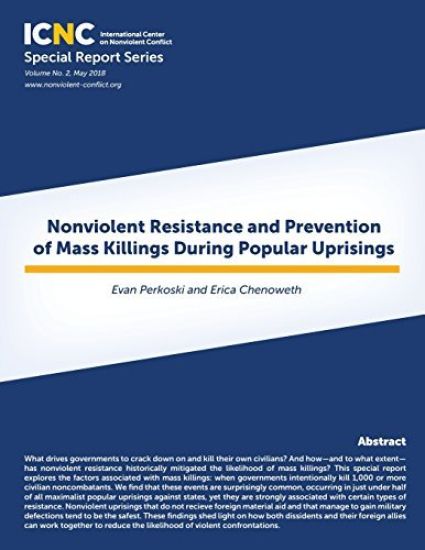
Nonviolent Resistance and Prevention of Mass Killings During Popular Uprisings

Nonviolent Resistance and Prevention of Mass Killings During Popular Uprisings

Evan Perkoski; Erica Chenoweth

International Center on Nonviolent Conflict
2018
pokkari
What drives governments to crack down on and kill their own civilians? And how--and to what extent--has nonviolent resistance historically mitigated the likelihood of mass killings? This special report explores the factors associated with mass killings: when governments intentionally kill 1,000 or more civilian noncombatants. We find that these events are surprisingly common, occurring in just under half of all maximalist popular uprisings against states, yet they are strongly associated with certain types of resistance. Nonviolent uprisings that do not receive foreign material aid and that manage to gain military defections tend to be the safest. These findings shed light on how both dissidents and their foreign allies can work together to reduce the likelihood of violent confrontations.
Why Civil Resistance Works

Why Civil Resistance Works

Erica Chenoweth; Maria Stephan

Columbia University Press
2012
pokkari

Halvin toimitettuna 32,40 €

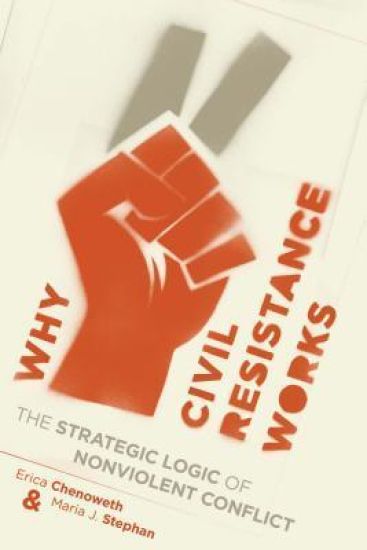
For more than a century, from 1900 to 2006, campaigns of nonviolent resistance were more than twice as effective as their violent counterparts in achieving their stated goals. By attracting impressive support from citizens, whose activism takes the form of protests, boycotts, civil disobedience, and other forms of nonviolent noncooperation, these efforts help separate regimes from their main sources of power and produce remarkable results, even in Iran, Burma, the Philippines, and the Palestinian Territories. Combining statistical analysis with case studies of specific countries and territories, Erica Chenoweth and Maria J. Stephan detail the factors enabling such campaigns to succeed and, sometimes, causing them to fail. They find that nonviolent resistance presents fewer obstacles to moral and physical involvement and commitment, and that higher levels of participation contribute to enhanced resilience, greater opportunities for tactical innovation and civic disruption (and therefore less incentive for a regime to maintain its status quo), and shifts in loyalty among opponents' erstwhile supporters, including members of the military establishment. Chenoweth and Stephan conclude that successful nonviolent resistance ushers in more durable and internally peaceful democracies, which are less likely to regress into civil war. Presenting a rich, evidentiary argument, they originally and systematically compare violent and nonviolent outcomes in different historical periods and geographical contexts, debunking the myth that violence occurs because of structural and environmental factors and that it is necessary to achieve certain political goals. Instead, the authors discover, violent insurgency is rarely justifiable on strategic grounds.
Why Civil Resistance Works

Why Civil Resistance Works

Erica Chenoweth; Maria Stephan

Columbia University Press
2011
sidottu
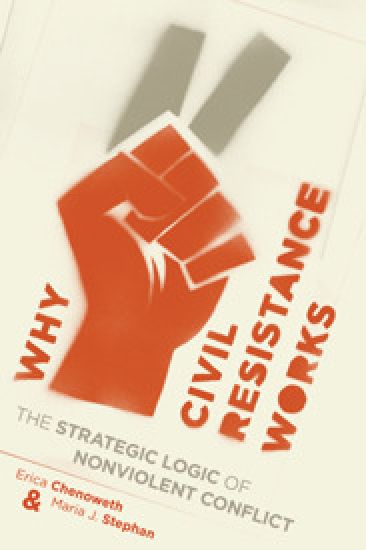
For more than a century, from 1900 to 2006, campaigns of nonviolent resistance were more than twice as effective as their violent counterparts in achieving their stated goals. By attracting impressive support from citizens, whose activism takes the form of protests, boycotts, civil disobedience, and other forms of nonviolent noncooperation, these efforts help separate regimes from their main sources of power and produce remarkable results, even in Iran, Burma, the Philippines, and the Palestinian Territories. Combining statistical analysis with case studies of specific countries and territories, Erica Chenoweth and Maria J. Stephan detail the factors enabling such campaigns to succeed and, sometimes, causing them to fail. They find that nonviolent resistance presents fewer obstacles to moral and physical involvement and commitment, and that higher levels of participation contribute to enhanced resilience, greater opportunities for tactical innovation and civic disruption (and therefore less incentive for a regime to maintain its status quo), and shifts in loyalty among opponents' erstwhile supporters, including members of the military establishment. Chenoweth and Stephan conclude that successful nonviolent resistance ushers in more durable and internally peaceful democracies, which are less likely to regress into civil war. Presenting a rich, evidentiary argument, they originally and systematically compare violent and nonviolent outcomes in different historical periods and geographical contexts, debunking the myth that violence occurs because of structural and environmental factors and that it is necessary to achieve certain political goals. Instead, the authors discover, violent insurgency is rarely justifiable on strategic grounds.