Kirjojen hintavertailu – 12 859 819 kirjaa ja 27 kauppaa

Kirjailija

Erica Frydenberg

Kirjat ja teokset yhdessä paikassa: 18 kirjaa, julkaisuja vuosilta 2005–2025, suosituimpiin kuuluu Think Positively!. Vertaile teosten hintoja ja tarkista saatavuus suomalaisista kirjakaupoista.

18 kirjaa

Kirjojen julkaisuvuodet: 2005–2025.

Think Positively!

Think Positively!

Erica Frydenberg

Continuum Publishing Corporation
2010
nidottu
Using photocopiable and electronic resources, Erica Frydenberg provides teachers with strategies that will enable students to combat stress and depression in the classroom. Depression is being experienced in epidemic proportions in many Western societies, and there is great concern over the number of young people who are suffering, sometimes to the extent of committing suicide. This book aims to help prevent stress and depression by taking a positive approach to the promotion of health and well being in young people, giving them the skills to cope with the problems of everyday life at school and at home. Erica Frydenberg introduces the theory behind a cognitive behavioural approach to coping skills and offers a program of modules that teachers or other professionals can use with young people to train them in coping skills. The principle that underscores this program is that we can all do what we do better. If we do not like how we cope in certain contexts we can learn new strategies. It is possible to enhance and develop one's coping if we have a framework within which to do that. The program is designed to have universal application and can be taught in any group or class setting. Nevertheless, instructors will be able to bring their own experience and adaptations to the sessions.

Coping in Good Times and Bad

Coping in Good Times and Bad

Erica Frydenberg

Melbourne University Press
2025
Nidottu
No one thinks about how well they are coping with life's daily stresses until they are not. Coping in Good Times and Bad brings together what we know about coping so we can create a life of health, joy, satisfaction, resilience and wellbeing, with an update on how to deal with the newer pressures of cost of living. 'Coping' and 'resilience' have become very commonly used words, especially in our world full of stresses, both big and small, along with the challenges that confront us, so what we need is a template for a good life. Decades of research, teaching and professional practice have provided psychologist Erica Frydenberg with intimate insight into how and why we cope well and not so well, and practical ways of developing and refining our coping strategies. Integrating coping with key proven ideas in contemporary psychology such as emotional intelligence, mindset, mindfulness and grit, she goes beyond focusing on particular kinds of crises-trauma, relationship breakdown, anxiety-to addressing the need for a framework that strengthens us through life, in good times and bad.
Coping in Good Times and Bad

Coping in Good Times and Bad

Erica Frydenberg

MELBOURNE UNIVERSITY PRESS
2025
nidottu
No one thinks about how well they are coping with life's daily stresses until they are not. Coping in Good Times and Bad brings together what we know about coping so we can create a life of health, joy, satisfaction, resilience and wellbeing, with an update on how to deal with the newer pressures of cost of living. 'Coping' and 'resilience' have become very commonly used words, especially in our world full of stresses, both big and small, along with the challenges that confront us, so what we need is a template for a good life. Decades of research, teaching and professional practice have provided psychologist Erica Frydenberg with intimate insight into how and why we cope well and not so well, and practical ways of developing and refining our coping strategies. Integrating coping with key proven ideas in contemporary psychology such as emotional intelligence, mindset, mindfulness and grit, she goes beyond focusing on particular kinds of crises-trauma, relationship breakdown, anxiety-to addressing the need for a framework that strengthens us through life, in good times and bad.
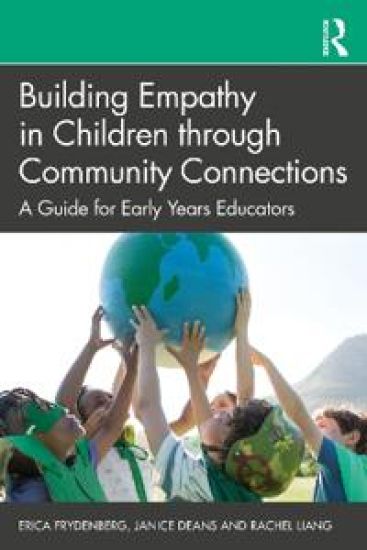
Building Empathy in Children through Community Connections

Building Empathy in Children through Community Connections

Erica Frydenberg; Janice Deans; Rachel Liang

TAYLOR FRANCIS LTD
2022
sidottu
Taking a unique approach, which highlights lived experience and engagement with community, this book guides the reader on how to create learning environments in which children are encouraged to develop relationships, build meaningful connections and take action which contributes to the wellbeing of their own communities. Through evaluations and feedback from participating professionals, as well as children’s learning in the form of artworks and photos, Building Empathy in Children through Community Connections: A Guide for Early Years Educators highlights how community partnership programs between children and community groups builds empathy and wellbeing in early childhood. Drawing on extensive research and professional experience in psychology and early childhood, it provides details of various community connections programs and considers the ways in which early learning settings can engage with their communities as they meet the requirements and objectives of the curriculum. Each chapter provides practical advice on implementation as well as take-home messages intended to encourage and enable community engagement. Demonstrating how young children can develop empathy through building community connections, this book is a vital resource for early childhood educators as well as parents and those working in community programs and early childhood settings.
Building Empathy in Children through Community Connections

Building Empathy in Children through Community Connections

Erica Frydenberg; Janice Deans; Rachel Liang

TAYLOR FRANCIS LTD
2022
nidottu
Taking a unique approach, which highlights lived experience and engagement with community, this book guides the reader on how to create learning environments in which children are encouraged to develop relationships, build meaningful connections and take action which contributes to the wellbeing of their own communities. Through evaluations and feedback from participating professionals, as well as children’s learning in the form of artworks and photos, Building Empathy in Children through Community Connections: A Guide for Early Years Educators highlights how community partnership programs between children and community groups builds empathy and wellbeing in early childhood. Drawing on extensive research and professional experience in psychology and early childhood, it provides details of various community connections programs and considers the ways in which early learning settings can engage with their communities as they meet the requirements and objectives of the curriculum. Each chapter provides practical advice on implementation as well as take-home messages intended to encourage and enable community engagement. Demonstrating how young children can develop empathy through building community connections, this book is a vital resource for early childhood educators as well as parents and those working in community programs and early childhood settings.
Coping in Good Times and Bad

Coping in Good Times and Bad

Erica Frydenberg

MELBOURNE UNIVERSITY PRESS
2022
nidottu
No one thinks about how well they're coping with life's daily stresses, until they're not. Coping in Good Times and Bad brings together what we know about coping so we can create a life of health, joy, satisfaction, resilience and wellbeing. 'Coping' and 'resilience' have become very commonly used words, especially in our COVID-impacted world, but what we need is a template for a good life. Decades of research, teaching and professional practice have provided psychologist Erica Frydenberg with intimate insight into how and why we cope well and not so well, and practical ways of developing and refining our coping strategies. Integrating coping with key proven ideas in contemporary psychology, such as emotional intelligence, mindset, mindfulness and grit, she goes beyond focusing on particular kinds of crisis (trauma, relationship breakdown, anxiety), and addresses the need for a framework that strengthens us through life, in good times and bad.
Young Children's Social Emotional Learning

Young Children's Social Emotional Learning

Erica Frydenberg; Janice Deans; Rachel Liang

Routledge
2020
nidottu
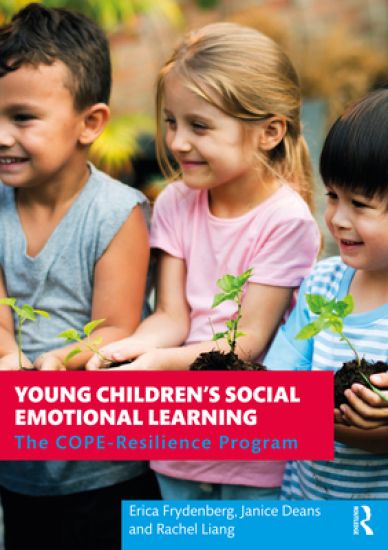
Young Children's Social Emotional Learning: The COPE-Resilience Program is a manual that is designed to support early childhood educators in the delivery of the COPE Resilience (COPE-R) program, an evidence-based program designed to teach empathy, resilience and prosocial skills to children. Grounded in extensive research and experience in psychology and early childhood, the program is built on a series of activities that help children develop their capacity for emotional understanding, caring for others, open communication, polite and respectful behaviours, and empathic sharing. The manual includes: Theoretical concepts underpinning COPE-R such as self-regulation, emotional intelligence, positive psychology, coping, resilience, and wellbeing in early childhood education. A "How-To" section to guide readers in the implementation of COPE-R. Over 40 activities templates (including examples of teacher’s adaptations) with easy to navigate icon legends. Facilitator notes and considerations for working with younger children and children of diverse backgrounds. Teaching tips for each of the topic areas and a feature piece on the insights from an early childhood teacher who is experienced in implementing COPE-R. Supplementary materials, including a set of situation and coping images. Each activity includes directions for children as well as guidelines for educators, and is designed to be used flexibly in various early learning contexts, enabling educators to select activities that best suit their setting.
Young Children's Social Emotional Learning

Young Children's Social Emotional Learning

Erica Frydenberg; Janice Deans; Rachel Liang

Routledge
2020
sidottu
Young Children's Social Emotional Learning: The COPE-Resilience Program is a manual that is designed to support early childhood educators in the delivery of the COPE Resilience (COPE-R) program, an evidence-based program designed to teach empathy, resilience and prosocial skills to children. Grounded in extensive research and experience in psychology and early childhood, the program is built on a series of activities that help children develop their capacity for emotional understanding, caring for others, open communication, polite and respectful behaviours, and empathic sharing. The manual includes: Theoretical concepts underpinning COPE-R such as self-regulation, emotional intelligence, positive psychology, coping, resilience, and wellbeing in early childhood education. A "How-To" section to guide readers in the implementation of COPE-R. Over 40 activities templates (including examples of teacher’s adaptations) with easy to navigate icon legends. Facilitator notes and considerations for working with younger children and children of diverse backgrounds. Teaching tips for each of the topic areas and a feature piece on the insights from an early childhood teacher who is experienced in implementing COPE-R. Supplementary materials, including a set of situation and coping images. Each activity includes directions for children as well as guidelines for educators, and is designed to be used flexibly in various early learning contexts, enabling educators to select activities that best suit their setting.
Coping and the Challenge of Resilience

Coping and the Challenge of Resilience

Erica Frydenberg

Palgrave Macmillan
2020
nidottu
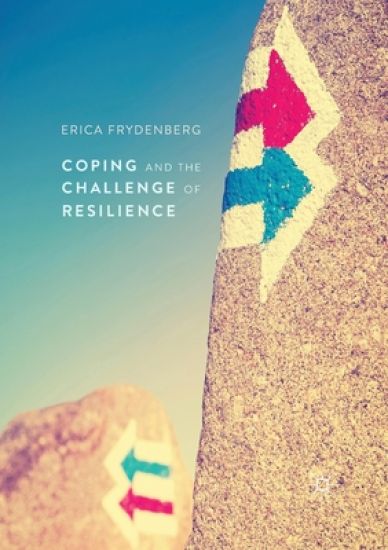
This book addresses how best to meet everyday challenges. The author focuses on how to think and act differently about what we do as we face challenges, and how to assess each situation as one of challenge rather than threat or harm because we have the strategies to cope. Spanning eleven chapters, the book examines the best ways to provide the core skills for life, to children, adolescents and adults, and how that is best achieved through the contemporary theories of coping. Coping has traditionally been defined in terms of reaction; that is, how people respond after or during a stressful event. More recently, coping is being defined more broadly to include anticipatory, preventive and proactive coping. This book provides case studies of resilient adults in a range of settings, highlighting how coping resources have helped them to overcome adversity. Researchers, students of psychology and social work, practitioners and those interested in the self-help field will find this book invaluable.
Promoting Well-Being in the Pre-School Years

Promoting Well-Being in the Pre-School Years

Erica Frydenberg; Janice Deans; Rachel Liang

Routledge
2019
nidottu
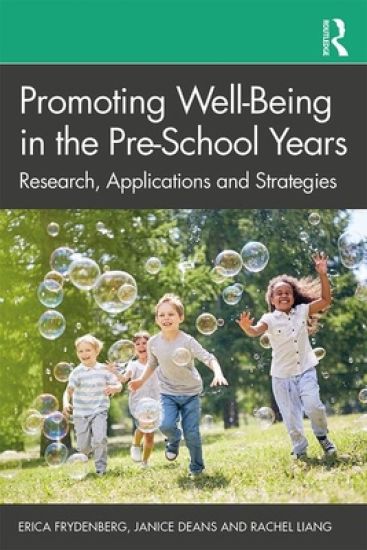
Promoting Well-Being in the Pre-School Years provides evidence-based research and real-life strategies that support social and emotional development and well-being for children aged 3–5 years. It places emphasis on nurturing social emotional competence through purposeful scaffolding activities and how these can be used by children and families to create a harmonious platform for building resilience and positive relationships with family and the community. Drawing on principles from Positive Psychology and Positive Education, it is illustrated throughout with examples of sustainable practice in diverse, global settings. Key topics explored include: Contemporary well-being concepts, including ‘grit’, ‘growth mindset’ and ‘gratitude’, as well as ‘classic’ constructs such as coping and self-efficacy The attitudes and skills that need to be developed to ensure that young children flourish Cognitive and sociocultural perspectives complemented by neuroscience and epigenetics Social Emotional Learning (SEL) in the early years curriculum Using visual tools – the Early Years Coping Cards How we measure young children’s coping The relationship between coping, stress and mental health Recognition of the importance of parents’ own coping skills How partnerships with communities can improve children’s SEL. Promoting Well-Being in the Pre-School Years shows how we can support young children to develop an understanding of what it means to be happy and to flourish as a socially responsible member of the family and wider community. It is essential reading for teachers, parents and professionals who work with young children, as well as academics in child development.
Promoting Well-Being in the Pre-School Years

Promoting Well-Being in the Pre-School Years

Erica Frydenberg; Janice Deans; Rachel Liang

Routledge
2019
sidottu
Promoting Well-Being in the Pre-School Years provides evidence-based research and real-life strategies that support social and emotional development and well-being for children aged 3–5 years. It places emphasis on nurturing social emotional competence through purposeful scaffolding activities and how these can be used by children and families to create a harmonious platform for building resilience and positive relationships with family and the community. Drawing on principles from Positive Psychology and Positive Education, it is illustrated throughout with examples of sustainable practice in diverse, global settings. Key topics explored include: Contemporary well-being concepts, including ‘grit’, ‘growth mindset’ and ‘gratitude’, as well as ‘classic’ constructs such as coping and self-efficacy The attitudes and skills that need to be developed to ensure that young children flourish Cognitive and sociocultural perspectives complemented by neuroscience and epigenetics Social Emotional Learning (SEL) in the early years curriculum Using visual tools – the Early Years Coping Cards How we measure young children’s coping The relationship between coping, stress and mental health Recognition of the importance of parents’ own coping skills How partnerships with communities can improve children’s SEL. Promoting Well-Being in the Pre-School Years shows how we can support young children to develop an understanding of what it means to be happy and to flourish as a socially responsible member of the family and wider community. It is essential reading for teachers, parents and professionals who work with young children, as well as academics in child development.
Adolescent Coping

Adolescent Coping

Erica Frydenberg

Routledge
2018
sidottu
How do young people cope with the multitude of difficult situations and scenarios that are associated with growing up, like anxiety and depression, as well as illness, rejection and family breakdown? How can we facilitate and encourage, through a combination of health, well-being and positive mindset, healthy development during adolescence and beyond? With a substantial focus on the positive aspects of coping, including an emphasis on developing resilience and the achievement of happiness, Erica Frydenberg presents the latest developments in the field of coping. Adolescent Coping highlights the ways in which coping can be measured and implemented in a wide range of circumstances and contexts, with suggestions for the development of coping skills and coping skills training, and it provides strong scholarly evidence for the concepts and constructs that it promotes as providing a pathway to resilience. The work is framed as an ongoing interaction between individuals and their environments as represented by the psychosocial ecological model of Bronfenbrenner. The major theories of coping are articulated that take account of the transactional model, resources theories and proactive models of coping. Areas of recent interest such as neuroscience and epigenetics are included, alongside a new chapter, ‘Cyberworld’, which provides insights on new and relevant topics such as mindfulness and the impact of social media as they relate to coping in the contemporary context. Adolescent Coping will be of interest to practitioners in psychology, social work, sociology, education and youth and community work as well as to students on courses in adolescent development in these fields.
Adolescent Coping

Adolescent Coping

Erica Frydenberg

Routledge
2018
nidottu
How do young people cope with the multitude of difficult situations and scenarios that are associated with growing up, like anxiety and depression, as well as illness, rejection and family breakdown? How can we facilitate and encourage, through a combination of health, well-being and positive mindset, healthy development during adolescence and beyond? With a substantial focus on the positive aspects of coping, including an emphasis on developing resilience and the achievement of happiness, Erica Frydenberg presents the latest developments in the field of coping. Adolescent Coping highlights the ways in which coping can be measured and implemented in a wide range of circumstances and contexts, with suggestions for the development of coping skills and coping skills training, and it provides strong scholarly evidence for the concepts and constructs that it promotes as providing a pathway to resilience. The work is framed as an ongoing interaction between individuals and their environments as represented by the psychosocial ecological model of Bronfenbrenner. The major theories of coping are articulated that take account of the transactional model, resources theories and proactive models of coping. Areas of recent interest such as neuroscience and epigenetics are included, alongside a new chapter, ‘Cyberworld’, which provides insights on new and relevant topics such as mindfulness and the impact of social media as they relate to coping in the contemporary context. Adolescent Coping will be of interest to practitioners in psychology, social work, sociology, education and youth and community work as well as to students on courses in adolescent development in these fields.
Coping and the Challenge of Resilience

Coping and the Challenge of Resilience

Erica Frydenberg

Palgrave Macmillan
2017
sidottu
This book addresses how best to meet everyday challenges. The author focuses on how to think and act differently about what we do as we face challenges, and how to assess each situation as one of challenge rather than threat or harm because we have the strategies to cope. Spanning eleven chapters, the book examines the best ways to provide the core skills for life, to children, adolescents and adults, and how that is best achieved through the contemporary theories of coping. Coping has traditionally been defined in terms of reaction; that is, how people respond after or during a stressful event. More recently, coping is being defined more broadly to include anticipatory, preventive and proactive coping. This book provides case studies of resilient adults in a range of settings, highlighting how coping resources have helped them to overcome adversity. Researchers, students of psychology and social work, practitioners and those interested in the self-help field will find this book invaluable.
Families Coping

Families Coping

Erica Frydenberg

Australian Council Educational Research (ACER)
2015
nidottu
Happy families are ones where parents can recognise both their own and their children's needs, and where children are resilient and are able to negotiate relationships with those around them. Families Coping seeks to build these skills and provides the tools to do so. Families Coping brings together two frameworks - positive parenting skills and the transactional model of stress and coping - to create a program of positive psychology aimed at parents, children and counselling professionals. It provides a toolkit for parents that can be used in a self-help mode or as an instructor-led program. It brings together tried and true principles of good parent-child relationships, which will benefit the family through childhood years and beyond. Families Coping includes exercises for both parents and children, tools and techniques for building resilience, information on additional coping services and resources and more.
Early Years Coping Cards

Early Years Coping Cards

Erica Frydenberg; Jan Deans

Australian Council Educational Research (ACER)
2011
nidottu
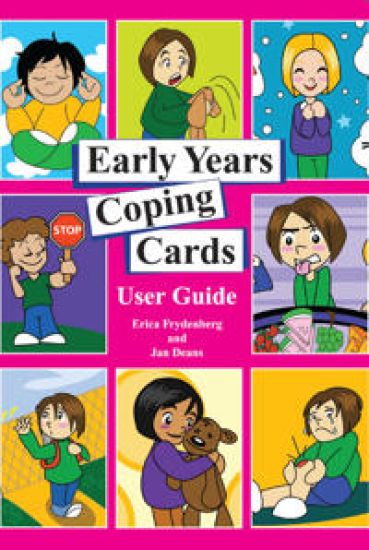
The Early Years Coping Cards is a set of pictorial situation and coping response cards to engage young children aged four- to eight-years-old in discussing a variety of ways to cope with challenging situations. It can be used as a teaching tool to develop skills in building resilience, coping with difficult situations and responding constructively to challenges. The cards are accompanied by a User Guide that includes background information, conclusions from research and practical suggestions on using the cards.
The Australian Leadership Reader

The Australian Leadership Reader

Erica Frydenberg

Australian Academic Press
2006
nidottu
Of interest to ages 15 years and up and especially appropriate for use in secondary and undergraduate studies, this unique book does not try to define leadership, but instead encourages the reader to fulfill that task themselves through a series of short essays on the personal and professional life of some contemporary Australians recognised nationally as aspiring leaders in their fields. A brief overview on the concept of leadership, plus a short series of questions about leadership and coping, provides a framework for individual study or group discussion. This book presents six engagingly written leadership profiles.
Morton Deutsch

Morton Deutsch

Erica Frydenberg

Australian Academic Press
2005
nidottu
Morton Deutsch is one of the most distinguished psychologists of our time and has been honoured by his profession with numerous awards. His ideas permeate the boundaries of law, international politics, education, business, and industrial relations. Yet today many people working in mediation and conflict resolution remain unaware of his great contributions to social and organisational psychology. His professional life spans the very existence of modern social psychology, beginning with his student days in the New York of 1935, through to his continuing work at the International Center for Cooperation and Conflict Resolution, the influential research and teaching centre he founded. Psychologist Erica Frydenberg spent two years documenting the life and legacy of this remarkable man through interviews with Morton and his many students and colleagues. The result is a book that enlightens us about the man's family and work life as well as illustrating the importance of using rigourous theoretical analysis to drive practical research and application in a way that can make a true difference in our everyday lives.