

Kirjailija
Erich Auerbach
Kirjat ja teokset yhdessä paikassa: 13 kirjaa, julkaisuja vuosilta 1993–2024, suosituimpiin kuuluu Gesammelte Aufsätze zur romanischen Philologie - Studienausgabe. Vertaile teosten hintoja ja tarkista saatavuus suomalaisista kirjakaupoista.
13 kirjaa
Kirjojen julkaisuvuodet: 1993–2024.

V sbornik voshli krupnye sochinenija vydajuschegosja filologa-romanista i literaturoveda Erikha Auerbakha (1892-1957). Osnovnaja chast izdanija - perevod ego poslednej knigi, vyshedshej v 1958 g. "Literaturnyj jazyk i publika v latinskoj pozdnej Antichnosti i v Srednevekove", gde v tsentre vnimanija avtora - istorija zapadnokhristianskoj ritoriki, srednelatinskaja stilistika, poetika narodnojazychnykh pridvornykh romanov i stanovlenie romanskoj kultury v tselom; a tak zhe glavnye voprosy sotsiologii literatury: kak i kogda voznikla chitajuschaja publika? kakovy ee vzaimootnoshenija s avtorom? kak eta publika razvivaetsja i chto zhdet ee v perspektive? Sbornik dopolnen vazhnejshimi statjami Auerbakha, sredi kotorykh - kontseptualnaja "Figura" (1938). Perevodchik: Kolchigin D. S. Redaktor: Uspenskij Fedor Borisovich

Gesammelte Aufsätze zur romanischen Philologie - Studienausgabe
Erich Auerbach
Narr Dr. Gunter
2021
pokkari

Segodnja vazhnyj den - Shmjak i ego odnoklassniki igrajut v spektakle "Zolushka". U Shmjaka pochetnaja rol konja, Ship budet printsem, a printsessoj - konechno zhe, Kitti. No vot tolko bednjaga Ship tak razvolnovalsja, chto ne smog vyjti na stsenu. Etomu spektaklju nuzhen novyj geroj! Kitti ochen khochet, chtoby Shmjak stal ee printsem. No spravitsja li on s etoj otvetstvennoj rolju ili etot spektakl vse zapolnjat nadolgo? Khudozhnik: Brants LorinPerevodchik: Pokidaeva Tatjana


• Lukemisen taidon ja hitaan lähilukemisen puolustus• Suuren eurooppalaisen humanistin ja kirjallisuudentukijan keskeiset esseet maailmankirjallisuudesta• Filologia on yleinen kulttuuritiede, joka tarjoaa syvällisen ja laaja-alaisen vaihtoehdon sirpalemaiselle erityistutkimukselle• Vastapainon Klassikko-sarjaa"Vain historian avulla ihmiset esiintyvät kokonaisuutena." Eric Auerbachia (1892-1957) on kuvattu yhdeksi 1900-luvun suurista kirjallisuudentutkijoista ja eurooppalaisista humanisteista. Auerbachin maailmanmaine perustuu ennen kaikkea vuonna 1946 ilmestyneeseen kirjallisuustieteen klassikkoon Mimesis: Todellisuudenkuvaus länsimaisessa kirjallisuudessa. Tämä suomennoskokoelma sisältää kaksitoista Auerbachin maailmankirjallisuuden filologiaa käsittelevää esseetä. Maailmankirjallisuus on yleisesti arvostettua kirjallisuutta, joka vaikuttaa kielellisten ja kansallisten rajojen yli. Filologia tarkoittaa Auerbachille kielen ja kirjallisuuden syvää tuntemusta, eräänlaista kielen, kirjallisuuden, historian ja filosofian synteesiä. Tämän syvällisen, filologisen ulottuvuuden ymmärtäminen on keskeistä myös 2000-luvulla, kun pohditaan humanististen tieteiden suhdetta toisiinsa ja niiden monesti yhteen nivoutuvia historiallisia kehityskulkuja. Filologia - lukemisen tiede - yhdistää humanistisia tieteitä aikana, jolloin monitieteisyys on akateemisen keskustelun keskiössä. Auerbachille filologia olikin eräänlainen yleinen kulttuuritiede, joka tarjosi vaihtoehdon erikoistuneelle ja ammatillistuneelle, erikoistieteisiin jakautuneelle tutkimukselle. Auerbachin tutkimusmenetelmä korostaa yksittäistä ja konkreettista tekstiä, filologiaa ja tyylianalyysia. Se on lukemisen taitoa, erityisesti hitaan lähiluennan taitoa.
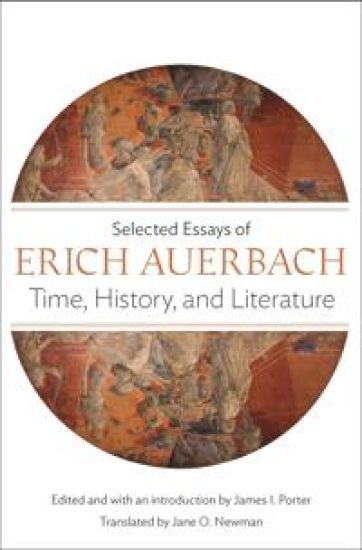
Erich Auerbach (1892-1957), best known for his classic literary study Mimesis, is celebrated today as a founder of comparative literature, a forerunner of secular criticism, and a prophet of global literary studies. Yet the true depth of Auerbach's thinking and writing remains unplumbed. Time, History, and Literature presents a wide selection of Auerbach's essays, many of which are little known outside the German-speaking world. Of the twenty essays culled for this volume from the full length of his career, twelve have never appeared in English before, and one is being published for the first time. Foregrounded in this major new collection are Auerbach's complex relationship to the Judaeo-Christian tradition, his philosophy of time and history, and his theory of human ethics and responsible action. Auerbach effectively charts out the difficult discovery, in the wake of Christianity, of the sensuous, the earthly, and the human and social worlds. A number of the essays reflect Auerbach's responses to an increasingly hostile National Socialist environment. These writings offer a challenging model of intellectual engagement, one that remains as compelling today as it was in Auerbach's own time.
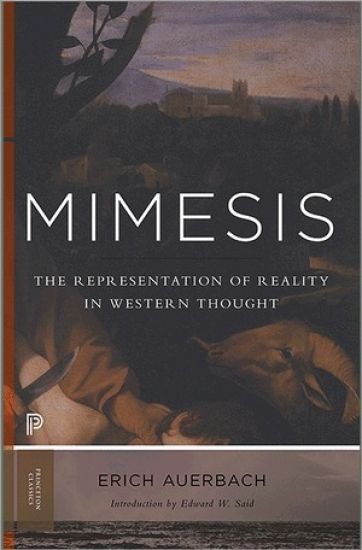
Mimesis
Erich Auerbach; Edward W. Said
Princeton University Press
2013
pokkari
Halvin toimitettuna 26,30 €
More than half a century after its translation into English, Erich Auerbach's Mimesis remains a masterpiece of literary criticism. A brilliant display of erudition, wit, and wisdom, his exploration of how great European writers from Homer to Virginia Woolf depicted reality has taught generations how to read Western literature. This new expanded edition includes a substantial essay in introduction by Edward Said as well as an essay, never before translated into English, in which Auerbach responds to his critics. A German Jew, Auerbach was forced out of his professorship at the University of Marburg in 1935. He left for Turkey, where he taught at the state university in Istanbul. There he wrote Mimesis, publishing it in German after the end of the war. Displaced as he was, Auerbach produced a work of great erudition that contains no footnotes, basing his arguments instead on searching, illuminating readings of key passages from his primary texts. His aim was to show how from antiquity to the twentieth century literature progressed toward ever more naturalistic and democratic forms of representation. This essentially optimistic view of European history now appears as a defensive--and impassioned--response to the inhumanity he saw in the Third Reich. Ranging over works in Greek, Latin, Spanish, French, Italian, German, and English, Auerbach used his remarkable skills in philology and comparative literature to refute any narrow form of nationalism or chauvinism, in his own day and ours. For many readers, both inside and outside the academy, Mimesis is among the finest works of literary criticism ever written. This Princeton Classics edition includes a substantial introduction by Edward Said as well as an essay in which Auerbach responds to his critics.

Mimesis : Verklighetsframställningen i den västerländska litteraturen
Erich Auerbach
Albert Bonniers Förlag
2012
nidottu
Erich Auerbachs Mimesis, 3 000 års litteraturhistoria, från Homeros till Virginia Woolf, från rulle till kodex, från inkunabel till pocket. Nu som e-bok! Mimesis publicerades 1946. Det är ett klassiskt och epokgörande litteraturhistoriskt verk som alla som läst litteraturhistoria har stött på som här presenteras i svensk översättning. Med sin tilltalande metod att utifrån ett kort, träffande citat vidga resonemanget till helheten – verket, epoken och, som övergripande tema, frågan om verklighetsåtergivningen i sitt sociala och historiska sammanhang – belyser Auerbach tretusen år litteraturhistoria i tjugo kapitel med suggestiva titlar som Odysseus ärr, Världen i Pantagruels mun, Den avbrutna supén och Den bruna strumpan. Till de avhandlade författarna hör Homeros, Petronius, Dante, Boccaccio, Rabelais, Montaigne, Shakespeare, Cervantes, Schiller, Goethe, Stendhal, Balzac, Flaubert, Virginia Woolf och Marcel Proust m. fl

Den tyske filologen Erich Auerbach (1892-1957) er forfatteren av storverket Mimesis, som handler om virkelighetsfremstillingen i Vestens litteratur gjennom tidene. Essaysamlingen Verdenslitteraturens filologi viser bredden i Auerbachs forfatterskap. Her reflekterer Auerbach over sin egen arbeidsmåte, den filologiske nærlesningen. For ham er lesing av litteraturhistoriens store verker en vei til å forstå "det allmennmenneskelige" - det som overskrider nasjonale grenser og historiske epoker. Nr. 58 i Cappelens upopulære skrifter.
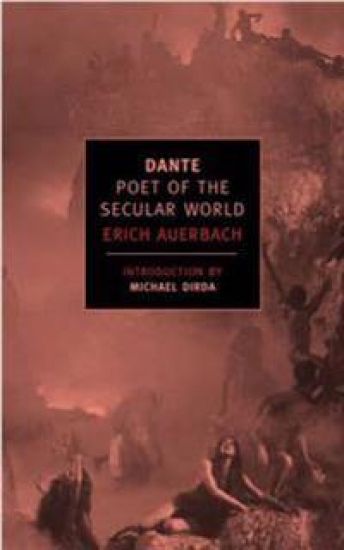
Erich Auerbach's Dante: Poet of the Secular World is an inspiring introduction to one of world's greatest poets as well as a brilliantly argued and still provocative essay in the history of ideas. Here Auerbach, thought by many to be the greatest of twentieth-century scholar-critics, makes the seemingly paradoxical claim that it is in the poetry of Dante, supreme among religious poets, and above all in the stanzas of his Divine Comedy, that the secular world of the modern novel first took imaginative form. Auerbach's study of Dante, a precursor and necessary complement to Mimesis, his magisterial overview of realism in Western literature, illuminates both the overall structure and the individual detail of Dante's work, showing it to be an extraordinary synthesis of the sensuous and the conceptual, the particular and the universal, that redefined notions of human character and fate and opened the way into modernity.

Der Kulturhistoriker Erich Auerbach (1892-1957) zahlt zu den bedeutendsten Kulturwissenschaftlern und Romanisten des 20. Jahrhunderts. Wie viele andere bedeutende Gelehrte emigrierte er fruh aus Deutschland, um der Verfolgung durch die Nationalsozialisten zu entgehen. Bereits 1929 erschien sein Buch zu Dante, das trotz des etwas komplizierten Titels einen runden Gesamtuberblick uber das dichterische Schaffen des italienischen Nationaldichters gibt. Auerbach spurte in der Gottlichen Komodie, Dantes Hauptwerk, viele Realismen auf. Ruckbezuge auf die Welt des Irdischen bleiben auch im Grauen der Holle, in der Hoffnung des Fegefeuers und in der religiosen Ekstase des Paradieses deutlich. Dante schildert beispielsweise viele Zeitgenossen und ihre Sunden, die dann entsprechend gebusst werden. Bei Auerbach wird das Universum Dantes eindrucksvoll lebendig."

Literary Language and Its Public in Late Latin Antiquity and in the Middle Ages
Erich Auerbach
Princeton University Press
1993
pokkari
In this, his final book, Erich Auerbach writes, "My purpose is always to write history." Tracing the transformations of classical Latin rhetoric from late antiquity to the modern era, he explores major concerns raised in his Mimesis: the historical and social contexts in which writings were received, and issues of aesthetics, semantics, stylistics, and sociology that anticipate the concerns of the new historicism.