Kirjojen hintavertailu – 12 903 725 kirjaa ja 27 kauppaa

Kirjailija

Erik Cambria

Kirjat ja teokset yhdessä paikassa: 13 kirjaa, julkaisuja vuosilta 2012–2025, suosituimpiin kuuluu Sentiment Analysis in the Bio-Medical Domain. Vertaile teosten hintoja ja tarkista saatavuus suomalaisista kirjakaupoista.

13 kirjaa

Kirjojen julkaisuvuodet: 2012–2025.

Sentiment Analysis in the Bio-Medical Domain

Sentiment Analysis in the Bio-Medical Domain

Ranjan Satapathy; Erik Cambria; Amir Hussain

Springer International Publishing AG
2019
nidottu
The abundance of text available in social media and health-related forums and blogs have recently attracted the interest of the public health community to use these sources for opinion mining. This book presents a lexicon-based approach to sentiment analysis in the bio-medical domain, i.e., WordNet for Medical Events (WME). This book gives an insight in handling unstructured textual data and converting it to structured machine-processable data in the bio-medical domain. The readers will discover the following key novelties: 1) development of a bio-medical lexicon: WME expansion and WME enrichment with additional features.; 2) ensemble of machine learning and computational creativity; 3) development of microtext analysis techniques to overcome the inconsistency in social communication. It will be of interest to researchers in the fields of socially-intelligent human-machine interaction and biomedical text mining
Sentiment Analysis in the Bio-Medical Domain

Sentiment Analysis in the Bio-Medical Domain

Ranjan Satapathy; Erik Cambria; Amir Hussain

Springer International Publishing AG
2018
sidottu
The abundance of text available in social media and health-related forums and blogs have recently attracted the interest of the public health community to use these sources for opinion mining. This book presents a lexicon-based approach to sentiment analysis in the bio-medical domain, i.e., WordNet for Medical Events (WME). This book gives an insight in handling unstructured textual data and converting it to structured machine-processable data in the bio-medical domain. The readers will discover the following key novelties: 1) development of a bio-medical lexicon: WME expansion and WME enrichment with additional features.; 2) ensemble of machine learning and computational creativity; 3) development of microtext analysis techniques to overcome the inconsistency in social communication. It will be of interest to researchers in the fields of socially-intelligent human-machine interaction and biomedical text mining
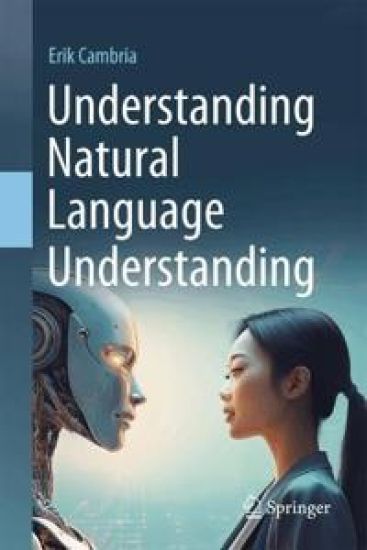
Understanding Natural Language Understanding

Understanding Natural Language Understanding

Erik Cambria

Springer International Publishing AG
2024
sidottu
About half a century ago, AI pioneers like Marvin Minsky embarked on the ambitious project of emulating how the human mind encodes and decodes meaning. While today we have a better understanding of the brain thanks to neuroscience, we are still far from unlocking the secrets of the mind, especially when it comes to language, the prime example of human intelligence. “Understanding natural language understanding”, i.e., understanding how the mind encodes and decodes meaning through language, is a significant milestone in our journey towards creating machines that genuinely comprehend human language. Large language models (LLMs) such as GPT-4 have astounded us with their ability to generate coherent, contextually relevant text, seemingly bridging the gap between human and machine communication. Yet, despite their impressive capabilities, these models operate on statistical patterns rather than true comprehension. This textbook delves into the nuanced differences between these two paradigms and explores the future of AI as we strive to achieve true natural language understanding (NLU). LLMs excel at identifying and replicating patterns within vast datasets, producing responses that appear intelligent and meaningful. They can generate text that mimics human writing styles, provide summaries of complex documents, and even engage in extended dialogues with users. However, their limitations become evident when they encounter tasks that require deeper understanding, reasoning, and contextual knowledge. An NLU system that deconstructs meaning leveraging linguistics and semiotics (on top of statistical analysis) represents a more profound level of language comprehension. It involves understanding context in a manner similar to human cognition, discerning subtle meanings, implications, and nuances that current LLMs might miss or misinterpret. NLU grasps the semantics behind words and sentences, comprehending synonyms, metaphors, idioms, and abstract concepts with precision. This textbook explores the current state of LLMs, their capabilities and limitations, and contrasts them with the aspirational goals of NLU. The author delves into the technical foundations required for achieving true NLU, including advanced knowledge representation, hybrid AI systems, and neurosymbolic integration, while also examining the ethical implications and societal impacts of developing AI systems that genuinely understand human language. Containing exercises, a final assignment and a comprehensive quiz, the textbook is meant as a reference for courses on information retrieval, AI, NLP, data analytics, data mining and more.
Time Expression and Named Entity Recognition

Time Expression and Named Entity Recognition

Xiaoshi Zhong; Erik Cambria

Springer Nature Switzerland AG
2022
nidottu
This book presents a synthetic analysis about the characteristics of time expressions and named entities, and some proposed methods for leveraging these characteristics to recognize time expressions and named entities from unstructured text. For modeling these two kinds of entities, the authors propose a rule-based method that introduces an abstracted layer between the specific words and the rules, and two learning-based methods that define a new type of tagging scheme based on the constituents of the entities, different from conventional position-based tagging schemes that cause the problem of inconsistent tag assignment. The authors also find that the length-frequency of entities follows a family of power-law distributions. This finding opens a door, complementary to the rank-frequency of words, to understand our communicative system in terms of language use.
Time Expression and Named Entity Recognition

Time Expression and Named Entity Recognition

Xiaoshi Zhong; Erik Cambria

Springer Nature Switzerland AG
2021
sidottu
This book presents a synthetic analysis about the characteristics of time expressions and named entities, and some proposed methods for leveraging these characteristics to recognize time expressions and named entities from unstructured text. For modeling these two kinds of entities, the authors propose a rule-based method that introduces an abstracted layer between the specific words and the rules, and two learning-based methods that define a new type of tagging scheme based on the constituents of the entities, different from conventional position-based tagging schemes that cause the problem of inconsistent tag assignment. The authors also find that the length-frequency of entities follows a family of power-law distributions. This finding opens a door, complementary to the rank-frequency of words, to understand our communicative system in terms of language use.
Intelligent Asset Management

Intelligent Asset Management

Frank Xing; Erik Cambria; Roy Welsch

Springer Nature Switzerland AG
2020
nidottu
This book presents a systematic application of recent advances in artificial intelligence (AI) to the problem of asset management. While natural language processing and text mining techniques, such as semantic representation, sentiment analysis, entity extraction, commonsense reasoning, and fact checking have been evolving for decades, finance theories have not yet fully considered and adapted to these ideas. In this unique, readable volume, the authors discuss integrating textual knowledge and market sentiment step-by-step, offering readers new insights into the most popular portfolio optimization theories: the Markowitz model and the Black-Litterman model. The authors also provide valuable visions of how AI technology-based infrastructures could cut the cost of and automate wealth management procedures. This inspiring book is a must-read for researchers and bankers interested in cutting-edge AI applications in finance.
Intelligent Asset Management

Intelligent Asset Management

Frank Xing; Erik Cambria; Roy Welsch

Springer Nature Switzerland AG
2019
sidottu
This book presents a systematic application of recent advances in artificial intelligence (AI) to the problem of asset management. While natural language processing and text mining techniques, such as semantic representation, sentiment analysis, entity extraction, commonsense reasoning, and fact checking have been evolving for decades, finance theories have not yet fully considered and adapted to these ideas. In this unique, readable volume, the authors discuss integrating textual knowledge and market sentiment step-by-step, offering readers new insights into the most popular portfolio optimization theories: the Markowitz model and the Black-Litterman model. The authors also provide valuable visions of how AI technology-based infrastructures could cut the cost of and automate wealth management procedures. This inspiring book is a must-read for researchers and bankers interested in cutting-edge AI applications in finance.
Sentic Computing

Sentic Computing

Erik Cambria; Amir Hussain

Springer International Publishing AG
2019
nidottu
This volume presents a knowledge-based approach to concept-level sentiment analysis at the crossroads between affective computing, information extraction, and common-sense computing, which exploits both computer and social sciences to better interpret and process information on the Web. Concept-level sentiment analysis goes beyond a mere word-level analysis of text in order to enable a more efficient passage from (unstructured) textual information to (structured) machine-processable data, in potentially any domain. Readers will discover the following key novelties, that make this approach so unique and avant-garde, being reviewed and discussed:• Sentic Computing's multi-disciplinary approach to sentiment analysis-evidenced by the concomitant use of AI, linguistics and psychology for knowledge representation and inference• Sentic Computing’s shift from syntax to semantics-enabled by the adoption of the bag-of-concepts model instead of simply counting word co-occurrence frequencies in text• Sentic Computing's shift from statistics to linguistics-implemented by allowing sentiments to flow from concept to concept based on the dependency relation between clausesThis volume is the first in the Series Socio-Affective Computing edited by Dr Amir Hussain and Dr Erik Cambria and will be of interest to researchers in the fields of socially intelligent, affective and multimodal human-machine interaction andsystems.
Multimodal Sentiment Analysis

Multimodal Sentiment Analysis

Soujanya Poria; Amir Hussain; Erik Cambria

Springer Nature Switzerland AG
2018
nidottu
This latest volume in the series, Socio-Affective Computing, presents a set of novel approaches to analyze opinionated videos and to extract sentiments and emotions. Textual sentiment analysis framework as discussed in this book contains a novel way of doing sentiment analysis by merging linguistics with machine learning. Fusing textual information with audio and visual cues is found to be extremely useful which improves text, audio and visual based unimodal sentiment analyzer. This volume covers the three main topics of: textual preprocessing and sentiment analysis methods; frameworks to process audio and visual data; and methods of textual, audio and visual features fusion. The inclusion of key visualization and case studies will enable readers to understand better these approaches. Aimed at the Natural Language Processing, Affective Computing and Artificial Intelligence audiences, this comprehensive volume will appeal to a wide readership and will help readers to understand key details on multimodal sentiment analysis.
Multimodal Sentiment Analysis

Multimodal Sentiment Analysis

Soujanya Poria; Amir Hussain; Erik Cambria

Springer International Publishing AG
2018
sidottu
This latest volume in the series, Socio-Affective Computing, presents a set of novel approaches to analyze opinionated videos and to extract sentiments and emotions. Textual sentiment analysis framework as discussed in this book contains a novel way of doing sentiment analysis by merging linguistics with machine learning. Fusing textual information with audio and visual cues is found to be extremely useful which improves text, audio and visual based unimodal sentiment analyzer. This volume covers the three main topics of: textual preprocessing and sentiment analysis methods; frameworks to process audio and visual data; and methods of textual, audio and visual features fusion. The inclusion of key visualization and case studies will enable readers to understand better these approaches. Aimed at the Natural Language Processing, Affective Computing and Artificial Intelligence audiences, this comprehensive volume will appeal to a wide readership and will help readers to understand key details on multimodal sentiment analysis.
Sentic Computing

Sentic Computing

Erik Cambria; Amir Hussain

Springer International Publishing AG
2015
sidottu
This volume presents a knowledge-based approach to concept-level sentiment analysis at the crossroads between affective computing, information extraction, and common-sense computing, which exploits both computer and social sciences to better interpret and process information on the Web. Concept-level sentiment analysis goes beyond a mere word-level analysis of text in order to enable a more efficient passage from (unstructured) textual information to (structured) machine-processable data, in potentially any domain. Readers will discover the following key novelties, that make this approach so unique and avant-garde, being reviewed and discussed:• Sentic Computing's multi-disciplinary approach to sentiment analysis-evidenced by the concomitant use of AI, linguistics and psychology for knowledge representation and inference• Sentic Computing’s shift from syntax to semantics-enabled by the adoption of the bag-of-concepts model instead of simply counting word co-occurrence frequencies in text• Sentic Computing's shift from statistics to linguistics-implemented by allowing sentiments to flow from concept to concept based on the dependency relation between clausesThis volume is the first in the Series Socio-Affective Computing edited by Dr Amir Hussain and Dr Erik Cambria and will be of interest to researchers in the fields of socially intelligent, affective and multimodal human-machine interaction andsystems.
Sentic Computing

Sentic Computing

Erik Cambria; Amir Hussain

Springer
2012
nidottu
In this book common sense computing techniques are further developed and applied to bridge the semantic gap between word-level natural language data and the concept-level opinions conveyed by these. In particular, the ensemble application of graph mining and multi-dimensionality reduction techniques is exploited on two common sense knowledge bases to develop a novel intelligent engine for open-domain opinion mining and sentiment analysis. The proposed approach, termed sentic computing, performs a clause-level semantic analysis of text, which allows the inference of both the conceptual and emotional information associated with natural language opinions and, hence, a more efficient passage from (unstructured) textual information to (structured) machine-processable data.