

Kirjailija
Erik Hofmann
Kirjat ja teokset yhdessä paikassa: 23 kirjaa, julkaisuja vuosilta 2007–2022, suosituimpiin kuuluu Dienstleistungseinkauf. Vertaile teosten hintoja ja tarkista saatavuus suomalaisista kirjakaupoista.
23 kirjaa
Kirjojen julkaisuvuodet: 2007–2022.
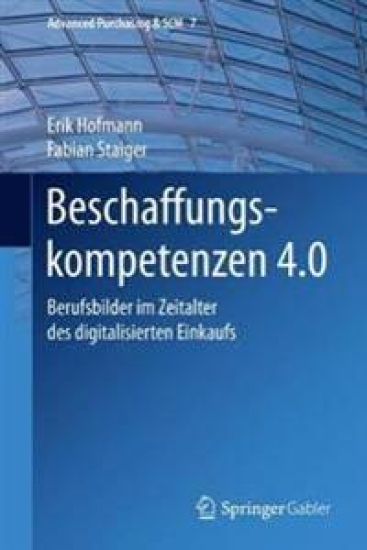
Obwohl der prozentuale Kostenanteil beschaffter Güter aufgrund des Outsourcing-Trends stetig zugenommen hat, wurde die Beschaffung lange Zeit in Theorie und Praxis vernachlässigt. Mit der vierten industriellen Revolution (Industrie 4.0) hat sie jedoch die einzigartige Möglichkeit, ihr volles Potential zu nutzen und ihre strategische Relevanz auszubauen, wenn sie die richtigen Kompetenzen entwickelt. Ausgehend von den aktuellen Beschaffungsaufgaben stellt dieses Buch methodisch drei Kompetenzprofile vor, die eine Grundlage für die Entwicklung zukünftiger Berufsbilder in der Beschaffung 4.0 bilden. Es zeigt anschaulich, auf welche Weise sich die heutigen Aufgaben, Anforderungen sowie Kompetenzen in der Beschaffung mit der digitalen Transformation verändern werden und leitet einen konkreten Handlungsbedarf zur Stärkung der Beschaffung im digitalen Zeitalter ab.
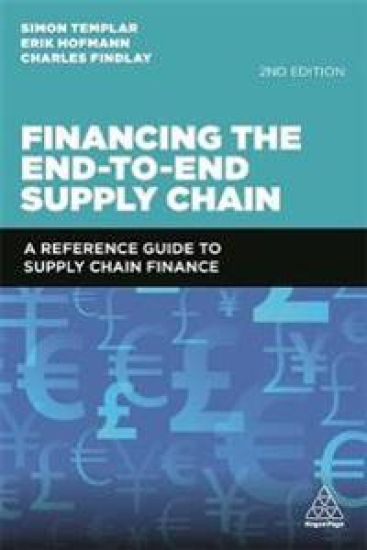
Financing the End-to-End Supply Chain
Simon Templar; Erik Hofmann; Charles Findlay
Kogan Page Ltd
2020
nidottu
Financing the End-to-End Supply Chain provides readers with a comprehensive understanding of the financial synergies across the supply chain. It demonstrates the importance of the strategic relationship between the physical supply of goods and services and the associated financial flows. The book provides a clear introduction, demonstrating the importance of the strategic relationship between supply chain and financial communities within an organization. This book links together treasury, banking, supply chain, systems, IT, and key stakeholders. Financing the End-to-End Supply Chain will help senior supply chain practitioners to build collaboration, improve relationships and enhance trust between supply chain partners. With its combination of theory and practice it tackles vital issues including physical, information and financial flows, and tailoring supply chain finance to individual organisations' circumstances. Recognizing that supply chain finance means different things in different countries, the authors also consider various initiatives to harmonize and develop cross-border financing as well as including an agenda for national and international policy makers. The new edition features interviews from SCF platform providers on how ecosystems are involved in supply chain finance, additional learning activities for students and new examples on working capital management.
Financing the End-to-End Supply Chain
Simon Templar; Erik Hofmann; Charles Findlay
Kogan Page Ltd
2020
sidottu
Financing the End-to-End Supply Chain provides readers with a comprehensive understanding of the financial synergies across the supply chain. It demonstrates the importance of the strategic relationship between the physical supply of goods and services and the associated financial flows. The book provides a clear introduction, demonstrating the importance of the strategic relationship between supply chain and financial communities within an organization. This book links together treasury, banking, supply chain, systems, IT, and key stakeholders. Financing the End-to-End Supply Chain will help senior supply chain practitioners to build collaboration, improve relationships and enhance trust between supply chain partners. With its combination of theory and practice it tackles vital issues including physical, information and financial flows, and tailoring supply chain finance to individual organisations' circumstances. Recognizing that supply chain finance means different things in different countries, the authors also consider various initiatives to harmonize and develop cross-border financing as well as including an agenda for national and international policy makers. The new edition features interviews from SCF platform providers on how ecosystems are involved in supply chain finance, additional learning activities for students and new examples on working capital management.
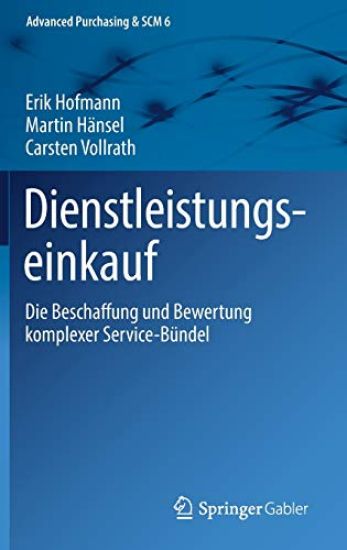
Dienstleistungseinkauf
Erik Hofmann; Martin Hänsel; Carsten Vollrath
Springer-Verlag Berlin and Heidelberg GmbH Co. K
2018
sidottu
Dieses Buch zeigt die Bedeutung der Dienstleistungen als zunehmend wichtigen Erwerbszweig für die Wirtschaft. Der Anteil der Erwerbstätigen im dritten Sektor (tertiärer Sektor) steigt stetig. Durch die spezifische Charakteristik von Dienstleistungen erweist sich die Beschaffung und Bewertung als deutlich schwieriger als der vielerorts bereits hoch professionalisierte Einkauf von Gütern. Zu diesem Zweck hat das Institut für Supply Chain Management der Universität St. Gallen ein Projekt gemeinsam mit verschiedenen Verbänden und Praxispartnern aus der Schweiz initiiert. Die Ergebnisse aus diesem Projekt werden in diesem Buch auch vor dem Hintergrund der Digitalisierung anschaulich dargestellt.
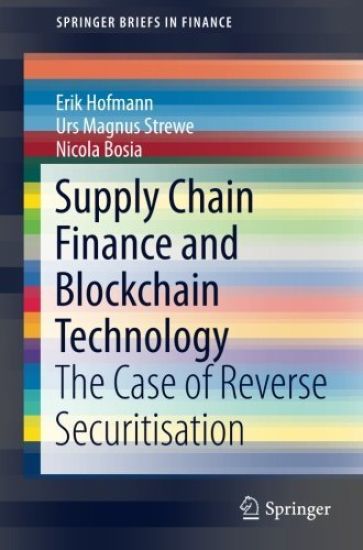
Supply Chain Finance and Blockchain Technology
Erik Hofmann; Urs Magnus Strewe; Nicola Bosia
Springer International Publishing AG
2017
nidottu
This book investigates how the Blockchain Technology (BCT) for Supply Chain Finance (SCF) programs allows businesses to come together in partnerships and accelerate cash flows throughout the supply chain. BCT promises to change the way individuals and corporations exchange value and information over the Internet, and is perfectly positioned to enable new levels of collaboration among the supply chain actors. The book reveals new opportunities stemming from the application of BCT to SCF financing solutions, particularly reverse factoring – or approved payables financing. To do so, it first identifies the principal barriers and pain points in delivering financing solutions. Then, a possible blockchain-driven supply chain model is defined. Using this framework, the book subsequently discusses relevant use cases for the technology, which could open up new opportunities in the SCF space. It demonstrates that blockchain and distributed ledgers technologies could deliver substantial benefits for all parties involved in SCF transactions, promising to expedite the processes and lower the overall costs of financing programs. Industry giants such as IBM, Maersk, China-based Dianrong and FnConn (a Foxconn subsidiary) are currently working to digitize the global, cross-border supply chain using blockchain technology, and will likely soon create blockchain platforms for supply chain finance. These solutions aim to reduce complexity and make data sharing more secure, accurate and efficient. This book offers a highly topical resource for stakeholders across the entire supply chain, helping them prepare for the upcoming technological revolution.
The Purchasing of Business Services. Performance Excellence Study 2016
Erik Hofmann; Martin Hänsel; Carsten Vollrath
Cuvillier
2016
nidottu
Performance Measurement and Incentive Systems in Purchasing
Erik Hofmann; Daniel Maucher; Martin Kotula; Oliver Kreienbrink
Springer-Verlag Berlin and Heidelberg GmbH Co. K
2016
nidottu
In recent years, purchasing performance measurement have steadily gained in importance in theory and practice. Yet, in many cases, the focus still remains on cost items, especially savings. Moreover, reported performance ratios in purchasing are frequently called into question in terms of their amount and efficacy. Most of the time, there is no tie-in at all with staff compensations. To meet these and other challenges, this book presents a holistic approach for purchasing performance measurement and the incentive systems associated with it. The following topics are dealt with in detail: • Purchasing performance measurement on the level of commodity groups and the procurement organization • Supplier evaluation and performance measurement on the level of the buyer-supplier relationship • Comprehensive systems for purchasing performance measurement, such as the procurement value added and the purchasing balanced scorecard • Performance-oriented incentive systems and bonus payments for buyers, procurement organizations and suppliers Readers are thus provided with comprehensive guidelines for the implementation and realization of sustained performance measurement and incentivization in purchasing.
The Supply Chain Differentiation Guide
Erik Hofmann; Patrick Beck; Erik Füger
Springer-Verlag Berlin and Heidelberg GmbH Co. K
2014
nidottu
The importance of supply chain management has increased over the last few decades. Today, entire supply chains are competing with each other instead of individual companies. As such, supply chain management has become a way for companies to set themselves apart from competing companies and their supply chains. Interestingly, supply chain management mainly focuses on efficiency-oriented topics rather than effectiveness-driven issues, in particular the design of supply chains from manufacturing sites downstream, instead of upstream from the customer. The Supply Chain Differentiation Guide offers a modern approach to supply chain management. While for many years “one-size-fits-all” approaches to supply chain management were very common, the current efforts of managers and academics alike focus on the simultaneous management of multiple supply chains. Despite the interest of the business sector in the management of multiple supply chains, academia has largely neglected this topicto date. The Supply Chain Differentiation Guide addresses this shortcoming, introducing both established and cutting-edge management methods to the context of supply chain differentiation and providing inspirations for how to improve corporate operations.
Working Capital Management- Performance Excellence-Studie Band 2014
Judith Martin; Erik Hofmann
Cuvillier
2014
nidottu
Capital Equipment Purchasing
Erik Hofmann; Daniel Maucher; Jens Hornstein; Rainer den Ouden
Springer-Verlag Berlin and Heidelberg GmbH Co. K
2014
nidottu
Compared to other main groups of procurement, capital equipment features numerous characteristics that significantly impact the purchasing process. The process of purchasing capital equipment therefore requires specific attention and above all a systematic approach. To overcome these challenges, a holistic process model and specific tools and methods for capital equipment purchasing are presented. The following topics regarding capital equipment purchasing are presented:• Compliance management• Savings measurement• Life cycle costs and total cost of ownership• Determining the optimum useful life and replacement time• Real options approach for the evaluation of investment alternatives• Performance contractingReaders are provided with a comprehensive and structured process model for capital equipment purchasing. The comprehensive set of methods including various instruments and methods presented in this book support the establishment of a professional capital equipment purchasing process.
Erfolgsmessung beim Investitionsgütereinkauf
Daniel Maucher; Wolfgang Stölzle; Erik Hofmann
Springer-Verlag Berlin and Heidelberg GmbH Co. K
2014
nidottu
Aufgrund des steigenden Wettbewerbsdrucks und der Anforderung an den Einkauf seine Leistung darzulegen, gewinnt das Thema Erfolgsmessung im Einkauf immer mehr an Bedeutung. Obwohl dabei häufig noch immer monetäre Erfolgsgrößen (Savings) an erster Stelle stehen, rücken vermehrt auch nicht-monetäre Ziele (z. B. Innovationen, Versorgungsicherheit, Produktqualität) in den Fokus des Einkaufs. Speziell beim Investitionsgütereinkauf ergeben sich dabei jedoch spezifische Herausforderungen, wie z. B. fehlenden Referenzpreise. Zur Untersuchung der beschriebenen Thematik wurde eine Studie mit 18 Unternehmen auf Basis persönlicher Interviews durchgeführt. Die Publikation zeigt die Ergebnisse der empirischen Untersuchung zu den Themen Investitionsgütereinkauf, Erfolgsmessung im Einkauf, Savings-Messung sowie Savings-Messung beim Investitionsgütereinkauf und gibt jeweils praktische Handlungsempfehlungen.
Fragen zum unternehmensübergreifenden Management in und von Wertschöpfungsnetzwerken stehen zunehmend sowohl in der Wissenschaft als auch der Praxis im Mittelpunkt des Interesses. Dabei ist dem Konzept des Supply Chain Managements (SCM) eine zentrale Bedeutung zuzusprechen. Erik Hofmann erweitert das SCM strukturiert um die bisher vernachlässigte strategische und finanzwirtschaftliche Orientierung sowie die Perspektive der wertorientierten Steuerung. Über die konsequente Einbettung dieser Punkte wird das SCM systematisch in Richtung eines „Interorganizational Operations Managements“ weiterentwickelt.
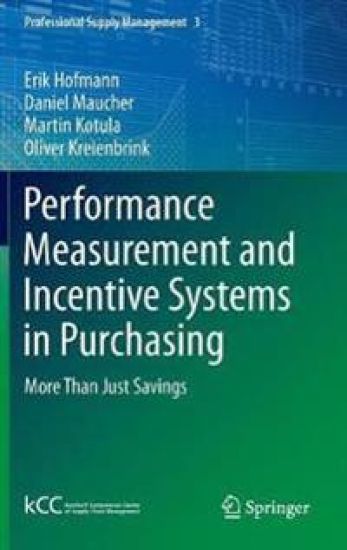
Performance Measurement and Incentive Systems in Purchasing
Erik Hofmann; Daniel Maucher; Martin Kotula; Oliver Kreienbrink
Springer-Verlag Berlin and Heidelberg GmbH Co. K
2013
sidottu
In recent years, purchasing performance measurement have steadily gained in importance in theory and practice. Yet, in many cases, the focus still remains on cost items, especially savings. Moreover, reported performance ratios in purchasing are frequently called into question in terms of their amount and efficacy. Most of the time, there is no tie-in at all with staff compensations. To meet these and other challenges, this book presents a holistic approach for purchasing performance measurement and the incentive systems associated with it. The following topics are dealt with in detail: • Purchasing performance measurement on the level of commodity groups and the procurement organization • Supplier evaluation and performance measurement on the level of the buyer-supplier relationship • Comprehensive systems for purchasing performance measurement, such as the procurement value added and the purchasing balanced scorecard • Performance-oriented incentive systems and bonus payments for buyers, procurement organizations and suppliers Readers are thus provided with comprehensive guidelines for the implementation and realization of sustained performance measurement and incentivization in purchasing.
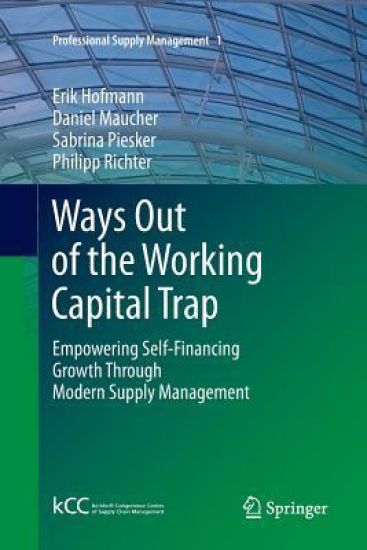
Ways Out of the Working Capital Trap
Erik Hofmann; Daniel Maucher; Sabrina Piesker; Philipp Richter
Springer-Verlag Berlin and Heidelberg GmbH Co. K
2013
nidottu
Especially in times of an economic boom following a crisis, companies have to deal with the phenomenon of the "working capital trap," which signifies a company's increasing need for financial liquidity in times of hindered access to debt capital, caused by the increasingly restrictive credit approval processes of financial institutions. As a consequence of cost savings, this situation is often reinforced by a low level of inventory. This book takes up the problem and shows ways of escaping the "trap" by identifying and strengthening in-house financing potential. First, different operating ratios will be introduced. These refer to the amount of capital committed to the flow of goods and to the amount of in-house financing possible. Subsequently, methods for consolidating in-house financing that are affected by procurement processes will be presented from the company's and the supply chain's perspective. From a company's perspective, the methods for consolidating the amount of in-house financing over the following topics: The Management of Payment Terms, Inventory Management and Product Group and Supplier Management From the supply chain's perspective, the following methods for extending the possible amount of in-house financing will be discussed: Finance-Oriented Supply Chain Sourcing, Supply Chain-Oriented Supplier Financing, Collaborative Cash-to-Cash Management, Collaborative Cash Pooling and Netting, Supply Chain Financing Platforms. The conceptual models will be clarified using a practical example from the automobile industry. Finally, the "Procurement Value Added" (PVA©) approach will be presented, a concept that measures the contribution of procurement to the company's success.
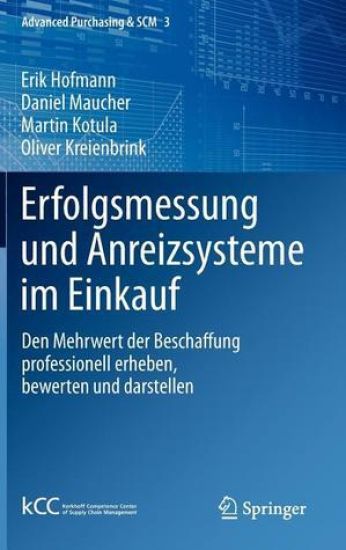
Erfolgsmessung und Anreizsysteme im Einkauf
Erik Hofmann; Daniel Maucher; Martin Kotula; Oliver Kreienbrink
Springer-Verlag Berlin and Heidelberg GmbH Co. K
2012
sidottu
Die Bedeutung der Erfolgsmessung im Einkauf hat in den letzten Jahren in Wissenschaft und Praxis stetig zugenommen. Dennoch findet in vielen Fällen immer noch eine Fokussierung auf Kostengrößen – vor allem Savings – statt. Zudem werden die ausgewiesenen Erfolgskennzahlen des Einkaufs in Bezug auf Höhe und Wirksamkeit häufig angezweifelt. Eine Kopplung zur Vergütung der Mitarbeiter fehlt meist gänzlich. Um diesen und weiteren Herausforderungen entgegen zu treten, stellt dieses Buch einen ganzheitlichen Ansatz zur Erfolgsmessung im Einkauf und den damit verbundenen Anreizsystemen vor. Dabei werden im Einzelnen folgende Themen behandelt: • Erfolgsmessung im Einkauf auf Ebene der Warengruppen und der Beschaffungsorganisation • Lieferantenbewertung und Erfolgsmessung auf Ebene der Lieferanten-Abnehmer-Beziehung • Ganzheitliche Systeme zur Erfolgsmessung im Einkauf wie der Procurement Value Added und die Purchasing Balanced Scorecard • Erfolgsorientierte Anreizsysteme und Leistungsvergütung für Einkäufer, Beschaffungsorganisationen und Lieferanten. Den Lesern wird damit eine umfangreiche Handlungsanweisung zur Implementierung und Umsetzung einer nachhaltigen Erfolgsmessung sowie der Anreizsetzung im Einkauf gegeben.
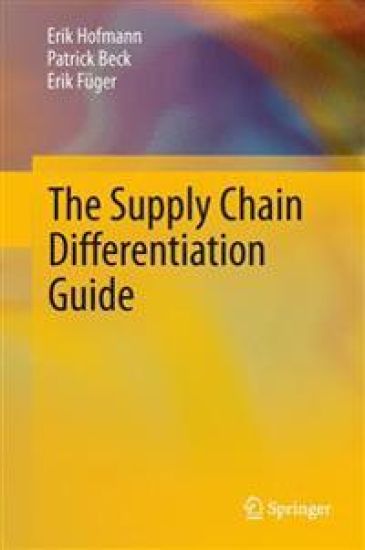
The Supply Chain Differentiation Guide
Erik Hofmann; Patrick Beck; Erik Füger
Springer-Verlag Berlin and Heidelberg GmbH Co. K
2012
sidottu
The importance of supply chain management has increased over the last few decades. Today, entire supply chains are competing with each other instead of individual companies. As such, supply chain management has become a way for companies to set themselves apart from competing companies and their supply chains. Interestingly, supply chain management mainly focuses on efficiency-oriented topics rather than effectiveness-driven issues, in particular the design of supply chains from manufacturing sites downstream, instead of upstream from the customer. The Supply Chain Differentiation Guide offers a modern approach to supply chain management. While for many years “one-size-fits-all” approaches to supply chain management were very common, the current efforts of managers and academics alike focus on the simultaneous management of multiple supply chains. Despite the interest of the business sector in the management of multiple supply chains, academia has largely neglected this topicto date. The Supply Chain Differentiation Guide addresses this shortcoming, introducing both established and cutting-edge management methods to the context of supply chain differentiation and providing inspirations for how to improve corporate operations.
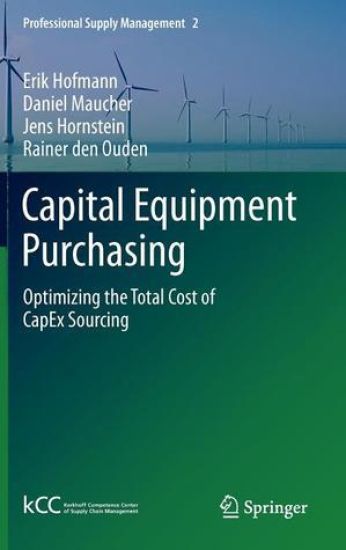
Capital Equipment Purchasing
Erik Hofmann; Daniel Maucher; Jens Hornstein; Rainer den Ouden
Springer-Verlag Berlin and Heidelberg GmbH Co. K
2012
sidottu
Compared to other main groups of procurement, capital equipment features numerous characteristics that significantly impact the purchasing process. The process of purchasing capital equipment therefore requires specific attention and above all a systematic approach. To overcome these challenges, a holistic process model and specific tools and methods for capital equipment purchasing are presented. The following topics regarding capital equipment purchasing are presented:• Compliance management• Savings measurement• Life cycle costs and total cost of ownership• Determining the optimum useful life and replacement time• Real options approach for the evaluation of investment alternatives• Performance contractingReaders are provided with a comprehensive and structured process model for capital equipment purchasing. The comprehensive set of methods including various instruments and methods presented in this book support the establishment of a professional capital equipment purchasing process.
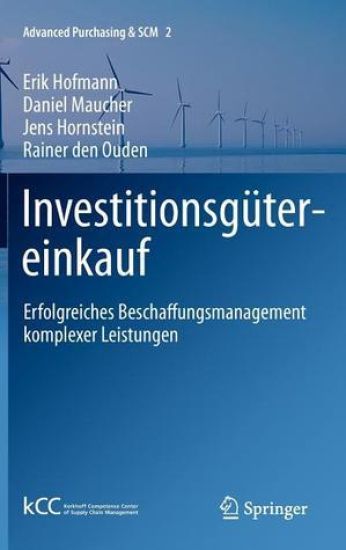
Investitionsgütereinkauf
Erik Hofmann; Daniel Maucher; Jens Hornstein; Rainer den Ouden
Springer-Verlag Berlin and Heidelberg GmbH Co. KG
2011
sidottu
Investitionsgüter weisen gegenüber anderen Beschaffungshauptgruppen zahlreiche Besonderheiten auf, die sich maßgeblich auf den Einkaufsprozess auswirken. Der Prozess zur Beschaffung von Investitionsgütern bedarf daher spezifischer Aufmerksamkeit und vor allem einer systematischen Vorgehensweise. Zur Bewältigung dieser Herausforderungen werden ein ganzheitliches Prozessmodell sowie spezielle Instrumente und Methoden zum Investitionsgütereinkauf vorgestellt. Dabei werden folgende Themen zum Investitionsgütereinkauf präsentiert: Compliance Management, Savings-Messung, Life Cycle Costing und Total Cost of Ownership, Ermittlung der optimalen Nutzungsdauer und des optimalen Ersatzzeitpunktes, Realoptionen zur Bewertung von Investitionsalternativen, Performance Contracting. Den Lesern wird ein ganzheitliches und strukturiertes Prozessmodell für den Investitionsgütereinkauf zur Verfügung gestellt. Das umfassende Methodenset mit seinen zahlreichen Instrumenten und Methoden unterstützt beim Aufbau eines professionellen Investitionsgütereinkaufs.
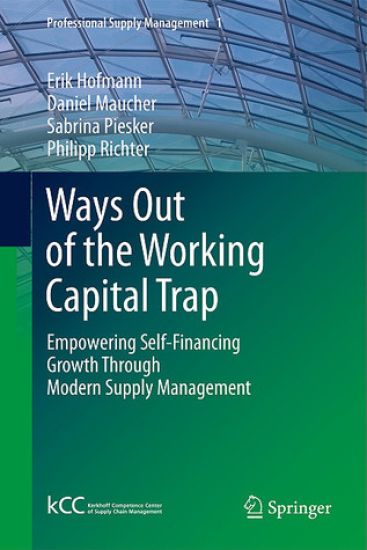
Ways Out of the Working Capital Trap
Erik Hofmann; Daniel Maucher; Sabrina Piesker; Philipp Richter
Springer-Verlag Berlin and Heidelberg GmbH Co. K
2011
sidottu
Especially in times of an economic boom following a crisis, companies have to deal with the phenomenon of the "working capital trap," which signifies a company's increasing need for financial liquidity in times of hindered access to debt capital, caused by the increasingly restrictive credit approval processes of financial institutions. As a consequence of cost savings, this situation is often reinforced by a low level of inventory. This book takes up the problem and shows ways of escaping the "trap" by identifying and strengthening in-house financing potential. First, different operating ratios will be introduced. These refer to the amount of capital committed to the flow of goods and to the amount of in-house financing possible. Subsequently, methods for consolidating in-house financing that are affected by procurement processes will be presented from the company's and the supply chain's perspective. From a company's perspective, the methods for consolidating the amount of in-house financing over the following topics: The Management of Payment Terms, Inventory Management and Product Group and Supplier Management From the supply chain's perspective, the following methods for extending the possible amount of in-house financing will be discussed: Finance-Oriented Supply Chain Sourcing, Supply Chain-Oriented Supplier Financing, Collaborative Cash-to-Cash Management, Collaborative Cash Pooling and Netting, Supply Chain Financing Platforms. The conceptual models will be clarified using a practical example from the automobile industry. Finally, the "Procurement Value Added" (PVA©) approach will be presented, a concept that measures the contribution of procurement to the company's success.