Kirjojen hintavertailu – 12 876 421 kirjaa ja 26 kauppaa

Kirjailija

Erik Hollnagel

Kirjat ja teokset yhdessä paikassa: 24 kirjaa, julkaisuja vuosilta 2004–2026, suosituimpiin kuuluu Decremental and Incremental Safety Cultures. Vertaile teosten hintoja ja tarkista saatavuus suomalaisista kirjakaupoista.

24 kirjaa

Kirjojen julkaisuvuodet: 2004–2026.

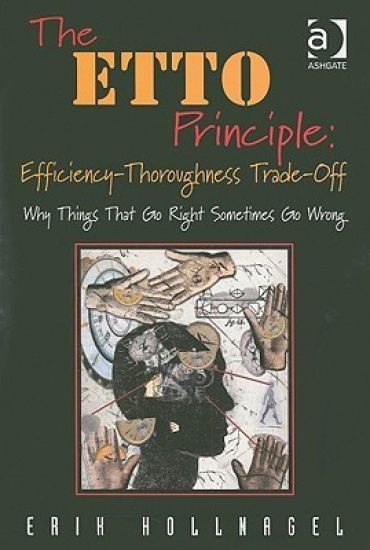
The ETTO Principle: Efficiency-Thoroughness Trade-Off

The ETTO Principle: Efficiency-Thoroughness Trade-Off

Erik Hollnagel

Ashgate Publishing Limited
2009
nidottu
Accident investigation and risk assessment have for decades focused on the human factor, particularly 'human error'. Countless books and papers have been written about how to identify, classify, eliminate, prevent and compensate for it. This bias towards the study of performance failures, leads to a neglect of normal or 'error-free' performance and the assumption that as failures and successes have different origins there is little to be gained from studying them together. Erik Hollnagel believes this assumption is false and that safety cannot be attained only by eliminating risks and failures. The ETTO Principle looks at the common trait of people at work to adjust what they do to match the conditions - to what has happened, to what happens, and to what may happen. It proposes that this efficiency-thoroughness trade-off (ETTO) - usually sacrificing thoroughness for efficiency - is normal. While in some cases the adjustments may lead to adverse outcomes, these are due to the very same processes that produce successes, rather than to errors and malfunctions. The ETTO Principle removes the need for specialised theories and models of failure and 'human error' and offers a viable basis for effective and just approaches to both reactive and proactive safety management.
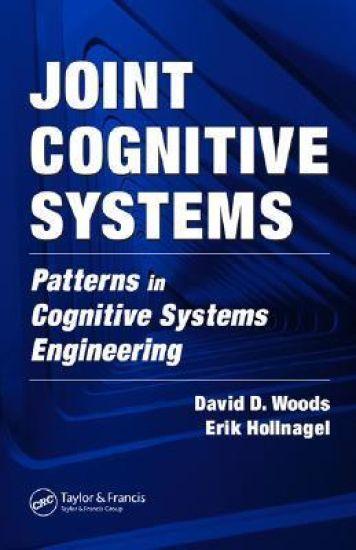
Joint Cognitive Systems

Joint Cognitive Systems

David D. Woods; Erik Hollnagel

CRC Press Inc
2006
sidottu
Our fascination with new technologies is based on the assumption that more powerful automation will overcome human limitations and make our systems 'faster, better, cheaper,' resulting in simple, easy tasks for people. But how does new technology and more powerful automation change our work? Research in Cognitive Systems Engineering (CSE) looks at the intersection of people, technology, and work. What it has found is not stories of simplification through more automation, but stories of complexity and adaptation. When work changed through new technology, practitioners had to cope with new complexities and tighter constraints. They adapted their strategies and the artifacts to work around difficulties and accomplish their goals as responsible agents. The surprise was that new powers had transformed work, creating new roles, new decisions, and new vulnerabilities. Ironically, more autonomous machines have created the requirement for more sophisticated forms of coordination across people, and across people and machines, to adapt to new demands and pressures. This book synthesizes these emergent Patterns though stories about coordination and mis-coordination, resilience and brittleness, affordance and clumsiness in a variety of settings, from a hospital intensive care unit, to a nuclear power control room, to a space shuttle control center. The stories reveal how new demands make work difficult, how people at work adapt but get trapped by complexity, and how people at a distance from work oversimplify their perceptions of the complexities, squeezing practitioners. The authors explore how CSE observes at the intersection of people, technology, and work, how CSE abstracts patterns behind the surface details and wide variations, and how CSE discovers promising new directions to help people cope with complexities. The stories of CSE show that one key to well-adapted work is the ability to be prepared to be surprised. Are you ready?
Joint Cognitive Systems

Joint Cognitive Systems

Erik Hollnagel; David D. Woods

CRC Press Inc
2005
sidottu
Nothing has been more prolific over the past century than human/machine interaction. Automobiles, telephones, computers, manufacturing machines, robots, office equipment, machines large and small; all affect the very essence of our daily lives. However, this interaction has not always been efficient or easy and has at times turned fairly hazardous. Cognitive Systems Engineering (CSE) seeks to improve this situation by the careful study of human/machine interaction as the meaningful behavior of a unified system. Written by pioneers in the development of CSE, Joint Cognitive Systems: Foundations of Cognitive Systems Engineering offers a principled approach to studying human work with complex technology. The authors use a top-down, functional approach and emphasize a proactive (coping) perspective on work that overcomes the limitations of the structural human information processing view. They describe a conceptual framework for analysis with concrete theories and methods for joint system modeling that can be applied across the spectrum of single human/machine systems, social/technical systems, and whole organizations. The book explores both current and potential applications of CSE illustrated by examples. Understanding the complexities and functions of the human/machine interaction is critical to designing safe, highly functional, and efficient technological systems. This is a critical reference for students, designers, and engineers in a wide variety of disciplines.
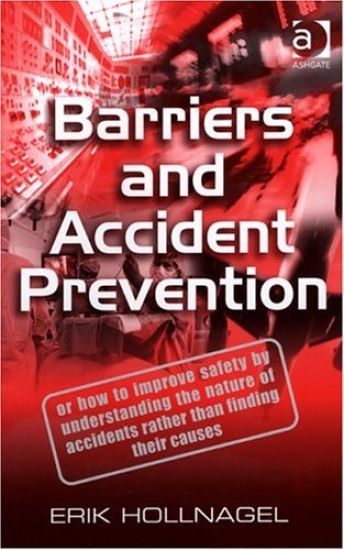
Barriers and Accident Prevention

Barriers and Accident Prevention

Erik Hollnagel

Ashgate Publishing Limited
2004
sidottu
Accidents are preventable, but only if they are correctly described and understood. Since the mid-1980s accidents have come to be seen as the consequence of complex interactions rather than simple threads of causes and effects. Yet progress in accident models has not been matched by advances in methods. The author's work in several fields (aviation, power production, traffic safety, healthcare) made it clear that there is a practical need for constructive methods and this book presents the experiences and the state-of-the-art. The focus of the book is on accident prevention rather than accident analysis and unlike other books, has a proactive rather than reactive approach. The emphasis on design rather than analysis is a trend also found in other fields. Features of the book include: -A classification of barrier functions and barrier systems that will enable the reader to appreciate the diversity of barriers and to make informed decisions for system changes. -A perspective on how the understanding of accidents (the accident model) largely determines how the analysis is done and what can be achieved. The book critically assesses three types of accident models (sequential, epidemiological, systemic) and compares their strengths and weaknesses. -A specific accident model that captures the full complexity of systemic accidents. One consequence is that accidents can be prevented through a combination of performance monitoring and barrier functions, rather than through the elimination or encapsulation of causes. -A clearly described methodology for barrier analysis and accident prevention. Written in an accessible style, Barriers and Accident Prevention is designed to provide a stimulating and practical guide for industry professionals familiar with the general ideas of accidents and human error. The book is directed at those involved with accident analysis and system safety, such as managers of safety departments, risk and safety consultants, human factors professionals, and accident investigators. It is applicable to all major application areas such as aviation, ground transportation, maritime, process industries, healthcare and hospitals, communication systems, and service providers.