Kirjojen hintavertailu – 12 903 735 kirjaa ja 27 kauppaa

Kirjailija

Erika Balsom

Kirjat ja teokset yhdessä paikassa: 7 kirjaa, julkaisuja vuosilta 2013–2026, suosituimpiin kuuluu The Edges of Cinema. Vertaile teosten hintoja ja tarkista saatavuus suomalaisista kirjakaupoista.

7 kirjaa

Kirjojen julkaisuvuodet: 2013–2026.

The Edges of Cinema

The Edges of Cinema

Erika Balsom

Columbia University Press
2026
pokkari
Recent years have seen a panic over the future of mainstream film. Yet film culture is at its most vital on the margins, where the moving image meets visual art, documentary brushes up against experimentalism, and curators are reshaping established histories. Bringing together a decade of criticism, The Edges of Cinema roams across an array of styles to take account of how some of the most important contemporary filmmakers are engaging the world. Erika Balsom—a leading scholar and critic—explores subjects ranging from computer-generated animation to the effects of digitization, and from the status of observational cinema to the longest of long takes. She takes a bold stand in debates on the “female gaze” and examines how filmmakers address issues concerning climate change, race, gender, violence, and technology. Balsom considers works at the intersection of documentary, experimental film, and auteur cinema by directors such as Peggy Ahwesh, James Benning, Aria Dean, Mati Diop, Harun Farocki, Albert Serra, Brett Story, Tsai Ming-liang, and Wang Bing. Challenging the caricature of experimental film as “difficult,” this wide-ranging and engaging book makes a case for the politics, provocations, and pleasures of a less ordinary cinema.
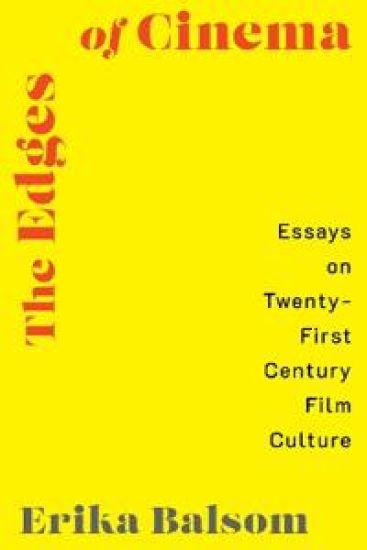
The Edges of Cinema

The Edges of Cinema

Erika Balsom

Columbia University Press
2026
sidottu
Recent years have seen a panic over the future of mainstream film. Yet film culture is at its most vital on the margins, where the moving image meets visual art, documentary brushes up against experimentalism, and curators are reshaping established histories. Bringing together a decade of criticism, The Edges of Cinema roams across an array of styles to take account of how some of the most important contemporary filmmakers are engaging the world. Erika Balsom—a leading scholar and critic—explores subjects ranging from computer-generated animation to the effects of digitization, and from the status of observational cinema to the longest of long takes. She takes a bold stand in debates on the “female gaze” and examines how filmmakers address issues concerning climate change, race, gender, violence, and technology. Balsom considers works at the intersection of documentary, experimental film, and auteur cinema by directors such as Peggy Ahwesh, James Benning, Aria Dean, Mati Diop, Harun Farocki, Albert Serra, Brett Story, Tsai Ming-liang, and Wang Bing. Challenging the caricature of experimental film as “difficult,” this wide-ranging and engaging book makes a case for the politics, provocations, and pleasures of a less ordinary cinema.

Last Movies

Last Movies

Stanley Schtinter; Erika Balsom

Tenement Press
2023
pokkari
Stanley Schtinter's debut collection, Last Movies, is an alternative account of the first century of cinema according to the films watched by a constellation of its most notable stars shortly before (or at the time of) their deaths. An extensive and exhaustive research project-a holy book of celluloid spiritualism and old canards-Schtinter questions and reconfigures common knowledge to recast the historic column inches of cinema's mythological hearsay into a thousand-yard stare. Via a series of interlinked vignettes, here we've a book in which Manhattan Melodrama, directed by W. S. Van Dyke and George Cukor, is seen by American gangster John Dillinger, only for him to be gunned down by federal agents upon leaving the cinema. In which George Cukor watches The Graduate, and dies thereafter. In which Bette Davis-given her break by Cukor-watches herself in Waterloo Bridge (the 1940 remake Cukor had been meant to direct), before travelling to France and failing to make it back to Hollywood. In which Rainer Werner Fassbinder watches Bette Davis in Michael Curtiz's 20,000 Years in Sing Sing, and suffers the stroke that kills him. In which John F. Kennedy watches From Russia with Love at a private 'casa-blanca' screening prior to the presidential motorcade reaching Dealey Plaza; in which Burt Topper's War is Hell exists only in a fifteen-minute cut, considering this is as much as Lee Harvey Oswald would have seen at the Texas Theatre in the wake of JFK's killing. Including a foreword from Erika Balsom-an 'intermission' by Bill Drummond-and an afterword by Nicole Brenez, Last Movies is a love letter to those that've lived (and died) amidst the patina and glow of cinema's counterpoint to life. Like Hermione Lee 'at the movies, ' and redolent of the works of Kenneth Anger, Last Movies antagonises the possibility of survival in an age of extremity and extinction only to underline the degree of accident involved in a culture's relationship with posterity.
Feminist Worldmaking and the Moving Image

Feminist Worldmaking and the Moving Image

Erika Balsom; Hila Peleg

MIT PRESS LTD
2022
nidottu
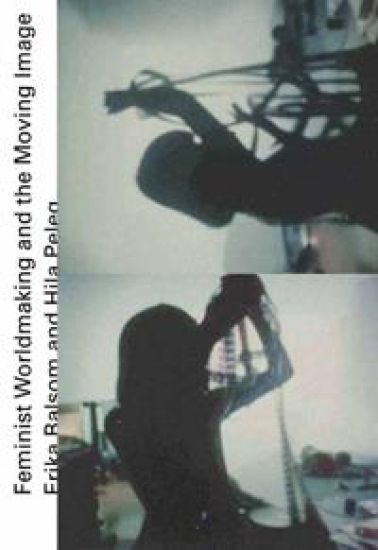
Intersectional, intergenerational, and international perspectives on nonfiction filmmaking by women, generously illustrated, with film stills and other images. This book offers intersectional, intergenerational, and international perspectives on nonfiction film- and videomaking by and about women, examining practices that range from activist documentaries to avant-garde experiments. Concentrating primarily on the period between the 1970s and 1990s, the contributions revisit major figures, contexts, and debates across a polycentric, global geography. They explore how the moving image has been a crucial terrain of feminist struggle—a way of not only picturing the world but remaking it. The contributors consider key decolonial filmmakers, including Trinh T. Minh-ha and Sarah Maldoror; explore collectively produced films with ties to women’s liberation movements in different countries; and investigate the cinematic expressions of tensions and alliances between feminism and anti-imperialist struggles. They grapple with the need for a broader more inclusive definition of the term “feminism”; meditate on the figure of the grandmother; reflect on realist aesthetics; and ask what a feminist film historiography might look like. The book, generously illustrated with film stills and other images, many in color, offers ten original texts, two conversations, and eight short essays composed in response to historical texts written by filmmakers. The historical texts, half of which are published in English for the first time, appear alongside the essays. ContributorsHelena Amiradzibi, Madeleine Bernstorff, Teresa Castro, Counter Encounters (Laura Huertas Millán, Onyeka Igwe, Rachael Rakes), Ayanna Dozier, Forough Farrokhzad, Safi Faye, Devika Girish, Elena Gorfinkel, Haneda Sumiko, Shai Heredia, Juliet Jacques, Sarah Keller, Nzingha Kendall, Julia Lesage, Beatrice Loayza, Janaína Oliveira, Lakshmi Padmanabhan, Yasmina Price, Elizabeth Ramírez-Soto, Pooja Rangan, Lis Rhodes, Sara Saljoughi, Rasha Salti, Isabel Seguí, Chick Strand, Monika Talarczyk, Trinh T. Minh-ha, Françoise Vergès, Claudia von Alemann, Mitsuyo Wada-Marciano, Shilyh Warren, Giovanna Zapperi
After Uniqueness

After Uniqueness

Erika Balsom

Columbia University Press
2017
sidottu
Images have never been as freely circulated as they are today. They have also never been so tightly controlled. As with the birth of photography, digital reproduction has created new possibilities for the duplication and consumption of images, offering greater dissemination and access. But digital reproduction has also stoked new anxieties concerning authenticity and ownership. From this contemporary vantage point, After Uniqueness traces the ambivalence of reproducibility through the intersecting histories of experimental cinema and the moving image in art, examining how artists, filmmakers, and theorists have found in the copy a utopian promise or a dangerous inauthenticity-or both at once. From the sale of film in limited editions on the art market to the downloading of bootlegs, from the singularity of live cinema to video art broadcast on television, Erika Balsom investigates how the reproducibility of the moving image has been embraced, rejected, and negotiated by major figures including Stan Brakhage, Leo Castelli, and Gregory Markopoulos. Through a comparative analysis of selected distribution models and key case studies, she demonstrates how the question of image circulation is central to the history of film and video art. After Uniqueness shows that distribution channels are more than neutral pathways; they determine how we encounter, interpret, and write the history of the moving image as an art form.
After Uniqueness

After Uniqueness

Erika Balsom

Columbia University Press
2017
pokkari
Images have never been as freely circulated as they are today. They have also never been so tightly controlled. As with the birth of photography, digital reproduction has created new possibilities for the duplication and consumption of images, offering greater dissemination and access. But digital reproduction has also stoked new anxieties concerning authenticity and ownership. From this contemporary vantage point, After Uniqueness traces the ambivalence of reproducibility through the intersecting histories of experimental cinema and the moving image in art, examining how artists, filmmakers, and theorists have found in the copy a utopian promise or a dangerous inauthenticity-or both at once. From the sale of film in limited editions on the art market to the downloading of bootlegs, from the singularity of live cinema to video art broadcast on television, Erika Balsom investigates how the reproducibility of the moving image has been embraced, rejected, and negotiated by major figures including Stan Brakhage, Leo Castelli, and Gregory Markopoulos. Through a comparative analysis of selected distribution models and key case studies, she demonstrates how the question of image circulation is central to the history of film and video art. After Uniqueness shows that distribution channels are more than neutral pathways; they determine how we encounter, interpret, and write the history of the moving image as an art form.
Exhibiting Cinema in Contemporary Art

Exhibiting Cinema in Contemporary Art

Erika Balsom

Amsterdam University Press
2013
nidottu
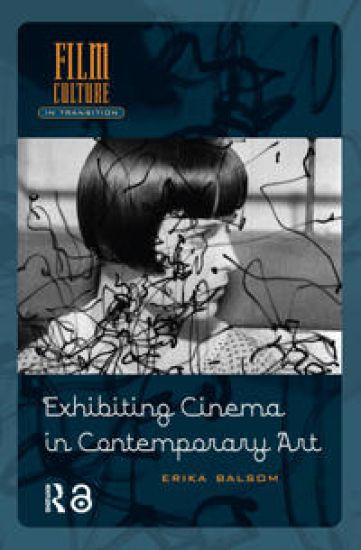
Whether it involves remaking an old Hollywood movie, projecting a quiet 16mm film, or constructing a bombastic multi-screen environment, cinema now takes place not just in the movie theatre and the home, but also in the art gallery and the museum. The author of this engaging study takes stock of this development, offering an in-depth inquiry into its genesis, its defining features, and the ramifications it has for art and cinema alike. Through the lens of contemporary art history, she examines cinema studies’ great disciplinary obsession – namely, what cinema was, is, and will become in a digital future.