Kirjojen hintavertailu – 12 859 829 kirjaa ja 27 kauppaa

Kirjailija

Erin Hannah

Kirjat ja teokset yhdessä paikassa: 3 kirjaa, julkaisuja vuosilta 2016–2024, suosituimpiin kuuluu NGOs and Global Trade. Vertaile teosten hintoja ja tarkista saatavuus suomalaisista kirjakaupoista.

3 kirjaa

Kirjojen julkaisuvuodet: 2016–2024.

Global Political Economy

Global Political Economy

Erin Hannah; John Ravenhill

Oxford University Press
2024
nidottu

Halvin toimitettuna 59,40 €

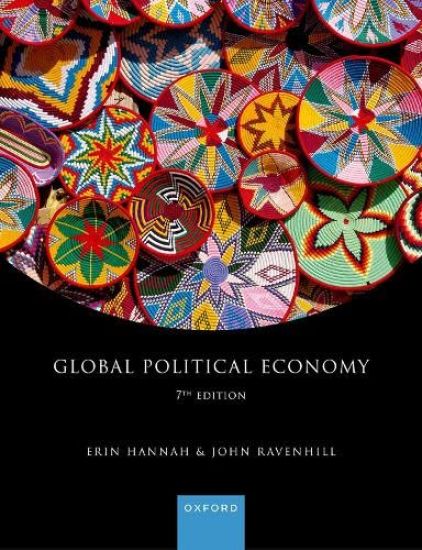
What constitutes Global Political Economy? In whose interest is GPE constructed, and by whom? How can injustices in GPE best be redressed? These are some of the key questions addressed in the 7th edition of this highly regarded highly regarded textbook. As an ever-evolving field subject to constant changes and developments, the new edition provides a comprehensive introduction to the subject written by leading experts in the field. Edited by Dr Erin Hannah,the 7th edition surveys major contemporary issues and debates in GPE while being attuned to the silences, marginalizations, and exclusions that predominate the field. By integrating a wide range of theoretical approaches, rich empirical material, non-western viewpoints and diversity of contributors, the 7th edition provides enhanced coverage of the central axes of inequality in GPE and centers topics such as colonialism, race, gender, North-South divides and everyday life.
NGOs and Global Trade

NGOs and Global Trade

Erin Hannah

Routledge
2018
nidottu
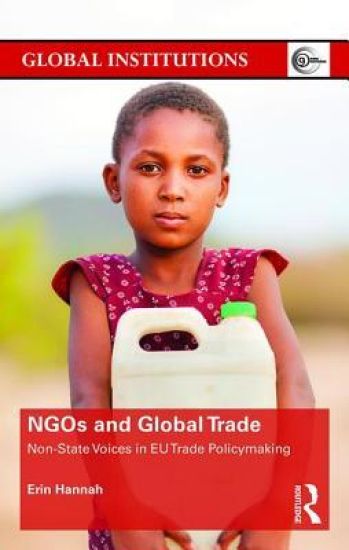
In a deeply iniquitous world, where the gains from trade are distributed unevenly and where trade rules often militate against progressive social values, human health, and sustainable development, NGOs are widely touted as our best hope for redressing these conditions. As a critical voice of the poor and marginalized, many are engaged in a global struggle for democratic norms and social justice. Yet the potential for NGOs to bring about meaningful change is limited. This book examines whether improvements in participatory opportunities for progressive NGOs results in substantive and normative policy change in one of the major trading powers, the European Union. Hannah advances a constructivist account of the role of NGOs in the EU’s trade policymaking process. She argues that NGOs have been instrumental in providing education, raising awareness, and giving a voice to broader societal concerns about proposed trade deals, both when they take advantage of formal participatory opportunities and when they protest from the streets and in the media. However, the book also highlights how NGO inputs are mediated by the social structure of global trade governance. Epistemes—the background knowledge, ideological and normative beliefs, and shared assumptions about how the world works—determine who has a voice in global trade governance. Showing how NGOs succeed only when their advocacy conforms broadly to the dominant episteme, this book will be of value to scholars and students with an interest in NGOs and international trade negotiations. It will also be of interest to policymakers, national trade negotiators, government departments, and the trade policy community.
NGOs and Global Trade

NGOs and Global Trade

Erin Hannah

Routledge
2016
sidottu
In a deeply iniquitous world, where the gains from trade are distributed unevenly and where trade rules often militate against progressive social values, human health, and sustainable development, NGOs are widely touted as our best hope for redressing these conditions. As a critical voice of the poor and marginalized, many are engaged in a global struggle for democratic norms and social justice. Yet the potential for NGOs to bring about meaningful change is limited. This book examines whether improvements in participatory opportunities for progressive NGOs results in substantive and normative policy change in one of the major trading powers, the European Union. Hannah advances a constructivist account of the role of NGOs in the EU’s trade policymaking process. She argues that NGOs have been instrumental in providing education, raising awareness, and giving a voice to broader societal concerns about proposed trade deals, both when they take advantage of formal participatory opportunities and when they protest from the streets and in the media. However, the book also highlights how NGO inputs are mediated by the social structure of global trade governance. Epistemes—the background knowledge, ideological and normative beliefs, and shared assumptions about how the world works—determine who has a voice in global trade governance. Showing how NGOs succeed only when their advocacy conforms broadly to the dominant episteme, this book will be of value to scholars and students with an interest in NGOs and international trade negotiations. It will also be of interest to policymakers, national trade negotiators, government departments, and the trade policy community.