Kirjojen hintavertailu – 12 903 735 kirjaa ja 27 kauppaa

Kirjailija

Erin Turner

Kirjat ja teokset yhdessä paikassa: 5 kirjaa, julkaisuja vuosilta 2012–2026, suosituimpiin kuuluu Empowering Science and Mathematics Education in Urban Schools. Vertaile teosten hintoja ja tarkista saatavuus suomalaisista kirjakaupoista.

5 kirjaa

Kirjojen julkaisuvuodet: 2012–2026.

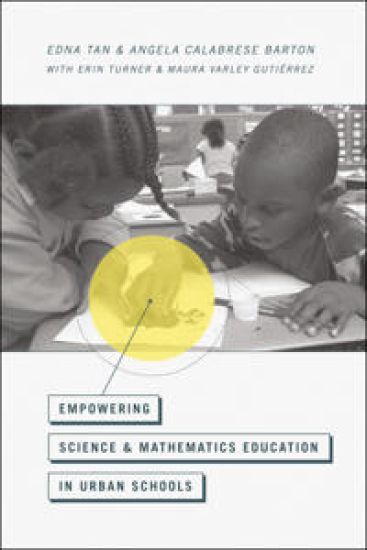
Empowering Science and Mathematics Education in Urban Schools

Empowering Science and Mathematics Education in Urban Schools

Edna Tan; Angela Calabrese Barton; Erin Turner; Maura Varley Gutierrez

University of Chicago Press
2012
nidottu
Math and science hold powerful places in contemporary society, setting the foundations for entry into some of the most robust and highest-paying industries. However, effective math and science education is not equally available to all students, with some of the poorest students - those who would benefit most - going egregiously underserved. This ongoing problem with education highlights one of the core causes of the widening class gap. While this educational inequality can be attributed to a number of economic and political causes, in "Empowering Science and Mathematics Education in Urban Communities", Edna Tan and Angela Calabrese Barton demonstrate that it is augmented by a consistent failure to integrate student history, culture, and social needs into the core curriculum. They argue that teachers and schools should create hybrid third spaces - neither classroom nor home - in which underserved students can merge their personal worlds with those of math and science. A host of examples buttress this argument: schools where these spaces have been instituted now provide students not only an immediate motivation to engage the subjects most critical to their future livelihoods but also the broader math and science literacy necessary for robust societal engagement. A unique look at a frustratingly understudied subject, "Empowering Science and Mathematics Education" pushes beyond the idea of teaching for social justice and into larger questions of how and why students participate in math and science.
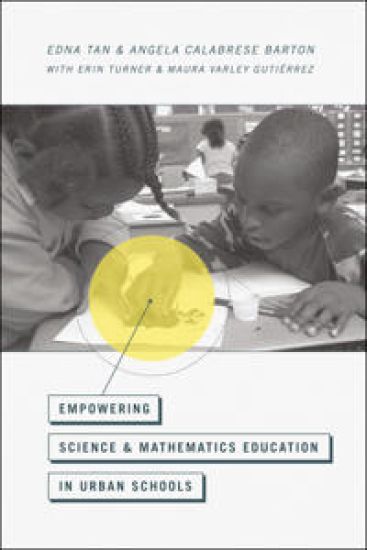
Empowering Science and Mathematics Education in Urban Schools

Empowering Science and Mathematics Education in Urban Schools

Edna Tan; Angela Calabrese Barton; Erin Turner; Maura Varley Gutierrez

University of Chicago Press
2012
sidottu
Math and science hold powerful places in contemporary society, setting the foundations for entry into some of the most robust and highest-paying industries. However, effective math and science education is not equally available to all students, with some of the poorest students - those who would benefit most - going egregiously underserved. This ongoing problem with education highlights one of the core causes of the widening class gap. While this educational inequality can be attributed to a number of economic and political causes, in "Empowering Science and Mathematics Education in Urban Communities", Edna Tan and Angela Calabrese Barton demonstrate that it is augmented by a consistent failure to integrate student history, culture, and social needs into the core curriculum. They argue that teachers and schools should create hybrid third spaces - neither classroom nor home - in which underserved students can merge their personal worlds with those of math and science. A host of examples buttress this argument: schools where these spaces have been instituted now provide students not only an immediate motivation to engage the subjects most critical to their future livelihoods but also the broader math and science literacy necessary for robust societal engagement. A unique look at a frustratingly under-studied subject, "Empowering Science and Mathematics Education" pushes beyond the idea of teaching for social justice and into larger questions of how and why students participate in math and science.

Recovering from a First Episode of Psychosis

Recovering from a First Episode of Psychosis

Chris Jackson; Eleanor Baggott; Mark Bernard; Ruth Clutterbuck; Diane Ryles; Erin Turner

Routledge
2019
nidottu
Despite years of research, debate and changes in mental health policy, there is still a lack of consensus as to what recovery from psychosis actually means, how it should be measured and how it may ultimately be achieved. In Recovering from a First Episode of Psychosis: An Integrated Approach to Early Intervention, it is argued that recovery from a first episode of psychosis (FEP) is comprised of three core elements: symptomatic, social and personal. Moreover, all three types of recovery need to be the target of early intervention for psychosis programmes (EIP) which provide evidence-based, integrated, bio-psychosocial interventions delivered in the context of a value base offering hope, empowerment and a youth-focused approach. Over the 12 chapters in the book, the authors, all experienced clinicians and researchers from multi-professional backgrounds, demonstrate that long-term recovery needs to replace short term remission as the key target of early psychosis services and that, to achieve this, we need a change in the way we deliver EIP: one that takes account of the different stages of psychosis and the ‘bespoke’ targeting of integrated medical, psychological and social treatments during the ‘critical period’. Illustrated with a wealth of clinical examples, this book will be of great interest to clinical psychologists, psychiatrists, psychiatric nurses and other associated mental health professionals.
Recovering from a First Episode of Psychosis

Recovering from a First Episode of Psychosis

Chris Jackson; Eleanor Baggott; Mark Bernard; Ruth Clutterbuck; Diane Ryles; Erin Turner

Routledge
2019
sidottu
Despite years of research, debate and changes in mental health policy, there is still a lack of consensus as to what recovery from psychosis actually means, how it should be measured and how it may ultimately be achieved. In Recovering from a First Episode of Psychosis: An Integrated Approach to Early Intervention, it is argued that recovery from a first episode of psychosis (FEP) is comprised of three core elements: symptomatic, social and personal. Moreover, all three types of recovery need to be the target of early intervention for psychosis programmes (EIP) which provide evidence-based, integrated, bio-psychosocial interventions delivered in the context of a value base offering hope, empowerment and a youth-focused approach. Over the 12 chapters in the book, the authors, all experienced clinicians and researchers from multi-professional backgrounds, demonstrate that long-term recovery needs to replace short term remission as the key target of early psychosis services and that, to achieve this, we need a change in the way we deliver EIP: one that takes account of the different stages of psychosis and the ‘bespoke’ targeting of integrated medical, psychological and social treatments during the ‘critical period’. Illustrated with a wealth of clinical examples, this book will be of great interest to clinical psychologists, psychiatrists, psychiatric nurses and other associated mental health professionals.