Kirjojen hintavertailu – 12 859 818 kirjaa ja 27 kauppaa

Kirjailija

Ernest Bramah

Kirjat ja teokset yhdessä paikassa: 202 kirjaa, julkaisuja vuosilta 2001–2026, suosituimpiin kuuluu Max Carrados. Vertaile teosten hintoja ja tarkista saatavuus suomalaisista kirjakaupoista.

202 kirjaa

Kirjojen julkaisuvuodet: 2001–2026.

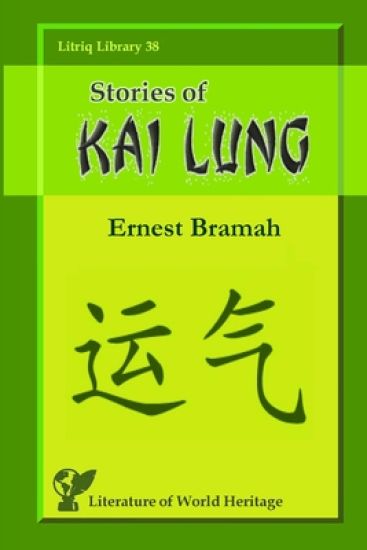
Stories of Kai Lung

Stories of Kai Lung

Ernest Bramah

Lulu.com
2022
pokkari
An itinerant impoverished storyteller travels through ancient China, encountering a series of hazards, and overcoming them through relating his tales. Filled with droll humor and charm, the two volumes collected here (The Wallet of Kai Lung and Kai Lung's Golden Hours) are the first of several such collections by an English author highly-regarded by such contemporaries as H. G. Wells and Jerome K. Jerome.
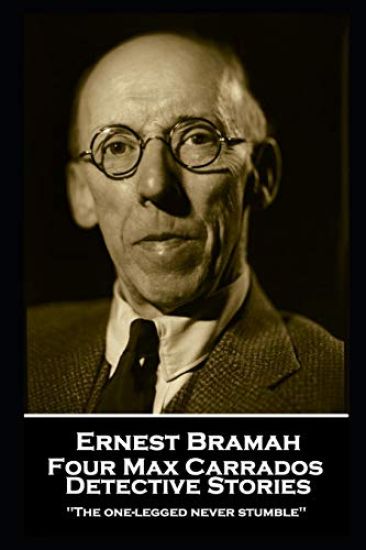
Ernest Bramah - Four Max Carrados Detective Stories: "The one-legged never stumble''
Ernest Bramah was born on 20th March 1868. He was an intensely private man and very little about his life was ever released. Bramah dropped out of Manchester Grammar school at sixteen, in almost all his subjects he was close to the bottom of his class, and took a job at a farm. His father then invested substantial sums in setting him up with his own farm but Bramah's long term interests were elsewhere. In his spare time he would write vignettes on local subjects and send them to The Birmingham News for publication. In a now rather dramatic change of career he obtained the position of secretary to Jerome K Jerome and then to editing one of Jerome's magazines. Thereafter Bramah edited journals for a publishing firm that only ceased with its bankruptcy. He obtained success in his own right with the creation of the storyteller Kai Lung with humourous tales set in China, usually laced with fantasy elements. There seems to have been a certain vogue for stories with an oriental element at this time which Bramah was happy to take advantage of. His career blossomed across many genres; in humour, science-fiction, and supernatural he was ranked with the very best of the day. Even Orwell cited his work as an influence and as a predictor for the rise of Fascism and his own novel, 1984. At a time when the English Channel had yet to be crossed by an aeroplane, Bramah foresaw aerial express trains traveling at 10,000 feet, a nationwide wireless-telegraphy network, fax machines and cypher writing typewriters similar to the German Enigma machine. In 1914, Bramah created the blind detective Max Carrados. Despite the obvious obstacle to his deductive powers he was a literary and commercial success. Ernest Bramah died in Weston-Super-Mare on 27th June 1942 at the age of 74.
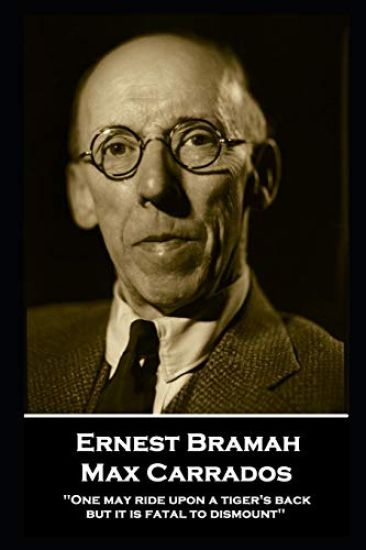
Ernest Bramah - Max Carrados: "One may ride upon a tiger's back but it is fatal to dismount''
Ernest Bramah was born on 20th March 1868. He was an intensely private man and very little about his life was ever released. Bramah dropped out of Manchester Grammar school at sixteen, in almost all his subjects he was close to the bottom of his class, and took a job at a farm. His father then invested substantial sums in setting him up with his own farm but Bramah's long term interests were elsewhere. In his spare time he would write vignettes on local subjects and send them to The Birmingham News for publication. In a now rather dramatic change of career he obtained the position of secretary to Jerome K Jerome and then to editing one of Jerome's magazines. Thereafter Bramah edited journals for a publishing firm that only ceased with its bankruptcy. He obtained success in his own right with the creation of the storyteller Kai Lung with humourous tales set in China, usually laced with fantasy elements. There seems to have been a certain vogue for stories with an oriental element at this time which Bramah was happy to take advantage of. His career blossomed across many genres; in humour, science-fiction, and supernatural he was ranked with the very best of the day. Even Orwell cited his work as an influence and as a predictor for the rise of Fascism and his own novel, 1984. At a time when the English Channel had yet to be crossed by an aeroplane, Bramah foresaw aerial express trains traveling at 10,000 feet, a nationwide wireless-telegraphy network, fax machines and cypher writing typewriters similar to the German Enigma machine. In 1914, Bramah created the blind detective Max Carrados. Despite the obvious obstacle to his deductive powers he was a literary and commercial success. Ernest Bramah died in Weston-Super-Mare on 27th June 1942 at the age of 74.
Ernest Bramah - The Secret of the League: "The wise duck keeps his mouth shut when he smells frogs''
Ernest Bramah was born on 20th March 1868. He was an intensely private man and very little about his life was ever released. Bramah dropped out of Manchester Grammar school at sixteen, in almost all his subjects he was close to the bottom of his class, and took a job at a farm. His father then invested substantial sums in setting him up with his own farm but Bramah's long term interests were elsewhere. In his spare time he would write vignettes on local subjects and send them to The Birmingham News for publication. In a now rather dramatic change of career he obtained the position of secretary to Jerome K Jerome and then to editing one of Jerome's magazines. Thereafter Bramah edited journals for a publishing firm that only ceased with its bankruptcy. He obtained success in his own right with the creation of the storyteller Kai Lung with humourous tales set in China, usually laced with fantasy elements. There seems to have been a certain vogue for stories with an oriental element at this time which Bramah was happy to take advantage of. His career blossomed across many genres; in humour, science-fiction, and supernatural he was ranked with the very best of the day. Even Orwell cited his work as an influence and as a predictor for the rise of Fascism and his own novel, 1984. At a time when the English Channel had yet to be crossed by an aeroplane, Bramah foresaw aerial express trains traveling at 10,000 feet, a nationwide wireless-telegraphy network, fax machines and cypher writing typewriters similar to the German Enigma machine. In 1914, Bramah created the blind detective Max Carrados. Despite the obvious obstacle to his deductive powers he was a literary and commercial success. Ernest Bramah died in Weston-Super-Mare on 27th June 1942 at the age of 74.
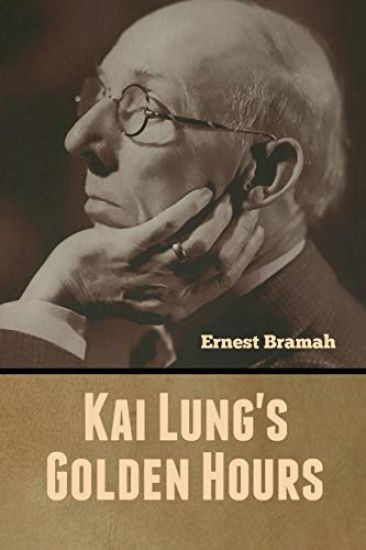
Kai Lung's Golden Hours

Kai Lung's Golden Hours

Ernest Bramah

Bibliotech Press
2020
pokkari
Kai Lung's Golden Hours is a fantasy novel by English writer Ernest Bramah. It was first published in hardcover in London by Grant Richards Ltd. in October, 1922, and there have been numerous editions since. The first edition included a preface by Hilaire Belloc, which has also been a feature of every edition since. It was reissued by Ballantine Books as the forty-fifth volume of the Ballantine Adult Fantasy series in April, 1972. The Ballantine edition includes an introduction by Lin Carter. As with other Kai Lung novels, the main plot serves primarily as a vehicle for the presentation of the gem-like, aphorism-laden stories told by the protagonist Kai Lung, an itinerant story-teller of ancient China. In Kai Lung's Golden Hours he is brought before the court of the Mandarin Shan Tien on charges of treason by the Mandarin's confidential agent Ming-shu. In a unique defense, Kai Lung recites his beguiling tales to the Mandarin, successfully postponing his conviction time after time until he is finally set free. In the process he attains the love and hand of the maiden Hwa-Mei. (wikipedia.org)
Kai Lung's Golden Hours

Kai Lung's Golden Hours

Ernest Bramah

Bibliotech Press
2020
sidottu
Kai Lung's Golden Hours is a fantasy novel by English writer Ernest Bramah. It was first published in hardcover in London by Grant Richards Ltd. in October, 1922, and there have been numerous editions since. The first edition included a preface by Hilaire Belloc, which has also been a feature of every edition since. It was reissued by Ballantine Books as the forty-fifth volume of the Ballantine Adult Fantasy series in April, 1972. The Ballantine edition includes an introduction by Lin Carter. As with other Kai Lung novels, the main plot serves primarily as a vehicle for the presentation of the gem-like, aphorism-laden stories told by the protagonist Kai Lung, an itinerant story-teller of ancient China. In Kai Lung's Golden Hours he is brought before the court of the Mandarin Shan Tien on charges of treason by the Mandarin's confidential agent Ming-shu. In a unique defense, Kai Lung recites his beguiling tales to the Mandarin, successfully postponing his conviction time after time until he is finally set free. In the process he attains the love and hand of the maiden Hwa-Mei. (wikipedia.org)
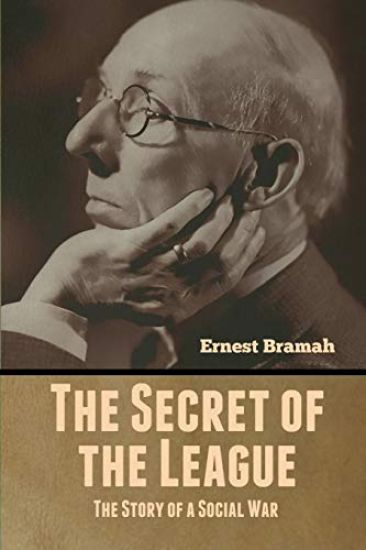
The Secret of the League

The Secret of the League

Ernest Bramah

Bibliotech Press
2020
pokkari
The Secret of the League is a 1907 dystopian novel by Ernest Bramah, which describes the overthrow of a democratically elected British Labour Party Government through a carefully prepared plot by members of the upper classes, and depicts such an overthrow as being a positive and desirable outcome. George Orwell credited the book with having given a considerably accurate prediction of the rise of Fascism, and also with reflecting "the mentality of the middle classes" and the brutal measures which members of these classes might condone or actively support, should they feel threatened with a revolution -"even such a decent and kindly writer as Ernest Bramah", in Orwell's words. (wikipedia.org)
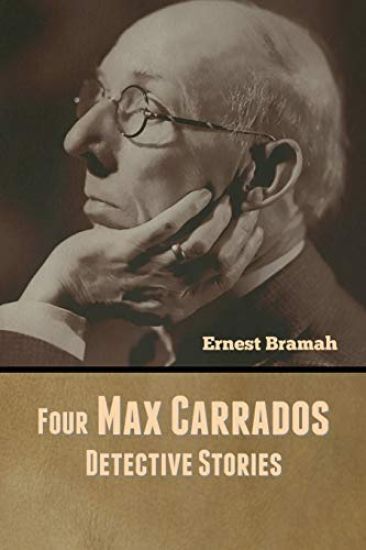
Four Max Carrados Detective Stories

Four Max Carrados Detective Stories

Ernest Bramah

Bibliotech Press
2020
pokkari
Max Carrados is a fictional blind detective in a series of mystery stories and books by Ernest Bramah, first published in 1914. The Max Carrados stories appeared alongside Sherlock Holmes stories in the Strand Magazine. Bramah was often billed above Arthur Conan Doyle, and the Carrados stories frequently outsold the Holmes stories at the time, even if they failed to achieve the same longevity. George Orwell wrote that, together with those of Doyle and R. Austin Freeman, Max Carrados and The Eyes of Max Carrados "are the only detective stories since Poe that are worth re-reading." (wikipedia.org)
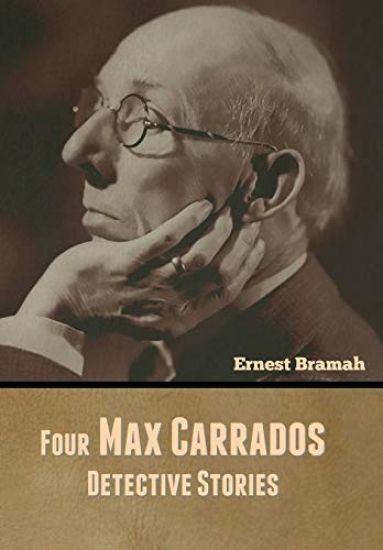
Four Max Carrados Detective Stories

Four Max Carrados Detective Stories

Ernest Bramah

Bibliotech Press
2020
sidottu
Max Carrados is a fictional blind detective in a series of mystery stories and books by Ernest Bramah, first published in 1914. The Max Carrados stories appeared alongside Sherlock Holmes stories in the Strand Magazine. Bramah was often billed above Arthur Conan Doyle, and the Carrados stories frequently outsold the Holmes stories at the time, even if they failed to achieve the same longevity. George Orwell wrote that, together with those of Doyle and R. Austin Freeman, Max Carrados and The Eyes of Max Carrados "are the only detective stories since Poe that are worth re-reading." (wikipedia.org)
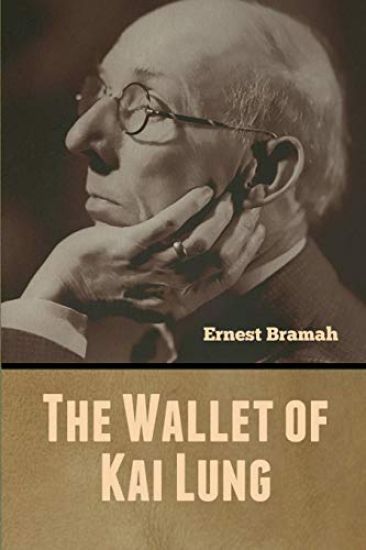
The Wallet of Kai Lung

The Wallet of Kai Lung

Ernest Bramah

Bibliotech Press
2020
pokkari
The Wallet of Kai Lung is a collection of fantasy stories by English writer Ernest Bramah, all but the last of which feature Kai Lung, an itinerant story-teller of ancient China. It was first published in hardcover in London by Grant Richards in 1900, and there have been numerous editions since. Its initial tale, "The Transmutation of Ling", was also issued by the same publisher as a separate chapbook in 1911. The collection's importance in the history of fantasy literature was recognized by the anthologization of two of its tales in the celebrated Ballantine Adult Fantasy Series, edited by Lin Carter and published by Ballantine Books; "The Vision of Yin" in Discoveries in Fantasy (March, 1972), and "The Transmutation of Ling" in Great Short Novels of Adult Fantasy Volume II (March, 1973). Although the collection is presented in the fashion of a novel, with each of its component stories designated chapters, there is no overall plot aside from each of the first eight tales being presented as narratives told by Kai Lung at various points in his itinerant career. The final tale is represented as being from a manuscript left by its own separate first-person narrator, Kin Yen. (wikipedia.org)
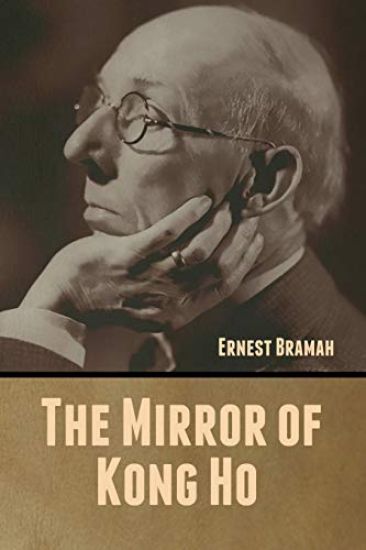
The Mirror of Kong Ho

The Mirror of Kong Ho

Ernest Bramah

Bibliotech Press
2020
pokkari
Ernest Bramah (20 March 1868 - 27 June 1942), whose name was recorded after his birth as Ernest Brammah Smith, was an English author. He published 21 books and numerous short stories and features. His humorous works were ranked with Jerome K. Jerome and W. W. Jacobs, his detective stories with Conan Doyle, his politico-science fiction with H. G. Wells and his supernatural stories with Algernon Blackwood. George Orwell acknowledged that Bramah's book, What Might Have Been, influenced his Nineteen Eighty-Four. Bramah created the characters Kai Lung and Max Carrados. Bramah was a very private man who chose not to make public any details of his personal life. He died at the age of 74 in Weston-super-Mare, Somerset. After Bramah had died his widow presented to the Hammersmith borough libraries a collection of all his published books for reference use only. It was in Hammersmith that Bramah had lived for some 30 years, not far from Ravenscourt Park. Bramah attained commercial and critical success with his creation of Kai Lung, an itinerant storyteller. He first appears in The Wallet of Kai Lung which was rejected by eight publishers before Grant Richards published it in 1900. It was still in print a hundred years later. The Kai Lung stories are humorous tales set in China, often with fantasy elements such as dragons and gods. Bramah also wrote political science fiction. What Might Have Been, published in 1907 and republished as The Secret of the League in 1909), is an anti-socialist dystopia reflecting Bramah's conservative political views. It was acknowledged by George Orwell as a source for Nineteen Eighty-Four. Orwell credited it with giving a considerably accurate prediction of the rise of Fascism. In 1914, Bramah created Max Carrados, a blind detective. Given the outlandish idea that a blind man could be a detective, in the introduction to the second Carrados book The Eyes of Max Carrados, Bramah compared his hero's achievements to those of real-life blind people such as Nicholas Saunderson, Lucasian Professor of Mathematics at Cambridge, Blind Jack of Knaresborough the road builder, John Fielding the Bow Street Magistrate (of whom it was said he could identify 3,000 thieves by their voices), and Helen Keller. (wikipedia.org)

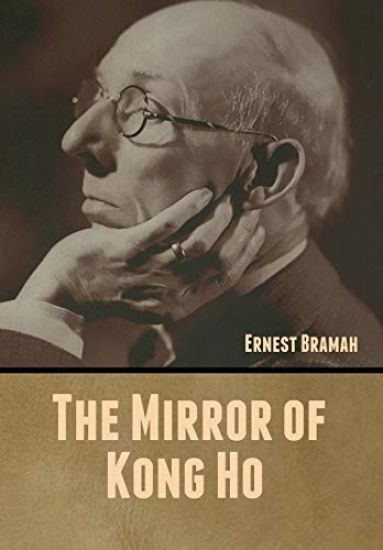
The Mirror of Kong Ho

The Mirror of Kong Ho

Ernest Bramah

Bibliotech Press
2020
sidottu
Ernest Bramah (20 March 1868 - 27 June 1942), whose name was recorded after his birth as Ernest Brammah Smith, was an English author. He published 21 books and numerous short stories and features. His humorous works were ranked with Jerome K. Jerome and W. W. Jacobs, his detective stories with Conan Doyle, his politico-science fiction with H. G. Wells and his supernatural stories with Algernon Blackwood. George Orwell acknowledged that Bramah's book, What Might Have Been, influenced his Nineteen Eighty-Four. Bramah created the characters Kai Lung and Max Carrados. Bramah was a very private man who chose not to make public any details of his personal life. He died at the age of 74 in Weston-super-Mare, Somerset. After Bramah had died his widow presented to the Hammersmith borough libraries a collection of all his published books for reference use only. It was in Hammersmith that Bramah had lived for some 30 years, not far from Ravenscourt Park. Bramah attained commercial and critical success with his creation of Kai Lung, an itinerant storyteller. He first appears in The Wallet of Kai Lung which was rejected by eight publishers before Grant Richards published it in 1900. It was still in print a hundred years later. The Kai Lung stories are humorous tales set in China, often with fantasy elements such as dragons and gods. Bramah also wrote political science fiction. What Might Have Been, published in 1907 and republished as The Secret of the League in 1909), is an anti-socialist dystopia reflecting Bramah's conservative political views. It was acknowledged by George Orwell as a source for Nineteen Eighty-Four. Orwell credited it with giving a considerably accurate prediction of the rise of Fascism. In 1914, Bramah created Max Carrados, a blind detective. Given the outlandish idea that a blind man could be a detective, in the introduction to the second Carrados book The Eyes of Max Carrados, Bramah compared his hero's achievements to those of real-life blind people such as Nicholas Saunderson, Lucasian Professor of Mathematics at Cambridge, Blind Jack of Knaresborough the road builder, John Fielding the Bow Street Magistrate (of whom it was said he could identify 3,000 thieves by their voices), and Helen Keller. (wikipedia.org)
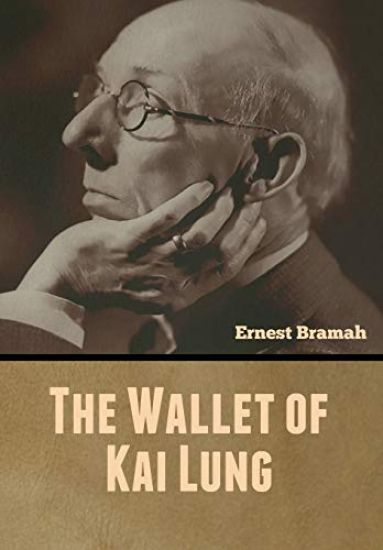
The Wallet of Kai Lung

The Wallet of Kai Lung

Ernest Bramah

Bibliotech Press
2020
sidottu
The Wallet of Kai Lung is a collection of fantasy stories by English writer Ernest Bramah, all but the last of which feature Kai Lung, an itinerant story-teller of ancient China. It was first published in hardcover in London by Grant Richards in 1900, and there have been numerous editions since. Its initial tale, "The Transmutation of Ling", was also issued by the same publisher as a separate chapbook in 1911. The collection's importance in the history of fantasy literature was recognized by the anthologization of two of its tales in the celebrated Ballantine Adult Fantasy Series, edited by Lin Carter and published by Ballantine Books; "The Vision of Yin" in Discoveries in Fantasy (March, 1972), and "The Transmutation of Ling" in Great Short Novels of Adult Fantasy Volume II (March, 1973). Although the collection is presented in the fashion of a novel, with each of its component stories designated chapters, there is no overall plot aside from each of the first eight tales being presented as narratives told by Kai Lung at various points in his itinerant career. The final tale is represented as being from a manuscript left by its own separate first-person narrator, Kin Yen. (wikipedia.org)
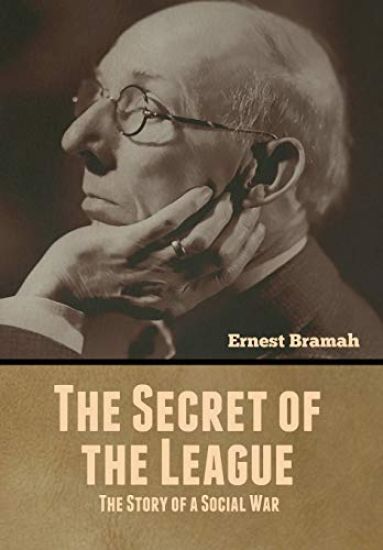
The Secret of the League

The Secret of the League

Ernest Bramah

Bibliotech Press
2020
sidottu
The Secret of the League is a 1907 dystopian novel by Ernest Bramah, which describes the overthrow of a democratically elected British Labour Party Government through a carefully prepared plot by members of the upper classes, and depicts such an overthrow as being a positive and desirable outcome. George Orwell credited the book with having given a considerably accurate prediction of the rise of Fascism, and also with reflecting "the mentality of the middle classes" and the brutal measures which members of these classes might condone or actively support, should they feel threatened with a revolution -"even such a decent and kindly writer as Ernest Bramah", in Orwell's words. (wikipedia.org)