

Kirjailija
Ernest Mandel
Kirjat ja teokset yhdessä paikassa: 27 kirjaa, julkaisuja vuosilta 1962–2026, suosituimpiin kuuluu El capital. Vertaile teosten hintoja ja tarkista saatavuus suomalaisista kirjakaupoista.
27 kirjaa
Kirjojen julkaisuvuodet: 1962–2026.

La formaci n del pensamiento econ mico de Carlos Marx: De 1843 a la redacci n de El capital
Ernest Mandel
SEVEN STORIES PRESS
2025
nidottu
En su libro La formaci n del pensamiento econ mico de Carlos Marx, el economista, historiador y pol tico belga de origen alem n Ernest Mandel nos entrega un minucioso estudio de las obras de Marx desde 1843 hasta la realizaci n de su obra cumbre, El capital. Mandel presenta al lector el proceso evolutivo mediante el cual Marx se nutre y fortalece, contrasta, sustituye y va perfilando sus concepciones te ricas. Significativa importancia concede, especialmente en el ltimo cap tulo, a profundizar en el papel de la categor a «enajenaci n en el pensamiento marxista, y su relevancia para comprender la din mica del capitalismo.
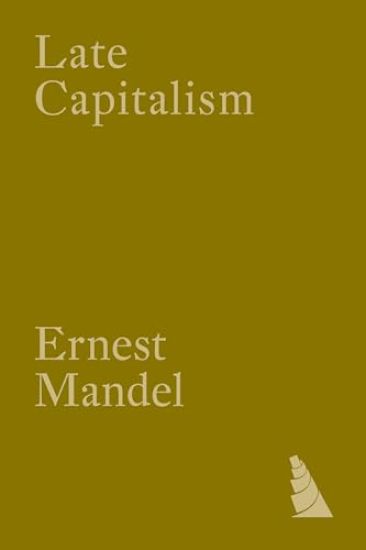
Late Capitalism is the first major synthesis to have been produced by the contemporary revival of Marxist economics. It represents, in fact, the only systematic attempt so far ever made to combine the general theory of the 'laws of motion' of the capitalist mode of production developed by Marx with the concrete history of capitalism in the twentieth century. A landmark in Marxist economic literature, Late Capitalism is specifically designed to explain the international recession of the 1970s and is an invaluable guide to understanding the nature of the world economy today. This edition includes a new introduction by Cédric Durand assessing the book's continued relevance.
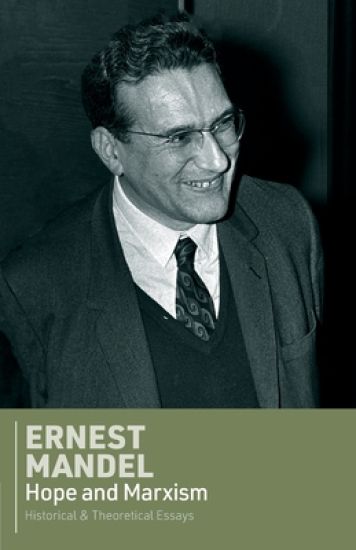
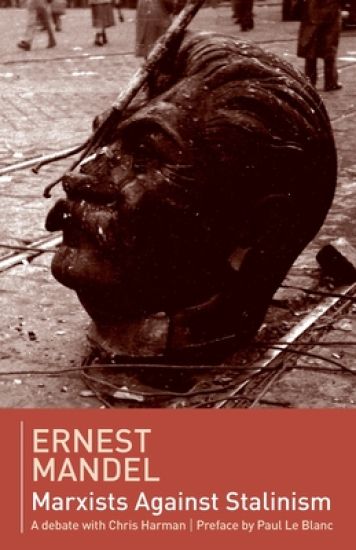
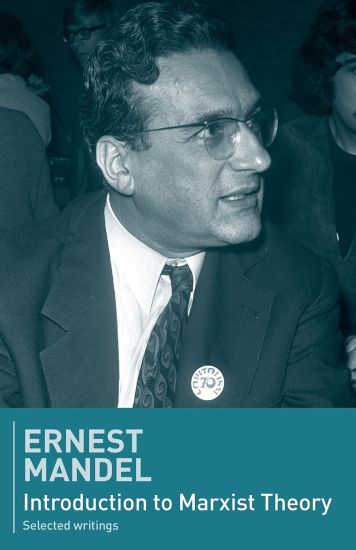
Socialists and the Capitalist Recession & 'The Basic Ideas of Karl Marx'
Ernest Mandel; Raphie de Santos; Claudio Katz
I.M.G.Publications
2019
pokkari
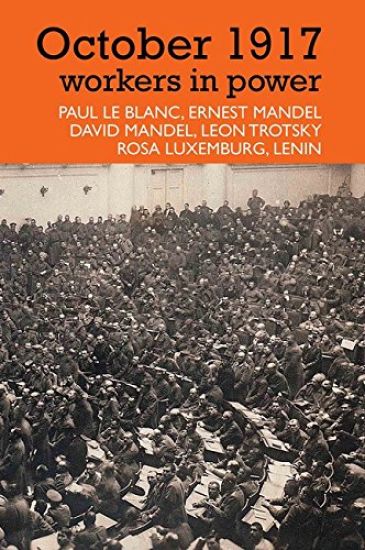
Was October 1917 a coup d'etat or a social revolution? Writing as both a historian and political activist, Ernest Mandel vigorously reasserts the deep legitimacy of the Russian Revolution. He considers mistakes made by the Bolshevik leadership in 1917-21 and sets out lessons to be learnt. David Mandel's 'Factory Committees and Workers' Control in Petrograd in 1917' draws on Russian-language archives to tell the story from below. Petrograd workers did not dream at first of 'socialist experiments'. Factory committees met fierce resistance from owners, they were driven to take management into their own hands and to seek the nationalisation of industries. Common conceptions about the 'utopian' and 'anarchistic' impulses supposedly behind the October Revolution are reassessed and refuted. The introduction by Paul Le Blanc, provides a new evaluation of the events one century on. He discusses recent scholarship and debates, new ways of comprehending class, the centrality of women and that of ethnicity, race and national identity, as well as Lars Lih's reassessment of the role of Kamenev and Zinoviev. Paul Le Blanc considers 'what went right: the revolution that brought 'bread, peace and land' to millions, and 'what went wrong'. Were the Bolsheviks elitist, sectarian and authoritarian? He assesses what is still relevant today and what is not.
In this republication of the 1971 original, Ernest Mandel traces the development of Marx's economic ideas from the Economic and Philosophic Manuscripts to the completion of the Grundrisse. In a series of focused chapters he provides an overview of debates and discussions of subjects that are central to Marxist economic theory. Mandel focuses onMarx's concept of "alienation" which gained much currency among Marxists in the twentieth century, traces the development of debates surrounding the labor theory of value, Marx's writings on communism and "crisis." These debates and discussions started by Marx have not ended and remain evermore pertinent to the present day. These writings are vital not just to academics but also to those who wish to interpret and to change the world.

The very scale of the 1939-45 war has often tempted historians to study particular campaigns at the expense of the wider panorama. In this readable and richly detailed history of the conflict, the Belgian scholar Ernest Mandel (author of the acclaimed Late Capitalism) outlines his view that the war was in fact a combination of several distinct struggles and a battle between rival imperialisms for world hegemony. In concise chapters, Mandel examines the role played by technology, science, logistics, weapons and propaganda. Throughout, he weaves a consideration of the military strategy of the opposing states into his analytical narrative of the war and its results.
The Meaning of the Second World War
Ernest Mandel
Verso Books
2011
nidottu
Halvin toimitettuna 27,60 €
The very scale of the 1939-45 war has often tempted historians to study particular campaigns at the expense of the wider panorama. In this readable and richly detailed history of the conflict, the Belgian scholar Ernest Mandel (author of the acclaimed Late Capitalism) outlines his view that the war was in fact a combination of several distinct struggles and a battle between rival imperialisms for world hegemony. In concise chapters, Mandel examines the role played by technology, science, logistics, weapons and propaganda. Throughout, he weaves a consideration of the military strategy of the opposing states into his analytical narrative of the war and its results.
The Long March of the Trotskyists Contributions to the History of the Fourth International
Pierre Frank; Daniel Bensaid; Ernest Mandel
I.M.G.Publications
2010
pokkari
In this revised and expanded edition of Long Waves of Capitalist Development, Ernest Mandel seeks to explain the underlying determinants of the booms and slumps of the trade cycle. Mandel first establishes that there have indeed been twenty- to twenty-five-year-long waves of capitalist expansion and contraction-and that these have persisted in the period since World War II. He then assembles evidence to show that while broad tendencies in the rate of profit have been decisive in triggering downturns, the ingredients necessary for a new upswing are, by contrast, generally political and extra-economic in character. He thereby demonstrates the falsity of neo-liberal doctrines, according to which the free market will itself generate a new formula for balanced and sustainable expansion. Long Waves of Capitalist Development not only offers a penetrating analysis of the ills that have afflicted contemporary capitalist economies but also surveys, and takes forward, one of the classical debates of modern economic history.
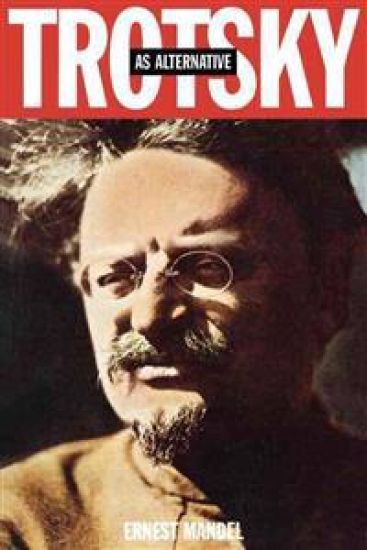
Leon Trotsky has become one of the twentieth century's most enduring political legends. Joining the Bolsheviks on the eve of the 1917 revolution he played a vital role as Lenin's right-hand man in the insurrection and went on to lead the Red Army to victory in the ensuing civil war. Having lost to Stalin the struggle for power which followed Lenin's death, he became an implacable opponent of the dictator over the next three decades-a stance which cost him his political career, his citizenship and ultimately his life. A charismatic orator, a prolific author and a political philosopher whose ideas continue to resonate in the wake of the collapse of the Stalinist regimes of Eastern Europe, Trotsky made an indelible mark on world history. Ernest Mandel, one of the foremost leaders of the international movement which Trotsky founded before the Second World War and an influential economist and political theorist, is uniquely placed to review the life and work of Trotsky. In Trotsky as Alternative he presents a portrait of his subject which is appreciative yet critical. He shows that Trotsky's contribution to the history of the twentieth century was primarily political rather than sociological, and this in a practical as well as a theoretical sense. He locates Trotsky's theory of uneven and combined development as a crucial tool whose explanatory power of the mechanisms of world imperialism is as relevant to the late capitalism of the 1990s as it was to the first three decades of the century when it was formulated. Ranging across Trotsky's struggles against Stalin's bureaucracy, his formulation of an alternative economic strategy, his theories relating to the Third World, fascism and the national question, his extensive literary criticism, and concluding with a moving assessment of an extraordinary life, this book is a fitting testimony to a man who, in Mandel's words, "will be judged by history as the most important strategist for the socialist movement."
Analyses of bureaucratic power and privilege have an academic pedigree but have also long preoccupied socialists. The collapse of communist rule in the Soviet Union and Eastern Europe puts to a new test the classical theories concerning the relationship between bureaucracy and class. Power and Money is a timely contribution to this renewal of theory, exploring the social and historical roots of bureaucracy, both within the capitalist state and in workers' mass organizations. Ernest Mandel draws on archival and contemporary accounts in an analysis of both capitalist administration and the ideology and practice of bureaucratic dictatorship in the communist bloc. He measures the actual performance of western and eastern societies against the forecasts of Lenin and Trotsky, Ludwig von Mises and Roberto Michels, or the more recent reflections of Amitai Etzioni and Alvin Gouldner. This lucid study challenges those theories-Stalinist, Weberian or social-democratic-which claim that an autonomous officialdom is a necessary feature of modern societies. It also furnishes a perceptive account of the specific dynamics of communist and post-communist society.
The changes taking place in the Soviet Union under Gorbachev have generated a host of interpretations. In this controversial book, Ernest Mandel shows that commentators have signally failed to provide lasting insight into Soviet society in the age of perestroika. To begin with, most were so dazzled by Gorbachev's charisma and his bold tactics that they failed to investigate the barriers to change which still existed, or to consider the social forces capable of bringing about a revolutionary transformation. Although glasnost has made spectacular advances, the power of the Soviet nomenklatura has so far survived intact. Despite the spread of democratic debate and the growth of nationalist movements, a formidable bureaucracy - based on the top levels of the Party, state administration and security forces - has never relinquished its grip. Mandel argues that, without broad popular involvement and a willingness to concede basic democratic rights like national seIf-determination, the whole project of reform will be doomed. However, he remains optimistic that a newly awakened workers' movement and public opinion may yet seize the initiative and drive the bureaucracy beyond perestroika. Distinguished not only by its original analysis of events which have confounded so many analysts but also by the mass of information on Soviet economic problems, on bureaucratic privilege, and on the forms of worker resistance to which they have given rise, this substantially revised edition will be indispensable reading.
The focus of this book is the emerging economic confrontation between European and U. S. capitalism at the end of the "golden age" of capitalism in the late 1960s. Ernest Mandel here paints a remarkably clear, comprehensive, and detailed portrait of trends at that critical period. Mandel moves with ease from the most general international problems to the specifics of corporate activity, and few developments in the business and economic worlds seem to have escaped his attention.

Named by Choice as an 'Academic Book of the Year' for 1979, The Second Slump locates the 1970s recession in the context of the theory and history of capitalist crises. It argues that the slump, unlike the earlier one of 1929-32, is marked by a high level of organization by the working class in the developed capitalist countries, and that it is fundamentally a crisis of over-production, in which the oil price rises of 1973 played only a secondary role. Mandel analyses each of the major branches of industry, and includes separate discussions of the USA, Japan, the EEC, and the Third World. At the same time, he discusses the growth of inter-imperialist contradictions and the rise of protectionism, whilst attributing the slow upturn to the uneven spread of the recovery and the failure of productive investment to increase. Mandel describes the economic record of the Soviet Union and the East European countries in the same period, stressing their distinctness and resilience in a period of international capitalist crisis. He argues that there can be a major upturn in the capitalist countries only if the workers' movement is defeated, and concludes with a programme for a socialist alternative to present government policies. In a postscript specially written for the Verso edition of The Second Slump, Mandel extends his analysis to the partial recovery and new downturn of the last years of the seventies.