Kirjojen hintavertailu – 12 903 735 kirjaa ja 27 kauppaa
Kirjailija
Ernest Wamba Dia Wamba
Kirjat ja teokset yhdessä paikassa: 8 kirjaa, julkaisuja vuosilta 2018–2023, suosituimpiin kuuluu Cuestiones de democracia africana. Vertaile teosten hintoja ja tarkista saatavuus suomalaisista kirjakaupoista.
Nimi esiintyy myös muodoissa: Ernest Wamba-dia-Wamba
The effort for independence must be resumed and continued. We must develop the capacity of the Congolese to agree, without recourse to foreign intermediaries, to conclude a Congolese Charter for emancipation among themselves. To achieve this, it is necessary to revive discussions on everything and everywhere: around a national repentance for all the failings of the ancestors who participated in capitalist slavery up to the present day and a true national reconciliation with truth. This dynamic would allow the transformation and refoundation of the graft state to become a dignified state for all, mobilising the Congolese for the great work of reconstruction. One must clean one's house before visiting the neighbour's.
Die Bem hungen um die Unabh ngigkeit m ssen wieder aufgenommen und fortgesetzt werden. Die Kongolesen m ssen die F higkeit entwickeln, sich ohne R ckgriff auf ausl ndische Vermittler zu einigen, um untereinander eine kongolesische Charta f r die Emanzipation zu vereinbaren. Um dies zu erreichen, m ssen Palaver ber alles und berall wiederbelebt werden: um eine nationale Reue f r alle Vers umnisse von den Vorfahren, die an der kapitalistischen Sklaverei teilgenommen hatten, bis heute und eine echte nationale Vers hnung mit der Wahrheit. Diese Dynamik w rde die Transformation und Neugr ndung des Pfropfstaates zu einem w rdigen Staat f r alle erm glichen, der die Kongolesen f r die gro en Wiederaufbauarbeiten mobilisiert. Man muss sein eigenes Haus putzen, bevor man das des Nachbarn besucht.
Lo sforzo per l'indipendenza deve essere ripreso e continuato. Dobbiamo sviluppare la capacit dei congolesi di accordarsi, senza ricorrere a intermediari stranieri, per concludere tra loro una Carta congolese di emancipazione. Per raggiungere questo obiettivo, necessario rilanciare le discussioni su tutto e dappertutto: intorno a un pentimento nazionale per tutte le mancanze degli antenati che hanno partecipato alla schiavit capitalista fino ad oggi e a una vera riconciliazione nazionale con la verit . Questa dinamica consentirebbe la trasformazione e la rifondazione dello Stato-trappola per trasformarlo in uno Stato dignitoso per tutti, mobilitando i congolesi per la grande opera di ricostruzione. Bisogna pulire la propria casa prima di visitare quella del vicino.
O esfor o pela independ ncia deve ser retomado e continuado. Temos de desenvolver a capacidade dos congoleses de acordar, sem recorrer a intermedi rios estrangeiros, a conclus o de uma Carta Congolesa de emancipa o entre si. Para o conseguir, necess rio reavivar as discuss es sobre tudo e em todo o lado: em torno de um arrependimento nacional para todas as falhas dos antepassados que participaram na escravatura capitalista at aos dias de hoje e uma verdadeira reconcilia o nacional com a verdade. Esta din mica permitiria que a transforma o e refunda o do estado de enxerto se tornasse um estado digno para todos, mobilizando os congoleses para o grande trabalho de reconstru o. preciso limpar a casa antes de visitar a casa do vizinho.
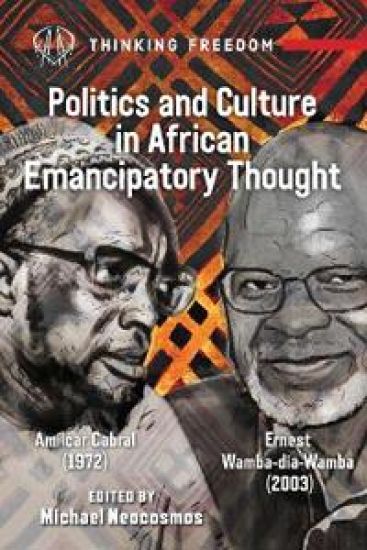
The current absence of any emancipatory vision for Africa lies at the heart of our political problems of racial capitalist and colonial oppression. Any attempt to rethink political emancipation on the African continent must be able to locate a universal conception of freedom within singular cultural experiences where people live. Irrespective of the specific manner in which such struggles for freedom were thought within different historical contexts, emancipatory politics always exhibited such a dialectic when it was based within popular traditions. Yet only some militant intellectual leaders understood the importance of this dialectic in thought. The present volume outlines and discusses two particularly important views concerning the role and importance of popular culture in emancipatory politics in Africa. Each is the product of distinct forms of colonial capitalist exploitation: the former saw the light of day within a colonial context while the latter is directly confronted by the neocolonial state. All emancipatory politics are developed in confrontation with state power, and all begin with a process of discussion and debate whereby a collective subject begins to be formed. The formation of such a collective political subject has been fundamentally informed by popular cultures on the African continent. The two authors whose essays are included here understood this and posit popular culture at the centre of their politics. The first, Am lcar Cabral, addresses the central role of popular culture in the independence struggle of Guinea Bissau in the 1970s; the second, Ernest Wamba-dia-Wamba, addresses the centrality of African popular culture in an emancipatory politics for the current Democratic Republic of Congo. Despite the distance in time that separates them, both Cabral and Wamba-dia-Wamba develop a dialectics at the core of their politics which activates the universals of culture in the present. It is this that makes their views of central importance to emancipatory thought today.