
Kirjailija
Ernest William Hornung
Kirjat ja teokset yhdessä paikassa: 102 kirjaa, julkaisuja vuosilta 2008–2026, suosituimpiin kuuluu A Bride from the Bush (1890) by: Ernest William Hornung ( NOVEL ). Vertaile teosten hintoja ja tarkista saatavuus suomalaisista kirjakaupoista.
102 kirjaa
Kirjojen julkaisuvuodet: 2008–2026.
Ernest William Hornung, was an English author, most famous for writing the Raffles series of novels about a Gentleman thief in late Victorian London. In addition to his novels and short stories Hornung wrote some good war verse, and a play based on the Raffles stories was produced successfully and was "a man of large and generous nature, a delightful companion and conversationalist". The model for Raffles was George Ives, a Cambridge-educated criminologist and talented cricketer acording to Lycett. Ives was a discreet gay, and although Hornung "may not have understood this sexual side of Ives' character", Raffles "enjoys a remarkably intimate relationship with his sidekick Bunny Manders."
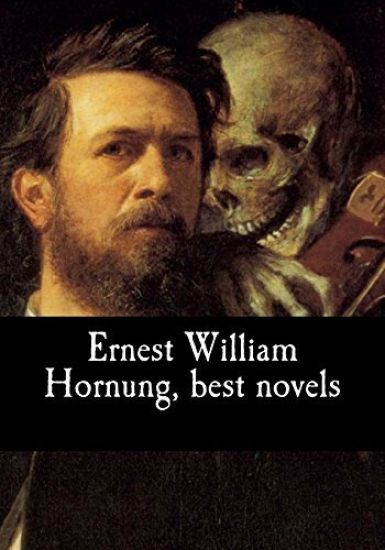
Ernest William Hornung, best novels
Ernest William Hornung
Createspace Independent Publishing Platform
2017
nidottu
Ernest William Hornung (1866 - 1921) was an English author best known for writing the A. J. Raffles series of stories about a gentleman thief in late 19th-century London. In the series of Raffles short stories were collected for sale in book form in 1899, and two further books of Raffles short stories followedl. Aside from his Raffles stories, Hornung was a prodigious writer of fiction, publishing numerous books from 1890, one of the best, The Crime Doctor. Although much of Hornung's work has fallen into obscurity, his Raffles stories continued to be popular, and have formed numerous film and television adaptations. Hornung's stories dealt with a wider range of themes than crime: he examined scientific and medical developments, guilt, class and the unequal role played by women in society. In this book: The Amateur Cracksman A Thief in the Night Mr. Justice Raffles Raffles, Further Adventures of the Amateur Cracksman
Arthur J. Raffles is a character created in the 1890s by E. W. Hornung, brother-in-law to Sir Arthur Conan Doyle, the creator of Sherlock Holmes. Raffles is, in many ways, a deliberate inversion of Holmes - he is a ""gentleman thief,"" living at the Albany, a prestigious address in London, playing cricket for the Gentlemen of England and supporting himself by carrying out ingenious burglaries. He is called the ""Amateur Cracksman,"" and often, at first, differentiates between himself and the ""professors"" - professional criminals from the lower classes. As Holmes has Dr. Watson to chronicle his adventures, Raffles has Harry ""Bunny"" Manders - a former schoolmate saved from disgrace and suicide by Raffles, whom Raffles persuaded to accompany him on a burglary. While Raffles often takes advantage of Manders' relative innocence, and sometimes treats him with a certain amount of contempt, he knows that Manders' bravery and loyalty are to be relied on utterly.
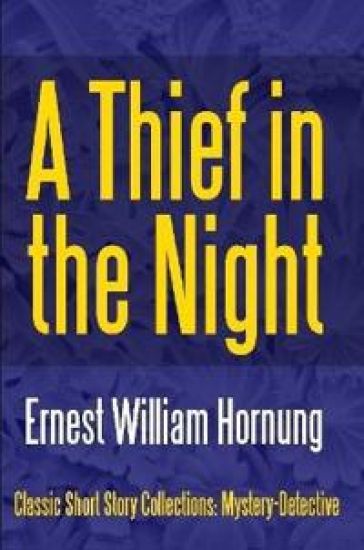
""These latest adventures of 'Raffles' and 'Bunny' are their most thrilling and exciting ones. The sentimental side of their story has never before been shown so dramatically and romantically, and the suggestion in this book of the final conclusion of their careers cannot but make these stories of the greatest interest to all readers."" Boston Herald. Hornung was the brother-in-law of Arthur Conan Doyle the creator of Sherlock Holmes. Hornung has created Raffles as an inverted representation of Sherlock Holmes. A J Raffles was a thief. He was a gentleman thief who lived in a good neighborhood in London and played cricket. Raffles' plots to steal are ingenious and of a higher quality than the ""common thieves."" Ernest William Hornung (7 June 1866 - 22 March 1921) was an English author and poet known for writing the A. J. Raffles series of stories about a gentleman thief in late 19th-century London.
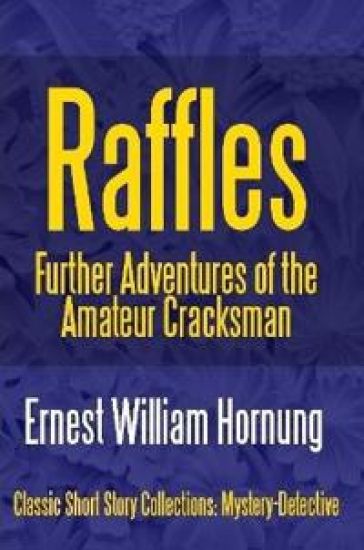
These ""Further Adventures"" is a collection of stories about the ever-popular amateur thief Raffles, following the success of ""The Amateur Cracksman."" Arthur J. Raffles is a character created in the 1890s by E. W. Hornung, brother-in-law to Sir Arthur Conan Doyle, the creator of Sherlock Holmes. Raffles is, in many ways, a deliberate inversion of Holmes - he is a ""gentleman thief,"" living at the Albany, a prestigious address in London, playing cricket for the Gentlemen of England and supporting himself by carrying out ingenious burglaries. He is called the ""Amateur Cracksman,"" and often, at first, differentiates between himself and the ""professors"" - professional criminals from the lower classes. As Holmes has Dr. Watson to chronicle his adventures, Raffles has Harry ""Bunny"" Manders - a former schoolmate saved from disgrace and suicide by Raffles, whom Raffles persuaded to accompany him on a burglary.
A Thief in the Night
Ernest William Hornung
Createspace Independent Publishing Platform
2017
nidottu
Raffles: Further Adventures of the Amateur Cracksman
Ernest William Hornung
Createspace Independent Publishing Platform
2017
nidottu
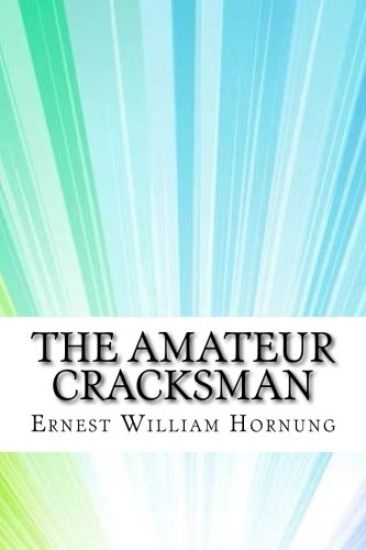
The Amateur Cracksman
Ernest William Hornung
Createspace Independent Publishing Platform
2017
nidottu
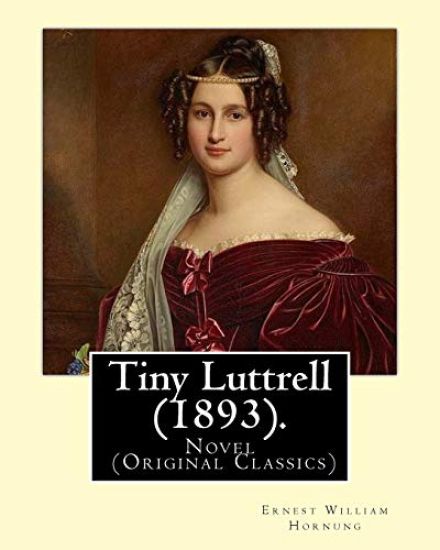
Tiny Luttrell (1893). By: Ernest William Hornung: Novel (Original Classics)
Ernest William Hornung
Createspace Independent Publishing Platform
2017
nidottu
Ernest William Hornung (7 June 1866 - 22 March 1921) was an English author and poet known for writing the A. J. Raffles series of stories about a gentleman thief in late 19th-century London. Hornung was educated at Uppingham School; as a result of poor health he left the school in December 1883 to travel to Sydney, where he stayed for two years. He drew on his Australian experiences as a background when he began writing, initially short stories and later novels. In 1898 he wrote "In the Chains of Crime", which introduced Raffles and his sidekick, Bunny Manders; the characters were based partly on his friends Oscar Wilde and his lover, Lord Alfred Douglas, and also on the characters of Sherlock Holmes and Dr. Watson, created by his brother-in-law, Arthur Conan Doyle. The series of Raffles short stories were collected for sale in book form in 1899, and two further books of Raffles short stories followed, as well as a poorly received novel. Aside from his Raffles stories, Hornung was a prodigious writer of fiction, publishing numerous books from 1890, with A Bride from the Bush to his 1914 novel The Crime Doctor. The First World War brought an end to Hornung's fictional output. His son, Oscar, was killed at the Second Battle of Ypres in July 1915. Hornung joined the YMCA, initially in England, then in France, where he helped run a canteen and library. He published two collections of poetry during the war, and then, afterwards, one further volume of verse and an account of his time spent in France, Notes of a Camp-Follower on the Western Front. Hornung's fragile constitution was further weakened by the stress of his war work. To aid his recuperation, he and his wife visited the south of France in 1921. He fell ill from influenza on the journey, and died on 22 March 1921, aged 54. Although much of Hornung's work has fallen into obscurity, his Raffles stories continued to be popular, and have formed numerous film and television adaptations. Hornung's stories dealt with a wider range of themes than crime: he examined scientific and medical developments, guilt, class and the unequal role played by women in society. Two threads that run through a sizeable proportion of his books are Australia and cricket; the latter was also a lifelong passion............
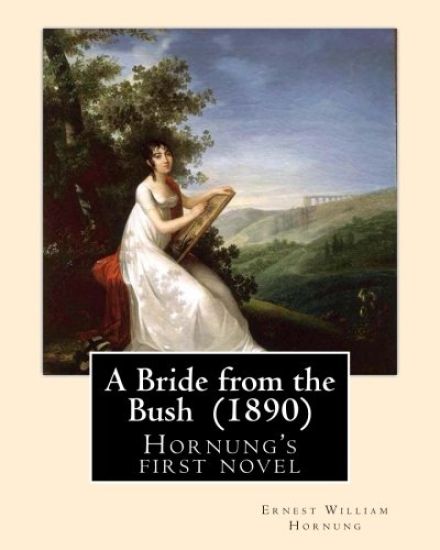
A Bride from the Bush (1890). By: Ernest William Hornung: Hornung's first novel
Ernest William Hornung
Createspace Independent Publishing Platform
2017
nidottu
A Bride from the Bush is the first novel written by E. W. Hornung. He started writing the book while working as a tutor for Charles Joseph Parsons in Mossgiel Station, New South Wales, Australia. The novel was initially published by Smith, Elder & Co. as a serial in the Cornhill Magazine, and then published in book format by the same company in October 1890. As with Tiny Luttrell and The Unbidden Guest, two of Hornung's other early novels, A Bride from the Bush points out flaws in British society by presenting the country through an Australian perspective. A reviewer from The New York Times called the novel "a most piquant contrast between civilization and crudity". The writer Thomas Alexander Browne called the titular character of A Bride from the Bush "a libel to Australian womankind". A Punch editor made the opposite claim, arguing that the protagonist of the novel is more kind-hearted and attractive than actual Australians. Hornung's later stories in the A. J. Raffles series achieved much more popularity than A Bride from the Bush. Nonetheless, he himself liked A Bride from the Bush and his other Australian stories better than those of Raffles. When he published the novel Peccavi in 1900, a critic from The Advertiser wrote a scathing review, writing that Hornung should go back to Australia so he would be inspired to write something as good as A Bride from the Bush again. Upon Hornung's death, a tribute in The Freeman's Journal called A Bride from the Bush "the best and the best known" of Hornung's Australia-related stories. In 1924 Andr Coeuroy and Theodore Baker argued in The Musical Quarterly that Hornung's characterisation of the novel's hero as being pitiable for being unable to appreciate anthems demonstrates that A Bride from the Bush is typical of other novels of the time in favouring vocal church music..... Ernest William Hornung (7 June 1866 - 22 March 1921) was an English author and poet known for writing the A. J. Raffles series of stories about a gentleman thief in late 19th-century London. Hornung was educated at Uppingham School; as a result of poor health he left the school in December 1883 to travel to Sydney, where he stayed for two years. He drew on his Australian experiences as a background when he began writing, initially short stories and later novels. In 1898 he wrote "In the Chains of Crime", which introduced Raffles and his sidekick, Bunny Manders; the characters were based partly on his friends Oscar Wilde and his lover, Lord Alfred Douglas, and also on the characters of Sherlock Holmes and Dr. Watson, created by his brother-in-law, Arthur Conan Doyle. The series of Raffles short stories were collected for sale in book form in 1899, and two further books of Raffles short stories followed, as well as a poorly received novel. Aside from his Raffles stories, Hornung was a prodigious writer of fiction, publishing numerous books from 1890, with A Bride from the Bush to his 1914 novel The Crime Doctor. The First World War brought an end to Hornung's fictional output. His son, Oscar, was killed at the Second Battle of Ypres in July 1915. Hornung joined the YMCA, initially in England, then in France, where he helped run a canteen and library. He published two collections of poetry during the war, and then, afterwards, one further volume of verse and an account of his time spent in France, Notes of a Camp-Follower on the Western Front. Hornung's fragile constitution was further weakened by the stress of his war work. To aid his recuperation, he and his wife visited the south of France in 1921. He fell ill from influenza on the journey, and died on 22 March 1921, aged 54. Although much of Hornung's work has fallen into obscurity, his Raffles stories continued to be popular, and have formed numerous film and television adaptations.......
That was on the Tuesday before the 'Varsity match, or a full fortnight after his mysterious disappearance. The telegram was from Carlsbad, of all places for Raffles of all men Of course there was only one thing that could possibly have taken so rare a specimen of physical fitness to any such pernicious spot. But to my horror he emerged from the train, on the Wednesday evening, a cadaverous caricature of the splendid person I had gone to meet. "Not a word, my dear Bunny, till I have bitten British beef " said he, in tones as hollow as his cheeks. "No, I'm not going to stop to clear my baggage now. You can do that for me to-morrow, Bunny, like a dear good pal.
The Amateur Cracksman
Ernest William Hornung
Createspace Independent Publishing Platform
2017
nidottu
"No," said I, finding a full voice as I shook my head; "no, I won't smoke, and I won't sit down, thank you. Nor will you ask me to do either when you've heard what I have to say." "Really?" said he, lighting his own cigarette with one clear blue eye upon me. "How do you know?" "Because you'll probably show me the door," I cried bitterly; "and you will be justified in doing it But it's no use beating about the bush.
A Thief in the Night
Ernest William Hornung
Createspace Independent Publishing Platform
2017
nidottu
If I must tell more tales of Raffles, I can but back to our earliest days together, and fill in the blanks left by discretion in existing annals. In so doing I may indeed fill some small part of an infinitely greater blank, across which you may conceive me to have stretched my canvas for the first frank portrait of my friend. The whole truth cannot harm him now. I shall paint in every wart. Raffles was a villain, when all is written; it is no service to his memory to glaze the fact; yet I have done so myself before to-day. I have omitted whole heinous episodes. I have dwelt unduly on the redeeming side. And this I may do again, blinded even as I write by the gallant glamour that made my villain more to me than any hero. But at least there shall be no more reservations, and as an earnest I shall make no further secret of the greatest wrong that even Raffles ever did me. I pick my words with care and pain, loyal as I still would be to my friend, and yet remembering as I must those Ides of March when he led me blindfold into temptation and crime. That was an ugly office, if you will. It was a moral bagatelle to the treacherous trick he was to play me a few weeks later. The second offence, on the other hand, was to prove the less serious of the two against society, and might in itself have been published to the world years ago. There have been private reasons for my reticence. The affair was not only too intimately mine, and too discreditable to Raffles. One other was involved in it, one dearer to me than Raffles himself, one whose name shall not even now be sullied by association with ours. Suffice it that I had been engaged to her before that mad March deed. True, her people called it "an understanding," and frowned even upon that, as well they might. But their authority was not direct; we bowed to it as an act of politic grace; between us, all was well but my unworthiness. That may be gauged when I confess that this was how the matter stood on the night I gave a worthless check for my losses at baccarat, and afterward turned to Raffles in my need. Even after that I saw her sometimes. But I let her guess that there was more upon my soul than she must ever share, and at last I had written to end it all. I remember that week so well It was the close of such a May as we had never had since, and I was too miserable even to follow the heavy scoring in the papers. Raffles was the only man who could get a wicket up at Lord's, and I never once went to see him play. Against Yorkshire, however, he helped himself to a hundred runs as well; and that brought Raffles round to me, on his way home to the Albany. "We must dine and celebrate the rare event," said he. "A century takes it out of one at my time of life; and you, Bunny, you look quite as much in need of your end of a worthy bottle. Suppose we make it the Caf' Royal, and eight sharp? I'll be there first to fix up the table and the wine.
The boss of Taroomba. ( NOVEL ) By: Ernest William Hornung
Ernest William Hornung
Createspace Independent Publishing Platform
2017
nidottu
The Crime Doctor (1914) by: Ernest William Hornung ( NOVEL )
Ernest William Hornung
Createspace Independent Publishing Platform
2017
nidottu
Ernest William Hornung (7 June 1866 - 22 March 1921) was an English author and poet known for writing the A. J. Raffles series of stories about a gentleman thief in late 19th-century London. Hornung was educated at Uppingham School; as a result of poor health he left the school in December 1883 to travel to Sydney, where he stayed for two years. He drew on his Australian experiences as a background when he began writing, initially short stories and later novels. In 1898 he wrote "In the Chains of Crime", which introduced Raffles and his sidekick, Bunny Manders; the characters were based partly on his friends Oscar Wilde and his lover, Lord Alfred Douglas, and also on the characters of Sherlock Holmes and Dr. Watson, created by his brother-in-law, Arthur Conan Doyle. The series of Raffles short stories were collected for sale in book form in 1899, and two further books of Raffles short stories followed, as well as a poorly received novel. Aside from his Raffles stories, Hornung was a prodigious writer of fiction, publishing numerous books from 1890, with A Bride from the Bush to his 1914 novel The Crime Doctor.
Tiny Luttrell. Novel By: Ernest William Hornung (Original Version)
Ernest William Hornung
Createspace Independent Publishing Platform
2016
nidottu