Kirjojen hintavertailu – 12 903 724 kirjaa ja 27 kauppaa

Kirjailija

Ernesto Damiani

Kirjat ja teokset yhdessä paikassa: 8 kirjaa, julkaisuja vuosilta 2000–2025, suosituimpiin kuuluu A Journey into Security Certification. Vertaile teosten hintoja ja tarkista saatavuus suomalaisista kirjakaupoista.

8 kirjaa

Kirjojen julkaisuvuodet: 2000–2025.

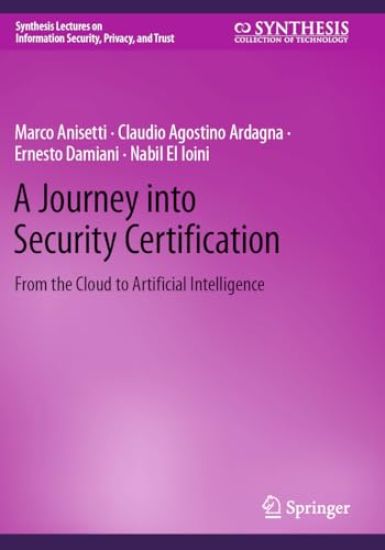
A Journey into Security Certification

A Journey into Security Certification

Marco Anisetti; Claudio Agostino Ardagna; Ernesto Damiani; Nabil El Ioini

Springer International Publishing AG
2025
nidottu
This book, authored by some of the pioneers in the security certification domain, provides a foundational knowledge base for designing and deploying effective security certification schemes for cloud-edge distributed systems. It gives readers unique and essential insight into the history of security certification and its evolution from static to dynamic models. The book helps readers to understand the importance of security certification across distributed system evolution from cloud-based to artificial intelligence-machine learning systems. It covers in full the certification of cloud-based composite services, discussing the role of multi-factor certification. It also emphasizes processes for continuously certifying services across system and context changes, as well as the certification of the deployment environment and development process and their impact on the overall cloud service certification. The book considers and challenges existing security certification schemes for cloud services, discussing issues and gaps when applied to modern systems in the cloud-edge continuum and built on artificial intelligence. Readers will become familiar with the challenges in certifying cloud-edge distributed systems and machine learning-based systems. This book also provides actionable insight to readers who manage modern security systems. Security controls have grown in size and complexity, requiring reliable and sustainable certification schemes to support varying quality standards and produce compliant products. It covers the logic behind security standards and the evaluation criteria of main certification standards, further discussing the evolution and corresponding certification of distributed systems towards cloud, cloud-edge, and artificial intelligence. The book teaches readers how to build faster, scalable, and more reliable cloud-edge distributed systems and beyond.
A Journey into Security Certification

A Journey into Security Certification

Marco Anisetti; Claudio Agostino Ardagna; Ernesto Damiani; Nabil El Ioini

Springer International Publishing AG
2024
sidottu
This book, authored by some of the pioneers in the security certification domain, provides a foundational knowledge base for designing and deploying effective security certification schemes for cloud-edge distributed systems.
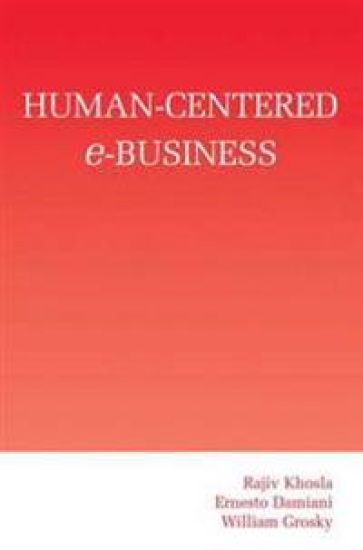
Human-Centered e-Business

Human-Centered e-Business

Rajiv Khosla; Ernesto Damiani; William Grosky

Springer-Verlag New York Inc.
2012
nidottu
Human-Centered e-Business focuses on analysis, design and development of human-centered e-business systems. The authors illustrate the benefits of the human-centered approach in intelligent e-sales recruitment application, integrating data mining technology with decision support model for profiling transaction behavior of internet banking customers, user-centered context dependent data organization using XML, knowledge management, and optimizing the search process through human evaluation in an intelligent interactive multimedia application. The applications described in this work, facilitates both e-business analysis from a business professional's perspective, and human-centered system design from a system development perspective. These applications employ a range of internet and soft computing technologies.
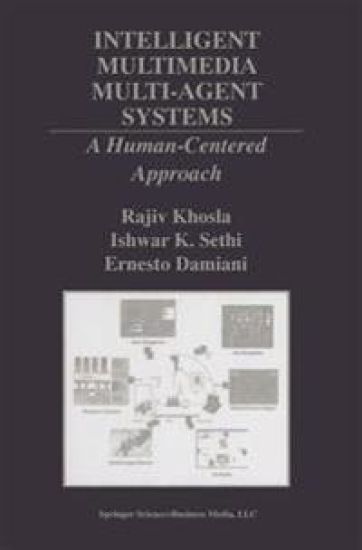
Intelligent Multimedia Multi-Agent Systems

Intelligent Multimedia Multi-Agent Systems

Rajiv Khosla; Ishwar K. Sethi; Ernesto Damiani

Springer-Verlag New York Inc.
2010
nidottu
Intelligent Multimedia Multi-Agent Systems focuses on building intelligent successful systems. The book adopts a human-centered approach and considers various pragmatic issues and problems in areas like intelligent systems, software engineering, multimedia databases, electronic commerce, data mining, enterprise modeling and human-computer interaction for developing a human-centered virtual machine. The authors describe an ontology of the human-centered virtual machine which includes four components: activity-centered analysis component, problem solving adapter component, transformation agent component, and multimedia based interpretation component. These four components capture the external and internal planes of the system development spectrum. They integrate the physical, social and organizational reality on the external plane with stakeholder goals, tasks and incentives, and organization culture on the internal plane. The human-centered virtual machine and its four components are used for developing intelligent multimedia multi-agent systems in areas like medical decision support and health informatics, medical image retrieval, e-commerce, face detection and annotation, internet games and sales recruitment. The applications in these areas help to expound various aspects of the human-centered virtual machine including, human-centered domain modeling, distributed intelligence and communication, perceptual and cognitive task modeling, component based software development, and multimedia based data modeling. Further, the applications described in the book employ various intelligent technologies like neural networks, fuzzy logic and knowledge based systems, software engineering artifacts like agents and objects, internet technologies like XML and multimedia artifacts like image, audio, video and text.
Open Source Systems Security Certification

Open Source Systems Security Certification

Ernesto Damiani; Claudio Agostino Ardagna; Nabil El Ioini

Springer-Verlag New York Inc.
2010
nidottu
Open Source Systems Security Certification discusses Security Certification Standards and establishes the need to certify open source tools and applications. This includes the international standard for the certification of IT products (software, firmware and hardware) Common Criteria (ISO/IEC 15408) (CC 2006), a certification officially adopted by the governments of 18 nations. Without security certification, open source tools and applications are neither secure nor trustworthy. Open Source Systems Security Certification addresses and analyzes the urgency of security certification for security-sensible markets, such as telecommunications, government and the military, through provided case studies. This volume is designed for professionals and companies trying to implement an Open Source Systems (OSS) aware IT governance strategy, and SMEs looking to attract new markets traditionally held by proprietary products or to reduce costs. This book is also suitable for researchers and advanced-level students.
Open Source Systems Security Certification

Open Source Systems Security Certification

Ernesto Damiani; Claudio Agostino Ardagna; Nabil El Ioini

Springer-Verlag New York Inc.
2008
sidottu
Open Source Systems Security Certification discusses Security Certification Standards and establishes the need to certify open source tools and applications. This includes the international standard for the certification of IT products (software, firmware and hardware) Common Criteria (ISO/IEC 15408) (CC 2006), a certification officially adopted by the governments of 18 nations. Without security certification, open source tools and applications are neither secure nor trustworthy. Open Source Systems Security Certification addresses and analyzes the urgency of security certification for security-sensible markets, such as telecommunications, government and the military, through provided case studies. This volume is designed for professionals and companies trying to implement an Open Source Systems (OSS) aware IT governance strategy, and SMEs looking to attract new markets traditionally held by proprietary products or to reduce costs. This book is also suitable for researchers and advanced-level students.
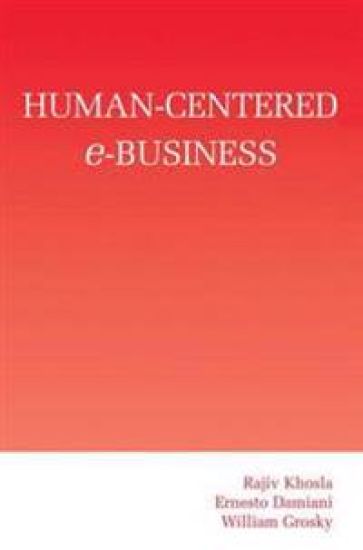
Human-Centered e-Business

Human-Centered e-Business

Rajiv Khosla; Ernesto Damiani; William Grosky

Springer-Verlag New York Inc.
2003
sidottu
Human-Centered e-Business focuses on analysis, design and development of human-centered e-business systems. The authors illustrate the benefits of the human-centered approach in intelligent e-sales recruitment application, integrating data mining technology with decision support model for profiling transaction behavior of internet banking customers, user-centered context dependent data organization using XML, knowledge management, and optimizing the search process through human evaluation in an intelligent interactive multimedia application. The applications described in this work, facilitates both e-business analysis from a business professional's perspective, and human-centered system design from a system development perspective. These applications employ a range of internet and soft computing technologies.
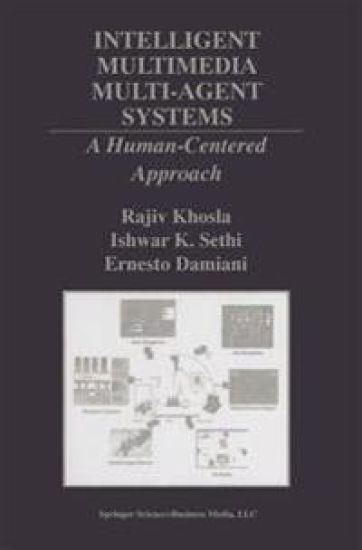
Intelligent Multimedia Multi-Agent Systems

Intelligent Multimedia Multi-Agent Systems

Rajiv Khosla; Ishwar K. Sethi; Ernesto Damiani

Springer
2000
sidottu
Intelligent Multimedia Multi-Agent Systems focuses on building intelligent successful systems. The book adopts a human-centered approach and considers various pragmatic issues and problems in areas like intelligent systems, software engineering, multimedia databases, electronic commerce, data mining, enterprise modeling and human-computer interaction for developing a human-centered virtual machine. The authors describe an ontology of the human-centered virtual machine which includes four components: activity-centered analysis component, problem solving adapter component, transformation agent component, and multimedia based interpretation component. These four components capture the external and internal planes of the system development spectrum. They integrate the physical, social and organizational reality on the external plane with stakeholder goals, tasks and incentives, and organization culture on the internal plane. The human-centered virtual machine and its four components are used for developing intelligent multimedia multi-agent systems in areas like medical decision support and health informatics, medical image retrieval, e-commerce, face detection and annotation, internet games and sales recruitment. The applications in these areas help to expound various aspects of the human-centered virtual machine including, human-centered domain modeling, distributed intelligence and communication, perceptual and cognitive task modeling, component based software development, and multimedia based data modeling. Further, the applications described in the book employ various intelligent technologies like neural networks, fuzzy logic and knowledge based systems, software engineering artifacts like agents and objects, internet technologies like XML and multimedia artifacts like image, audio, video and text.