Kirjojen hintavertailu – 12 859 819 kirjaa ja 27 kauppaa
Kirjailija
Ernesto Sánchez-Triana
Kirjat ja teokset yhdessä paikassa: 6 kirjaa, julkaisuja vuosilta 2013–2023, suosituimpiin kuuluu Revitalizing Industrial Growth in Pakistan. Vertaile teosten hintoja ja tarkista saatavuus suomalaisista kirjakaupoista.
Nimi esiintyy myös muodoissa: Ernesto Sanchez-Triana
This book aims to share information on the environmental harms in Sindh, Pakistan, which in 2009 resulted in more than 40,000 premature deaths and costs equivalent to 15% of the province's GDP, and to provide an interdisciplinary framework for bringing about improved environmental conditions in Sindh.
Pakistan's development efforts are guided by its 2011 Framework for Economic Growth, which identifies actions needed to create a prosperous, industrialised Pakistan through rapid and sustainable development. Industrialisation has the potential to drive Pakistan's economic growth and contribute significantly to meeting both economic and human development goals in Pakistan. Expansions of industrialisation activities, whether in highly developed or developing countries, can be stimuli for intense debate about such projects' benefits and costs to the region in which they are to be located, to the national economy - and to human health and the environment. Pakistan's 2011 Framework for Economic Growth recognises that, to accelerate industrialisation, Pakistan must reduce the cost of doing business and create an incentive structure designed to achieve a competitive, dynamic, and export-driven industrial sector capable of providing employment to the growing labour force. Competing in global markets requires a socially and environmentally sustainable industrialisation strategy. The four main inputs for sustainable industrial growth in Pakistan discussed in this book are: (i) Macroeconomic stability and sectoral policies to support industrial competitiveness by allowing long-term planning, including investments in infrastructure and cleaner production; (ii) Upgraded trade facilitation and infrastructure (particularly transport and energy) to address some of industrialisation's spatial aspects. Improved transport infrastructure will lower production's environmental costs; (iii) Greening of Pakistan's industrial sector to enhance international competitiveness - 'greening' will make Pakistan a more attractive export partner for nations and firms committed to green production; (iv) Strong institutions - for example, environmental management agencies to control pollution, and cleaner production centers to increase domestic awareness of international environmental standards- to implement industrialisation initiatives effectively, including those for small and medium-sized enterprises. This book provides a comprehensive analysis of issues relating to the debate about Pakistan's green industrial growth and lays out priorities and strategies for 'greening' Pakistan's industrial growth.
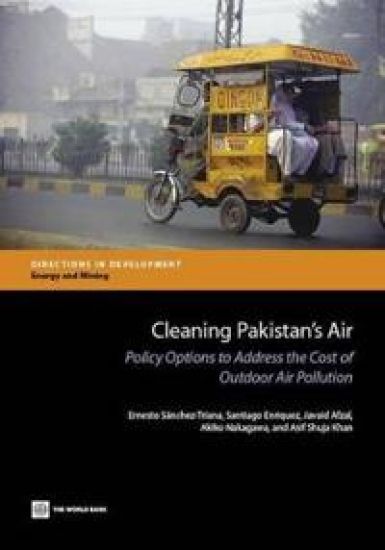
The harm to Pakistanis health, economy, and environment from urban air pollution is among the highest in South Asia, exceeding several high-profile causes of mortality and morbidity in Pakistan. This report details a broad spectrum of research on Pakistan's air quality management challenges and presents concrete steps to achieve improvements.
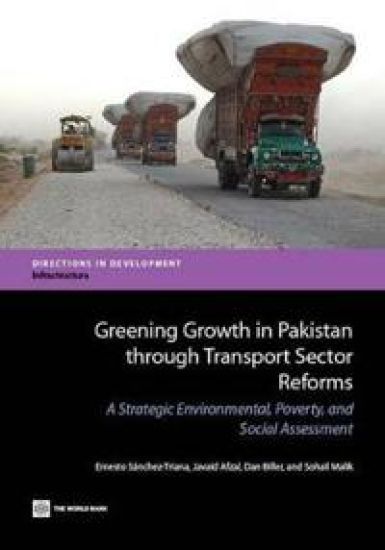
This book identifies reforms that can help manage environmental priority problems associated with transport's impacts on air quality, noise pollution, road safety, hazardous-materials transport, climate change, and urban sprawl. The policy options are contextualised in light of the Government of Pakistan's 2011 Framework for Economic Growth and its strategic objectives. Appendixes A-D present additional background information, describe the economic and institutional analyses undergirding this report, and detail the report's methodology. This analytical work by a team of World Bank specialists focuses on: analysing the policy and institutional adjustments required to address environmental, social, and poverty aspects of increased transportation efficiency in Pakistan;identifying policy options for the Government of Pakistan to better serve the population, to enhance social cohesion, and to foster equitable benefit sharing with low-income or other vulnerable groups; developing a broad participatory process to give a voice to stakeholders who could be affected by enhancements of freight transport productivity;making robust recommendations to strengthen governance and the institutional capacity of agencies to manage the environmental, social, and poverty consequences of freight transportation infrastructure.