Kirjailija
Ernst-Wolfgang Böckenförde
Kirjat ja teokset yhdessä paikassa: 17 kirjaa, julkaisuja vuosilta 1973–2022, suosituimpiin kuuluu Geschichte der Rechts- und Staatsphilosophie. Vertaile teosten hintoja ja tarkista saatavuus suomalaisista kirjakaupoista.
Nimi esiintyy myös muodoissa: Ernst-Wolfgang Bockenforde
17 kirjaa
Kirjojen julkaisuvuodet: 1973–2022.
Ernst-Wolfgang Böckenförde (1930-2019) was one of Europe's foremost legal scholars and political thinkers. As a scholar of constitutional law and a judge on Germany's Federal Constitutional Court (1983-1996), Böckenförde was a major contributor to contemporary debates in legal and political theory, to the conceptual framework of the modern state and its presuppositions, and to contested political issues such as the constitutional status of the state of emergency, citizenship rights, bioethical politics, and the challenges of European integration. His writings have shaped not only academic but also wider public debates from the 1950s to the present, to an extent that few European scholars can match. As a federal constitutional judge and holder of a trusted public office, Böckenförde has influenced the way academics and citizens think about law and politics. During his tenure on the Court, several path-breaking decisions for the Federal Republic of Germany were handed down, including decisions on the deployment of missiles, the law on political parties, the regulation of abortion, and the process of European integration. This second volume in the first representative edition in English of Böckenförde's writings brings together his essays on religion, law, and democracy. The volume is organized in five sections: I. the Catholic Church and Political Order; II. State and Secularity; III. the Theology of Law and its Relation to Political Theory; IV. Norms and the Principle of Human Dignity; and V. Excerpts from a biographical interview. Sections I, II, III, and IV are preceded by an editors' introduction to the articles as well as running editorial commentary to the work.

Ernst-Wolfgang Böckenförde (b. 1930, d. 2019) is one of Europe's foremost legal scholars and political thinkers. As a scholar of constitutional law and a judge on Germany's Federal Constitutional Court (December 1983 - May 1996), Böckenförde has been a major contributor to contemporary debates in legal and political theory, to the conceptual framework of the modern state and its presuppositions, and to contested political issues such as the rights of the enemies of the state, the constitutional status of the state of emergency, citizenship rights, and challenges of European integration. His writings have shaped not only academic but also wider public debates from the 1950s to the present, to an extent that few European scholars can match. As a federal constitutional judge and thus holder of one the most important and most trusted public offices, Böckenförde has influenced the way in which academics and citizens think about law and politics. During his tenure as a member of the Second Senate of the Federal Constitutional Court, several path-breaking decisions for the Federal Republic of Germany were handed down, including decisions pertaining to the deployment of missiles, the law on political parties, the regulation of abortion, and the process of European integration. In the first representative edition in English of Böckenförde's writings, this volume brings together his essays on constitutional and political theory. The volume is organized in four sections, focusing respectively on (I) the political theory of the state; (II) constitutional theory; (III) constitutional norms and fundamental rights; and (IV) the relation between state, citizenship, and political autonomy. Each of these feature introductions to the articles as well as a running editorial commentary to the work. A second volume will follow this collection, focusing on the relation between religion, law, and democracy. A companion volume entitled Religion, Law, and Democracy is also being published.
Ernst-Wolfgang Böckenförde (1930-2019) was one of Europe's foremost legal scholars and political thinkers. As a scholar of constitutional law and a judge on Germany's Federal Constitutional Court (1983-1996), Böckenförde was a major contributor to contemporary debates in legal and political theory, to the conceptual framework of the modern state and its presuppositions, and to contested political issues such as the constitutional status of the state of emergency, citizenship rights, bioethical politics, and the challenges of European integration. His writings have shaped not only academic but also wider public debates from the 1950s to the present, to an extent that few European scholars can match. As a federal constitutional judge and holder of a trusted public office, Böckenförde has influenced the way academics and citizens think about law and politics. During his tenure on the Court, several path-breaking decisions for the Federal Republic of Germany were handed down, including decisions on the deployment of missiles, the law on political parties, the regulation of abortion, and the process of European integration. This second volume in the first representative edition in English of Böckenförde's writings brings together his essays on religion, law, and democracy. The volume is organized in five sections: I. the Catholic Church and Political Order; II. State and Secularity; III. the Theology of Law and its Relation to Political Theory; IV. Norms and the Principle of Human Dignity; and V. Excerpts from a biographical interview. Sections I, II, III, and IV are preceded by an editors' introduction to the articles as well as running editorial commentary to the work.

Ernst-Wolfgang Böckenförde (b. 1930) is one of Europe's foremost legal scholars and political thinkers. As a scholar of constitutional law and a judge on Germany's Federal Constitutional Court (December 1983 - May 1996), Böckenförde has been a major contributor to contemporary debates in legal and political theory, to the conceptual framework of the modern state and its presuppositions, and to contested political issues such as the rights of the enemies of the state, the constitutional status of the state of emergency, citizenship rights, and challenges of European integration. His writings have shaped not only academic but also wider public debates from the 1950s to the present, to an extent that few European scholars can match. As a federal constitutional judge and thus holder of one the most important and most trusted public offices, Böckenförde has influenced the way in which academics and citizens think about law and politics. During his tenure as a member of the Second Senate of the Federal Constitutional Court, several path-breaking decisions for the Federal Republic of Germany were handed down, including decisions pertaining to the deployment of missiles, the law on political parties, the regulation of abortion, and the process of European integration. In the first representative edition in English of Böckenförde's writings, this volume brings together his essays on constitutional and political theory. The volume is organized in four sections, focusing respectively on (I) the political theory of the state; (II) constitutional theory; (III) constitutional norms and fundamental rights; and (IV) the relation between state, citizenship, and political autonomy. Each of these feature introductions to the articles as well as a running editorial commentary to the work. A second volume will follow this collection, focusing on the relation between religion, law, and democracy.
Die 2. Auflage enthält ergänzende Ausführungen u.a. zu Platons Gerechtigkeitsbegriff, zum Ursprung des Gedankens der Würde des Menschen in der Stoa und im Christentum, zur Diskussion um die lex naturalis bei Thomas von Aquin und neu die Darstellung der Lehren von Marsillius von Padua." Ernst-Wolfgang Böckenfördes meisterhafte Geschichte der Rechts- und Staatsphilosophie ist ein Resultat jahrlanger Vorlesungstätigkeit: eine in Form wie Inhalt "klassische" historisch-politische Ideengeschichte der grossen Systeme, in denen im Abendland bis zum Ausgang des Mittelalters die normative Ordnung des menschlichen Zusammenlebens begründet und interpretiert wurde." Otto Kallscheuer Neue Zürcher Zeitung vom 19.8.2003"Das Buch Böckenfördes fordert und fördert das Nachdenken über die Geschichte des Nachdenkens zu Recht und Staat. Ein gelungenes, ein wichtiges Buch." Bernd Rüthers NJW 9 (2004), S. 585"Zum Schluss soll das Buch nochmal allen empfohlen werden, die an einer komplexen Darstellung der Ideen und Gedanken bezüglich des Staates und des Rechts im Verlauf der Jahrhunderte interessiert sind, und es ist Böckenförde zu wünschen, dass Leser seines Buches dieses als Einstieg für eigene Überlegungen und eine vertiefende Beschäftigung mit diesem Thema nutzen." Denis Kirstein Ausbildung-Prüfung-Fortbildung, 10 (2005), S. 80
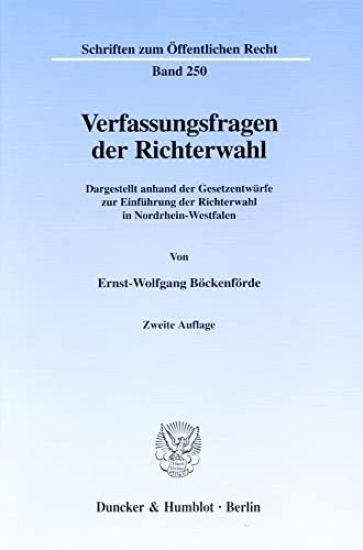
Verfassungsfragen Der Richterwahl: Dargestellt Anhand Der Gesetzentwurfe Zur Einfuhrung Der Richterwahl in Nordrhein-Westfalen
Ernst-Wolfgang Bockenforde
Duncker Humblot
1998
nidottu
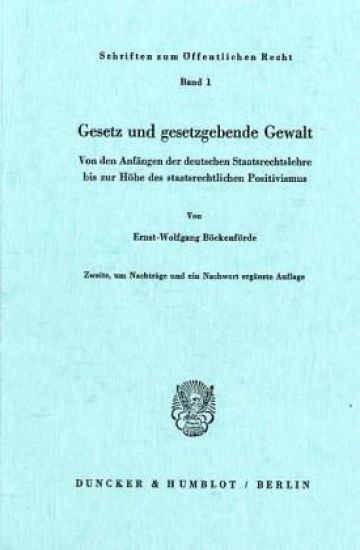
Gesetz Und Gesetzgebende Gewalt: Von Den Anfangen Der Deutschen Staatsrechtslehre Bis Zur Hohe Des Staatsrechtlichen Positivismus
Ernst-Wolfgang Bockenforde
Duncker Humblot
1981
nidottu
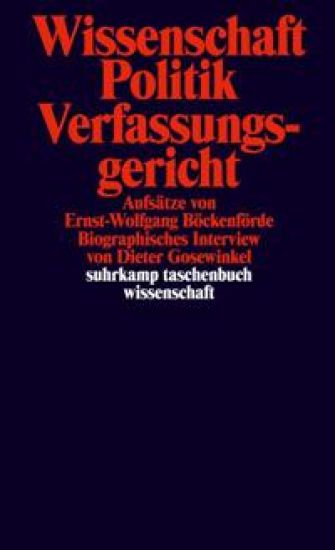
Wissenschaft, Politik, Verfassungsgericht
Ernst-Wolfgang Böckenförde; Dieter Gosewinkel
SUHRKAMP VERLAG
2011
pokkari
English summary: This survey of the history of the philosophy of law and of the state in antiquity and the middle ages deals with major ideas and figures and - based on the source material - includes the intellectual and historical-political surroundings of these ideas and figures at the same time. In doing so, the book imparts a knowledge of history and philosophy and also stimulates the reader to think about law and the political system. German description: Die 2. Auflage enthalt erganzende Ausfuhrungen u.a. zu Platons Gerechtigkeitsbegriff, zum Ursprung des Gedankens der Wurde des Menschen in der Stoa und im Christentum, zur Diskussion um die lex naturalis bei Thomas von Aquin und neu die Darstellung der Lehren von Marsillius von Padua. Ernst-Wolfgang Bockenfordes meisterhafte Geschichte der Rechts- und Staatsphilosophie ist ein Resultat jahrlanger Vorlesungstatigkeit: eine in Form wie Inhalt klassische historisch-politische Ideengeschichte der grossen Systeme, in denen im Abendland bis zum Ausgang des Mittelalters die normative Ordnung des menschlichen Zusammenlebens begrundet und interpretiert wurde. Otto Kallscheuer Neue Zurcher Zeitung vom 19.8.2003
Der Band vereinigt mehrere, sich ergänzende Studien zu den Problemen Staat, Nation, Europa. In ihnen geht es um die Erörterung von Fragen, die für die staatlich-politische Entwicklung, wie sie sich im letzten Jahrzehnt in Deutschland und auf Europa hin vollzieht, grundlegende Bedeutung erlangt haben. Behandelt werden u.a. begriff und Probleme des Verfassungsstaats, der begriff des Verfassungswandels, Strukturprobleme der Verfassungsgerichtbarkeit, das Verhältnis von staatlichem Recht und sittlicher Ordnung, die Bedeutung der Religion in einer 'civil society' sowie die Frage, ob politische Demokratie eine notwendige Forderungen der Menschenrechte sei.
Die Deutsche Verfassungsgeschichtliche Forschung Im 19. Jahrhundert: Zeitgebundene Fragestellungen Und Leitbilder
Ernst-Wolfgang Bockenforde
Duncker Humblot
1996
nidottu
Die verfassungstheoretische Unterscheidung von Staat und Gesellschaft als Bedingung der individuellen Freiheit
Ernst-Wolfgang Böckenförde
VS Verlag fur Sozialwissenschaften
1973
nidottu