Kirjojen hintavertailu – 10 495 686 kirjaa ja 27 kauppaa

Kirjailija

Erskine Caldwell

Kirjat ja teokset yhdessä paikassa: 21 kirjaa, julkaisuja vuosilta 1987–2026, suosituimpiin kuuluu Tobacco Road. Vertaile teosten hintoja ja tarkista saatavuus suomalaisista kirjakaupoista.

21 kirjaa

Kirjojen julkaisuvuodet: 1987–2026.

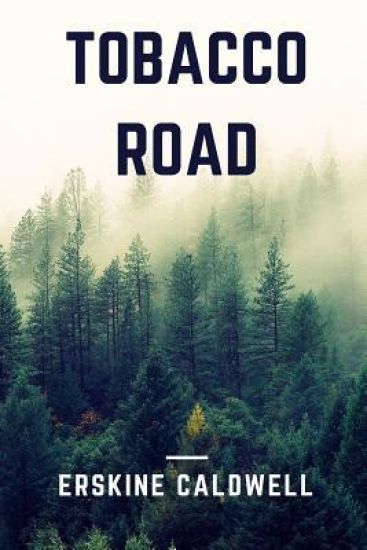
Tobacco Road

Tobacco Road

Erskine Caldwell

Lulu.com
2017
nidottu

Halvin toimitettuna 17,30 € 3 kauppaa

Originally published in 1932, Caldwell's novel told the story of the Lester family, poor Georgia sharecroppers who no longer farmed the land, but lived by whatever means possible. Caldwell's picture of the rural South challenged notions of the dignified and polite Antebellum South and depicted an image that was grotesque, violent, and morally bankrupt. Southern readers immediately found Caldwell's novel needlessly exaggerated and offensive, while Northern critics read his story as an indictment upon a failed Southern economic system in dire need of reform.
Georgia Boy

Georgia Boy

Erskine Caldwell; Roy Blount

University of Georgia Press
1995
pokkari
In this appealing collection of fourteen interrelated stories, twelve-year-old William Stroup recounts the ludicrous predicaments and often self-imposed hardships his family endures. Playing on the tension between Martha, his hardworking, sensible mother, and Morris, his disarmingly likable but shiftless and philandering father, William tells of Pa's flirtation with a widow, his swapping match with a band of gypsies, his battle of wits with a traveling silk-tie saleswoman, and his get-rich-quick schemes based on selling Ma's old love letters and collecting scrap iron.Often caught in the middle of the Stroups' bungles is Handsome Brown, their yard hand, as well as a number of animals with all-too-human qualities: Ida, the mule; Pretty Sooky, the runaway calf; College Boy, the fighting cock; a small flock of woodpeckers that favor Handsome's head over a tree; and goats who commandeer the roof of the Stroups' house.Georgia Boy was a special book to Caldwell, and its humor is less in the service of social criticism than in other works in which he dealt with poor white southerners. Beneath Georgia Boy's folksy lightheartedness, however, lie the problems of indigence, racism, and apathy that Caldwell confronted again and again in his fiction.
Journeyman

Journeyman

Erskine Caldwell; Edwin T. Arnold

University of Georgia Press
1996
pokkari
Written immediately following Tobacco Road and God's Little Acre, this novel introduces one of Erskine Caldwell's most memorable characters: the philandering, murderous itinerant preacher, Semon Dye. Part allegory, part tall tale, and with a good measure of old frontier humor, Journeyman,/i> tells of a stranger, as devilish as he is divine, who mysteriously arrives in Rocky Comfort, Georgia, and, inside of a week, nearly tears the small community apart.Helping Rocky Comfort's citizens to rationalize their vices and weaknesses, Semon Dye then uses their flaws to his own advantage. Offering no forgiveness for their actions and no justification for his own, he confronts the people of Rocky Comfort with their own sins as he gambles, drinks, carouses, and fights along with them.Culminating in a tumultuous, ecstatic revival, Journeyman is filled with insights into human nature and the physical and emotional components of religious fervor. This volume reprints the complete text of Journeyman as it was first published, before the more widely circulated edition, expurgated in the aftermath of the legal battles waged against God's Little Acre, was released.
Deep South

Deep South

Erskine Caldwell

University of Georgia Press
1995
pokkari
Portraying a region steeped religious piety and ritual, excess and prejudice, Deep South is a product both of Erskine Caldwell the storyteller and Erskine Caldwell the minister's son.Reverend Ira Sylvester Caldwell's missionary work took him and his family deep into the region commonly referred to as the Bible Belt. His son, Erskine, was at his side on innumerable home visits with the elderly, sick, and poor of Georgia, the Carolinas, Tennessee, Virginia, and Florida. By the time the younger Caldwell left home at seventeen, he had also witnessed such varieties of religious experience as "Church of God all-night camp meetings, Holy Roller exhibitions on splintery wooden floors, primitive Christian baptismal immersions in muddy creeks, Seventh-Day Adventist foot-washings, Body of Christ blood-drinking communions, Kingdom of God snakehandlings, Full Redeemer glossolalia services, Fire Baptized Holiness street-corner rallies, Catholic mass at midnight on Christmas Eve, the rituals of Jewish synagogues, and . . . philosophical lectures in Unitarian churches."Decades later, Caldwell drew on this fertile background when he toured Georgia and neighboring states in order to hear firsthand from ministers and churchgoers about how southern Protestantism was faring amid the social upheaval of the mid-1960s. Deep South offers a rich mix of anecdotes, memories, interviews, and observations that point to what may be the true essence of southern spirituality.

Tobacco Road

Tobacco Road

Erskine Caldwell

University of Georgia Press
1995
pokkari
Set during the Depression in the depleted farmlands surrounding Augusta, Georgia, Tobacco Road was first published in 1932. It is the story of the Lesters, a family of white sharecroppers so destitute that most of their creditors have given up on them. Debased by poverty to an elemental state of ignorance and selfishness, the Lesters are preoccupied by their hunger, sexual longings, and fear that they will someday descend to a lower rung on the social ladder than the black families who live near them.
Blue Ridge Country

Blue Ridge Country

Jean Thomas; Erskine Caldwell

Anson Street Press
2025
pokkari
Venture into the heart of "Blue Ridge Country" with Jean Thomas's timeless exploration of life in the Appalachian mountains. This meticulously prepared republication offers a window into the history and folklore of the Blue Ridge region, capturing the essence of Southern culture and mountain life. Explore the unique traditions, landscapes, and stories that define this captivating area. Delve into the rich tapestry of a world shaped by its geography, its people, and their enduring connection to the land. "Blue Ridge Country" provides a fascinating glimpse into a distinct corner of the United States, appealing to anyone interested in travel, regional nature, and the history of the American South. Experience the enduring spirit of Appalachia through the words of a keen observer.This work has been selected by scholars as being culturally important, and is part of the knowledge base of civilization as we know it.This work is in the public domain in the United States of America, and possibly other nations. Within the United States, you may freely copy and distribute this work, as no entity (individual or corporate) has a copyright on the body of the work.Scholars believe, and we concur, that this work is important enough to be preserved, reproduced, and made generally available to the public. We appreciate your support of the preservation process, and thank you for being an important part of keeping this knowledge alive and relevant.
Blue Ridge Country

Blue Ridge Country

Jean Thomas; Erskine Caldwell

Anson Street Press
2025
sidottu
Venture into the heart of "Blue Ridge Country" with Jean Thomas's timeless exploration of life in the Appalachian mountains. This meticulously prepared republication offers a window into the history and folklore of the Blue Ridge region, capturing the essence of Southern culture and mountain life. Explore the unique traditions, landscapes, and stories that define this captivating area. Delve into the rich tapestry of a world shaped by its geography, its people, and their enduring connection to the land. "Blue Ridge Country" provides a fascinating glimpse into a distinct corner of the United States, appealing to anyone interested in travel, regional nature, and the history of the American South. Experience the enduring spirit of Appalachia through the words of a keen observer.This work has been selected by scholars as being culturally important, and is part of the knowledge base of civilization as we know it.This work is in the public domain in the United States of America, and possibly other nations. Within the United States, you may freely copy and distribute this work, as no entity (individual or corporate) has a copyright on the body of the work.Scholars believe, and we concur, that this work is important enough to be preserved, reproduced, and made generally available to the public. We appreciate your support of the preservation process, and thank you for being an important part of keeping this knowledge alive and relevant.
You Have Seen Their Faces

You Have Seen Their Faces

Erskine Caldwell; Alan Trachtenberg

University of Georgia Press
2018
sidottu
In the middle years of the Great Depression, Erskine Caldwell and photographer Margaret Bourke-White spent eighteen months traveling across the back roads of the Deep South—from South Carolina to Arkansas—to document the living conditions of the sharecropper. Their collaboration resulted in You Have Seen Their Faces, a graphic portrayal of America's desperately poor rural underclass. First published in 1937, it is a classic comparable to Jacob Riis's How the Other Half Lives, and James Agee and Walker Evans's Let Us Now Praise Famous Men, which it preceded by more than three years.Caldwell lets the poor speak for themselves. Supported by his commentary, they tell how the tenant system exploited whites and blacks alike and fostered animosity between them. Bourke-White, who sometimes waited hours for the right moment, captures her subjects in the shacks where they lived, the depleted fields where they plowed, and the churches where they worshipped.
Erskine Caldwell

Erskine Caldwell

Erskine Caldwell

McFarland Co Inc
2013
pokkari
"I'm just an ordinary writer," Erskine Caldwell once wrote. "I'm not trying to sell anything; I'm not trying to buy anything. I'm just trying to present my vision of life." Yet his vision of Southern grotesques, of slack-jawed, pellagra-ridden sharecroppers, repressed farmwives, and oversexed nymphets, elicited anything but an "ordinary" response. Hailed by the likes of F. Scott Fitzgerald and Maxwell Perkins, reviled by others as a pornographer or sensationalist, Caldwell was once called "America's most popular author." Once the furor flagged, Caldwell was relegated to the "mansions of subliterature," where his reputation resides today. This book contains more than 150 previously unpublished letters, notes, telegrams, and postcards written between 1929 and 1955, at the peak of Caldwell's popularity and influence, all extensively annotated. The introduction assays Caldwell's significance in American popular culture and literary studies and establishes the importance of Caldwell's correspondence as a means of understanding the intentions of a man who was otherwise terse and unforthcoming about his work.
Tierra Tragica

Tierra Tragica

Erskine Caldwell

Ediciones Robinbook
2013
nidottu
A portrait of American society during the Great Depression, this novel finds humor in sad and unpleasant situations. Spence Douthit and his family move to the city in the hopes of making a decent living working in the gunpowder factory. But the factory closes, and Spence finds himself jobless and struggling to make ends meet in Pobre Chico, a neighborhood full of emigrants and the underprivileged. "Un retrato de la sociedad americana durante la Gran Depresion, esta novela consigue el humor aun en el medio de las situaciones tristes y desagradables. Spence Douthit y su familia se mudan a la ciudad con la esperanza de ganarse una buena vida en la fabrica de polvora. Pero la fabrica cierra, y Spence se encuentra sin empleo y malviviendo en Pobre Chico, el barrio de los emigrantes y los desfavorecidos."
On the Plantation

On the Plantation

Joel Chandler Harris; Erskine Caldwell

University of Georgia Press
2004
pokkari
The enduring fame of Joel Harris as a skillful storyteller had its beginning with the publication of the first of his enchanting Uncle Remus stories. These and other local color tales were written to sound as if they were being told to a group of small children on a winter night beside a blazing fireplace of a middle Georgia farmhouse. And ever since his stories first appeared in print, it has yet to be resolved who enjoys them the most—a child or the adult reading them aloud.
The Stories of Erskine Caldwell

The Stories of Erskine Caldwell

Erskine Caldwell; Stanley W. Lindberg

University of Georgia Press
1996
pokkari
This collection of ninety-six stories was first published in 1953 and presents the best of Erskine Caldwell's short fiction from his most productive period of work. Included is "Crown-Fire," which James Dickey praised as "the best story in the language," and such personal favorites of Caldwell as "Country Full of Swedes," "The Windfall," "Horse Thief," "Yellow Girl," and "Kneel to the Rising Sun."
Call It Experience

Call It Experience

Erskine Caldwell

University of Georgia Press
1996
pokkari
This memoir presents an engaging self-portrait of Erskine Caldwell's first thirty years as a writer, with special emphasis on his long and hard apprenticeship before he emerged as one of the most widely read and controversial authors of his time. While conveying the enormous amount of drive and dedication with which he pursued the writer's life, Caldwell tells of his struggles to find his own voice, his travels, and his various jobs, which ranged from back-breaking common labor to much sought-after positions in radio, film, and journalism.Such literary personages as Nathanael West, Maxwell Perkins, and Margaret Mitchell appear in Call It Experience, as does Margaret Bourke-White, with whom he collaborated on a number of projects and whom he also married. Including a self-interview, Call It Experience offers a wealth of insights into Caldwell's imagination, his sources of inspiration, and his writing habits, as well as his views on critics and reviewers, publishers, and booksellers. It is a source of both information and inspiration to aspiring writers.
The Sacrilege of Alan Kent

The Sacrilege of Alan Kent

Erskine Caldwell; Mary Hood

University of Georgia Press
1996
sidottu
As Mary Hood writes in her foreword, "The Sacrilege of Alan Kent is unique. Comparisons are not odious, they are impossible. There is nothing like it in any of Caldwell's published works, nor can we find its example in all of American literature."Alan Kent is a wanderer, a seeker. Driven by, or fleeing from, unnamed forces, he struggles against the hardening effects of a brutal and indifferent world. In a series of episodes, Erskine Caldwell tells the semiautobiographical story of Kent's childhood, roving early manhood, and transformation into an artist.The episodes, which range from brief, graphic sketches to one-sentence impressions, are filled with elemental images of light and darkness, blood and water, earth and sky. Although an early work, The Sacrilege of Alan Kent shows readers the poetic economy, stark naturalism, and concern for the South's poorest people that became the hallmarks of Caldwell's later work.
In Search of Bisco

In Search of Bisco

Erskine Caldwell

University of Georgia Press
1995
pokkari
In 1965, more than five decades after his forced estrangement from his black boyhood friend Bisco, Erskine Caldwell set out across the South to find him. On the journey, which took him from South Carolina to Arkansas, Caldwell spoke to many people on the pretense of asking Bisco's whereabouts: a black college professor in Atlanta, Georgia; a white real estate salesman in Demopolis, Alabama; a black sharecropper in the Yazoo Basin of the Mississippi Delta; a transplanted white New England housewife in Bastrop, Louisiana; and others. Eighteen of those conversations, with Caldwell's commentary, make up this book.Caldwell made his journey at the zenith of the civil rights movement. Bisco, whom Caldwell never found, becomes a symbol for the South's race problem, to which he sought an answer in the emotions, experiences, and attitudes of those he encountered.
You Have Seen Their Faces

You Have Seen Their Faces

Erskine Caldwell; Alan Trachtenberg

University of Georgia Press
1995
pokkari
In the middle years of the Great Depression, Erskine Caldwell and photographer Margaret Bourke-White spent eighteen months traveling across the back roads of the Deep South—from South Carolina to Arkansas—to document the living conditions of the sharecropper. Their collaboration resulted in You Have Seen Their Faces, a graphic portrayal of America's desperately poor rural underclass. First published in 1937, it is a classic comparable to Jacob Riis's How the Other Half Lives, and James Agee and Walker Evans's Let Us Now Praise Famous Men, which it preceded by more than three years.Caldwell lets the poor speak for themselves. Supported by his commentary, they tell how the tenant system exploited whites and blacks alike and fostered animosity between them. Bourke-White, who sometimes waited hours for the right moment, captures her subjects in the shacks where they lived, the depleted fields where they plowed, and the churches where they worshipped.
With All My Might: An Autobiography

With All My Might: An Autobiography

Erskine Caldwell

Peachtree Publishers
1987
nidottu
In With All My Might, his definitive autobiography, Caldwell tells about his work as a cotton picker, stagehand, professional football player, and war correspondent for Life magazine during World War II. In 1932, Erskine Caldwell's first novel, Tobacco Road, was the center of controversy. Some critics condemned the book; others considered it to be the work of a genius. Today Caldwell's fifty-plus books have sold more than 80 million copies worldwide, and his stature as a writer has been firmly established. In With All My Might, his definitive autobiography, Caldwell tells about his work as a cotton picker, stagehand, professional football player, and war correspondent for Life magazine during World War II. He describes his four marriages (including the much-publicized divorce from photographer Margaret Bourke-White). He writes of the sacrifices he made and the rejections he suffered during the years he was struggling to have his work published.