
Kirjailija
Erskine Childers
Kirjat ja teokset yhdessä paikassa: 104 kirjaa, julkaisuja vuosilta 1988–2026, suosituimpiin kuuluu The Riddle of the Sands. Vertaile teosten hintoja ja tarkista saatavuus suomalaisista kirjakaupoista.
104 kirjaa
Kirjojen julkaisuvuodet: 1988–2026.

A Tree with a Bird in it A Symposium of Contemporary American Poets on Being Shown a Pear-tree on Which Sat a Grackle (Edition1)
Erskine Childers
Alpha Editions
2024
nidottu
The Riddle of the Sands by Erskine Childers is a gripping espionage novel that unfolds against the backdrop of the North Sea and the intricate politics of early 20th-century Europe. When Carruthers receives an invitation from an old acquaintance, Davies, to join him on a sailing trip through the Frisian Islands, he embarks on what he believes to be a leisurely adventure. However, as Carruthers becomes entangled in Davies' quest to uncover suspicious activities along the German coast, their seemingly innocent voyage transforms into a thrilling journey fraught with danger and intrigue. Filled with suspenseful twists, maritime espionage, and geopolitical tensions, "The Riddle of the Sands" is a riveting tale that keeps readers guessing until the very end.

How to be Happy Though Married: Being a Handbook to Marriage
Erskine Childers
Alpha Editions
2023
nidottu
The Riddle of the Sands, a classical book, has been considered essential throughout the human history, and so that this work is never forgotten we at Alpha Editions have made efforts in its preservation by republishing this book in a modern format for present and future generations. This whole book has been reformatted, retyped and designed. These books are not made of scanned copies of their original work and hence the text is clear and readable.

"The Framework of Home Rule" is an ancient nonfiction story book written by Erskine Childers. Childers' paintings, set against the context of the early twentieth century, whilst tensions between Ireland and Britain had been at their top, offers a thorough evaluation of the historical, accredited, and constitutional factors that make up the house rule argument. Childers gives a radical framework for knowledge the thoughts and realities of home rule, addressing key issues together with sovereignty, illustration, and Ireland's connection to the British Empire. Drawing on his very own experiences as a proponent of Irish independence, Childers offers insights into the political dynamics of the time and pushes for an amicable and democracy method to the Irish afflicted times. His careful studies and persuasive language make "The Framework of Home Rule" a crucial examine for anybody interested by Irish history and the struggle for self-dedication. Erskine Childers' book remains a seminal addition to the investigation of Irish politics, informing debates on themes of autonomy and governance in Ireland and elsewhere.


The book "" The Framework of Home Rule "" has been considered important throughout the human history, and so that this work is never forgotten we have made efforts in its preservation by republishing this book in a modern format for present and future generations. This whole book has been reformatted, retyped and designed. These books are not made of scanned copies and hence the text is clear and readable.
The Riddle of the SandsThe Riddle of the Sands: A Record of Secret Service is a 1903 novel by Erskine Childers. The book, which enjoyed immense popularity in the years before World War I, is an early example of the espionage novel and was extremely influential in the genre of spy fiction. It has been made into feature-length films for both cinema and television. The novel "owes a lot to the wonderful adventure novels of writers like Rider Haggard, that were a staple of Victorian Britain". It was a spy novel that "established a formula that included a mass of verifiable detail, which gave authenticity to the story - the same ploy that would be used so well by John Buchan, Ian Fleming, John le Carr and many others. It was one of the early invasion novels, "... a story with a purpose" in the author's own words, written from "a patriot's natural sense of duty", which predicted war with Germany and called for British preparedness. Context The whole genre of "invasion novels" raised the public's awareness of the "potential threat" of Imperial Germany. Although the belief has grown that the book was responsible for the development of the naval base at Rosyth, the novel was published in May 1903, two months after the purchase of the land for the Rosyth naval base was announced in Parliament (5 March 1903) and some time after secret negotiations for the purchase had begun. Although Winston Churchill later credited the book as a major reason why the Admiralty had decided to establish the new naval bases, this seems unlikely. When war was declared he ordered the Director of Naval Intelligence to find Childers, whom he had met when the author was campaigning to represent a naval seat in Parliament, and employ him. At the time Childers was writing Riddle he was also contributing to a factual book published by The Times in which he warned of outdated British army tactics in the event of "conflicts of the future". He developed this theme in two further works he published in 1911: War and the Arme Blanche and German Influence on British Cavalry. analysis The novel contains many realistic details based on Childers's own sailing trips along the East Frisia coast and large parts of his logbook entries from an 1897 Baltic cruise "appear almost unedited in the book." The yacht Dulcibella in the novel is based upon Vixen, the boat Childers used for his exploration.
This book has been considered important throughout the human history, and so that this work is never forgotten we have made efforts in its preservation by republishing this book in a modern format for present and future generations. This whole book has been reformatted, retyped and designed. These books are not made of scanned copies and hence the text is clear and readable.

The Riddle of the SandsThe Riddle of the Sands: A Record of Secret Service is a 1903 novel by Erskine Childers. The book, which enjoyed immense popularity in the years before World War I, is an early example of the espionage novel and was extremely influential in the genre of spy fiction. It has been made into feature-length films for both cinema and television. The novel "owes a lot to the wonderful adventure novels of writers like Rider Haggard, that were a staple of Victorian Britain". It was a spy novel that "established a formula that included a mass of verifiable detail, which gave authenticity to the story - the same ploy that would be used so well by John Buchan, Ian Fleming, John le Carr and many others. It was one of the early invasion novels, "... a story with a purpose" in the author's own words, written from "a patriot's natural sense of duty", which predicted war with Germany and called for British preparedness. Context The whole genre of "invasion novels" raised the public's awareness of the "potential threat" of Imperial Germany. Although the belief has grown that the book was responsible for the development of the naval base at Rosyth, the novel was published in May 1903, two months after the purchase of the land for the Rosyth naval base was announced in Parliament (5 March 1903) and some time after secret negotiations for the purchase had begun. Although Winston Churchill later credited the book as a major reason why the Admiralty had decided to establish the new naval bases, this seems unlikely. When war was declared he ordered the Director of Naval Intelligence to find Childers, whom he had met when the author was campaigning to represent a naval seat in Parliament, and employ him. At the time Childers was writing Riddle he was also contributing to a factual book published by The Times in which he warned of outdated British army tactics in the event of "conflicts of the future". He developed this theme in two further works he published in 1911: War and the Arme Blanche and German Influence on British Cavalry. analysis The novel contains many realistic details based on Childers's own sailing trips along the East Frisia coast and large parts of his logbook entries from an 1897 Baltic cruise "appear almost unedited in the book." The yacht Dulcibella in the novel is based upon Vixen, the boat Childers used for his exploration. In August 1910, inspired by the work, two British amateur yachtsmen, Captain Bernard Trench RM and Lieutenant Vivian Brandon RN, undertook a sailing holiday along the same section of the Frisian coast, during which they collected information about German naval installations. The two men were sentenced to four years custody by a military court in Leipzig, but they were pardoned by the Emperor in 1913. They joined "Room 40", the intelligence and decoding section of the British Admiralty, on the outbreak of war.the autor: Erskine Childers (1870-1922) was an Irish nationalist and novelist. He was the editor of the Cambridge Review and the author of the influential novel Riddle of the Sands, which the Observer listed as one of the "100 Greatest Novels of All Time." It is considered by many to be the first spy novel.
The Riddle of the Sands: A Record of Secret Service is a 1903 novel by Erskine Childers. The book, which enjoyed immense popularity in the years before World War I, is an early example of the espionage novel and was extremely influential in the genre of spy fiction. It has been made into feature-length films for both cinema and television. The novel "owes a lot to the wonderful adventure novels of writers like Rider Haggard, that were a staple of Victorian Britain". It was a spy novel that "established a formula that included a mass of verifiable detail, which gave authenticity to the story - the same ploy that would be used so well by John Buchan, Ian Fleming, John le Carr and many others." All of the physical background is completely authentic - the various Frisian islands and towns named in the book actually exist and the descriptions of them accurate (often, from the author's own experience). The same is true for the various "sands" of the title - vast areas which are flooded at high tide but become mudflats at ebb. Navigating a small boat under these conditions requires a specialized kind of skilled seamanship - of which the character Davies is an unsurpassed master, and the descriptions of his feats are of abiding interest to yachting enthusiasts, quite apart from their role in the book's espionage plot.
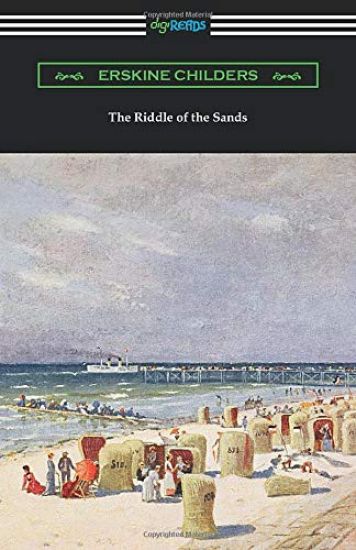
First Published in 1903, Erskine Childers' "The Riddle of the Sands: A Record of Secret Service", is one of the earliest examples of an espionage novel and was immensely influential in the creation of this popular genre. Childers led an interesting and adventurous life, becoming an amateur sailor as a young man before enlisting in the military and serving in the Boer War and eventually the First World War. In "The Riddle of the Sands", a gripping and thrilling story begins with a minor official in the Foreign Office, Carruthers, and his complete boredom with his occupation. Although his prospects are good, he feels an emptiness in his life, and this in large part encourages him to accept an invitation to go sailing with his friend Davies. Davies suspects German naval activity in the Baltic, and the two overcome numerous obstacles, both by suspicious German patrol boats and tricky inshore sailing, to discover information that threatens the lives and safety of their countrymen back home. Childers's tale is a masterpiece of suspense and intrigue, as well as a patriotic tale of men willing to die for their country in a dangerous time of secret plots and burgeoning war. This edition is printed on premium acid-free paper.

Robert Erskine Childers (1870-1922) was a British-born Irish writer. In his early career, he was a notable military historian and critic, famously writing an account of the Boer War for which he was a correspondent. In his 1910 work, "War and the Arme Blanche" Childers offers a critique of the cavalry. Employing his personal experiences in the Boer War, he argues that instead of simply having lances, the cavalry should be transformed into mounted infantry complete with swords and carbines. Content includes: "The Issue And Its Importance", "The Threefold Problem", "British And Boer Mounted Troops", "Elandslaagte", "From Elandslaagte To The Black Week", "Colesberg And Kimberley", etc. Other notable works by this author include: "The Riddle of the Sands" (1903) and "The Framework for Home Rule" (1911).
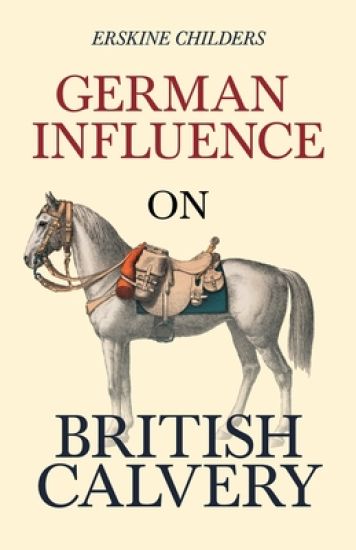
First published in 1911, this vintage book contains an fascinating account of how British cavalry was influenced by German practices and techniques at the turn of the twentieth century. Contents include: "Introductory", "Sir John French on", "The Arme Blanche", "The British Theory of The Arme Blanche", "Cavalry In Combat", "Tactics Against The Various Arms", "The Fight Of The Independent Cavalry", "Tactics Against The Various Arms", "The Fight Of The Independent Cavalry", "The Battle Of All Arms", etc. This fantastic volume will appeal to those with an interest in military history and the evolution of modern cavalry in particular. Robert Erskine Childers (1870-1922) was a British-born Irish writer. Other notable works by this author include: "The Riddle of the Sands" (1903), "The Framework for Home Rule" (1911), and "War and the Arme Blanche" (1910). Read & Co. is republishing this classic work in a brand new edition complete with an introductory excerpt from 'Remembering Sion' by Ryan Desmond.
"The Riddle of the Sands - A Record of Secret Service Recently Achieved" is a 1903 novel by British-born Irish writer Erskine Childers (1870-1922). "The Riddle of the Sands" is a nautical tale of a two-man sailing trip along the German coast at the beginning of the twentieth century. An accomplished yachtsman, Childers uses this realistic and portentous story to warn Britain of the increasing threat posed by Germany before the First World War. Contents include: "The Letter", "The Dulcibella", "Davies", "Retrospect", "Wanted, A North Wind", "Schlei Fiord", "The Missing Page", "The Theory", "I Sign Articles", and "His Chance". Other notable works by this author include: "The Riddle of the Sands" (1903), "The Framework for Home Rule" (1911), and "War and the Arme Blanche" (1910). This classic work is now being republished in an affordable, modern, high-quality edition complete with an excerpt from "Remembering Sion" by Ryan Desmond.

"The Framework of Home Rule" is a 1911 work by Erskine Childers. Within it, Childers attempts to outline and advocate a definite scheme of self-government for Ireland. Irish Home Rule was a movement that sought for self-governance for Ireland in the United Kingdom of Great Britain and Ireland, and it was the dominant nationalistic movement in Ireland between 1870 and the end of the First Word War. Robert Erskine Childers (1870-1922) was a British-born Irish writer. Other notable works by this author include: "The Riddle of the Sands" (1903), "The Framework for Home Rule" (1911), and "War and the Arme Blanche" (1910). Contents include: "The Colonization of Ireland and America", "Revolution in America and in Ireland", "Graitan's Parliament", "Australia and Ireland", "South Africa and Ireland", "The Analogy", "Ireland To-day", "The Framework of Home Rule", "Union Finance", "The Present Financial Situation", etc. Many vintage books such as this are becoming increasingly scarce and expensive. We are republishing this volume now in an affordable, modern, high-quality edition complete with an excerpt from 'Remembering Sion" by Ryan Desmond.

German Influence on British Cavalry is an unchanged, high-quality reprint of the original edition . Hansebooks is editor of the literature on different topic areas such as research and science, travel and expeditions, cooking and nutrition, medicine, and other genres. As a publisher we focus on the preservation of historical literature. Many works of historical writers and scientists are available today as antiques only. Hansebooks newly publishes these books and contributes to the preservation of literature which has become rare and historical knowledge for the future.