Kirjojen hintavertailu – 12 859 818 kirjaa ja 27 kauppaa

Kirjailija

Espen D. H. Olsen

Kirjat ja teokset yhdessä paikassa: 5 kirjaa, julkaisuja vuosilta 2012–2023, suosituimpiin kuuluu Norway’s EU Experience and Lessons for the UK. Vertaile teosten hintoja ja tarkista saatavuus suomalaisista kirjakaupoista.

5 kirjaa

Kirjojen julkaisuvuodet: 2012–2023.

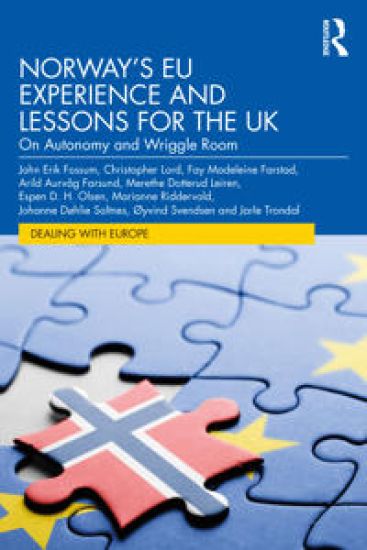
Norway’s EU Experience and Lessons for the UK

Norway’s EU Experience and Lessons for the UK

John Erik Fossum; Christopher Lord; Fay Madeleine Farstad; Arild Aurvåg Farsund; Merethe Dotterud Leiren; Espen D. H. Olsen; Marianne Riddervold; Johanne Døhlie Saltnes; Øyvind Svendsen; Jarle Trondal

TAYLOR FRANCIS LTD
2023
nidottu
This book examines Norway’s affiliation to the EU and systematically assesses the potential suitability of this arrangement for the UK as a viable EU affiliation post-Brexit. Framing the book within the framework of the broader European context, the authors ask how much autonomy and room to manoeuvre tightly integrated non-member states have under this arrangement. They present an in-depth assessment of Norway’s close EU affiliation and provide insight into what this may reveal to us about the post-Brexit European political order. The book’s analytical framework centred on autonomy under complex interdependence has relevance well beyond the confines of the Norway case. This includes the UK, not least since the EU–UK Trade and Cooperation Agreement (TCA) leaves considerable uncertainty. It contains transitory elements; there will be implementation reviews, and there may be many more bilateral and multilateral agreements before the trade relationship is fully defined. This book will be of key interest to scholars and students of European Union politics, Norwegian politics, British politics, European integration, and, more broadly, to European studies and international relations.
Norway’s EU Experience and Lessons for the UK

Norway’s EU Experience and Lessons for the UK

John Erik Fossum; Christopher Lord; Fay Madeleine Farstad; Arild Aurvåg Farsund; Merethe Dotterud Leiren; Espen D. H. Olsen; Marianne Riddervold; Johanne Døhlie Saltnes; Øyvind Svendsen; Jarle Trondal

TAYLOR FRANCIS LTD
2023
sidottu
This book examines Norway’s affiliation to the EU and systematically assesses the potential suitability of this arrangement for the UK as a viable EU affiliation post-Brexit. Framing the book within the framework of the broader European context, the authors ask how much autonomy and room to manoeuvre tightly integrated non-member states have under this arrangement. They present an in-depth assessment of Norway’s close EU affiliation and provide insight into what this may reveal to us about the post-Brexit European political order. The book’s analytical framework centred on autonomy under complex interdependence has relevance well beyond the confines of the Norway case. This includes the UK, not least since the EU–UK Trade and Cooperation Agreement (TCA) leaves considerable uncertainty. It contains transitory elements; there will be implementation reviews, and there may be many more bilateral and multilateral agreements before the trade relationship is fully defined. This book will be of key interest to scholars and students of European Union politics, Norwegian politics, British politics, European integration, and, more broadly, to European studies and international relations.

Challenging European Citizenship

Challenging European Citizenship

Agustín José Menéndez; Espen D. H. Olsen

Springer Nature Switzerland AG
2019
sidottu
This book provides a critique of the way in which European citizenship is imagined and practiced. Setting their analysis in its full historical context, the authors challenge preconceived ideas about European citizenship on the basis of a detailed reconstruction of political, social and economic practice. In particular, they show the extent to which the elimination of formal internal borders within Europe has come hand in glove with the emergence of new socio-economic boundaries and the hardening of external borders. The book concludes with a number of concrete proposals to forge a genuinely post-national form of membership.
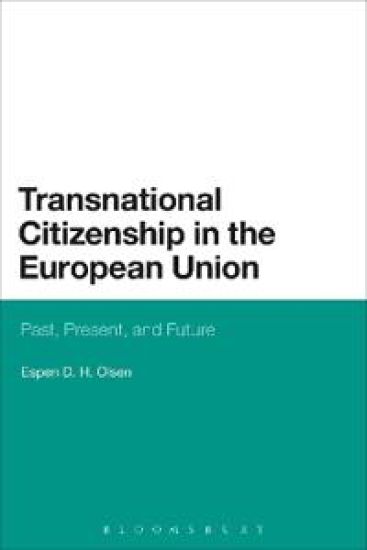
Transnational Citizenship in the European Union

Transnational Citizenship in the European Union

Espen D. H. Olsen

Bloomsbury Academic USA
2014
nidottu
This book argues that European citizenship is transnational, a status that has emerged incrementally during the European integration process. Transnational Citizenship in the European Union follows an institutionalist approach and traces the development of citizenship discourse from the founding treaties of the EU to the most recent effort of constitution-making and the Lisbon Treaty. This helps demonstrate that such discourse has followed a path based on the foundational principles of free movement and non-discrimination rather than revolutionary ideas of a postnational citizenship beyond the nation-state. This in-depth analysis of citizenship in the EU takes into account the institutional configuration of membership, rights, identity, and participation. It also brings in the domestic level of the debate through the examination of national positions on reform proposals and the interplay between EU and member states conceptions of citizenship. Lastly, by investigating citizenship practices, the book helps foster understanding of how the EU works as a political system, and the relationship between European institutions and the recipients of their integrative politics , i.e., the citizens.
Transnational Citizenship in the European Union

Transnational Citizenship in the European Union

Espen D. H. Olsen

Continuum Publishing Corporation
2012
sidottu
This book argues that European citizenship is transnational, a status that has emerged incrementally during the European integration process. Transnational Citizenship in the European Union follows an institutionalist approach and traces the development of citizenship discourse from the founding treaties of the EU to the most recent effort of constitution-making and the Lisbon Treaty. This helps demonstrate that such discourse has followed a path based on the foundational principles of free movement and non-discrimination rather than revolutionary ideas of a postnational citizenship beyond the nation-state. This in-depth analysis of citizenship in the EU takes into account the institutional configuration of membership, rights, identity, and participation. It also brings in the domestic level of the debate through the examination of national positions on reform proposals and the interplay between EU and member states conceptions of citizenship. Lastly, by investigating citizenship practices, the book helps foster understanding of how the EU works as a political system, and the relationship between European institutions and the recipients of their integrative politics , i.e., the citizens.