Kirjojen hintavertailu – 12 859 818 kirjaa ja 27 kauppaa

Kirjailija

Esther Fihl

Kirjat ja teokset yhdessä paikassa: 6 kirjaa, julkaisuja vuosilta 2002–2017, suosituimpiin kuuluu Ind i verden. Vertaile teosten hintoja ja tarkista saatavuus suomalaisista kirjakaupoista.

6 kirjaa

Kirjojen julkaisuvuodet: 2002–2017.

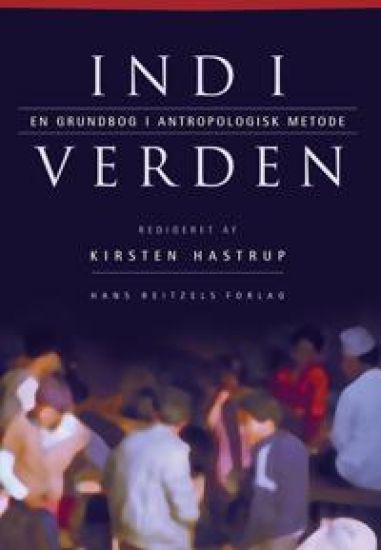
Ind i verden

Ind i verden

Andreas Roepstorff; Anne Line Dalsgård; Cathrine Hasse; Cecilie Rubow; Charlotte Andreas Baarts; Christian Kordt Højbjerg; Esther Fihl; Eva Gulløv; Helle Bundgaard; John Aggergaard Larsen; Karsten Pærregaard; Katrine Nørgaard; Kirsten Hastrup; Perle Møhl; Pia Lundberg; Susanne Højlund; Tine Tjørnhøj-Thomsen; Tine Gammeltoft

Gyldendal
2010
nidottu
"Dette er en bok til å bli klok av." Frode F. Jacobsen, Akademiske Sygeplejersker Antropologien er en videnskab af stigende betydning også for andre fagdiscipliner, som låner metode og teori fra antropologien. I denne bog gives de nyeste eksempler på antropologernes egen metodiske praksis fra formulering af et problem til dets teoretiske løsning. Gennem konkrete beskrivelser af antropologiske undersøgelser af fx en byggeplads i København, et hjerneforskningslaboratorium, en gruppe kvinder i Vietnam, soldater i Kosovo og hemmelige selskaber i Vestafrika m.m., kvalificeres det antropologiske feltarbejde, og antropologiens særlige vidensfelt indkredses. Bogen viser den nære sammenhæng mellem teori og praksis og er dermed også et bidrag til en diskussion af nogle videnskabelige grundlagsproblemer ved begyndelsen af det 21. århundrede. [] Ind i verden. En grundbog i antropologisk metode[] er redigeret af Kirsten Hastrup, professor ved Institut for Antropologi, Københavns Universitet. Bogens små 20 bidrag er skrevet af antropologer der hovedsageligt er tilknyttet danske universiteter.
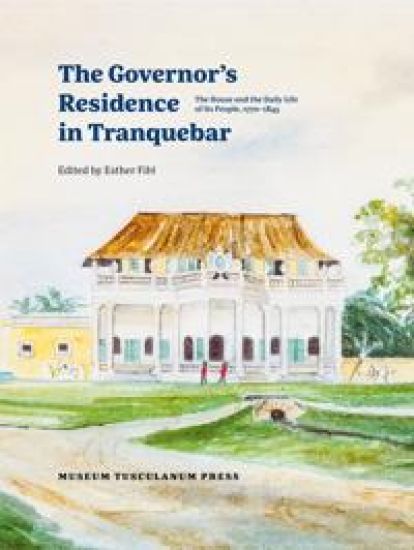
The Governor's Residence in Tranquebar

The Governor's Residence in Tranquebar

Esther Fihl

Museum Tusculanum Press
2017
sidottu
In 1620 the first Danish settlement on the Indian subcontinent was established in the small fishing village of Tranquebar facing the Indian Ocean on the Coromandel Coast of south India. For the next 225 years, until it was sold to the British in 1845, Tranquebar functioned as a colonial trading station under the Danish flag. From 1784 onwards the Danish governor of Tranquebar lived in a grandiose and beautiful mansion built in a unique style of colonial architecture. This book uses that particular house as a prism through which the authors present and analyse such topics as the architecture and furnishing of the building; the emotions of feeling both at home and away experienced by the governors and their families; the cultural encounters and exchanges that took place between residents of the house and their Indian staff as well as the broader Indian community of traders, temple priests and princely delegates; the intricate political landscapes all governors had to navigate, balancing pressures from other powers in the area, both Indian and European; and the status of Tranquebar as a representative of Denmark injected into an Indian setting dominated by castes suspended in complicated webs of economic exchange and rituals of rank and identity. Presenting stories from Danish Tranquebar, a minor player on the Indian continent, the book is able to apply new analytical perspectives to international politics and alliances on the Indian subcontinent during this period and to nuance the study of cultural contacts with Europea study which has generally been determined by the predominance of British colonialism. The book feeds into the growing international interest in the study of places with rich colonial and postcolonial histories, not only in India but all over the world.
A Comparative Ethnography of Alternative Spaces
Through ethnographical cases, this book examines the ways in which social groups position themselves between cultures, states, moralities, and local/state authorities, creating opportunities for agency. Alternative spaces designate in-between spaces rather than oppositional structures and are both inside and outside their constituent elements.
2-Volume SetExploring Central Asia

2-Volume SetExploring Central Asia

Esther Fihl

University of Washington Press
2010
sidottu
In the 1890s, the Danish lieutenant Ole Olufsen set out to lead two expeditions to Tsarist Central Asia. Exploring areas that were still blank on European and Russian maps, the participants spent more than a year traveling on horseback in the pamirs and adjacent valleys bordering Afghanistan, China, and British India. Esther Fihl offers an in-depth study of these Danish expeditions and presents the magnificent collection of objects brought back to the National Museum of Denmark. Drawing on diaries, reports, and published works and a scrutiny of the guiding principles for their collecting of objects, she demonstrates how these explorers portrayed the cultures encountered. This work is a treasure for anyone interested in Central Asia, early anthropological theory, material culture, or European travel literature. They lived with Kyrgyz nomads who carved out an existence for themselves above the tree line with their sheep, goats, and yaks. Traveling along the river Pandsh, they were the first Europeans to collect ethnographical information on the transhumant pastoralists in the elevated valleys bordering Afghanistan. On the steppes of the western lowlands, the Danish expeditions stopped in Samarkand, Khiva, and Bukhara, commercial hubs on the old Silk Road. As official guests of both the emir of Bukhara and the khan of Khiva, they studied the handicrafts of the bazaars and the irrigation agriculture practiced by the Tajiks and Uzbeks. On visits to Merv they also spent time with Turkmen nomadic tribes who had only recently been fighting the Russian colonial power.
Exploring Central Asia, vol. I-II

Exploring Central Asia, vol. I-II

Esther Fihl

Forlaget Rhodos
2002
sidottu
In the 1890s, the Danish lieutenant Ole Olufsen set out to lead two expeditions to Tsarist Central Asia. Exploring areas that were still blank on European and Russian maps, the participants spent more than a year travelling on horseback in the Pamirs and adjacent valleys bordering Afghanistan, China, and British India. Among mountain peaks reaching as high as 8000 metres, they lived with Kyrgyz nomads who carved out an existence for themselves above the tree line with their sheep, goats and yaks. Travelling along the right-hand side of the river Pandsh, they were the first Europeans to collect ethnographical information on the transhumant pastoralists in the elevated valleys bordering Afghanistan. On the steppes of the western lowlands, the Danish expeditions stopped in Samarkand, Khiva and Bukhara, commercial hubs on the old Silk Road. As official guests of both the emir of Bukhara and the khan of Khiva, they studied the handicrafts of the bazaars and the irrigation agriculture practiced by the Tajiks and Uzbeks. On visits to Merv they also spent time with Turkmen nomadic tribes who had only recently been fighting the Russian colonial power. Esther Fihl offers an in-depth study of these Danish expeditions and presents the magnificent collection of objects brought back to the National Museum of Denmark. Drawing on diaries, reports and published works and a scrutiny of the guiding principles for their collecting of objects, she demonstrates how these explorers portrayed the cultures encountered. A key aspect in her presentation of the ethnographical collection is the description of the Danish cultural and academic setting. She shows how the portrayals made by the Danish explorers reflect their own cultural perceptions and values, as well as the practical circumstances under which these representations were produced in Central Asia. This work is a treasure for anyone interested in Central Asia, early anthropological theory, material culture, or European travel literature. Contents: Written sources and beyond – The Danish setting in the 1890s – Travelling on a museum assignment – Collecting objects – The museum life of the objects – Kyrgyz nomads in the Pamirs – Catalogue – Agropastoralists in Vakhan – Catalogue – Turkmen nomads in Merv – Catalogue – The Khanate of Khiva – Catalogue – The Emirate of Bukhara and the Russian-controlled part of Turkestan - Catalogue – Representations of Central Asia – Conclusion – Appendix I: List of museum register numbers – Appendix II: Technical terms and materials – Russian summary – Bibliography – Unpublished documents – General index – Index of personal names and authorities – Geographical index. Published in 2002 in the series The Carlsberg Foundation's Nomad Research Project. 2 volumes, hardcover with dust jacket. 736 pages. 515 illustrations – 165 in colour – and 12 maps (e.g.: Key to the maps in vol. I-II, Olufsen’s maps of the Alitshur Pamir, Merv oasis, Khanate of Khiva, Emirate of Bukhara, Political sketch of Central Asia in the late 19th century, Travel route of the two Danish expeditions, A sketch of the culture-geographical areas established by Olufsen through his collecting of objects on the two Danish expeditions) Esther Fihl (born 1953) is professor emeritus at the University of Copenhagen. Before focusing on the study of colonial history of Central Asia, she specialized in India and did anthropological fieldwork among Tamil fishermen in the former Danish colony Tranquebar. For a Scandinavian audience, Esther Fihl has published extensively on Danish travel literature and colonial encounters in different parts of the world in the 17th to 19th century. She is an appointed member of the Danish Research Council for the Humanities.