Kirjailija
Eugen Herrigel
Kirjat ja teokset yhdessä paikassa: 16 kirjaa, julkaisuja vuosilta 1983–2025, suosituimpiin kuuluu La via dello zen. Vertaile teosten hintoja ja tarkista saatavuus suomalaisista kirjakaupoista.
16 kirjaa
Kirjojen julkaisuvuodet: 1983–2025.
En veiviser til å oppnå zen-sinn, tilstedeværelse i øyeblikket. Den tyske filosofen og universitetslæreren Eugen Herrigel (d. 1955) underviste i mange år i Japan. Der ble han fortrolig med den buddhistisk filosofiske retningen zen. Herrigel regnes for den som introduserte zen til Europa da han senere returnerte til Tyskland. Herrigels møte med zen-buddhismen går gjennom bueskytingens kunst. Han erfarte at konsentrasjon og muskelbruk bare er ytre aspekter ved det å skyte med pil og bue. Kunsten dreier seg om trening av bevisstheten og om å få kontakt med sin essens. Zen er en sinnstilstand (zen-sinn). Indre stillhet, konsentrasjon, fokus og tilstedeværelse i øyeblikket er stikkord for hva zen-sinn handler om. Boken er en veiviser til hvordan du kan utføre en hvilken som helst aktivitet for å oppnå zen-sinn. Med forord av den anerkjente buddhistiske filosofen og zen-forskeren Daisetz Teitaro Suzuki (d. 1966). Denne utgaven har i tillegg et forord av Viggo Johansen, filosof, forfatter, kognitiv terapeut og tidligere buddhistmunk.
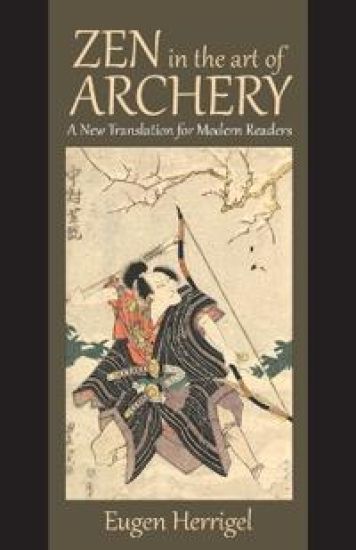
Zen in the Art of Archery, originally published in German, was first published in English in 1953, the first book to introduce Zen Buddhism to a Western audience. The translation was rather formal and scholarly, making for difficult reading about a subject that was already hard to understand. This new translation skillfully transmits the book's original meaning in a simpler, smoother style more accessible to modern readers, but with all of the author's fascinating experiences, explanations, and anecdotes intact. In this illuminating account, the author recounts his six-year study of archery as a way to understand Zen. Under the guidance of one of Japan's great archery masters, he gradually overcomes his initial misconceptions and inhibitions and begins to feel his way toward new, true ways of seeing, acting, and living. The author writes, "The art of archery is like a preparatory school for Zen, enabling beginners to understand, through their own experience, events that are not in themselves intelligible." Mastering archery is not the key to achieving enlightenment, and this is not a practical guide to archery. Rather, it is a fascinating introduction to Zen principles and learning, an excellent and informative guide for anyone who wants to know more about the "Great Doctrine" practiced by the spiritual teachers of the Asian tradition.
Zen in the Art of Archery (Zen in der Kunst des Bogenschie ens) is a book by German philosophy professor Eugen Herrigel, about his experiences studying Kyūdō, a form of Japanese archery, when he lived in Japan in the 1920s. It is credited with introducing Zen to Western audiences in the late 1940s and 1950s. The book sets forth theories about motor learning. Herrigel has an accepting spirit towards and about unconscious control of outer activity that Westerners heretofore considered to be wholly under conscious-waking control and direction. For example, a central idea in the book is how through years of practice, a physical activity becomes effortless both mentally and physically, as if our physical memory (today known as ""muscle memory"") executes complex and difficult movements without conscious control from the mind. Herrigel describes Zen in archery as follows: ""(...) The archer ceases to be conscious of himself as the one who is engaged in hitting the bull's-eye which confronts him. This state of unconscious is realized only when, completely empty and rid of the self, he becomes one with the perfecting of his technical skill, though there is in it something of a quite different order which cannot be attained by any progressive study of the art (...)""
Zen in the Art of Archery
Eugen Herrigel
SANAGE PUBLISHING HOUSE LLP
2021
pokkari
Halvin toimitettuna 22,40 €
Zen in the Art of Archery (Zen in der Kunst des Bogenschie ens) is a book by German philosophy professor Eugen Herrigel, about his experiences studying Kyūdō, a form of Japanese archery, when he lived in Japan in the 1920s. It is credited with introducing Zen to Western audiences in the late 1940s and 1950s. The book sets forth theories about motor learning. Herrigel has an accepting spirit towards and about unconscious control of outer activity that Westerners heretofore considered to be wholly under conscious-waking control and direction. For example, a central idea in the book is how through years of practice, a physical activity becomes effortless both mentally and physically, as if our physical memory (today known as ""muscle memory"") executes complex and difficult movements without conscious control from the mind. Herrigel describes Zen in archery as follows: ""(...) The archer ceases to be conscious of himself as the one who is engaged in hitting the bull's-eye which confronts him. This state of unconscious is realized only when, completely empty and rid of the self, he becomes one with the perfecting of his technical skill, though there is in it something of a quite different order which cannot be attained by any progressive study of the art (...)""
A classic work on Eastern philosophy, 'Zen in the Art of Archery' is a charming and deeply illuminating story of one man's experience with Zen. Eugen Herrigel, a German professor of Philosophy in Tokyo, took up the study of archery as a step toward an understanding of Zen Buddhism. This book is the account of the six years he spent as a student of one of Japan's great kyudo (archery) masters, and of how he gradually overcame his initial inhibitions and began to feel his way toward new truths and ways of seeing.
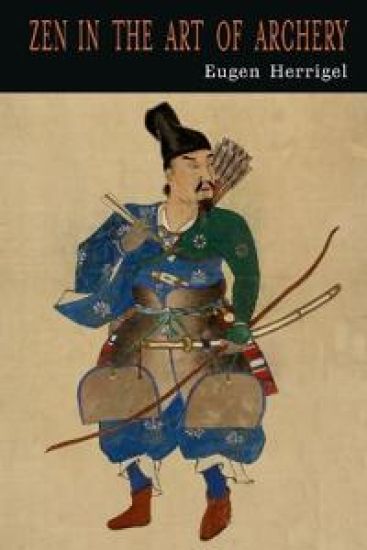
Zen in the Art of Archery
Eugen Herrigel
Martino Fine Books
2020
nidottu
Halvin toimitettuna 16,90 €
Hvordan leve et liv i tråd med hvordan virkeligheten faktisk er ... Her får du svaret. Eugen Herrigel (1884-1955), ble førti år gammel tilbudt en stilling som professor i filosofi ved Det keiserlige universitetet i Sendai i Japan, der han ble værende i fem år. Herrigels virkelige møte med zen-buddhismen går gjennom bueskytingens kunst. Under kyndig veiledning erfarer han at konsentrasjon og muskelbruk bare er ytre aspekter ved det å skyte med pil og bue. Det er trening av bevisstheten som denne kunsten dreier seg om, og som blir en årelang øvelse i å bli seg selv, uten å miste seg selv. Bueskyting blir en kunst først når den er uten mål, uten hensikt. Den kan leses som en eksotisk beretning om et menneske som kom til et fremmed land og ble innviet i en gammel kulturs innerste hemmeligheter. Da vil den være en spennende beretning som underholder så lenge den leses , men som fort glemmes. Den kan også leses som et eksempel på hvordan en ytre disiplin kan brukes til å disiplinere våre egne sjelskrefter slik at mennesket kommer i harmoni med seg selv, og hvordan vi på dette grunnlaget kan komme i kontakt med en dypere orden i livet. Da vil boken få en overføringsverdi: vise vei til hvordan du kan utføre en hvilken som helst aktivitet -- med full tistedeværelse. Bueskyting blir en kunst først når den er uten mål, uten hensikt.
Zen ja jousella ampumisen taito
Eugen Herrigel
DELFIINI KIRJAT
2008
nidottu
Halvin toimitettuna 22,00 €
Eugen Herrigel (1884-1955), saksalainen filosofian professori, tutustui zeniin 1920-luvulla Japanissa. Hän opiskeli jousella ampumisen taitoa useita vuosia mestarinsa Kenzo Awan opastuksella. Tässä kirjassa hän kertoo kokemuksistaan tuona aikana. Herrigelin teos on muodostunut neljässä vuosikymmenessä erääksi länsimaisen zen-kirjallisuuden luetuimmista ja rakastetuimmista klassikoista. Vaihe vaiheelta Herrigel johdattaa lukijansa yhä syvemmälle itämaiseen ajatteluun ja aitoon zenin henkeen." Niin pian kuin ajattelemme, pohdimme ja muodostamme käsitteitä, alkuperäinen tietoisuus häviää ja ajatus sukeltaa pinnalle. Me emme enää syö kun syömme, emme nuku kun nukumme. Jousi on laukaistu, mutta nuoli ei lennä suoraan maaliin, eikä maali ole siellä, missä sen pitäisi olla." D. T. Suzuki"Jousiampujan maali on hän itse."
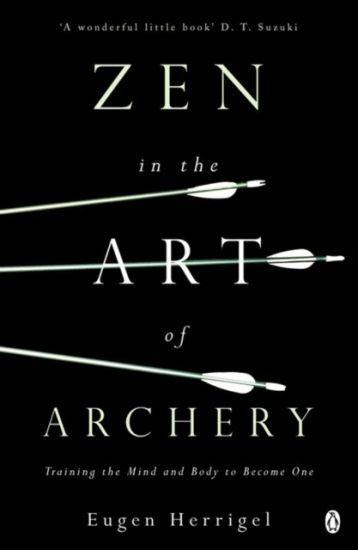
Zen in the Art of Archery: Training the Mind and Body to Become One
Eugen Herrigel
Penguin Random House UK
2004
nidottu
Bogen udgår som fysisk bog, men er i proces med at få den lavet om til en elektronisk titel. Bueskydning og zen udkom første gang i 1948. Eugen Herrigel beskriver heri, hvordan han gennem årelang træning opnåede den kombination af teknisk mesterskab og åndelig selvfordybelse, som er forudsætningen for at opnå den højeste indsigt gennem bueskydningen.
A classic work on Eastern philosophy, and a charming, deeply illuminating story of one man's experience with Zen. Eugen Herrigel, a German professor of Philosophy in Tokyo, took up the study of archery as a step toward an understanding of Zen Buddhism. This book is the account of the six years he spent as a student of one of Japan's great kyudo (archery) masters, and of how he gradually overcame his initial inhibitions and began to feel his way toward new truths and ways of seeing.
The path to achieving Zen (a balance between the body and the mind) is brilliantly explained by Professor Eugen Herrigel in this timeless account. This book is the result of the author’s six year quest to learn archery in the hands of Japanese Zen masters. It is an honest account of one man’s journey to complete abandonment of ‘the self’ and the Western principles that we use to define ourselves. Professor Herrigel imparts knowledge from his experiences and guides the reader through physical and spiritual lessons in a clear and insightful way. Mastering archery is not the key to achieving Zen, and this is not a practical guide to archery. It is more a guide to Zen principles and learning and perfect for practitioners and non-practitioners alike.