Kirjojen hintavertailu – 12 859 829 kirjaa ja 27 kauppaa

Kirjailija

Eugene M. Tobin

Kirjat ja teokset yhdessä paikassa: 5 kirjaa, julkaisuja vuosilta 1986–2017, suosituimpiin kuuluu Equity and Excellence in American Higher Education. Vertaile teosten hintoja ja tarkista saatavuus suomalaisista kirjakaupoista.

5 kirjaa

Kirjojen julkaisuvuodet: 1986–2017.

Locus of Authority

Locus of Authority

William G. Bowen; Eugene M. Tobin

Princeton University Press
2017
pokkari
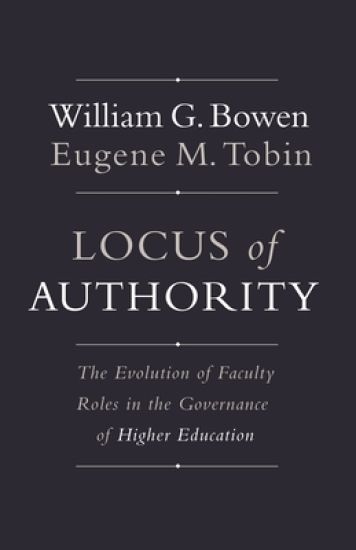
Do higher education institutions have what it takes to reform effectively from within? Locus of Authority argues that every issue facing today's colleges and universities, from stagnant degree completion rates to worrisome cost increases, is exacerbated by a century-old system of governance that desperately requires change. While prior studies have focused on boards of trustees and presidents, few have looked at the place of faculty within the governance system. Bowen and Tobin explore whether departments remain the best ways through which to organize decision making and if the concepts of academic freedom and shared governance need to be sharpened and redefined. Using case studies of four very different institutions, the authors demonstrate that college and university governance has capably adjusted to the necessities of the moment and governance norms and policies should be assessed in the context of historical events. They also demonstrate that successful reform depends on the artful consideration of technological, financial, and cultural developments. Locus of Authority shows that the consequences of not addressing college and university governance are more than the nation can afford.
Locus of Authority

Locus of Authority

William G. Bowen; Eugene M. Tobin

Princeton University Press
2015
sidottu
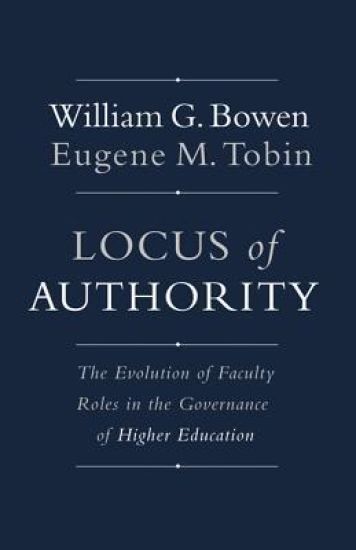
Do higher education institutions have what it takes to reform effectively from within? Locus of Authority argues that every issue facing today's colleges and universities, from stagnant degree completion rates to worrisome cost increases, is exacerbated by a century-old system of governance that desperately requires change. While prior studies have focused on boards of trustees and presidents, few have looked at the place of faculty within the governance system. Bowen and Tobin explore whether departments remain the best ways through which to organize decision making and if the concepts of academic freedom and shared governance need to be sharpened and redefined. Using case studies of four very different institutions, the authors demonstrate that college and university governance has capably adjusted to the necessities of the moment and governance norms and policies should be assessed in the context of historical events. They also demonstrate that successful reform depends on the artful consideration of technological, financial, and cultural developments. Locus of Authority shows that the consequences of not addressing college and university governance are more than the nation can afford.
Equity and Excellence in American Higher Education

Equity and Excellence in American Higher Education

William G. Bowen; Martin A. Kurzweil; Eugene M. Tobin

University of Virginia Press
2006
nidottu
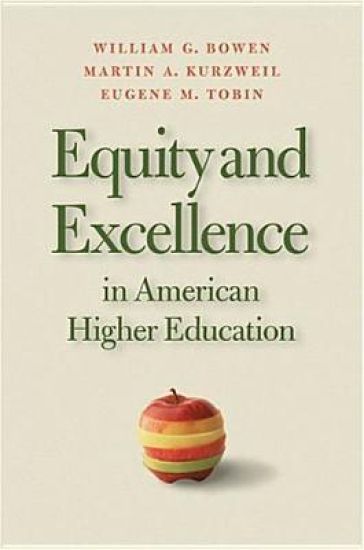
Thomas Jefferson once stated that the foremost goal of American education must be to nurture the "natural aristocracy of talent and virtue." Although in many ways American higher education has fulfilled Jefferson's vision by achieving a widespread level of excellence, it has not achieved the objective of equity implicit in Jefferson's statement. In Equity and Excellence in American Higher Education, William G. Bowen, Martin A. Kurzweil, and Eugene M. Tobin explore the cause for this divide. Employing historical research, examination of the most recent social science and public policy scholarship, international comparisons, and detailed empirical analysis of rich new data, the authors study the intersection between "excellence" and "equity" objectives. Beginning with a time line tracing efforts to achieve equity and excellence in higher education from the American Revolution to the early Cold War years, this narrative reveals the halting, episodic progress in broadening access across the dividing lines of gender, race, religion, ethnicity, and socioeconomic status. The authors argue that despite our rhetoric of inclusiveness, a significant number of youth from poor families do not share equal access to America's elite colleges and universities. While America has achieved the highest level of educational attainment of any country, it runs the risk of losing this position unless it can markedly improve the precollegiate preparation of students from racial minorities and lower-income families. After identifying the "equity" problem at the national level and studying nineteen selective colleges and universities, the authors propose a set of potential actions to be taken at federal, state, local, and institutional levels. With recommendations ranging from reform of the admissions process, to restructuring of federal financial aid and state support of public universities, to addressing the various precollegiate obstacles that disadvantaged students face at home and in school, the authors urge all selective colleges and universities to continue race-sensitive admissions policies, while urging the most selective (and privileged) institutions to enroll more well-qualified students from families with low socioeconomic status.
Equity and Excellence in Higher Education

Equity and Excellence in Higher Education

William G. Bowen; Martin A. Kurzweil; Eugene M. Tobin

University of Virginia Press
2005
sidottu
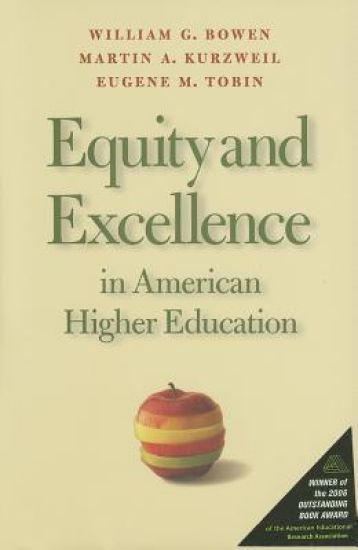
Thomas Jefferson once stated that the foremost goal of American education must be to nurture the ""natural aristocracy of talent and virtue."" Although in many American higher education has fulfilled Jefferson's vision by achieving a widespread level of excellence, it has not achieved the objective of equity implicit in Jefferson's statement. In Equity and Excellence in American Higher Education, William G. Bowen, Martin A. Kurzweil, and Eugene M. Tobin explore the cause for this divide. Employing historical research, examination of the most recent social science and public policy scholarship, international comparisons, and detailed empirical analysis of rich new data, the authors study the intersection between ""excellence"" and ""equity"" objectives. Beginning with a time line tracing efforts to achieve equity and excellence in higher education from the American Revolution to the early Cold War years, this narrative reveals the halting, episodic progress in broadening access across the dividing lines of gender, race, religion, ethnicity, and socioeconomic status. The authors argue that despite our rhetoric of inclusiveness, a significant number of youth from poor families do not share equal access to America's elite colleges and universities. While America has achieved the highest level of educational attainment of any country, it runs the risk of losing this position unless it can markedly improve the precollegiate preparation of students from racial minorities and lower-income families. After identifying the ""equity"" problem at the national level and studying nineteen selective colleges and universities, the authors propose a set of potential actions to be taken at federal, state, local, and institutional levels. With recommendations ranging from reform of the admissions process, to restructuring of federal financial aid and state support of public universities, to addressing the various precollegiate obstacles that disadvantaged students face at home and in school, the authors urge all selective colleges and universities to continue race-sensitive admissions policies, while urging the most selective (and privileged) institutions to enroll more well-qualified students from families with low socioeconomic status.