
Kirjojen hintavertailu – 12 903 725 kirjaa ja 27 kauppaa

Kirjailija

Eugénie Birch

Kirjat ja teokset yhdessä paikassa: 3 kirjaa, julkaisuja vuosilta 2006–2025, suosituimpiin kuuluu Harnessing Urban Innovation to Unlock the Sustainable Development Goals. Vertaile teosten hintoja ja tarkista saatavuus suomalaisista kirjakaupoista.

Nimi esiintyy myös muodoissa: Eugenie Birch

3 kirjaa

Kirjojen julkaisuvuodet: 2006–2025.

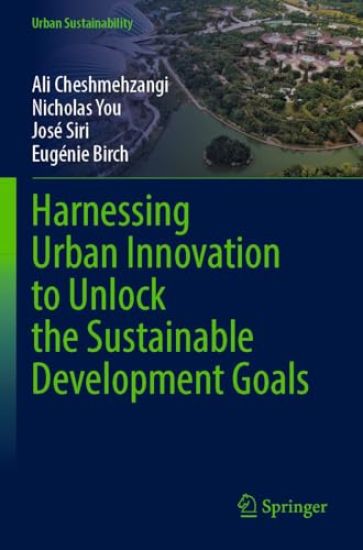
Harnessing Urban Innovation to Unlock the Sustainable Development Goals

Harnessing Urban Innovation to Unlock the Sustainable Development Goals

Ali Cheshmehzangi; Nicholas You; José Siri; Eugénie Birch

SPRINGER VERLAG, SINGAPORE
2025
nidottu
This book first attempts to explore the nexus between urban innovation and sustainable development goals (SDGs). It puts together global examples of urban innovation initiatives, highlighting practical, policy-oriented, social, and technological interventions. The case studies are divided into four clusters of ‘green cities’, ‘inclusive cities’, ‘resilient cities’, and ‘healthy cities’. In doing so, the book maps various global examples of urban innovation for sustainable pathways and directions. It also highlights means of implementation of tool and technologies, data, financing, and governance. The overarching aim is to provide a holistic overview of urban innovation sustainable development nexus, which would help future policy development, paradigm shifts, and technological applications. By summarising a selection of successful initiatives, interventions, and projects, this book highlights how urban innovation could accelerate achieving SDGs. The lessons learned from each case studycluster are narrated as knowledge transfer platforms for future city development and achieving sustainable development. These lessons will be beneficial to practitioners and governments, as well as researchers and academics who are interested in urban innovation research. City case studies included in the book are based on their success stories as role models for other cities in developed and developing nations. This collection helps us portray a more holistic image of urban innovation aligned with the SDGs and pathways to achieving them.
Harnessing Urban Innovation to Unlock the Sustainable Development Goals

Harnessing Urban Innovation to Unlock the Sustainable Development Goals

Ali Cheshmehzangi; Nicholas You; José Siri; Eugénie Birch

SPRINGER VERLAG, SINGAPORE
2024
sidottu
This book first attempts to explore the nexus between urban innovation and sustainable development goals (SDGs). It puts together global examples of urban innovation initiatives, highlighting practical, policy-oriented, social, and technological interventions. The case studies are divided into four clusters of ‘green cities’, ‘inclusive cities’, ‘resilient cities’, and ‘healthy cities’. In doing so, the book maps various global examples of urban innovation for sustainable pathways and directions. It also highlights means of implementation of tool and technologies, data, financing, and governance. The overarching aim is to provide a holistic overview of urban innovation sustainable development nexus, which would help future policy development, paradigm shifts, and technological applications. By summarising a selection of successful initiatives, interventions, and projects, this book highlights how urban innovation could accelerate achieving SDGs. The lessons learned from each case studycluster are narrated as knowledge transfer platforms for future city development and achieving sustainable development. These lessons will be beneficial to practitioners and governments, as well as researchers and academics who are interested in urban innovation research. City case studies included in the book are based on their success stories as role models for other cities in developed and developing nations. This collection helps us portray a more holistic image of urban innovation aligned with the SDGs and pathways to achieving them.
The Humane Metropolis

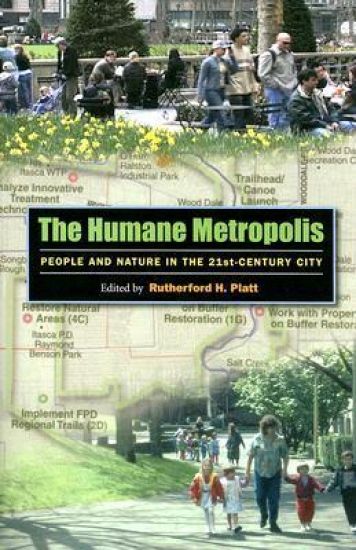
The Humane Metropolis

Carl Anthony; Thomas Balsley; Timothy Beatley; Eugenie Birch; Edward J. Blakely; Colin M. Cathcart; Steven E. Clemants; Christopher A. De Sousa; Steven N. Handel

University of Massachusetts Press
2006
nidottu
Four-fifths of Americans now live in the nation's sprawling metropolitan areas, and half of the world's population is now classified as ""urban."" As cities become the dominant living environment for humans, there is growing concern about how to make such places more habitable, more healthy and safe, more ecological, and more equitable - in short, more ""humane."" This book explores the prospects for a more humane metropolis through a series of essays and case studies that consider why and how urban places can be made greener and more amenable. Its point of departure is the legacy of William H. Whyte (1917-1999), one of America's most admired urban thinkers. From his eyrie high above Manhattan in the offices of the Rockefeller Brothers Fund, Whyte laid the foundation for today's ""smart growth"" and ""new urbanist"" movements with books, such as ""The Last Landscape"" (1968). His passion for improving the habitability of cities and suburbs is reflected in the diverse grass-roots urban design and regreening strategies discussed in this volume. Topics examined in this book include urban and regional greenspaces, urban ecological restoration, social equity, and green design. Some of the contributors are recognized academic experts, while others offer direct practical knowledge of particular problems and initiatives. The editor's introduction and epilogue set the individual chapters in a broader context and suggest how the strategies described, if widely replicated, may help create more humane urban environments.