Kirjojen hintavertailu – 12 903 725 kirjaa ja 27 kauppaa

Kirjailija

Eusebius

Kirjat ja teokset yhdessä paikassa: 22 kirjaa, julkaisuja vuosilta 1909–2021, suosituimpiin kuuluu Eusebius Kirchengeschichte. Vertaile teosten hintoja ja tarkista saatavuus suomalaisista kirjakaupoista.

22 kirjaa

Kirjojen julkaisuvuodet: 1909–2021.

The History of the Church

The History of the Church

Eusebius

Royal Classics
2021
sidottu
The Church History of Eusebius, bishop of Caesarea, was a 4th-century pioneer work giving a chronological account of the development of Early Christianity from the 1st century to the 4th century. Eusebius had access to the Theological Library of Caesarea and made use of many ecclesiastical monuments and documents, acts of the martyrs, letters, extracts from earlier Christian writings, lists of bishops, and similar sources, often quoting the originals at great length so that his work contains materials not elsewhere preserved. The History of the Church: From Christ to Constantine is the first full-length historical narrative written from a Christian point of view. Eusebius established the convention that would determine to a great extent the way history was written for the next thousand years. The time scheme of the narrative, correlated the history with the reigns of the Roman Emperors, and the scope was broad. Included were the bishops and other teachers of the Church, Christian relations with the Jews and those deemed heretical, and the Christian martyrs through 324 AD. This case laminate collector's edition includes a Victorian inspired dust-jacket.
The History of the Church, From Our Lord's Incarnation, to the Twelfth Year of the Emperor Mauricius Tiberius, or the Year of Christ 594. As it was Written in Greek by Eusebius Pamphilus In This Second Edition are Added, ...
The 18th century was a wealth of knowledge, exploration and rapidly growing technology and expanding record-keeping made possible by advances in the printing press. In its determination to preserve the century of revolution, Gale initiated a revolution of its own: digitization of epic proportions to preserve these invaluable works in the largest archive of its kind. Now for the first time these high-quality digital copies of original 18th century manuscripts are available in print, making them highly accessible to libraries, undergraduate students, and independent scholars. The Age of Enlightenment profoundly enriched religious and philosophical understanding and continues to influence present-day thinking. Works collected here include masterpieces by David Hume, Immanuel Kant, and Jean-Jacques Rousseau, as well as religious sermons and moral debates on the issues of the day, such as the slave trade. The Age of Reason saw conflict between Protestantism and Catholicism transformed into one between faith and logic -- a debate that continues in the twenty-first century.++++The below data was compiled from various identification fields in the bibliographic record of this title. This data is provided as an additional tool in helping to insure edition identification: ++++British LibraryT142058Titlepage in red and black. Text and register continuous despite pagination; a list of contents of the whole work is found at the beginning, and an index to the whole work at the end; the ecclesiastical histories of Eusebius Pamphilus, Socrates ScholastiLondon: printed by J. M. for Awnsham and John Churchill, 1709. 40],20,154,157-700, 22]p., plates: maps; 2
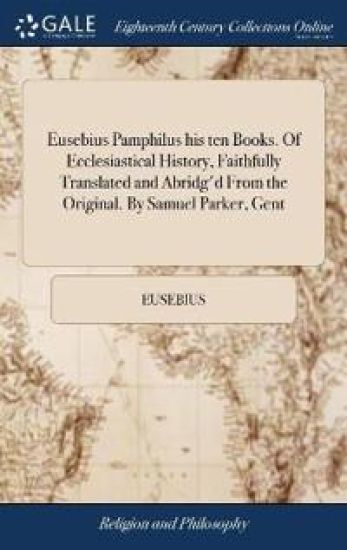
Eusebius Pamphilus his ten Books. Of Ecclesiastical History, Faithfully Translated and Abridg'd From the Original. By Samuel Parker, Gent
The 18th century was a wealth of knowledge, exploration and rapidly growing technology and expanding record-keeping made possible by advances in the printing press. In its determination to preserve the century of revolution, Gale initiated a revolution of its own: digitization of epic proportions to preserve these invaluable works in the largest archive of its kind. Now for the first time these high-quality digital copies of original 18th century manuscripts are available in print, making them highly accessible to libraries, undergraduate students, and independent scholars. The Age of Enlightenment profoundly enriched religious and philosophical understanding and continues to influence present-day thinking. Works collected here include masterpieces by David Hume, Immanuel Kant, and Jean-Jacques Rousseau, as well as religious sermons and moral debates on the issues of the day, such as the slave trade. The Age of Reason saw conflict between Protestantism and Catholicism transformed into one between faith and logic -- a debate that continues in the twenty-first century.++++The below data was compiled from various identification fields in the bibliographic record of this title. This data is provided as an additional tool in helping to insure edition identification: ++++British LibraryT105024Horizontal chain lines. The last 10 leaves contain the index. The author of 'The Snake in the Grass' = C. Leslie. London: printed for George Sawbridge, 1703. 18], x, xx,179, 21]p.: ill; 8
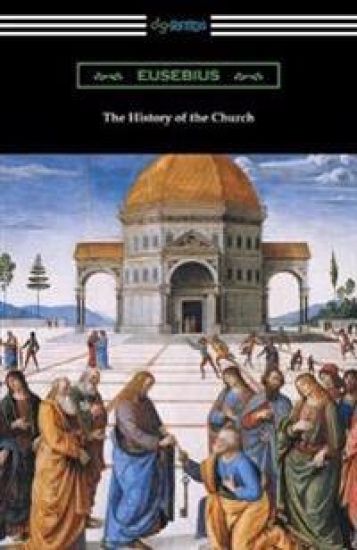
The History of the Church (Translated by Arthur Cushman McGiffert)
Written by Eusebius, the bishop of Caesarea, "The History of the Church" is the pioneering 4th century work which details the chronological history of early Christianity from the time of Christ to Constantine. This monumental work of Christian history stands apart from other contemporary histories as the first full-length record of early Christianity from a Christian point of view. A fierce advocate for the Christian religion, Eusebius lived in Caesarea Maritima, a coastal city in modern day Israel, prior to and during the rule of Constantine. At the time of Eusebius' life his hometown had became a center of Christian learning, through the work of Christian theologian Origen, and his follower Pamphilus, Eusebius' own teacher. This made Eusebius an ideal candidate to make a record of Christianity's crucial first three hundred years. While sometimes criticized as biased and inaccurate "The History of the Church" nevertheless provides an indispensable perspective upon the foundations of the Christian church and religion. This edition is printed on premium acid-free paper and follows the translation of Arthur Cushman McGiffert.
Das Onomastikon der biblischen Ortsnamen
Das Onomastikon des Eusebius von Caesarea ist eine unentbehrliche Quelle für die Topographie des Heiligen Landes. Beruhend auf biblischen Texten und antiken Autoren bietet das Onomastikon bis heute zentrale Anhaltspunkte für die Lokalisierung antiker Stätten. Diese Neuedition berichtigt eine Reihe von Fehlern der Ausgabe von Klostermann (1902) und bezieht neue Quellen für die Textetablierung mit ein.
Eusebius' Life of Constantine

Eusebius' Life of Constantine

Eusebius

Clarendon Press
1999
sidottu
Eusebius' Life of Constantine is the most important single record of Constantine, the emperor who turned the Roman Empire from prosecuting the Church to supporting it, with huge and lasting consequences for Europe and Christianity. The only English version previously available is based on a seventeenth-century Greek edition, but two new critical editions produced this century make a new English version necessary. The authors of this edition present the results of the recent scholarly debate, as well as their own researches so as to clarify the significance of Eusebius' work and introduce the student to the text and its interpretation, thus opening up the contentious issues. At face value much of what Eusebius wrote is false. This book shows how, once his partisan interpretations and rhetoric are properly understood, both Eusebius' text and the documents it contains give vital historical insights.
Eusebius' Life of Constantine

Eusebius' Life of Constantine

Eusebius

Clarendon Press
1999
nidottu
Eusebius' Life of Constantine is the most important single record of Constantine, the emperor who turned the Roman Empire from prosecuting the Church to supporting it, with huge and lasting consequences for Europe and Christianity. The only English version previously available is based on a seventeenth-century Greek edition, but two new critical editions produced this century make a new English version necessary. The authors of this edition present the results of the recent scholarly debate, as well as their own researches so as to clarify the significance of Eusebius' work and introduce the student to the text and its interpretation, thus opening up the contentious issues. At face value much of what Eusebius wrote is false. This book shows how, once his partisan interpretations and rhetoric are properly understood, both Eusebius' text and the documents it contains give vital historical insights.
The History of the Church from Christ to Constantine

The History of the Church from Christ to Constantine

Eusebius

Penguin Classics
1989
pokkari

Halvin toimitettuna 18,70 €

Eusebius's account is the only surviving historical record of the Church during its crucial first 300 years. Bishop Eusebius, a learned scholar who lived most of his life in Caesarea in Palestine, broke new ground in writing the History and provided a model for all later ecclesiastical historians. In tracing the history of the Church from the time of Christ to the Great Persecution at the beginning of the fourth century, and ending with the conversion of the Emperor Constantine, his aim was to show the purity and continuity of the doctrinal tradition of Christianity and its struggle against persecutors and heretics.
Ecclesiastical History, Volume II
The first comprehensive history of early Christianity. Eusebius of Caesarea (ca. AD 260–340), born in Palestine, was a student of the presbyter Pamphilus, whom he loyally supported during Diocletian’s persecution. He was himself imprisoned in Egypt, but became Bishop of Caesarea around 314. At the Council of Nicaea in 325 he sat by the emperor, led a party of moderates, and made the first draft of the famous creed. Of Eusebius’ many learned publications we have the Martyrs of Palestine and the Life of Constantine; several apologetic and polemic works; parts of his commentaries on the Psalms and Isaiah; and the Chronographia, known chiefly in Armenian and Syriac versions of the original Greek. But Eusebius’ chief fame rests on the History of the Christian Church in ten books, published in 324–325, the most important ecclesiastical history of ancient times, a great treasury of knowledge about the early Church.