Kirjojen hintavertailu – 12 859 819 kirjaa ja 27 kauppaa

Kirjailija

Eva Thomann

Kirjat ja teokset yhdessä paikassa: 6 kirjaa, julkaisuja vuosilta 2018–2026, suosituimpiin kuuluu Qualitative Comparative Analysis Using R. Vertaile teosten hintoja ja tarkista saatavuus suomalaisista kirjakaupoista.

6 kirjaa

Kirjojen julkaisuvuodet: 2018–2026.

Qualitative Comparative Analysis Using R

Qualitative Comparative Analysis Using R

Ioana-Elena Oana; Carsten Q. Schneider; Eva Thomann

Cambridge University Press
2021
pokkari

Halvin toimitettuna 36,20 €

A comprehensive introduction and teaching resource for state-of-the-art Qualitative Comparative Analysis (QCA) using R software. This guide facilitates the efficient teaching, independent learning, and use of QCA with the best available software, reducing the time and effort required when encountering not just the logic of a new method, but also new software. With its applied and practical focus, the book offers a genuinely simple and intuitive resource for implementing the most complete protocol of QCA. To make the lives of students, teachers, researchers, and practitioners as easy as possible, the book includes learning goals, core points, empirical examples, and tips for good practices. The freely available online material provides a rich body of additional resources to aid users in their learning process. Beyond performing core analyses with the R package QCA, the book also facilitates a close integration with the R package SetMethods allowing for a host of additional protocols for building a more solid and well-rounded QCA.

Qualitative Comparative Analysis Using R

Qualitative Comparative Analysis Using R

Ioana-Elena Oana; Carsten Q. Schneider; Eva Thomann

Cambridge University Press
2021
sidottu
A comprehensive introduction and teaching resource for state-of-the-art Qualitative Comparative Analysis (QCA) using R software. This guide facilitates the efficient teaching, independent learning, and use of QCA with the best available software, reducing the time and effort required when encountering not just the logic of a new method, but also new software. With its applied and practical focus, the book offers a genuinely simple and intuitive resource for implementing the most complete protocol of QCA. To make the lives of students, teachers, researchers, and practitioners as easy as possible, the book includes learning goals, core points, empirical examples, and tips for good practices. The freely available online material provides a rich body of additional resources to aid users in their learning process. Beyond performing core analyses with the R package QCA, the book also facilitates a close integration with the R package SetMethods allowing for a host of additional protocols for building a more solid and well-rounded QCA.

Policy Dynamics in the European Union

Policy Dynamics in the European Union

Eva Thomann; R. Kent Weaver; Tiziano Zgaga

Cambridge University Press
2026
sidottu
In multilevel governance systems, member states work together to address cross-border problems, yet people still lack a clear understanding of how and why their policies differ or converge. Existing research offers many explanations but often treats them separately or overstates the EU's independent influence. This Element brings these perspectives together in a single framework of policy dynamics. It distinguishes policy areas shaped mainly by EU institutions or member states, or by their interaction. It introduces an actor-centered typology of policy dynamics – stable patterns of actors, incentives, and mechanisms that shape policy over time. The Element shows that these dynamics matter only when governments, interest groups, and NGOs have the incentives, capacity, and leverage to build coalitions and pursue goals. The policy dynamics framework helps learners identify likely causal mechanisms and supports clearer comparison, explanation, and teaching of EU policymaking. This title is also available as Open Access on Cambridge Core.
Policy Dynamics in the European Union

Policy Dynamics in the European Union

Eva Thomann; R. Kent Weaver; Tiziano Zgaga

Cambridge University Press
2026
pokkari
In multilevel governance systems, member states work together to address cross-border problems, yet people still lack a clear understanding of how and why their policies differ or converge. Existing research offers many explanations but often treats them separately or overstates the EU's independent influence. This Element brings these perspectives together in a single framework of policy dynamics. It distinguishes policy areas shaped mainly by EU institutions or member states, or by their interaction. It introduces an actor-centered typology of policy dynamics – stable patterns of actors, incentives, and mechanisms that shape policy over time. The Element shows that these dynamics matter only when governments, interest groups, and NGOs have the incentives, capacity, and leverage to build coalitions and pursue goals. The policy dynamics framework helps learners identify likely causal mechanisms and supports clearer comparison, explanation, and teaching of EU policymaking. This title is also available as Open Access on Cambridge Core.
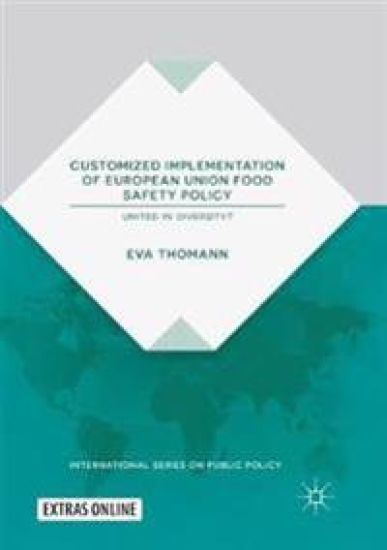
Customized Implementation of European Union Food Safety Policy

Customized Implementation of European Union Food Safety Policy

Eva Thomann

Springer Nature Switzerland AG
2018
nidottu
“As a Journal Editor for over twenty-five years, I have read a lot about the European Union. I am often asked, 'what are the major gaps in EU research?' My answer is always 'implementation'. Eva Thomann's book makes a major contribution to EU implementation studies. She brings really fresh thinking to the field. This is an important book for all students of the EU and of policy implementation."—Jeremy Richardson, Co-Editor of the Journal of European Public Policy This book sheds light on the patterns, causes and consequences of the “customization” of European Union (EU) policies. Even if they comply, member states interpret and adapt EU rules in very diverse ways when putting them into practice. We can think of and measure this diversity as a phenomenon of regulatory change along the implementation chain. The book explores what explains customization, and what it means for providing policy solutions to shared problems. It studies the implementation of EU food safety policies in Austria, Germany, France, the United Kingdom and Switzerland using innovative qualitative comparative techniques. After looking at the role of prominent compliance arguments and the “logics of action” for customization, the study assesses how differing degrees of customization affect the success of the implementation. The book provides a new, evidence-based perspective on “gold-plating” and better regulation in Europe for scholars, students and practitioners of policy implementation, European integration and Europeanization alike.
Customized Implementation of European Union Food Safety Policy

Customized Implementation of European Union Food Safety Policy

Eva Thomann

Springer International Publishing AG
2018
sidottu
“As a Journal Editor for over twenty-five years, I have read a lot about the European Union. I am often asked, 'what are the major gaps in EU research?' My answer is always 'implementation'. Eva Thomann's book makes a major contribution to EU implementation studies. She brings really fresh thinking to the field. This is an important book for all students of the EU and of policy implementation."—Jeremy Richardson, Co-Editor of the Journal of European Public Policy This book sheds light on the patterns, causes and consequences of the “customization” of European Union (EU) policies. Even if they comply, member states interpret and adapt EU rules in very diverse ways when putting them into practice. We can think of and measure this diversity as a phenomenon of regulatory change along the implementation chain. The book explores what explains customization, and what it means for providing policy solutions to shared problems. It studies the implementation of EU food safety policies in Austria, Germany, France, the United Kingdom and Switzerland using innovative qualitative comparative techniques. After looking at the role of prominent compliance arguments and the “logics of action” for customization, the study assesses how differing degrees of customization affect the success of the implementation. The book provides a new, evidence-based perspective on “gold-plating” and better regulation in Europe for scholars, students and practitioners of policy implementation, European integration and Europeanization alike.