Kirjojen hintavertailu – 12 903 725 kirjaa ja 27 kauppaa
Kirjailija
Evan E. Filby
Kirjat ja teokset yhdessä paikassa: 4 kirjaa, julkaisuja vuosilta 2012–2019, suosituimpiin kuuluu Before the Spud: Indians, Buckaroos, and Sheepherders in Pioneer Idaho. Vertaile teosten hintoja ja tarkista saatavuus suomalaisista kirjakaupoista.
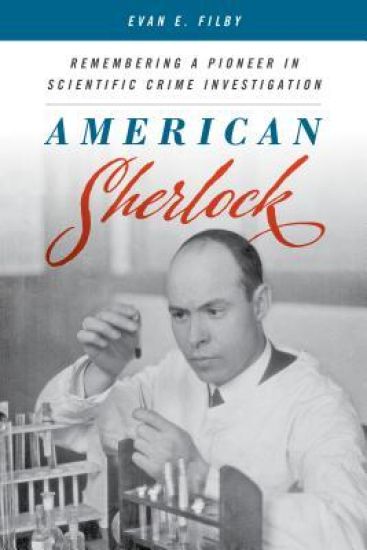
Luke S. May played a significant role in the development of scientific methods of crime investigation. Although basically self-taught in scientific matters, May spent over a half century practicing scientific crime detection and built a solid reputation among police agencies and attorneys in the Pacific Northwest and Western Canada as a serious and effective scientific investigator. This reputation as "America's Sherlock Holmes" also led to his being consulted on the establishment of the first full service public American crime laboratory at Northwestern University in Chicago, Illinois, and on a laboratory for the Royal Canadian Mounted Police at Regina, Saskatchewan, Canada. When May began, few people, anywhere, used scientific tools to investigate crime. Except for a couple of minimal installations in Europe, there were no crime labs. So to solve his cases – criminal and civil – May improved or invented techniques in every area of forensic science in the era before public crime laboratories. Along the way, he exchanged ideas with many other well-known crime fighting pioneers. American Sherlock: Remembering a Pioneer in Scientific Crime Investigation is the biography of this innovative criminologist, giving a case-based account of his life and honoring him as one of the pioneers of scientific crime detection.
According to scholars, the Shoshone, Bannock, and Nez Perc s Indians of Idaho obtained horses roughly three centuries ago. That makes them the "first stockmen of Idaho," although we know little of that history. Still, when the Lewis & Clark expedition visited the future state in 1805 and 1806, they met bands of skill horseback hunters and warriors, who owned vast herds of fine horses. Before the Spuds details the history of Idaho stock raising during the century that followed that meeting. The Indians remained Idaho's only stockmen until mid-century. For decades, they supplied horses to British-Canadian fur traders as well as Mountain Men from the United States. Later, they traded with emigrants passing through on the Oregon and California Trails. But by about 1850, Idaho had a nascent cattle industry: Traders in the south, plus missionaries and Indians in the north had small herds for local consumption and limited trading. Then, in 1860, prospectors discovered gold in northern Idaho. That brought tens of thousands of hopeful miners into the region, followed quickly by entrepreneurs with bands of cattle and sheep to supply them with meat. The influx led to the creation of Idaho Territory, in March 1863. By then, ranchers had moved stock onto grazing lands near the mining districts. But the rising demand quickly outstripped regional supplies, so stockmen began to purchase large herds of Texas cattle and drive them into the Territory. Between 1866 and 1874 drovers led thousands of Texas cattle into Idaho. Then, in perhaps one growing season, Idaho ranchers found themselves with too much stock. So, after about 1875, they began to send large drives of surplus cattle to markets in Omaha and further east. Sadly, all this growth led to conflict with the first stockmen of Idaho. By around 1880, most of Idaho's Indians had been forced onto reservations. Over the years, Idaho and neighboring regions to the south saw the emergence of the "buckaroo," a herder whose equipment, dress, and techniques were more akin to the Spanish vaqueros than to the cowboys of Texas and the Southwest. They had the range mostly to themselves until an east-west railroad was completed in 1884-85. That sparked a surge in sheep ranching, which led to clashes between cattlemen and sheepmen. Although Idaho never had an all-out range war, isolated murders and stock killings flare up all over the Territory, and then the state. The last known Idaho range killing occurred in 1904, and friction persisted for another twenty years after that. Shortly before World War I, stock raising and dairy overtook mining as the leading income sector of Idaho's economy. Before the Spud tells the stories of the Indians, buckaroos, and sheepmen who helped make that happen. One example: Arthur Pence, born near Des Moines, Iowa, came to Idaho Territory in 1864, before his eighteenth birthday. He worked as a freighter for about three years, then took up cattle ranching along the Boise River. He next settled in the Bruneau Valley, married, and ran cattle under the "spade" brand. For a time after 1879, his cattle became a sideline to vegetable gardening. In 1885, he decided sheep offered better prospects, and switched. Pence eventually became a major sheep rancher, which allowed him to help found the Bruneau State Bank. He served on the local school board, and also in the state legislature for three terms, including two terms in the Senate. He played a prominent role in politics and stock-raising until he was well into his seventies. He passed away in 1935.