Kirjojen hintavertailu – 12 903 725 kirjaa ja 27 kauppaa

Kirjailija

Evan Thompson

Kirjat ja teokset yhdessä paikassa: 8 kirjaa, julkaisuja vuosilta 1995–2025, suosituimpiin kuuluu El Punto Ciego: Por Qué La Ciencia No Puede Ignorar La Experiencia Humana. Vertaile teosten hintoja ja tarkista saatavuus suomalaisista kirjakaupoista.

8 kirjaa

Kirjojen julkaisuvuodet: 1995–2025.

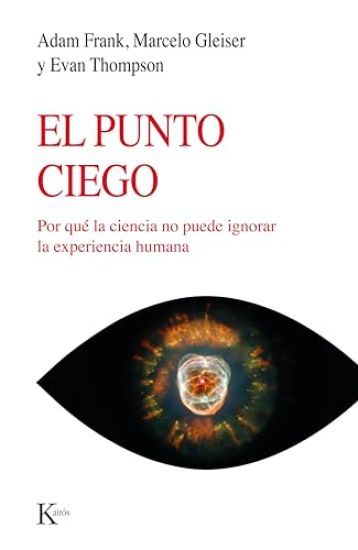
El Punto Ciego: Por Qué La Ciencia No Puede Ignorar La Experiencia Humana

El Punto Ciego: Por Qué La Ciencia No Puede Ignorar La Experiencia Humana

Adam Frank; Marcelo Gleiser; Evan Thompson

Editorial Kairos
2025
nidottu
In The Blind Spot, astrophysicist Adam Frank, theoretical physicist Marcelo Gleiser, and philosopher Evan Thompson argue for a revolutionary vision of the scientific world, one that includes humanity's lived experience as an inescapable part of our search for objective truth. Since the Enlightenment, science has been turned to knowing who we are, where we came from, and where we are going, but we have been stuck thinking that we can know the universe from outside our position in it. When we try to understand reality only through external physical things, imagined from this external position, we lose sight of the need for experience. This is the blind spot that, according to the authors, lies behind our scientific enigmas about time and the origin of the universe, quantum physics, life, artificial intelligence, mind, consciousness, and the Earth as a planetary system. The authors propose an alternative vision: scientific knowledge as a self-correcting narrative made from the world and our experience of it.
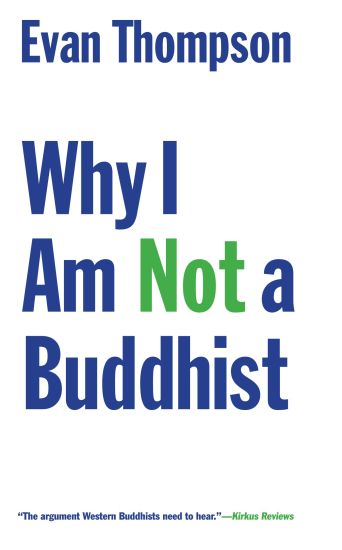
Why I Am Not a Buddhist

Why I Am Not a Buddhist

Evan Thompson

YALE UNIVERSITY PRESS
2022
pokkari

Halvin toimitettuna 24,60 €

A provocative essay challenging the idea of Buddhist exceptionalism, from one of the world’s most widely respected philosophers and writers on Buddhism and science Buddhism has become a uniquely favored religion in our modern age. A burgeoning number of books extol the scientifically proven benefits of meditation and mindfulness for everything ranging from business to romance. There are conferences, courses, and celebrities promoting the notion that Buddhism is spirituality for the rational, compatible with cutting-edge science, indeed, “a science of the mind.” In this provocative book, Evan Thompson argues that this representation of Buddhism is false. In lucid and entertaining prose, Thompson dives deep into both Western and Buddhist philosophy to explain how the goals of science and religion are fundamentally different. Efforts to seek their unification are wrongheaded and promote mistaken ideas of both. He suggests cosmopolitanism instead, a worldview with deep roots in both Eastern and Western traditions. Smart, sympathetic, and intellectually ambitious, this book is a must-read for anyone interested in Buddhism’s place in our world today.
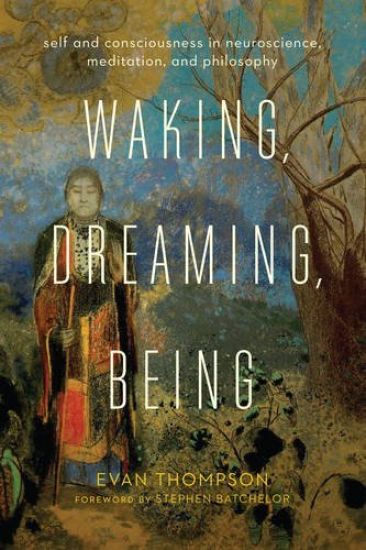
Waking, Dreaming, Being

Waking, Dreaming, Being

Evan Thompson; Stephen Batchelor

Columbia University Press
2017
pokkari

Halvin toimitettuna 25,70 €

A renowned philosopher of the mind, also known for his groundbreaking work on Buddhism and cognitive science, Evan Thompson combines the latest neuroscience research on sleep, dreaming, and meditation with Indian and Western philosophy of mind, casting new light on the self and its relation to the brain. Thompson shows how the self is a changing process, not a static thing. When we are awake we identify with our body, but if we let our mind wander or daydream, we project a mentally imagined self into the remembered past or anticipated future. As we fall asleep, the impression of being a bounded self distinct from the world dissolves, but the self reappears in the dream state. If we have a lucid dream, we no longer identify only with the self within the dream. Our sense of self now includes our dreaming self, the "I" as dreamer. Finally, as we meditate-either in the waking state or in a lucid dream-we can observe whatever images or thoughts arise and how we tend to identify with them as "me." We can also experience sheer awareness itself, distinct from the changing contents that make up our image of the self. Contemplative traditions say that we can learn to let go of the self, so that when we die we can witness its dissolution with equanimity. Thompson weaves together neuroscience, philosophy, and personal narrative to depict these transformations, adding uncommon depth to life's profound questions. Contemplative experience comes to illuminate scientific findings, and scientific evidence enriches the vast knowledge acquired by contemplatives.
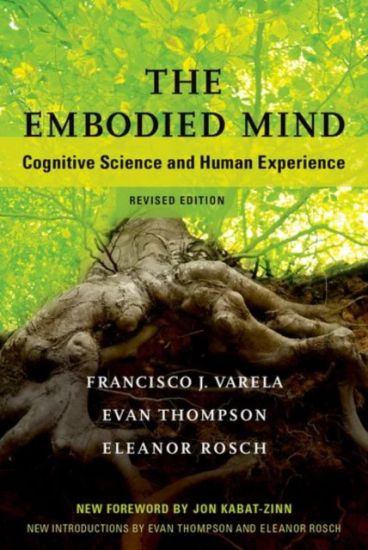
The Embodied Mind

The Embodied Mind

Francisco J. Varela; Evan Thompson; Eleanor Rosch; Jon Kabat-Zinn

MIT Press
2017
pokkari

Halvin toimitettuna 40,30 €

A new edition of a classic work that originated the "embodied cognition" movement and was one of the first to link science and Buddhist practices. This classic book, first published in 1991, was one of the first to propose the "embodied cognition" approach in cognitive science. It pioneered the connections between phenomenology and science and between Buddhist practices and science-claims that have since become highly influential. Through this cross-fertilization of disparate fields of study, The Embodied Mind introduced a new form of cognitive science called "enaction," in which both the environment and first person experience are aspects of embodiment. However, enactive embodiment is not the grasping of an independent, outside world by a brain, a mind, or a self; rather it is the bringing forth of an interdependent world in and through embodied action. Although enacted cognition lacks an absolute foundation, the book shows how that does not lead to either experiential or philosophical nihilism. Above all, the book's arguments were powered by the conviction that the sciences of mind must encompass lived human experience and the possibilities for transformation inherent in human experience. This revised edition includes substantive introductions by Evan Thompson and Eleanor Rosch that clarify central arguments of the work and discuss and evaluate subsequent research that has expanded on the themes of the book, including the renewed theoretical and practical interest in Buddhism and mindfulness. A preface by Jon Kabat-Zinn, the originator of the mindfulness-based stress reduction program, contextualizes the book and describes its influence on his life and work.
Waking, Dreaming, Being

Waking, Dreaming, Being

Evan Thompson; Stephen Batchelor

Columbia University Press
2014
sidottu

Halvin toimitettuna 30,20 €

A renowned philosopher of the mind, also known for his groundbreaking work on Buddhism and cognitive science, Evan Thompson combines the latest neuroscience research on sleep, dreaming, and meditation with Indian and Western philosophy of mind, casting new light on the self and its relation to the brain. Thompson shows how the self is a changing process, not a static thing. When we are awake we identify with our body, but if we let our mind wander or daydream, we project a mentally imagined self into the remembered past or anticipated future. As we fall asleep, the impression of being a bounded self distinct from the world dissolves, but the self reappears in the dream state. If we have a lucid dream, we no longer identify only with the self within the dream. Our sense of self now includes our dreaming self, the "I" as dreamer. Finally, as we meditate-either in the waking state or in a lucid dream-we can observe whatever images or thoughts arise and how we tend to identify with them as "me." We can also experience sheer awareness itself, distinct from the changing contents that make up our image of the self. Contemplative traditions say that we can learn to let go of the self, so that when we die we can witness its dissolution with equanimity. Thompson weaves together neuroscience, philosophy, and personal narrative to depict these transformations, adding uncommon depth to life's profound questions. Contemplative experience comes to illuminate scientific findings, and scientific evidence enriches the vast knowledge acquired by contemplatives.
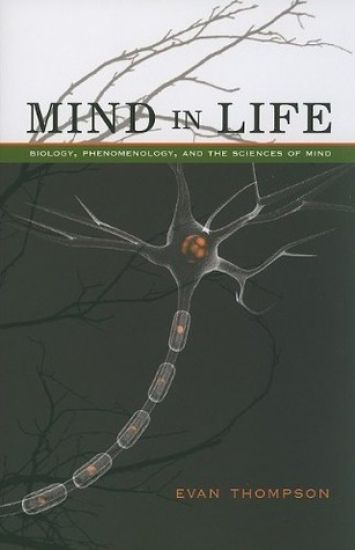
Mind in Life

Mind in Life

Evan Thompson

The Belknap Press
2010
nidottu
How is life related to the mind? The question has long confounded philosophers and scientists, and it is this so-called explanatory gap between biological life and consciousness that Evan Thompson explores in Mind in Life. Thompson draws upon sources as diverse as molecular biology, evolutionary theory, artificial life, complex systems theory, neuroscience, psychology, Continental Phenomenology, and analytic philosophy to argue that mind and life are more continuous than has previously been accepted, and that current explanations do not adequately address the myriad facets of the biology and phenomenology of mind. Where there is life, Thompson argues, there is mind: life and mind share common principles of self-organization, and the self-organizing features of mind are an enriched version of the self-organizing features of life. Rather than trying to close the explanatory gap, Thompson marshals philosophical and scientific analyses to bring unprecedented insight to the nature of life and consciousness. This synthesis of phenomenology and biology helps make Mind in Life a vital and long-awaited addition to his landmark volume The Embodied Mind: Cognitive Science and Human Experience (coauthored with Eleanor Rosch and Francisco Varela). Endlessly interesting and accessible, Mind in Life is a groundbreaking addition to the fields of the theory of the mind, life science, and phenomenology.
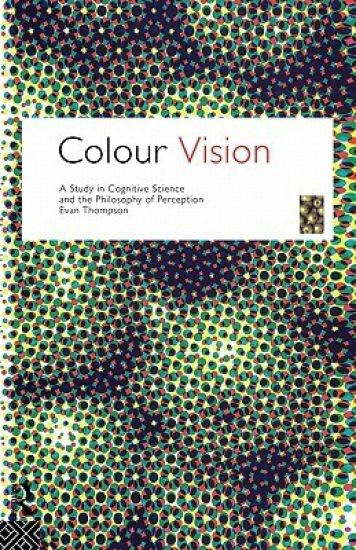
Colour Vision

Colour Vision

Evan Thompson

Routledge
1995
nidottu
Colour fascinates all of us, and scientists and philosophers have sought to understand the true nature of colour vision for many years. In recent times, investigations into colour vision have been one of the main success stories of cognitive science, for each discipline within the field - neuroscience, psychology, linguistics, computer science and artificial intelligence, and philosophy - has contributed significantly to our understanding of colour. Evan Thompson's book is a major contribution to this interdisciplinary project. Colour Vision provides an accessible review of the current scientific and philosophical discussions of colour vision. Thompson steers a course between the subjective and objective positions on colour, arguing for a relational account. This account develops a novel `ecological' approach to colour vision in cognitive science and the philosophy of perception. It is vital reading for all cognitive scientists and philosophers whose interests touch upon this central area.
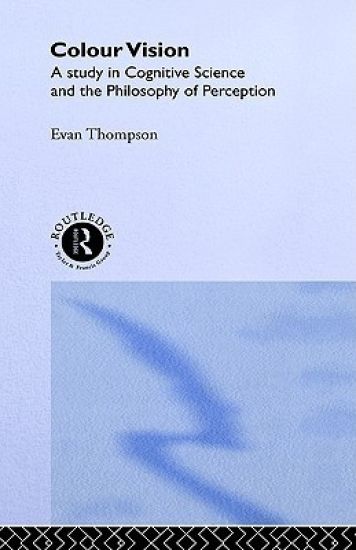
Colour Vision

Colour Vision

Evan Thompson

Routledge
1995
sidottu
Colour fascinates all of us, and scientists and philosophers have sought to understand the true nature of colour vision for many years. In recent times, investigations into colour vision have been one of the main success stories of cognitive science, for each discipline within the field - neuroscience, psychology, linguistics, computer science and artificial intelligence, and philosophy - has contributed significantly to our understanding of colour. Evan Thompson's book is a major contribution to this interdisciplinary project. Colour Vision provides an accessible review of the current scientific and philosophical discussions of colour vision. Thompson steers a course between the subjective and objective positions on colour, arguing for a relational account. This account develops a novel `ecological' approach to colour vision in cognitive science and the philosophy of perception. It is vital reading for all cognitive scientists and philosophers whose interests touch upon this central area.