
Kirjojen hintavertailu – 12 859 819 kirjaa ja 27 kauppaa

Kirjailija

Everatt David

Kirjat ja teokset yhdessä paikassa: 2 kirjaa, julkaisuja vuosilta 2014–2016, suosituimpiin kuuluu Fees Must Fall. Vertaile teosten hintoja ja tarkista saatavuus suomalaisista kirjakaupoista.

2 kirjaa

Kirjojen julkaisuvuodet: 2014–2016.

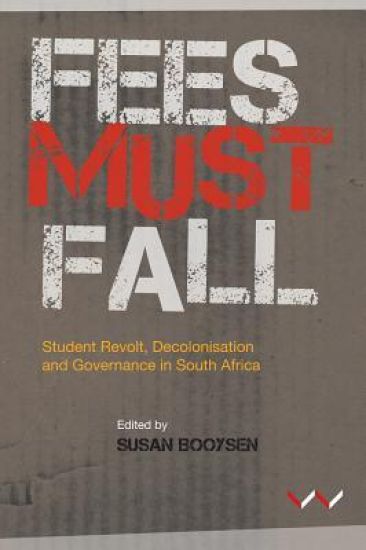
Fees Must Fall

Fees Must Fall

Booysen Susan; Gillian Godsell; Rekgotsofetse Chikane; Sizwe Mpofu-Walsh; Omhle Ntshingila; Refiloe Lepere; Swankie Mofoko; Ayabonga Nase; Everatt David; Lynn Hewlett; Nomagugu Masuku-Mukadah; Horácio Lucas Zandamela; Koffi Kouakou; Gumede William; Bond Patrick; Satgar Vishwas; Fitzgerald Patrick; Oliver Seale; Pillay Pundy; Darlene Miller; Thad Metz

Wits University Press
2016
nidottu
#FeesMustFall, the student revolt that began in October 2015, was an uprising against lack of access to, and financial exclusion from, higher education in South Africa. More broadly, it radically questioned the socio-political dispensation resulting from the 1994 social pact between big business, the ruling elite and the liberation movement. The 2015 revolt links to national and international youth struggles of the recent past and is informed by Black Consciousness politics and social movements of the international Left. Yet, its objectives are more complex than those of earlier struggles. The student movement has challenged the hierarchical, top-down leadership system of university management and it’s `double speak’ of professing to act in workers’ and students’ interests yet enforce a regressive system for control and governance. University managements, while one one level amenable to change, have also co-opted students into their ranks to create co-responsibility for the highly bureaucratised university fi nancial aid that stand in the way of their social revolution. This book maps the contours of student discontent a year after the start of the #FeesMustFall revolt. Student voices dissect coloniality, improper compromises by the founders of democratic South Africa, feminism, worker rights and meaningful education. In-depth assessments by prominent scholars refl ect on the complexities of student activism, its impact on national and university governance, and offer provocative analyses of the power of the revolt.
Changing Space, Changing City

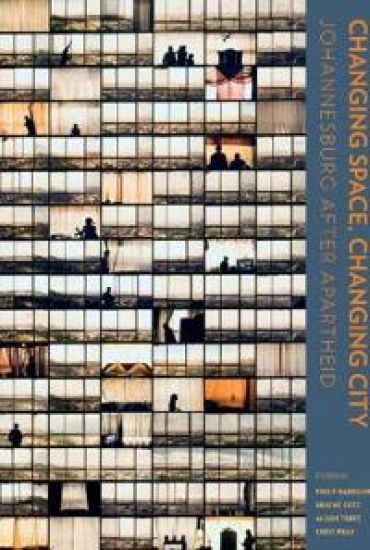
Changing Space, Changing City

Peter Ahmad; Badenhorst Willem; Beavon Keith; Claire Bénit-Gbaffou; Charlton Sarah; Yasmeen Dinath; Teresa Dirsuweit; Everatt David; Gotz Graeme; Kirsten Harrison; Harrison Philip; Huchzermeyer Marie; Hilton Judin; Karam Aly; Kihato Caroline; Neil Klug; Kuljian Christa; Karina Landman; Pauline Larsen; Hannah le Roux; Mabin Alan; Miriam Maina; Puleng Makhetha; Malaza Nqobile; Adrian Masson; Mathetha Mokonyama; Khangelani Moyo; Brian Mubiwa; Yusuf Patel; Herman Pienaar; Naomi Roux; Margot Rubin; Samadia Sadouni; Rashid Seedat

Wits University Press
2014
sidottu
As the dynamo of South Africa’s economy, Johannesburg commands a central position in the nation’s imagination, and scholars throughout the world monitor the city as an exemplar of urbanity in the global South. This richly illustrated study offers detailed empirical analyses of changes in the city’s physical space, as well as a host of chapters on the character of specific neighbourhoods and the social identities being forged within them. Informing all of these is a consideration of underlying economic, social and political processes shaping the wider Gauteng region. A mix of respected academics, practising urban planners and experienced policymakers offer compelling overviews of the rapid and complex spatial developments that have taken place in Johannesburg since the end of apartheid, along with tantalising glimpses into life on the streets and behind the high walls of this diverse city. The book has three sections. Section A provides an overview of macro spatial trends and the policies that have infl uenced them. Section B explores the shaping of the city at district and suburban level, revealing the peculiarity of processes in different areas. This analysis elucidates thelarger trends, while identifying shifts that are not easily detected at the macro level. Section C is an assembly of chapters and short vignettes that focus on the interweaving of place and identity at a micro level. With empirical data supported by new data sets including the 2011 Census, the city’s Development Planning and Urban Management Department’s information system, and Gauteng City-Region Observatory’s substantial archive, the book is an essential reference for planning practitioners, urban geographers, sociologists, and social anthropologists, among others.