Kirjojen hintavertailu – 12 903 733 kirjaa ja 27 kauppaa

Kirjailija

Evie Shockley

Kirjat ja teokset yhdessä paikassa: 8 kirjaa, julkaisuja vuosilta 2006–2025, suosituimpiin kuuluu A Half-Red Sea. Vertaile teosten hintoja ja tarkista saatavuus suomalaisista kirjakaupoista.

8 kirjaa

Kirjojen julkaisuvuodet: 2006–2025.

Beyond the Watershed

Beyond the Watershed

Nadia Alexis; Evie Shockley

CavanKerry Press
2025
nidottu
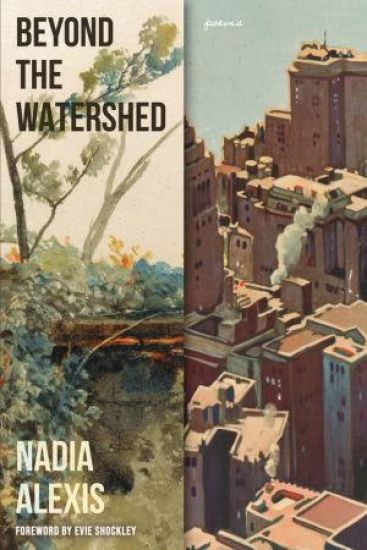
A hybrid collection that explores the dual nature of water as both a destructive and healing force, mirroring the experiences of Black women and girls. A hybrid collection of poetry and photography, Beyond the Watershed explores the various experiences of a Haitian American daughter and her Haitian immigrant mother. Nadia Alexis crafts a moving portrayal of generational trauma, domestic violence, survival, and reclamation, using stunning imagery drawing from the body, spirit, nature, and cityscapes. Alexis traces journeys to break free–documenting pain, making space for light, becoming a reckoning, connecting with spirit, and writing oneself into new seasons of safe waters, healthy love, and transformation. This vital debut affirms that there's "nothing like the thirst / of Black girls who believe in their own dreams," even as they navigate nonlinear paths to healing. "Sometimes the clouds speak to me / & tell me to look beyond the burning," the daughter declares, as she charts her own path forward.
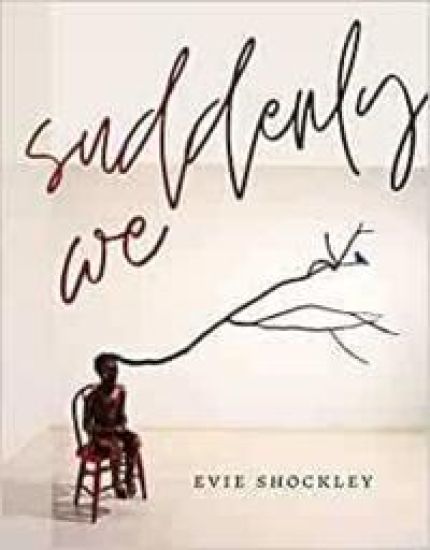
suddenly we

suddenly we

Evie Shockley

WESLEYAN UNIVERSITY PRESS
2023
sidottu
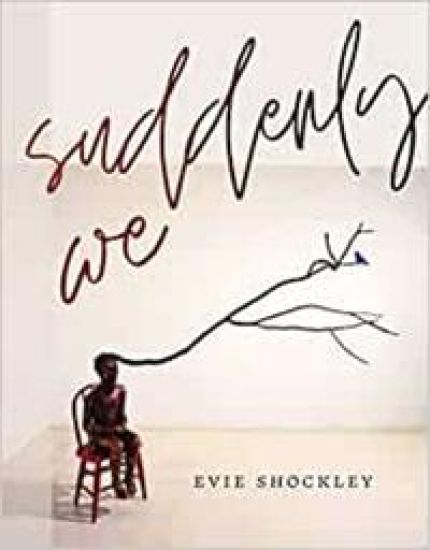
Evie Shockley's new poems invite us to dream - and work - toward a more capacious "we"In her new poetry collection, Evie Shockley mobilizes visual art, sound, and multilayered language to chart routes towards openings for the collective dreaming of a more capacious "we." How do we navigate between the urgency of our own becoming and the imperative insight that whoever we are, we are in relation to each other? Beginning with the visionary art of Black women like Alison Saar and Alma Thomas, Shockley's poems draw and forge a widening constellation of connections that help make visible the interdependence of everyone and everything on Earth.perchedi am black, comely,a girl on the cusp of desire.my dangling toes take the restthe rest of my body refuses. spine upright,my pose proposes anticipation. i poisein copper-colored tension, intent onmanifesting my soul in the discouraging world.under the rough eyes of others, i stiffen.if i must be hard, it will be as a tree, alivewith change. inside me, a love of beauty riseslike sap, sprouts from my scalpand stretches forth. i send out my song, an ariablue and feathered, and grow toward it,choirs bare, but soon to bud. i amblack and becoming.- after Alison Saar's Blue Bird
suddenly we

suddenly we

Evie Shockley

WESLEYAN UNIVERSITY PRESS
2023
nidottu

Halvin toimitettuna 19,20 €

Evie Shockley's new poems invite us to dream - and work - toward a more capacious "we" In her new poetry collection, Evie Shockley mobilizes visual art, sound, and multilayered language to chart routes towards openings for the collective dreaming of a more capacious "we." How do we navigate between the urgency of our own becoming and the imperative insight that whoever we are, we are in relation to each other? Beginning with the visionary art of Black women like Alison Saar and Alma Thomas, Shockley's poems draw and forge a widening constellation of connections that help make visible the interdependence of everyone and everything on Earth. perched i am black, comely, a girl on the cusp of desire. my dangling toes take the rest the rest of my body refuses. spine upright, my pose proposes anticipation. i poise in copper-colored tension, intent on manifesting my soul in the discouraging world. under the rough eyes of others, i stiffen. if i must be hard, it will be as a tree, alive with change. inside me, a love of beauty rises like sap, sprouts from my scalp and stretches forth. i send out my song, an aria blue and feathered, and grow toward it, choirs bare, but soon to bud. i am black and becoming. - after Alison Saar's Blue Bird
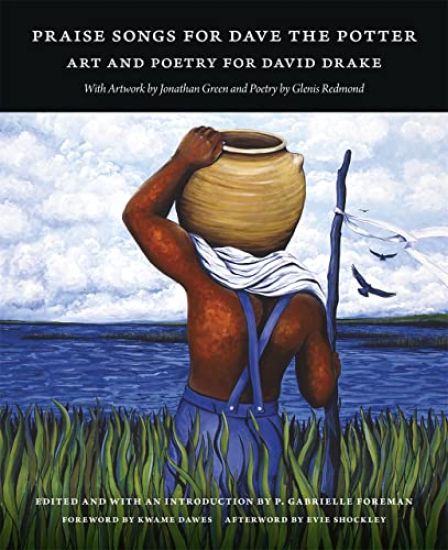
Praise Songs for Dave the Potter

Praise Songs for Dave the Potter

Kwame Dawes; Evie Shockley

UNIVERSITY OF GEORGIA PRESS
2023
sidottu
David Drake is recognized as one of the United States’ most accomplished nineteenth-century potters. Yet, though his pots—many inscribed with original verse—sit in museums across the nation, he is too often passed over when considering the early foundations of African American poetry. Born in South Carolina at the beginning of the nineteenth century, Drake produced hundreds of pieces while under the surveillance of the enslavers who claimed him and his work as their property. Still, asserts P. Gabrielle Foreman, he is perhaps the only Black person in all of the free or slave states whose literary work was preserved in neither books nor pamphlets nor newspapers. His pots and jars served as pages as well as ceramic vessels. This book examines how Drake’s pottery and poetry have inspired visual artists and poets who claim him as an artistic ancestor. It features the Sir Dave (1998) series by artist Jonathan Green, including thirteen paintings that have never been exhibited or published together before. Accompanying and in dialogue with Green’s paintings is a twenty-poem cycle called All My Relation (2015) by Glenis Redmond. Praise Songs includes the editor’s interview of Redmond and Green and essays by Redmond, Foreman, and Lynnette Young Overby, the artistic director of a 2014 collaboration and performance featuring both Green’s and Redmond’s work. As one of the first volumes to focus on David Drake’s legacy as a writer, it also includes an updated compilation of all of his poetic inscriptions. This volume presents the artistic legacy of one of the most well-known Black potters, and one of the most innovative and underappreciated enslaved poets, of the nineteenth century.
semiautomatic

semiautomatic

Evie Shockley

Wesleyan University Press
2018
nidottu
Art can't shield our bodies or stabilize the earth's climate, but Evie Shockley's semiautomatic insists that it can feed the spirit and reawaken the imagination. The volume responds primarily to the twenty-first century's inescapable evidence of the terms of black life—not so much new as newly visible. The poems trace a whole web of connections between the kinds of violence that affect people across the racial, ethnic, gender, class, sexual, national, and linguistic boundaries that do and do not divide us. How do we protect our humanity, our ability to feel deeply and think freely, in the face of a seemingly endless onslaught of physical, social, and environmental abuses? Where do we find language to describe, process, and check the attacks and injuries we see and suffer? What actions can break us out of the soul-numbing cycle of emotions, moving through outrage, mourning, and despair, again and again? In poems that span fragment to narrative and quiz to constraint, from procedure to prose and sequence to song, semiautomatic culls past and present for guides to a hoped-for future.
The new black

The new black

Evie Shockley

Wesleyan University Press
2012
nidottu
Smart, grounded, and lyrical, Evie Shockley's the new black integrates powerful ideas about "blackness," past and present, through the medium of beautifully crafted verse. the new black sees our racial past inevitably shaping our contemporary moment, but struggles to remember and reckon with the impact of generational shifts: what seemed impossible to people not many years ago-for example, the election of an African American president-will have always been a part of the world of children born in the new millennium. All of the poems here, whether sonnet, mesostic, or deconstructed blues, exhibit a formal flair. They speak to the changes we have experienced as a society in the last few decades-changes that often challenge our past strategies for resisting racism and, for African Americans, ways of relating to one another. The poems embrace a formal ambiguity that echoes the uncertainty these shifts produce, while reveling in language play that enables readers to "laugh to keep from crying." They move through nostalgia, even as they insist on being alive to the present and point longingly towards possible futures. Check for the online reader's companion at http://http://thenewblack.site.wesleyan.edu.
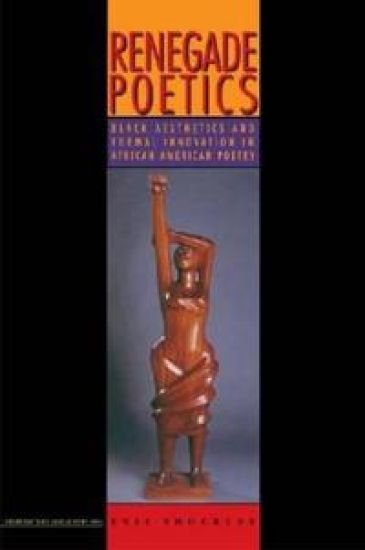
Renegade Poetics

Renegade Poetics

Evie Shockley

University of Iowa Press
2011
nidottu
Beginning with a deceptively simple question—What do we mean when we designate behaviours, values, or forms of expression as “black”?—Evie Shockley’s Renegade Poetics separates what we think we know about black aesthetics from the more complex and nuanced possibilities the concept has long encompassed. The study reminds us, first, that even among the radicalised young poets and theorists who associated themselves with the Black Arts Movement that began in the mid-1960s, the contours of black aesthetics were deeply contested and, second, that debates about the relationship between aesthetics and politics for African American artists continue into the twenty-first century. Shockley argues that a rigid notion of black aesthetics commonly circulates that is little more than a caricature of the concept. She sees the Black Aesthetic as influencing not only African American poets and their poetic production, but also, through its shaping of criteria and values, the reception of their work. Taking as its starting point the young BAM artists’ and activists’ insistence upon the interconnectedness of culture and politics, this study delineates how African American poets—in particular, Gwendolyn Brooks, Sonia Sanchez, Harryette Mullen, Anne Spencer, Ed Roberson, and Will Alexander—generate formally innovative responses to their various historical and cultural contexts. Out of her readings, Shockley eloquently builds a case for redefining black aesthetics descriptively, to account for nearly a century of efforts by African American poets and critics to name and tackle issues of racial identity and self-determination. In the process, she resituates innovative poetry that has been dismissed, marginalised, or misread because its experiments were not “recognisably black”—or, in relation to the avant-garde tradition, because they were.