Kirjojen hintavertailu – 12 903 735 kirjaa ja 27 kauppaa

Kirjailija

Ewelina U. Ochab

Kirjat ja teokset yhdessä paikassa: 3 kirjaa, julkaisuja vuosilta 2022–2026, suosituimpiin kuuluu Global Conflict-Related Sexual Violence. Vertaile teosten hintoja ja tarkista saatavuus suomalaisista kirjakaupoista.

3 kirjaa

Kirjojen julkaisuvuodet: 2022–2026.

Global Conflict-Related Sexual Violence

Global Conflict-Related Sexual Violence

Ewelina U. Ochab

TAYLOR FRANCIS LTD
2026
sidottu
Sexual violence in conflict, often referred to as conflict-related sexual violence (CRSV), refers to some form of sexual and/or reproductive violence perpetrated against women, men, girls and boys that is directly or indirectly related to the conflict. This includes rape, sexual slavery, forced prostitution, forced pregnancy, forced abortion, enforced sterilisation, forced marriage, and any other form of sexual violence of comparable gravity. The perpetrators of CRSV vary between each case and include state and non-state armed groups, including terrorist organisations. This book examines some of the recent manifestations of sexual violence as atrocity crimes, and especially, prohibited acts to bring about genocide, the responses to these crimes, and issues that continue to be neglected, including in relation to the duty to prevent. The work structures the discussion around the prevalence of CRSV, its use as a tool of genocide, and other international crimes, and the failures of legal and institutional responses. By combining thematic chapters on international law and accountability with case studies, the study provides a balance between theoretical critique and empirical analysis. It further engages with the debates on what is needed to bring about change, looking at specific policy and law reforms. The work also examines the way forward, including recommendations to introduce an international convention specifically focused on CRSV, and a permanent mechanism on CRSV. The book will be of interest to academics, researchers and policy-makers working in the areas of International Criminal Law, International Humanitarian Law, Human Rights Law, Constitutional Law, Legal History, Security Studies and Genocide Studies.
State Responses to Crimes of Genocide

State Responses to Crimes of Genocide

Ewelina U. Ochab; David Alton

Springer Nature Switzerland AG
2023
nidottu
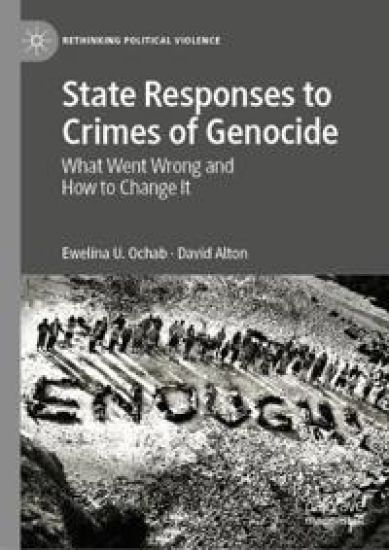
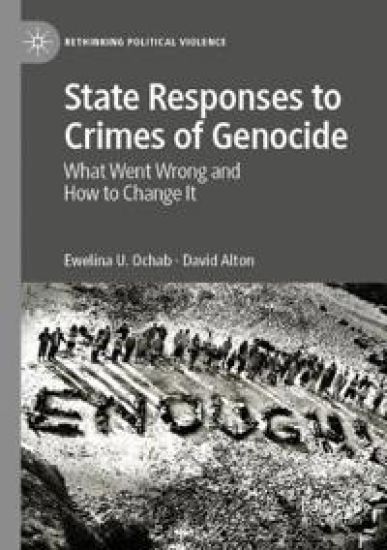
At the time of drafting the UN Convention on the Prevention and Punishment of the Crime of Genocide (Genocide Convention), the drafters were hopeful that the document will be the response needed to ensure that the world would never again witness such atrocities as committed by the Nazi regime. While, arguably, there has been no such great loss of human lives as during WWII, genocidal incidents have and still take place. After WWII, we have witnessed the genocides in Cambodia, Rwanda, Bosnia, Darfur, to name only a few. The responses to these atrocities have always been inadequate. Every time the world leaders would come together to renew their promise of ‘Never Again’. However, the promise has never materialised. In 2014, Daesh unleashed genocide against religious minorities in Syria and Iraq. Before the world managed to shake off from the atrocities, in 2016, the Burmese military launched a genocidal campaign against the Rohingya Muslims in Myanmar. This was followed by reports ofever-growing atrocities against Christian minorities in Nigeria. Without waiting too long, in 2018, China proceeded with its genocidal campaign against the Uyghur Muslims. In 2020, the Tigrayans became the victims of ethnic targeting. Five cases of mass atrocities that, in the space of just five years, all easily meet the legal definition of genocide. Again, the response that followed each case has been inadequate and unable to make a difference to the targeted communities. This legacy does not give much hope for the future. The question that this books hopes to address is what needs to change to ensure that we are better equipped to address genocide and prevent the crime in the future.
State Responses to Crimes of Genocide

State Responses to Crimes of Genocide

Ewelina U. Ochab; David Alton

Springer Nature Switzerland AG
2022
sidottu
At the time of drafting the UN Convention on the Prevention and Punishment of the Crime of Genocide (Genocide Convention), the drafters were hopeful that the document will be the response needed to ensure that the world would never again witness such atrocities as committed by the Nazi regime. While, arguably, there has been no such great loss of human lives as during WWII, genocidal incidents have and still take place. After WWII, we have witnessed the genocides in Cambodia, Rwanda, Bosnia, Darfur, to name only a few. The responses to these atrocities have always been inadequate. Every time the world leaders would come together to renew their promise of ‘Never Again’. However, the promise has never materialised. In 2014, Daesh unleashed genocide against religious minorities in Syria and Iraq. Before the world managed to shake off from the atrocities, in 2016, the Burmese military launched a genocidal campaign against the Rohingya Muslims in Myanmar. This was followed by reports ofever-growing atrocities against Christian minorities in Nigeria. Without waiting too long, in 2018, China proceeded with its genocidal campaign against the Uyghur Muslims. In 2020, the Tigrayans became the victims of ethnic targeting. Five cases of mass atrocities that, in the space of just five years, all easily meet the legal definition of genocide. Again, the response that followed each case has been inadequate and unable to make a difference to the targeted communities. This legacy does not give much hope for the future. The question that this books hopes to address is what needs to change to ensure that we are better equipped to address genocide and prevent the crime in the future.