Kirjailija
Eyal Ben-Ari
Kirjat ja teokset yhdessä paikassa: 14 kirjaa, julkaisuja vuosilta 1990–2023, suosituimpiin kuuluu Japan in Singapore. Vertaile teosten hintoja ja tarkista saatavuus suomalaisista kirjakaupoista.
14 kirjaa
Kirjojen julkaisuvuodet: 1990–2023.
The Japanese impact on Southeast Asia has been profound, not only in terms of economic presence, but equally in terms of an increasingly visible cultural presence. Food, fashion, TV, film, religion, sport, popular music, ideas about management and social relationships and even local literatures have been profoundly impacted by the flows of cultural influences from Japan. This volume examines these flows and their consequences in Singapore, a Southeast Asian society in which the Japanese presence is so visible as to make it a regional paradigm for a study of cultural influence in the region.
This book uncovers and explains the ways by which politics is naturalized and denaturalized, and familiarized and de-familiarized through popular media. It explores the tensions between state actors such as censors, politicized and nonpoliticized audiences, and visual media creators, at various points in the history of Japanese visual media. It offers new research on a wide array of visual media texts including classical narrative cinema, television, documentary film, manga, and animated film. It spans the militarized decades of the 1930s and 1940s, through the Asia Pacific War into the present day, and demonstrates how processes of politicization and depoliticization should be understood as part of wider historical developments including Japan’s postwar devastation and poverty, subsequent rapid modernization and urbanization, and the aging population and economic struggles of the twenty-first century.
This book explores the multiplicity of special times and spaces in Japan within which people get together to decide, celebrate or play, in gatherings such as organizational meetings, community festivities, preschool games or drinking bouts. It analyzes these gatherings in relation to the theoretical model of sociocultural frames, examining how such occasions are put together, their unfolding stages, interactive encounters, and relations between participants and the wider social and cultural contexts. It considers the cognitive, emotional and behavioural dimensions, the scope for manipulation and the effects, intentional and unintentional, on participants and the connections to the ways in which in society and culture change. Overall, besides describing specific rites and ceremonies in Japan, the book provides great insights into the process whereby the interactions, feelings and action of individuals and groups shape popular culture.
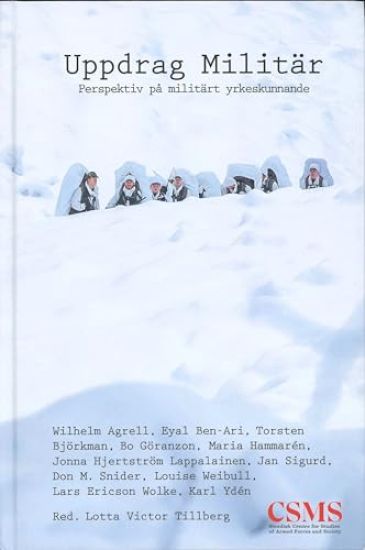
Uppdrag militär : perspektiv på militärt yrkeskunnande
Wilhelm Agrell; Eyal Ben-Ari; Torsten Björkman; Bo Göranzon; Maria Hammarén; Jonna Hjertström Lappalainen; Jan Sigurd; Don M. Snider; Louise Weibull; Lars Ericson Wolke; Karl Ydén
Santérus Förlag
2018
sidottu
Få utomstående har insyn i militär verksamhet. Det är ett förhållande denna bok syftat till att ändra på. I de tre föregående Uppdragsböckerna har militärer med egna ord beskrivit vad de gör, när de gör de som de tränats för. Vilka uppdrag ska hanteras? Vad möter dem, och vilka utmaningar ställs de inför? Hur ser det yrkeskunnande ut som härbärgerar både förmågan att bruka dödligt våld men också förmågan att skapa relationer, förtroende och samarbete? I den här boken bidrar elva olika forskare utifrån skiftande perspektiv, med sina reflektioner över militär yrkespraktik, dess möjligheter och dess utmaningar.
This book explores the multiplicity of special times and spaces in Japan within which people get together to decide, celebrate or play, in gatherings such as organizational meetings, community festivities, preschool games or drinking bouts. It analyzes these gatherings in relation to the theoretical model of sociocultural frames, examining how such occasions are put together, their unfolding stages, interactive encounters, and relations between participants and the wider social and cultural contexts. It considers the cognitive, emotional and behavioural dimensions, the scope for manipulation and the effects, intentional and unintentional, on participants and the connections to the ways in which in society and culture change. Overall, besides describing specific rites and ceremonies in Japan, the book provides great insights into the process whereby the interactions, feelings and action of individuals and groups shape popular culture.
First Published in 1990. This book forms part of the growing literature on aspects of conflict and conflict management in Japanese society. The explicit aim which has guided the volume's creation, however, has been to add a comparative perspective to this expanding stream of scholarly studies.
The Transformation of the World of War and Peace Support Operations
Kobi Michael; David Kellen; Eyal Ben-Ari
Praeger Publishers Inc
2009
sidottu
With the end of the Cold War, the euphoria of the Gulf War of the 1990s and the avowal of a New World Order, peace-operations were declared as the recipe for a better world through international intervention in conflict arenas. However, the debacles and failures in Cambodia, Somalia, or the Balkans led to disillusionment and a sense of strategic helplessness among leaders, experts and scholars in the industrial democracies. While these arguments have been the focus of intense criticism and discussion, they nevertheless underscore the fact that since the end of the Cold War the armed forces of the industrial democracies have undergone very significant transformations. This is the first work linking the changes in armed forces to Peace Support Operations (PSOs), those operations with major state-building components that demand broad and coherent cooperation between military forces and civilian entities. The Transformation of the World of War and Peace Support Operations is timely as the recent debates over PSOs continue to take center stage. This work embodies a new set of ideas and concepts that aid in grasping and interpreting the transformations taking place in the world of war and in PSOs. It seeks to understand how social, economic, political, and organizational transformations around the globe are related to the complex links between armed forces and PSOs. Additionally, this work addresses issues that continue to define the character and makeup of modern warfare and the missions of PSOs for coming decades.
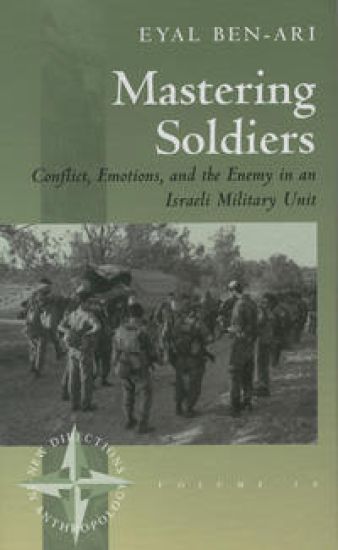
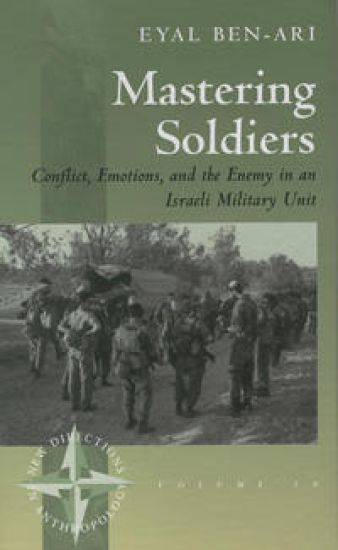
Studies of the military that deal with the actual experience of troops in the field are still rare in the social sciences. In fact, this ethnographic study of an elite unit in the Israeli Defense Force is the only one of its kind. As an officer of this unit and a professional anthropologist, the author was ideally positioned for his role as participant observer. During the eight years he spent with his unit he focused primarily on such notions as "conflict", "the enemy", and "soldiering" because they are, he argues, the key points of reference for "what we are" and "what we are trying to do" and form the basis for interpreting the environment within which armies operate. Relying on the latest anthropological approaches to cognitive models and the social constructions of emotion and masculinity, the author offers an in-depth analysis of the dynamics that drive the men's attitudes and behavior, and a rare and fascinating insight into the reality of military life.
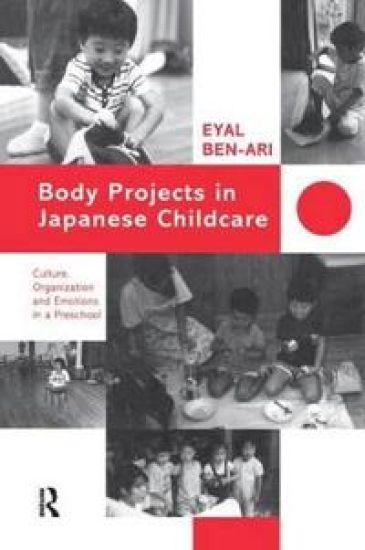
Examines the place of body practices and the management of emotions in Japanese preschools. Early childhood socialization is explored as a set of 'body projects': a series of practices undertaken (over time) to design the body according to prevailing cultural definitions and images.
First Published in 1990. This book forms part of the growing literature on aspects of conflict and conflict management in Japanese society. The explicit aim which has guided the volume's creation, however, has been to add a comparative perspective to this expanding stream of scholarly studies.
Examines the place of body practices and the management of emotions in Japanese preschools. Early childhood socialization is explored as a set of 'body projects': a series of practices undertaken (over time) to design the body according to prevailing cultural definitions and images.
The Japanese impact on Southeast Asia has been profound, not only in terms of economic presence, but equally in terms of an increasingly visible cultural presence. Food, fashion, TV, film, religion, sport, popular music, ideas about management and social relationships and even local literatures have been profoundly impacted by the flows of cultural influences from Japan. This volume examines these flows and their consequences in Singapore, a Southeast Asian society in which the Japanese presence is so visible as to make it a regional paradigm for a study of cultural influence in the region.
Studies of the military that deal with the actual experience of troops in the field are still rare in the social sciences. In fact, this ethnographic study of an elite unit in the Israeli Defense Force is the only one of its kind. As an officer of this unit and a professional anthropologist, the author was ideally positioned for his role as participant observer. During the eight years he spent with his unit he focused primarily on such notions as "conflict", "the enemy", and "soldiering" because they are, he argues, the key points of reference for "what we are" and "what we are trying to do" and form the basis for interpreting the environment within which armies operate. Relying on the latest anthropological approaches to cognitive models and the social constructions of emotion and masculinity, the author offers an in-depth analysis of the dynamics that drive the men's attitudes and behavior, and a rare and fascinating insight into the reality of military life.