Kirjojen hintavertailu – 12 859 828 kirjaa ja 27 kauppaa

Kirjailija

F C Conybeare

Kirjat ja teokset yhdessä paikassa: 14 kirjaa, julkaisuja vuosilta 2007–2024, suosituimpiin kuuluu The story of Ah?ik?ar from the Aramaic, Syriac, Arabic, Armenian, Ethiopic, Old Turkish, Greek and Slavonic versions. Vertaile teosten hintoja ja tarkista saatavuus suomalaisista kirjakaupoista.

Nimi esiintyy myös muodoissa: F. C. Conybeare

14 kirjaa

Kirjojen julkaisuvuodet: 2007–2024.

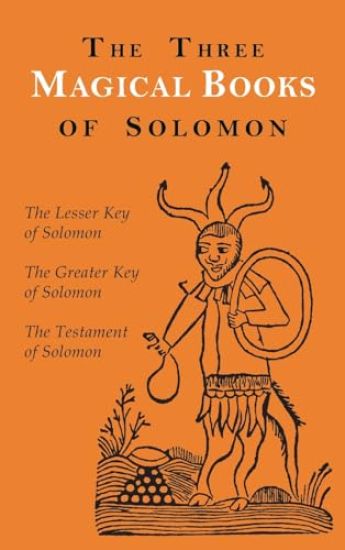
The Three Magical Books of Solomon

The Three Magical Books of Solomon

Aleister Crowley; S L MacGregor Mathers; F C Conybeare

Albatross Publishers
2024
sidottu

Halvin toimitettuna 34,10 €

2024 Hardcover Reprint of the three Grimoires bound into one volume. This omnibus edition reprints the three great magical works of King Solomon in one volume. The Key of Solomon the King was originally researched and translated by S. L. MacGregor Mathers from ancient manuscripts in the British museums. The work is traditionally divided into two books detailing the Key of King Solomon. The Lesser Key of Solomon 1904], or the Clavicula Salomonis Regis, or Lemegeton, is a compilation of materials and writings from ancient sources making up a text book of magic or "grimoire." Portions of this book can be traced back to the mid-16th to 17th centuries, when occult researchers such as Cornelius Agrippa and Johannes Trithemisus assembled what they discovered during their investigations into ancient texts. The Greater Key 1914] lists and describes a variety of purifications an exorcist should undergo. Instructions are given on clothing, magical devices, and even animal sacrifices. The Testament of Solomon 1898] is attributed to King Solomon of the Old Testament. Written in the first-person narrative, the book tells the story of the creation of the magical ring of King Solomon and how Solomon's ring was used to bind and control demons, including Beelzebub. The manuscripts from which this work was discovered date from the 15th, 16th, and 17th centuries. All were written in Greek. This dating makes most experts believe that the work is medieval. But some scholars argue that it is likely that the work comes from the 5th or 6th centuries. Regardless of the dates, these texts provide an immensely interesting description of how King Solomon tamed various demons to build his temple. The text includes predictions of the coming of Christ, as one demon explains to Solomon that while he may be bound, the only thing that can truly take his power away is the man born from a virgin who will be crucified by the Jews.
Myth, Magic, and Morals

Myth, Magic, and Morals

F C Conybeare

Wipf Stock Publishers
2020
pokkari
Of all the great figures which look down upon us across the gulf and void of time, Jesus of Nazareth is the most gracious and winning of aspect; and, although his memory was soon associated with that policy of craft and exclusiveness, of cruelty and credulity, which in East and West styled itself orthodoxy, nevertheless his name has ever been for the poor and the oppressed, for the despised and disinherited of the earth, a bond and symbol in union of peace and charity. It behooves us, then, more than ever in this age when old faiths are loosening their hold on us, and new superstitions, like Spiritualism, Occultism, and Christian Science, threaten to imprison our minds afresh, to inquire carefully who Jesus of Nazareth was, what were his real aims and ideas, what the means at his command for realizing them, how the great institutions connected with his name originated and grew up. This I have tried to do in the following pages... From the Introduction
Myth, Magic, and Morals

Myth, Magic, and Morals

F C Conybeare

Wipf Stock Publishers
2020
sidottu
Of all the great figures which look down upon us across the gulf and void of time, Jesus of Nazareth is the most gracious and winning of aspect; and, although his memory was soon associated with that policy of craft and exclusiveness, of cruelty and credulity, which in East and West styled itself orthodoxy, nevertheless his name has ever been for the poor and the oppressed, for the despised and disinherited of the earth, a bond and symbol in union of peace and charity. It behooves us, then, more than ever in this age when old faiths are loosening their hold on us, and new superstitions, like Spiritualism, Occultism, and Christian Science, threaten to imprison our minds afresh, to inquire carefully who Jesus of Nazareth was, what were his real aims and ideas, what the means at his command for realizing them, how the great institutions connected with his name originated and grew up. This I have tried to do in the following pages... From the Introduction
Selections from the Septuagint, according to the text of Swete

Selections from the Septuagint, according to the text of Swete

F C Conybeare; St George Stock

Alpha Edition
2020
pokkari
This book has been considered by academicians and scholars of great significance and value to literature. This forms a part of the knowledge base for future generations. So that the book is never forgotten we have represented this book in a print format as the same form as it was originally first published. Hence any marks or annotations seen are left intentionally to preserve its true nature.
Story of Ahikar

Story of Ahikar

F. C. Conybeare

Cambridge University Press
2009
pokkari
The story of Ahikar has appeared in various forms and numerous languages over the course of the last two and a half millennia. Long known to readers of the Arabian Nights, it was not until the end of the nineteenth century that scholars began to suspect that the legend had semi-biblical origins. Cambridge University Press had already published the first edition of The Story of Ahikar in 1898 when an enlarged and corrected second edition was prompted by the discovery of a series of Aramaic papyrus fragments on the island of Elephantiné, dating from the fifth century before Christ. It is the second edition of The Story of Ahikar, first published in 1913, which is reproduced here. Meticulously assembled, this edition contains the Armenian, Old Turkish, Syriac, and Arabic versions of the story in their original source language with accompanying English translations. Also included are translations of the Slavonic, Ethiopic, and Aramaic versions, as well as fragments of the sayings and parables of Ahikar and the Greek text of the story.
Selections from the Septuagint

Selections from the Septuagint

F C Conybeare; George Stock

Wipf Stock Publishers
2007
pokkari
F. C. Conybeare (1856-1924) was a British Orientalist, Fellow of University College, Oxford, and Professor of Theology at the University of Oxford. He was particularly noted for his attainments in Armenian and was a member of the Venetian Armenian Academy. He is also the author of 'Myth, Magic, and Morals'; 'The Historical Christ'; and 'History of New Testament Criticism'. George Stock also authored 'Stoicism', 'The Apology of Plato', and, with Conybeare, 'A Grammar of Septuagint Greek'.