
Kirjojen hintavertailu – 12 903 725 kirjaa ja 27 kauppaa

Kirjailija

F. Herbert Bormann

Kirjat ja teokset yhdessä paikassa: 2 kirjaa, julkaisuja vuosilta 1994–2001, suosituimpiin kuuluu Pattern and Process in a Forested Ecosystem. Vertaile teosten hintoja ja tarkista saatavuus suomalaisista kirjakaupoista.

Nimi esiintyy myös muodoissa: F.Herbert Bormann

2 kirjaa

Kirjojen julkaisuvuodet: 1994–2001.

Redesigning the American Lawn

Redesigning the American Lawn

F. Herbert Bormann; Diana Balmori; Gordon T. Geballe

Yale University Press
2001
pokkari
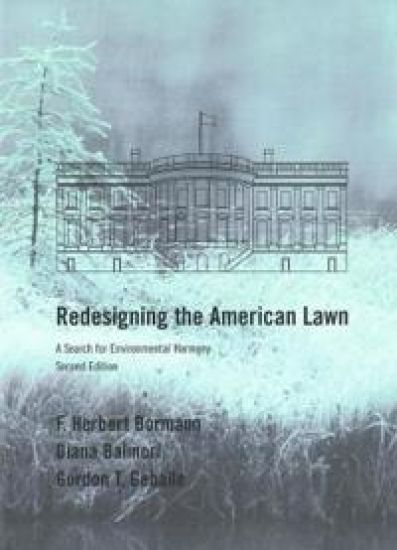
The authors in this book argue that our dedication to maintaining beautiful lawns is contributing to the serious environmental problems facing the planet, and they offer strategies for creating and caring for aesthetically pleasing and ecologically sound lawns. This new edition updates the original text and adds a chapter and illustrations showing what progress has been made in the ecological management of landscapes over the past decade. Reviews of the first edition:“An extremely readable summation of the origins of the addiction to lawns, and of the environmental reasons why Americans should kick the habit.”—Anne Raver, New York Times Book Review“A manual for improving a large part of the American environment while reducing pollution, saving Americans a large amount of money, and beautifying the landscape.”—Edward O. Wilson
Pattern and Process in a Forested Ecosystem

Pattern and Process in a Forested Ecosystem

F.Herbert Bormann; Gene E. Likens

Springer-Verlag New York Inc.
1994
nidottu
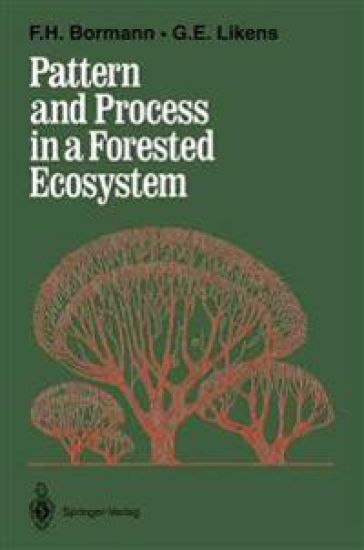
The advent of ecosystem ecology has created great difficulties for ecologists primarily trained as biologists, since inevitably as the field grew, it absorbed components of other disciplines relatively foreign to most ecologists yet vital to the understanding of the structure and function of ecosystems. From the point of view of the biological ecologist struggling to understand the enormous complexity of the biological functions within an ecosystem, the added necessity of integrating biology with geochemis­ try, hydrology, micrometeorology, geomorphology, pedology, and applied sciences (like silviculture and land use management) often has appeared as an impossible requirement. Ecologists have frequently responded by limiting their perspective to biology with the result that the modeling of species interactions is sometimes considered as modeling ecosystems, or modeling the living fraction of the ecosystems is considered as modeling whole ecosystems. Such of course is not the case, since understanding the structure and function of ecosystems requires sound understanding of inanimate as well as animate processes and often neither can be under­ stood without the other. About 15 years ago, a view of ecology somewhat different from most then prevailing, coupled with a strong dose of naivete and a sense of exploration, lead us to believe that consideration of the inanimate side of ecosystem function rather than being just one more annoying complexity might provide exceptional advantages in the study of ecosystems. To examine this possibility, we took two steps which occurred more or less simultaneously.