Kirjojen hintavertailu – 12 859 826 kirjaa ja 27 kauppaa

Kirjailija

F. James Rutherford

Kirjat ja teokset yhdessä paikassa: 4 kirjaa, julkaisuja vuosilta 2002–2020, suosituimpiin kuuluu Understanding Physics. Vertaile teosten hintoja ja tarkista saatavuus suomalaisista kirjakaupoista.

Nimi esiintyy myös muodoissa: F James Rutherford

4 kirjaa

Kirjojen julkaisuvuodet: 2002–2020.

Science Education In Global Perspective

Science Education In Global Perspective

Margrete Siebert Klein; F. James Rutherford; F James Rutherford; Margrete S. Klein

Routledge
2020
nidottu
The decline in the quality of American public school instruction, particularly in science and mathematics, is a well-documented subject of concern for our nation. This book examines the educational systems in Japan, the People's Republic of China, East and West Germany, and the Soviet Union, countries that have developed particularly innovative app

Science Education In Global Perspective

Science Education In Global Perspective

Margrete Siebert Klein; F. James Rutherford; F James Rutherford; Margrete S. Klein

Routledge
2019
sidottu
The decline in the quality of American public school instruction, particularly in science and mathematics, is a well-documented subject of concern for our nation. This book examines the educational systems in Japan, the People's Republic of China, East and West Germany, and the Soviet Union, countries that have developed particularly innovative app
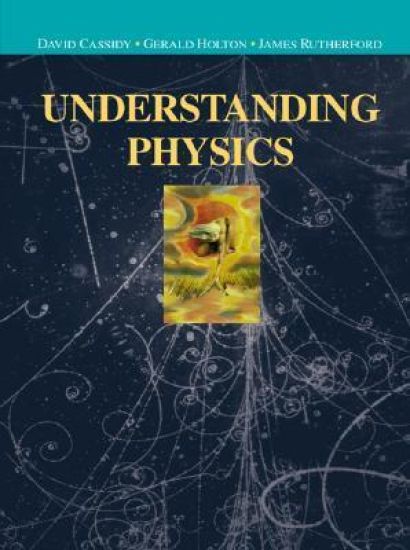
Understanding Physics

Understanding Physics

David C. Cassidy; Gerald Holton; F. James Rutherford

Springer-Verlag New York Inc.
2013
nidottu
Understanding Physics provides a thorough grounding in contemporary physics while placing physics into its social and historical context. Based in large part on the highly respected Project Physics Course developed by two of the authors, it also integrates the results of recent pedagogical research. The text thus: - teaches about the basic phenomena in the physical world and the concepts developed to explain them - shows that science is a rational human endeavor with a long and continuing tradition, involving many different cultures and people - develops facility in critical thinking, reasoned argumentation, evaluation of evidence, mathematical modeling, and ethical values The treatment emphasizes not only what we know but also how we know it, why we believe it, and what effects that knowledge has: - Why do we believe the Earth and planets revolve around the Sun? - Why do we believe that matter is made of atoms? - How do relativity theory and quantum mechanics alter our conception of Nature and in what ways do they leave the classical concepts unchanged? - What impact does the knowledge of finite energy resources have on our society? - How have applications of fundamental science (such as the steam engine, the laser, the electric generator, the transistor) affected our lives? - How does the evidence for non-scientific ideas, such as UFOs, ESP, and the like, differ from the evidence for accepted scientific results?
Understanding Physics

Understanding Physics

David C. Cassidy; Gerald Holton; F. James Rutherford

Springer-Verlag New York Inc.
2002
sidottu
Understanding Physics provides a thorough grounding in contemporary physics while placing physics into its social and historical context. Based in large part on the highly respected Project Physics Course developed by two of the authors, it also integrates the results of recent pedagogical research. The text thus: - teaches about the basic phenomena in the physical world and the concepts developed to explain them - shows that science is a rational human endeavor with a long and continuing tradition, involving many different cultures and people - develops facility in critical thinking, reasoned argumentation, evaluation of evidence, mathematical modeling, and ethical values The treatment emphasizes not only what we know but also how we know it, why we believe it, and what effects that knowledge has: - Why do we believe the Earth and planets revolve around the Sun? - Why do we believe that matter is made of atoms? - How do relativity theory and quantum mechanics alter our conception of Nature and in what ways do they leave the classical concepts unchanged? - What impact does the knowledge of finite energy resources have on our society? - How have applications of fundamental science (such as the steam engine, the laser, the electric generator, the transistor) affected our lives? - How does the evidence for non-scientific ideas, such as UFOs, ESP, and the like, differ from the evidence for accepted scientific results?