Kirjojen hintavertailu – 12 903 725 kirjaa ja 27 kauppaa

Kirjailija

F. Jamil Ragep

Kirjat ja teokset yhdessä paikassa: 3 kirjaa, julkaisuja vuosilta 2005–2015, suosituimpiin kuuluu Water in the Middle East. Vertaile teosten hintoja ja tarkista saatavuus suomalaisista kirjakaupoista.

3 kirjaa

Kirjojen julkaisuvuodet: 2005–2015.

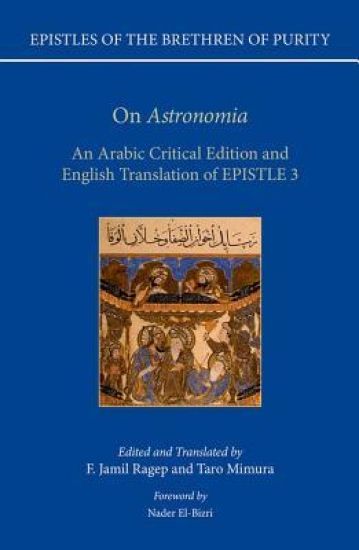
On 'Astronomia'

On 'Astronomia'

F. Jamil Ragep; Taro Mimura

Oxford University Press
2015
sidottu
The Epistles of the Brethren of Purity is an encyclopedic compendium, probably composed in tenth-century Iraq by a society of adepts with Platonic, Pythagorean, and Shi'i tendencies. Its 52 sections ('epistles') are divided into four parts (Mathematics, Natural Philosophy, Sciences of the Soul and Intellect, and Theology). The current volume provides an edition, translation, and notes to Epistle 3 ('On Astronomia'), which forms one of the 14 sections on Mathematics. The content is a mixture of elementary astronomy and astrology, but it is not a beginner's textbook. Rather, the purpose is to use examples from those disciplines to provide spiritual, moral, and soteriological guidance. Thus the Epistle uses the argument from design to show the necessity for a Creator who made the harmonious universe; this wondrous design is then employed by the authors as a model, providing humans with a paradigm for proper ethical, political, and even economic conduct; and the study of Astronomia helps the soul achieve ultimate happiness as it seeks to throw off the shackles of this mundane world and oppressive body in favour of the purity of the celestial realm. Although by no means typical of Islamic astronomical literature, Epistle 3 of the Brethren of Purity gives a window into a fascinating and intriguing group operating during the early period of Islam who sought to continue and adopt one of the esoteric strands of Hellenistic philosophy within an Islamic context, meshing astronomy, astrology, Platonic-Pythagorean philosophy, Quranic and Biblical quotations, and anecdotes from the lives of the Abrahamic prophets.
The Herbal of al-Ghafiqi

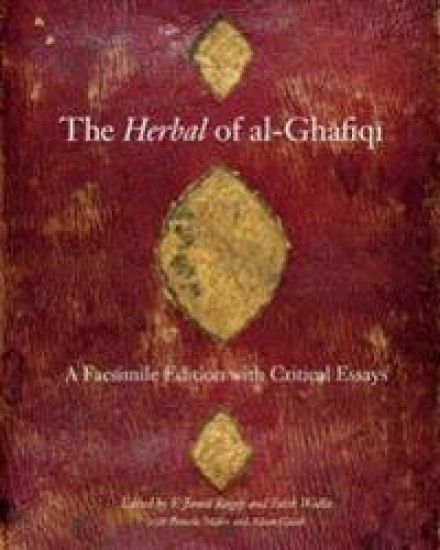
The Herbal of al-Ghafiqi

F. Jamil Ragep; Faith Wallis

McGill-Queen's University Press
2014
sidottu
"Herbals" - collections describing plants used for medicinal purposes - were among the ancient and medieval world's most valued scientific texts, synthesizing a vast treasury of medical learning to facilitate scientific edification for scholar, bibliophiles, or practical consultation by physicians. Abu Ja?far al-Ghafiqi (d. ca. 1165 CE) lived in the Arab-Islamic zone of the southern Iberian peninsula called al-Andalus, a land of many cultures, religions, and languages. His Herbal reflects the diverse milieu in which he lived, drawing from ancient Greek sources like Dioscorides and Galen as well as over thirty other works from India as well as the Hellenistic and Islamic worlds. The manuscript reproduced in this edition was purchased in 1912 by Sir William Osler and is now housed in the Osler Library of the History of Medicine at McGill University. It has entries for herbal, mineral, and animal-derived drugs, illustrated by almost 400 coloured, hand-drawn images of plants and animals. A glossary of over 2,000 secondary entries provides synonyms in Greek, Sanskrit, Syriac, Persian, Berber, Old Spanish, Latin, Coptic, and Armenian, reflecting the international character of medicine and pharmacy at the time. Essays by eminent scholars discuss the physical features and history of the manuscript, the philological complexity of the text, al-Ghafiqi's sources, the Andalusian and larger global contexts of the Herbal, and the illustrations accompanying the text. A remarkable document, The Herbal of al-Ghafiqi will be a cherished addition to the library of anyone interested in the history of pharmacological science or in the history of the Islamic world.
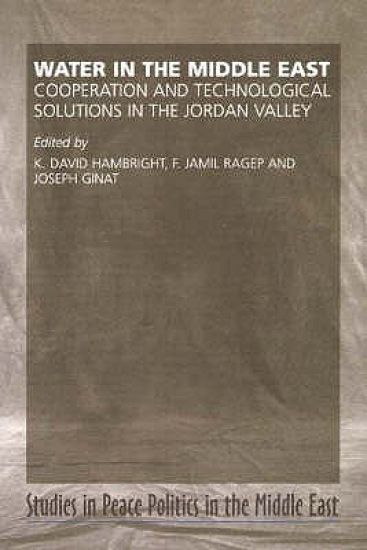
Water in the Middle East

Water in the Middle East

K. David Hambright; F. Jamil Ragep; Joseph Ginat

Sussex Academic Press
2005
sidottu
"Water in the Middle East" presents historical and cross-cultural perspectives on water and conflict, prospects for future cooperation in the water arena among Middle Eastern countries, the political economy of water and technical solutions to water shortages in the Jordan Valley, and the relationships among water, agriculture, and environmental sustainability. Through case studies and essays, natural and social scientific water experts from Israel, Palestine, Jordan, and the United States examine: The role of water in Middle East conflicts and the possibility of regional solutions to water scarcity requiring cooperation among states; Long-term prospects of various aquifers and other fresh-water sources, including desalination; current and future environmental deterioration of water resources; Breakthroughs and developments increasing regional agricultural productivity, depending less on high-quality waters while turning to lower quality resources, such as recycled and brackish waters; alternatives to current water-usage patterns, particularly with regard to agriculture and the possibility of redirecting water to tourism and other economic sectors. While this book highlights the complexities pertaining to regional water scarcity and inequitable distribution, the contributors offer no definitive conclusions or facile solutions; yet there is a broad consensus that regional solutions to maximize water resources must be pursued even as desalination becomes more viable both from technical/economic standpoints. The continuing deterioration of existing water supplies in terms of quantity and quality mandate that any solution must be achieved within a political/social framework of peace, enlightened economic policies, and the application of technical solutions that take due account of environmental concerns.