Kirjojen hintavertailu – 12 903 739 kirjaa ja 27 kauppaa

Kirjailija

F. LeRon Shults

Kirjat ja teokset yhdessä paikassa: 15 kirjaa, julkaisuja vuosilta 1999–2026, suosituimpiin kuuluu Practicing Safe Sects. Vertaile teosten hintoja ja tarkista saatavuus suomalaisista kirjakaupoista.

Nimi esiintyy myös muodoissa: F Leron Shults

15 kirjaa

Kirjojen julkaisuvuodet: 1999–2026.

Modeling Religion

Modeling Religion

Wesley J. Wildman; F. LeRon Shults

BLOOMSBURY PUBLISHING PLC
2026
nidottu
What role has religion played in the major civilizational transformations associated with the Neolithic Revolution, the Axial Age, and Modernity? This book introduces new methodological tools and material insights for guiding conversations about these debates. The authors introduce a new branch of computational humanities, using computational modeling to simulate civilizational transformations. They integrate multiple theories across many disciplines, including the scientific study of religion, and evaluate the relative importance of those causal theories in processes of civilizational change. Materially, the book sheds new light on major debates among historians, archaeologists, and other social theorists on the role of religion within these major transitions. The book tackles the urgent question of what sort of civilizational transformations might be possible in a world where the influence and significance of religion continues to decline wherever technology, education, freedom, and cultural pluralism are most advanced.
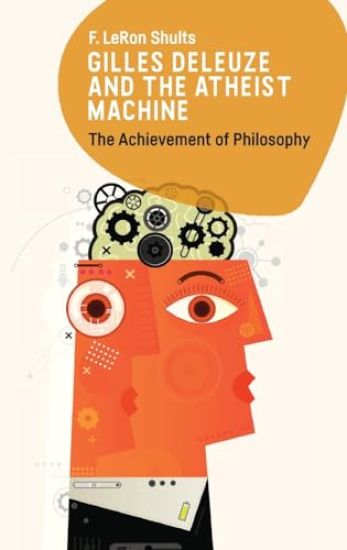
Gilles Deleuze and the Atheist Machine

Gilles Deleuze and the Atheist Machine

F. LeRon Shults

EDINBURGH UNIVERSITY PRESS
2025
nidottu
In What is Philosophy?, Deleuze argued that atheism is not a drama but 'the philosopher's serenity and philosophy's achievement.'LeRon Shults illustrates the uses and effects of an 'atheist machine' throughout Deleuze's work, demonstrating its central role in his philosophical achievements in metaphysics, epistemology and ethics. Shults also brings Deleuze's philosophy into dialogue with recent advances in computational social simulation, specifically multi-agent artificial intelligence modelling. Framing his argument in the context of empirical findings and theoretical developments in the scientific study of religion, he points toward the potentially creative role of atheist assemblages in addressing societal challenges associated with the Anthropocene.
Modeling Religion

Modeling Religion

Wesley J. Wildman; F. LeRon Shults

BLOOMSBURY PUBLISHING PLC
2024
sidottu
What role has religion played in the major civilizational transformations associated with the Neolithic Revolution, the Axial Age, and Modernity? This book introduces new methodological tools and material insights for guiding conversations about these debates. The authors introduce a new branch of computational humanities, using computational modeling to simulate civilizational transformations. They integrate multiple theories across many disciplines, including the scientific study of religion, and evaluate the relative importance of those causal theories in processes of civilizational change. Materially, the book sheds new light on major debates among historians, archaeologists, and other social theorists on the role of religion within these major transitions. The book tackles the urgent question of what sort of civilizational transformations might be possible in a world where the influence and significance of religion continues to decline wherever technology, education, freedom, and cultural pluralism are most advanced.
Gilles Deleuze and the Atheist Machine

Gilles Deleuze and the Atheist Machine

F. LeRon Shults

EDINBURGH UNIVERSITY PRESS
2024
sidottu
In What is Philosophy?, Deleuze argued that atheism is not a drama but 'the philosopher's serenity and philosophy's achievement.' LeRon Shults illustrates the uses and effects of an 'atheist machine' throughout Deleuze's work, demonstrating its central role in his philosophical achievements in metaphysics, epistemology and ethics. Shults also brings Deleuze's philosophy into dialogue with recent advances in computational social simulation, specifically multi-agent artificial intelligence modelling. Framing his argument in the context of empirical findings and theoretical developments in the scientific study of religion, he points toward the potentially creative role of atheist assemblages in addressing societal challenges associated with the Anthropocene.
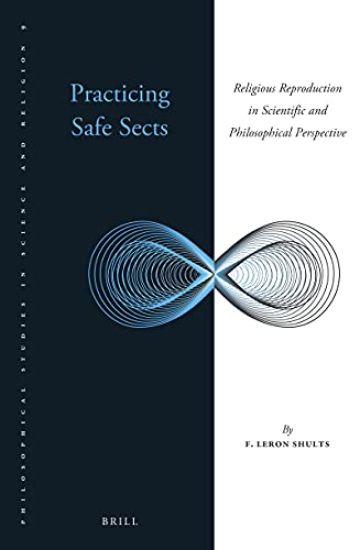
Practicing Safe Sects

Practicing Safe Sects

F. LeRon Shults

BRILL
2021
nidottu
Where do gods come from – and what is the cost of bearing them? In Practicing Safe Sects F. LeRon Shults argues for the importance of having “the talk” about the causes and consequences of participating in religious sects. To survive and thrive as a social species, we humans are likely to continue needing some kind of sects (as well as sex) for quite some time. But can we learn how to practice safe sects? Can we live together in healthy and productive social networks without reproducing the superstitious beliefs and segregative behaviors that are engendered and nurtured by shared ritual engagement with imagined supernatural agents? In this provocative and timely book, Shults provides scientific and philosophical resources for answering these questions.
Practicing Safe Sects

Practicing Safe Sects

F. LeRon Shults

BRILL
2018
sidottu
Where do gods come from – and what is the cost of bearing them? In Practicing Safe Sects F. LeRon Shults argues for the importance of having “the talk” about the causes and consequences of participating in religious sects. To survive and thrive as a social species, we humans are likely to continue needing some kind of sects (as well as sex) for quite some time. But can we learn how to practice safe sects? Can we live together in healthy and productive social networks without reproducing the superstitious beliefs and segregative behaviors that are engendered and nurtured by shared ritual engagement with imagined supernatural agents? In this provocative and timely book, Shults provides scientific and philosophical resources for answering these questions.
Iconoclastic Theology

Iconoclastic Theology

F. LeRon Shults

Discovery Press
2015
nidottu
Offera a new reading of Deleuze's whole corpus in light of his treatment of religion and theological themes. French philosopher Gilles Deleuze was vehemently opposed to the idea of the transcendental, yet still found value in religion - in its ability to 'secrete atheism'. F LeRon Shults explores Deleuze's fascination with theological themes throughout his entire corpus. He brings Deleuzian concepts into dialogue with insights derived from the bio cultural sciences of religion in order to increase the flow of a productive atheism. The first exposition of Deleuze's radical critique of religion, demonstrating the crucial role this creative destruction plays throughout his philosophical corpus; provocatively describes this aspect of Deleuze's work as 'theology', following his own (paradoxical, humorous, diabolical) description of that discipline as 'the science of non existing entities'; and brings Deleuze studies into dialogue with the bio cultural sciences of religion, which are transforming the current debates about the value of atheism in the academy and the public sphere.
Iconoclastic Theology

Iconoclastic Theology

F. LeRon Shults

Edinburgh University Press
2014
sidottu
This is a new reading of Deleuze's whole corpus in light of his treatment of religion and theological themes. French philosopher Gilles Deleuze was vehemently opposed to the idea of the transcendental, yet still found value in religion - in its ability to 'secrete atheism'. F. LeRon Shults explores Deleuze's fascination with theological themes throughout his entire corpus. He brings Deleuzian concepts into dialogue with insights derived from the bio-cultural sciences of religion in order to increase the flow of a productive atheism. This is the first exposition of Deleuze's radical critique of religion, demonstrating the crucial role this creative destruction plays throughout his philosophical corpus. It provocatively describes this aspect of Deleuze's work as 'theology', following his own (paradoxical, humorous, diabolical) description of that discipline as 'the science of non-existing entities'. It brings Deleuze studies into dialogue with the bio-cultural sciences of religion, which are transforming the current debates about the value of atheism in the academy and the public sphere.
Christology and Ethics

Christology and Ethics

F. LeRon Shults; B. Waters

William B Eerdmans Publishing Co
2010
nidottu
This book brings together leading theologians and ethicists to explore the neglected relationship between Christology and ethics. The contributors to this volume work to overcome the tendency toward disciplinary xenophobia, considering such questions as What is the relation between faithful teaching about the reality of Christ and teaching faithfulness to the way of Christ? and How is christological doctrine related to theological judgments about normative human agency? With renewed attention and creative reformulation, they argue, we can discover fresh ways of tending to these perennial questions.
Christology and Science

Christology and Science

F. Leron Shults

William B. Eerdmans Publishing Company
2008
nidottu
F. LeRon Shults here breaks new ground by explicitly bringing specific themes of Christology -- Incarnation, Atonement, and Parousia -- into dialogue with contemporary science -- evolutionary biology, cultural anthropology, and physical cosmology. Shults skillfully summarizes some of the popular constructive responses to these developments, offering a unique organization around three concrete case studies. After clarifying the way in which Christian understandings of God and of humanity shape the task of reforming Christology, each chapter concludes with a programmatic outline of ways in which we might articulate the identity, agency, and presence of Jesus Christ in dialogue with late modern science and culture.
Christology and Science

Christology and Science

F. LeRon Shults

Ashgate Publishing Limited
2008
nidottu
The dialogue between theology and science has blossomed in recent decades, but particular beliefs about Jesus Christ have not often been brought to the forefront of this interdisciplinary discussion even in explicitly Christian contexts. This book breaks new ground by explicitly bringing the specific themes of Christology into dialogue with contemporary science. It engages recent developments in late modern philosophy of science in order to articulate the Christian beliefs about Jesus Christ in a way that responds to challenges and opportunities that have arisen in light of various scientific discoveries. The main chapters deal with Incarnation, Atonement and Parousia. After a brief treatment of the history of the shaping of these ideas, the author traces developments in some of the sciences that have challenged these formulations: evolutionary biology, cultural anthropology and physical cosmology. Each chapter also summarises some of the popular constructive responses to these developments. After clarifying the way in which the Christian understanding of God and of humanity shape the task of reforming Christology, each chapter concludes with a programmatic outline of ways in which we might articulate the identity, agency and presence of Jesus Christ in dialogue with late modern science and culture.
The Evolution of Rationality

The Evolution of Rationality

F Leron Shults

William B Eerdmans Publishing Co
2006
pokkari
How can science and religion move together toward a collegial future? J. Wentzel van Huyssteen has spent decades developing an interdisciplinary platform for the fruitful engagement of science and religion. Compiled to celebrate van Huyssteen's 65th birthday, The Evolution of Rationality gathers a stellar roster of scholars in van Huyssteen's main areas of philosophy, science, and theology. The contributors -- some of them Gifford lecturers and Templeton Prize winners -- offer significant new methodological and material proposals, giving evidence of van Huyssteen's impact on the shape and texture of interdisciplinary conversation itself. Their essays are arranged in three parts: modern and postmodern philosophical challenges to our understanding of rationality, scientific, evolutionary perspectives on the nature and development of human rationality in relation to religion, religious and theological explorations of the evolution of rationality. However, because the authors are all involved in interdisciplinary dialogue, this philosophical-scientific-theological arrangement of chapters is not hard and fast. Virtually every essay engages issues that overlap all three fields, forming an extremely rich blend of thought. A creative interdisciplinary collection written by world-renowned philosophers, scientists, and theologians, The Evolution of Rationality renders fitting tribute to pioneering scholar-mentor J. Wentzel van Huyssteen.
Transforming Spirituality – Integrating Theology and Psychology

Transforming Spirituality – Integrating Theology and Psychology

F. LeRon Shults; Steven J. Sandage

Baker Academic, Div of Baker Publishing Group
2006
nidottu

Halvin toimitettuna 29,60 €

The twenty-first century has given rise to a growing interest in the intersection of science, religion, and spirituality. Few books address these issues from multiple perspectives and theories. To fill this void, F. LeRon Shults and Steven Sandage, coauthors of The Faces of Forgiveness (winner of the Narramore Award from the Christian Association for Psychological Studies) continue their interdisciplinary dialogue in their latest work, Transforming Spirituality. In this book Shults and Sandage address the subject of spiritual transformation through the lenses of psychology and theology. In addition to college and seminary students, Transforming Spirituality will appeal to readers interested in Christian spirituality. What is more, it provides helpful insights for counselors, psychologists, and others who work in the mental health field.
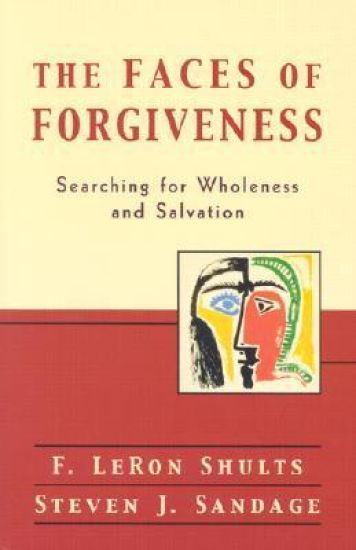
The Faces of Forgiveness – Searching for Wholeness and Salvation

The Faces of Forgiveness – Searching for Wholeness and Salvation

F. LeRon Shults; Steven J. Sandage

Baker Academic, Div of Baker Publishing Group
2003
nidottu
While forgiveness has historically been regarded as a religious concern, it has also become a popular topic in contemporary psychology. Unfortunately, there has been little effort to combine a Christian understanding of forgiveness with psychology. The Faces of Forgiveness, winner of the Narramore Award from the Christian Association for Psychological Studies, steps in to fill this void. The authors fuse Christian forgiveness and psychology with the unifying motif of the face; thereby building on the considerable psychological research linking emotions related to forgiveness with the human face. At a deeper level, the face can serve as a metaphor for integrating forgiveness, wholeness, and salvation. The authors argue that forgiveness should take a central role in our understanding of salvation because it is warranted by the Bible and engages our postmodern context. Pastors, psychologists, family counselors, and students of psychology and theology will find The Faces of Forgiveness a helpful resource.
The Postfoundationalist Task of Theology

The Postfoundationalist Task of Theology

F. LeRon Shults

William B Eerdmans Publishing Co
1999
pokkari
In recent years the theological writings of Wolfhart Pannenberg have exerted considerable influence. However, Pannenberg's work has also been criticized for not taking seriously the postmodern challenge to traditional conceptions of rationality and truth. This volume by F. LeRon Shults argues that the popular "foundationalist" reading of Pannenberg is a misinterpretation of his methodology and shows that, in fact, the structural dynamics of Pannenberg's approach offer significant resources for the postfoundationalist task of theology in our postmodern culture. Shults begins by laying out the first comprehensive summary and interpretation of the emerging postfoundationalist model of theological rationality. He then revisits Pannenberg's theological method and finds the German theologian to be a surprising ally in the quest to reconstruct a theological rationality along postfoundationalist lines. In the course of his discussion, Shults challenges views that see the future, reason, or history as the central concept of Pannenberg's thought and offers instead a new interpretation of Pannenberg's basic theological principle as understanding and explaining all things sub ratione Dei (under the aspect of the relation to God)-an interpretation endorsed by Pannenberg himself in the book's foreword. Shults also focuses on Pannenberg's unique way of linking philosophical and systematic theology and demonstrates how the underlying reciprocity of this method can carry over into the postfoundational concern to link hermeneutics and epistemology in the postmodern context.