

Kirjailija
F M Mayor
Kirjat ja teokset yhdessä paikassa: 8 kirjaa, julkaisuja vuosilta 1987–2023, suosituimpiin kuuluu The Rector's Daughter. Vertaile teosten hintoja ja tarkista saatavuus suomalaisista kirjakaupoista.
Nimi esiintyy myös muodoissa: F. M. Mayor, F.M. Mayor
8 kirjaa
Kirjojen julkaisuvuodet: 1987–2023.
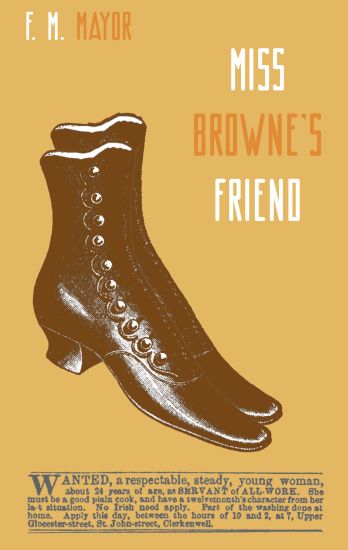
Miss Ethel Browne is a typical adornment of her era. A single lady of a certain age in the period before the First World War usually assists a senior, or less healthy family member with the running of their house, or affords help of a more modest kind, in order to feel useful. Sometimes they are inspired to approach places of last resort to befriend and encourage poor unfortunates. In Miss Browne's case the Rescue Home pairs her with Mabel Roberts, who has had a terrible start in life, and has fallen into dubious ways. Miss Browne is somewhat dazzled by Mabel's beauty, and charmed by her simple transparency and determination to be good. She finds Mabel a good position as general maid to two elderly ladies, and all seems set fair. But, as the months go by, so do the reports of arguments, temper and secretiveness. Positions come and go, as Miss Browne struggles to help Mabel surmount her failings and find a foothold in the better life. Having 'slipped' somewhat, in a position as a waitress in a restaurant, Mabel disappears. In the end, Miss Browne finds her, only to discover that life has dealt Mabel a harsher blow. Miss Browne's Friend was originally published in four parts between June 1914 and March 1915 in the Free Church Suffrage Times, a year after the publication of F. M. Mayor's celebrated first novel, The Third Miss Symons. With its mixture of wry humour and tragedy, it confirmed her reputation as one of the most sensitive exponents of the challenges and uncertainties of single women's lives in her times.
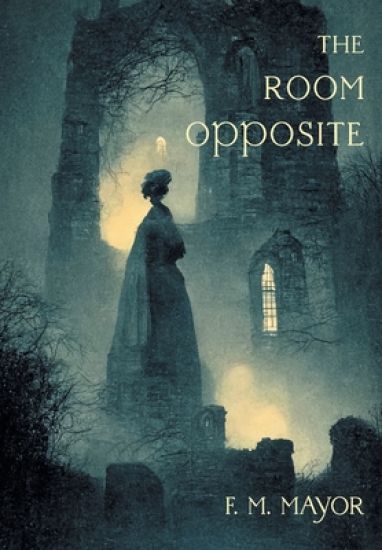
In 1935, Longmans, Green and Co. Ltd. published The Room Opposite: And Other Tales of Mystery and Imagination by F. M. Mayor, a collection of sixteen tales that had been left unpublished at the author's death. It was issued with a recommendation from no less eminent a critic of ghost stories than M. R. James, who wrote, 'The stories in this volume which introduce the supernatural commend themselves to me very strongly.' Secondhand copies of the first edition are incredibly hard to come by, and the book has never been republished... until now. This new edition contains all sixteen stories, along with a long article which originally appeared in The Queen newspaper in 1905 entitled 'Life in a Touring Company'. This edition also includes an introduction by Gina R. Collia: 'F. M. Mayor: Author, Actress & Champion of the Superfluous Woman'.
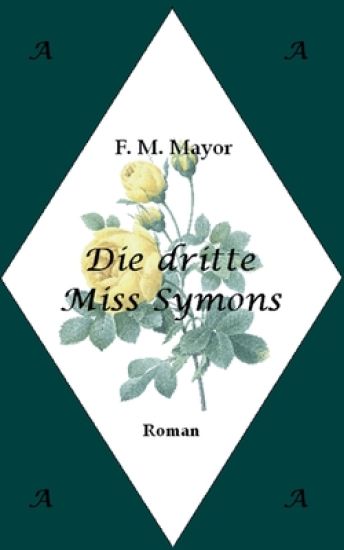
Henrietta Symons ist ein bezauberndes Kind in der Bl tezeit des Viktorianismus mit einer ungew hnlichen Sehnsucht nach Zuwendung und Vertrauen. Doch die eigenen Geschwister zeigen wenig Interesse an ihr und erweisen sich bald als schmerzliche H rde auf dem Weg ins Erwachsenendasein. Als sie sich am Ziel ihrer gesellschaftlichen Tr ume glaubt, wird sie unvermutet Opfer eines leichtfertigen Spiels aus Koketterie und sozialem Kalk l, das ihrem Schicksal eine fatale Wendung gibt. F. M. Mayors DIE DRITTE MISS SYMONS schildert ohne berfl ssiges Dekor, wie gnadenlos das 19. Jahrhundert mit Frauen umging, die das gesellschaftliche Ziel einer Ehe und Mutterschaft verfehlten und sich auf die schwere Suche nach dem Wert der eigenen Existenz machen mussten.


Miss Mayor's story is of a delicate quality, not common here, though occurring at intervals, and always sure of a choice, if not very large, audience among those who like in art the refined movement and the gentle line. Her subject, like her method, is one not commonly chosen by women writers; it is simply the life of an unmarried idle woman of the last generation, a life (to some eyes) of wasted leisure and deep futility, but common enough, and getting from its permitted commonness a justification from life, who is wasteful but roughly just. Miss Mayor tells this story with singular skill, more by contrast than by drama, bringing her chief character into relief against her world, as it passes in swift procession. Her tale is in a form becoming common among our best writers; it is compressed into a space about a third as long as the ordinary novel, yet form and manner are so closely suited that all is told and nothing seems slightly done, or worked with too rapid a hand. Much that is tiresome in the modern novel, the pages of analysis and of comment, the long descriptions and the nervous pathology, are omitted by Miss Mayor's method, which is all for the swift movement and against the temptations to delay which obstruct those whose eyes are not upon life; she condenses her opportunities for psychology and platitude into a couple of shrewd lines and goes on with her story, keeping her freshness and the reader's interest unabated.
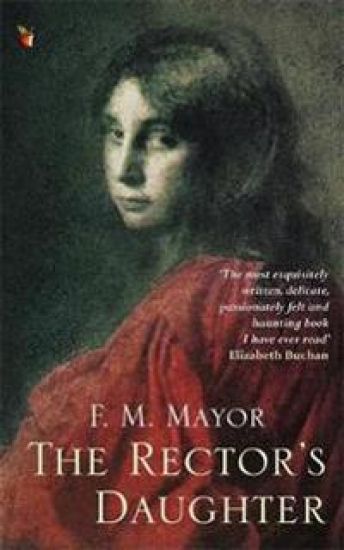
Dedmayne Rectory is quietly decaying, its striped chintz and darkened rooms are a bastion of outmoded Victorian values. Here Mary has spent thirty-five years, devoting herself to her sister, now dead, and to her father, Canon Jocelyn. Although she is pitied by her neighbours for this muted existence, Mary is content. But when she meets Robert Herbert, Mary's ease is destroyed and years of suppressed emotion surface through her desire for him. First published in 1924 this novel is an impressive exploration of Mary's relationship with her father, of her need for Robert and the way in which, through each, she comes to a clearer understanding of love.