Kirjojen hintavertailu – 12 859 818 kirjaa ja 27 kauppaa

Kirjailija

F. Xavier Medina

Kirjat ja teokset yhdessä paikassa: 3 kirjaa, julkaisuja vuosilta 2024–2026, suosituimpiin kuuluu Food Cultures of Spain. Vertaile teosten hintoja ja tarkista saatavuus suomalaisista kirjakaupoista.

3 kirjaa

Kirjojen julkaisuvuodet: 2024–2026.

Food Cultures of Spain

Food Cultures of Spain

F. Xavier Medina

BLOOMSBURY PUBLISHING PLC
2026
sidottu
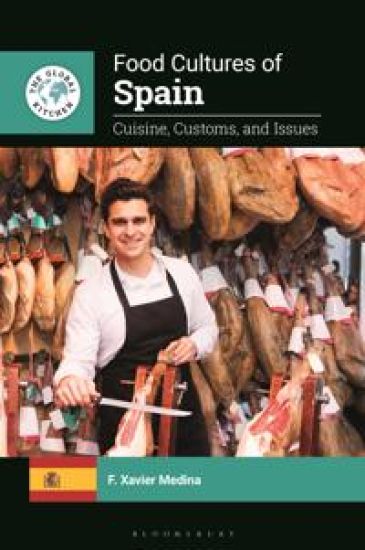
There’s far more to Spanish food than tapas and paella. Discover the history and culture of Spain through its rich culinary traditions. Part of the Global Kitchen series, this book takes readers on a food tour of Spain, covering everything from daily staples to holiday specialties. In addition to discovering Spain’s long culinary history, readers will learn about recent trends, foreign influences, and contemporary food and dietary concerns. Chapters are organized thematically, making it easy to focus in on particular courses or types of dishes. These include influential ingredients, appetizers, main dishes, desserts, and street food, among others. The main text is supplemented by sidebars that offer interesting bite-sized facts, a chronology of important dates in Spanish culinary history, and a glossary of key food- and dining-related terms. Spanish cuisine evolved over centuries, influenced by the country’s diverse landscapes and inhabitants. Rooted in the Mediterranean triad of olive oil, wheat, and wine, it emphasizes fresh, seasonal ingredients, often prepared simply to highlight their natural flavors. From the seafood-rich coasts to the cured meats and stews of the mountainous interior, each region boasts unique specialties. Social dining is central to Spanish foodways, and food remains a vital aspect of family, community, and heritage.
Digestible Governance

Digestible Governance

Jessica Boll; Robert Davidson; Suzanne Dunai; Luis Benito Garcia Alvarez; Silvina Schammah Gesser; Susy Gruss; Aitana Guia; F. Xavier Medina; Montserrat Miller; Alex Gomez del Moral; H. Rosi Song

VANDERBILT UNIVERSITY PRESS
2024
sidottu
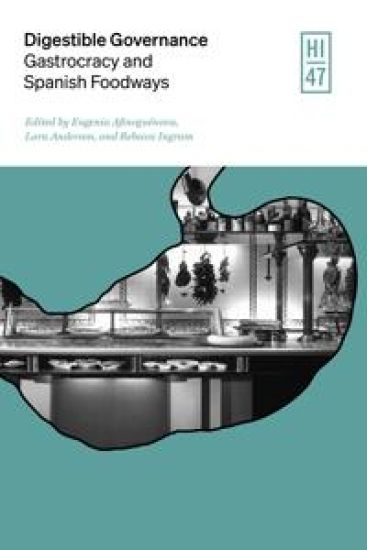
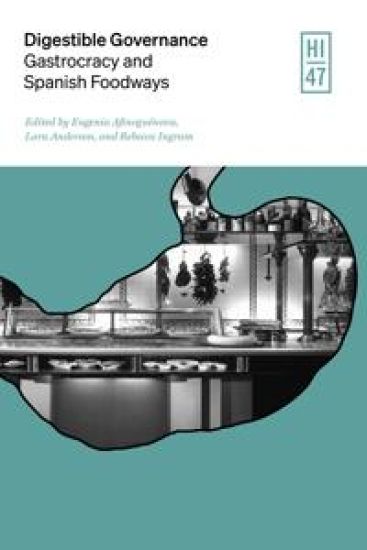
The term “gastrocracy” refers to the appropriation of discourses and practices related to the sourcing, preparation, distribution, and consumption of food for political purposes. The intersections of gastronomy and governance, dating in Spain to the last quarter of the nineteenth century, have become highly visible over the past decade, when political debates around nationalism in its different forms have taken the guise of discussions about regional and local cuisines. Concomitant with the rise of the “slow food” movement and following UNESCO’s addition in 2011 of “Gastronomic Meal of the French” to its list of Intangible Cultural Heritage of Humanity, public and private associations all around Spain have been established with the goal of achieving recognition by UNESCO for Spanish, Catalan, and other national cuisines. In 2016, Gastro Marca EspaÑa—an association and a web portal—was launched to raise the profile of food in Spain’s national brand. Eliciting wide public participation, coopted for political purposes, regarded as a factor of economic development on any scale, and integrated into every so-called banal nationalism, the production, distribution, and consumption of food are highly relevant for historical analysis. Seeking to encourage a broader discussion about Peninsular gastrocracies, this book brings together an interdisciplinary group of scholars from different sides of the Atlantic and the Pacific who have spearheaded research on gastronomy and governance in Spain.
Digestible Governance

Digestible Governance

Jessica Boll; Robert Davidson; Suzanne Dunai; Luis Benito Garcia Alvarez; Silvina Schammah Gesser; Susy Gruss; Aitana Guia; F. Xavier Medina; Montserrat Miller; Alex Gomez del Moral; H. Rosi Song

VANDERBILT UNIVERSITY PRESS
2024
nidottu
The term “gastrocracy” refers to the appropriation of discourses and practices related to the sourcing, preparation, distribution, and consumption of food for political purposes. The intersections of gastronomy and governance, dating in Spain to the last quarter of the nineteenth century, have become highly visible over the past decade, when political debates around nationalism in its different forms have taken the guise of discussions about regional and local cuisines. Concomitant with the rise of the “slow food” movement and following UNESCO’s addition in 2011 of “Gastronomic Meal of the French” to its list of Intangible Cultural Heritage of Humanity, public and private associations all around Spain have been established with the goal of achieving recognition by UNESCO for Spanish, Catalan, and other national cuisines. In 2016, Gastro Marca EspaÑa—an association and a web portal—was launched to raise the profile of food in Spain’s national brand. Eliciting wide public participation, coopted for political purposes, regarded as a factor of economic development on any scale, and integrated into every so-called banal nationalism, the production, distribution, and consumption of food are highly relevant for historical analysis. Seeking to encourage a broader discussion about Peninsular gastrocracies, this book brings together an interdisciplinary group of scholars from different sides of the Atlantic and the Pacific who have spearheaded research on gastronomy and governance in Spain.