Kirjojen hintavertailu – 12 903 725 kirjaa ja 27 kauppaa

Kirjailija

Fábio Duarte

Kirjat ja teokset yhdessä paikassa: 8 kirjaa, julkaisuja vuosilta 2017–2026, suosituimpiin kuuluu How AI Sees the City. Vertaile teosten hintoja ja tarkista saatavuus suomalaisista kirjakaupoista.

Nimi esiintyy myös muodoissa: Fabio Duarte

8 kirjaa

Kirjojen julkaisuvuodet: 2017–2026.

How AI Sees the City

How AI Sees the City

Fábio Duarte; Martina Mazzarello; Fan Zhang; Carlo Ratti

TAYLOR FRANCIS LTD
2026
sidottu
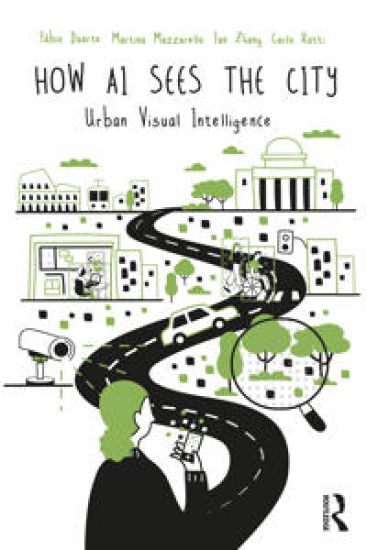
In an era where extreme amounts of data are produced daily, with the majority being visual content, cities have become vast repositories of digital imagery. From surveillance cameras to smartphone photos, satellite imagery to street-level captures, our urban environments are continuously documented through an unprecedented volume of visual data. This groundbreaking book examines how artificial intelligence (AI) is revolutionizing our understanding of cities, and presents a comprehensive framework for applying visual AI in urban contexts. The book traces the evolution of visual analysis in urban studies, from early photographic documentation to today's sophisticated AI-powered interpretations. Through detailed case studies from across the US, Stockholm, Amsterdam, Beijing, Dubai, Singapore, and more, it demonstrates how machine learning is unveiling new insights about urban patterns, human behavior, and social dynamics in cities. Chapters address critical concerns about surveillance, privacy, and algorithmic bias, offering a nuanced perspective on the ethical implications of urban visual intelligence. This book is essential for scholars and postgraduate students in urban planning, and landscape architecture, while also appealing to anyone interested in the future of cities and technology's role in understanding them.
How AI Sees the City

How AI Sees the City

Fábio Duarte; Martina Mazzarello; Fan Zhang; Carlo Ratti

TAYLOR FRANCIS LTD
2026
nidottu
In an era where extreme amounts of data are produced daily, with the majority being visual content, cities have become vast repositories of digital imagery. From surveillance cameras to smartphone photos, satellite imagery to street-level captures, our urban environments are continuously documented through an unprecedented volume of visual data. This groundbreaking book examines how artificial intelligence (AI) is revolutionizing our understanding of cities, and presents a comprehensive framework for applying visual AI in urban contexts. The book traces the evolution of visual analysis in urban studies, from early photographic documentation to today's sophisticated AI-powered interpretations. Through detailed case studies from across the US, Stockholm, Amsterdam, Beijing, Dubai, Singapore, and more, it demonstrates how machine learning is unveiling new insights about urban patterns, human behavior, and social dynamics in cities. Chapters address critical concerns about surveillance, privacy, and algorithmic bias, offering a nuanced perspective on the ethical implications of urban visual intelligence. This book is essential for scholars and postgraduate students in urban planning, and landscape architecture, while also appealing to anyone interested in the future of cities and technology's role in understanding them.
Urban Play

Urban Play

Fabio Duarte; Ricardo Alvarez

MIT Press
2021
nidottu
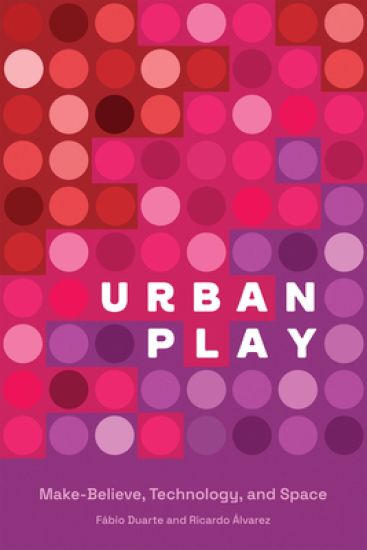
Why technology is most transformative when it is playful, and innovative spatial design happens only when designers are both tinkerers and dreamers. In Urban Play, F bio Duarte and Ricardo lvarez argue that the merely functional aspects of technology may undermine its transformative power. Technology is powerful not when it becomes optimally functional, but while it is still playful and open to experimentation. It is through play--in the sense of acting for one's own enjoyment rather than to achieve a goal--that we explore new territories, create new devices and languages, and transform ourselves. Only then can innovative spatial design create resonant spaces that go beyond functionalism to evoke an emotional response in those who use them. The authors show how creativity emerges in moments of instability, when a new technology overthrows an established one, or when internal factors change a technology until it becomes a different technology. Exploring the role of fantasy in design, they examine Disney World and its outsize influence on design and on forms of social interaction beyond the entertainment world. They also consider Las Vegas and Dubai, desert cities that combine technology with fantasies of pleasure and wealth. Video games and interactive media, they show, infuse the design process with interactivity and participatory dynamics, leaving spaces open to variations depending on the users' behavior. Throughout, they pinpoint the critical moments when technology plays a key role in reshaping how we design and experience spaces.
Unplugging the City

Unplugging the City

Fábio Duarte; Rodrigo Jose Firmino

Routledge
2019
nidottu
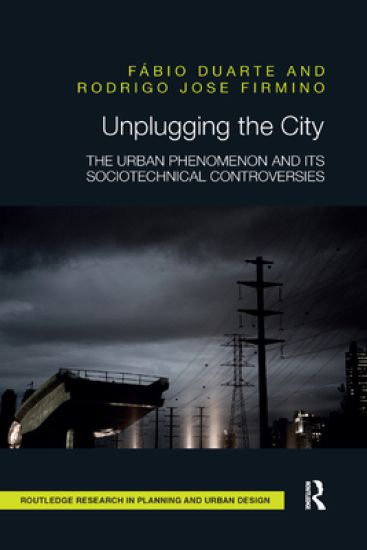
Modernity has entrusted technology with such power that it is treated as an autonomous entity, with its own manners and morals. Technological disruptions are also socially disruptive: technological failures reveal both the constituents of the technology itself and the social fabric woven by this technology. Cities are the quintessential technological arrangement, not only materially but also as a conceptual framework: the ubiquity of technology makes us think and plan cities mostly in terms of technological arrangements. Unplugging the City: The Urban Phenomenon and its Sociotechnical Controversies proposes a conceptual and methodological framework for analyzing certain urban phenomena as a technological assemblage. It demonstrates, through multiple case studies, the sociotechnical complexities involved in the stabilization and disruption of urban technological arrangements. Examples range from the urban phantasmagorias portrayed in science-fiction movies to the urban proposals of Brasilia and Masdar, from the book of bike-sharing systems to pervasive global surveillance systems. Written by Fábio Duarte and Rodrigo Firmino, based on their original research and publications, this is an essential resource for those interested in the theory and study of technology and its inextricable influence on the city.
Governance and Sustainable Urban Transport in the Americas

Governance and Sustainable Urban Transport in the Americas

Jean Mercier; Fanny Tremblay-Racicot; Mario Carrier; Fábio Duarte

Birkhauser Verlag AG
2018
sidottu
This volume explores the governance patterns of three cities of the Americas, Seattle, Montreal, and Curitiba, which all present different but interesting cases in dealing with sustainable urban transport challenges. The authors study empirical data from these three cities to analyze how specific governmental and policy instruments (planning, consultation and market mechanisms for example) were implemented in each case. Through concepts coming from policy studies and sociology, for example, such as path dependency, institutional culture and transaction costs, the three cities are also looked at in a broader perspective in order to better understand how they deal differently with their common challenges.
Space, Place and Territory

Space, Place and Territory

Fabio Duarte

Routledge
2018
nidottu
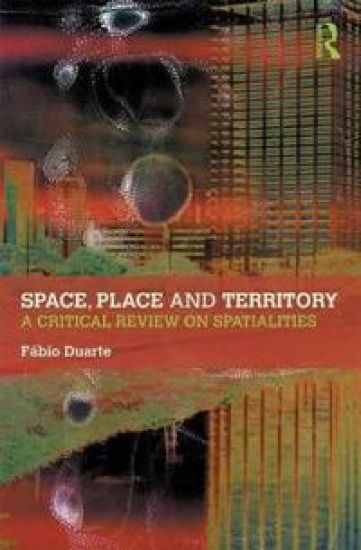
Space, place and territory are concepts that lie at the core of geography and urban planning, environmental studies and sociology. Although space, place and territory are indeed polysemic and polemic, they have particular characteristics that distinguish them from each other. They are interdependent but not interchangeable, and the differences between them explain how we simultaneously perceive, conceive and design multiple spatialities. After drawing the conceptual framework of space, place and territory, the book initially explores how we sense space in the most visceral ways, and how the overlay of meanings attached to the sensorial characteristics of space change the way we perceive it – smell, spatial experiences using electroence phalography, and the changing meaning of darkness are discussed. The book continues exploring cartographic mapping not as a final outcome, but rather as an epistemological tool, an instrument of inquiry. It follows on how particular ideas of space, place and territory are embedded in specific urban proposals, from Brasília to the Berlin Wall, airports and infiltration of digital technologies in our daily life. The book concludes by focusing on spatial practices that challenge the status quo of how we perceive and understand urban spaces, from famous artists to anonymous interventions by traceurs and hackers of urban technologies. Combining space, place and territory as distinctive but interdependent concepts into an epistemological matrix may help us to understand contemporary phenomena and live them critically.
Unplugging the City

Unplugging the City

Fábio Duarte; Rodrigo Jose Firmino

Routledge
2017
sidottu
Modernity has entrusted technology with such power that it is treated as an autonomous entity, with its own manners and morals. Technological disruptions are also socially disruptive: technological failures reveal both the constituents of the technology itself and the social fabric woven by this technology. Cities are the quintessential technological arrangement, not only materially but also as a conceptual framework: the ubiquity of technology makes us think and plan cities mostly in terms of technological arrangements. Unplugging the City: The Urban Phenomenon and its Sociotechnical Controversies proposes a conceptual and methodological framework for analyzing certain urban phenomena as a technological assemblage. It demonstrates, through multiple case studies, the sociotechnical complexities involved in the stabilization and disruption of urban technological arrangements. Examples range from the urban phantasmagorias portrayed in science-fiction movies to the urban proposals of Brasilia and Masdar, from the book of bike-sharing systems to pervasive global surveillance systems. Written by Fábio Duarte and Rodrigo Firmino, based on their original research and publications, this is an essential resource for those interested in the theory and study of technology and its inextricable influence on the city.
Space, Place and Territory

Space, Place and Territory

Fabio Duarte

Routledge
2017
sidottu
Space, place and territory are concepts that lie at the core of geography and urban planning, environmental studies and sociology. Although space, place and territory are indeed polysemic and polemic, they have particular characteristics that distinguish them from each other. They are interdependent but not interchangeable, and the differences between them explain how we simultaneously perceive, conceive and design multiple spatialities. After drawing the conceptual framework of space, place and territory, the book initially explores how we sense space in the most visceral ways, and how the overlay of meanings attached to the sensorial characteristics of space change the way we perceive it – smell, spatial experiences using electroence phalography, and the changing meaning of darkness are discussed. The book continues exploring cartographic mapping not as a final outcome, but rather as an epistemological tool, an instrument of inquiry. It follows on how particular ideas of space, place and territory are embedded in specific urban proposals, from Brasília to the Berlin Wall, airports and infiltration of digital technologies in our daily life. The book concludes by focusing on spatial practices that challenge the status quo of how we perceive and understand urban spaces, from famous artists to anonymous interventions by traceurs and hackers of urban technologies. Combining space, place and territory as distinctive but interdependent concepts into an epistemological matrix may help us to understand contemporary phenomena and live them critically.