Kirjojen hintavertailu – 12 903 725 kirjaa ja 27 kauppaa

Kirjailija

Fabrizio Pregadio

Kirjat ja teokset yhdessä paikassa: 9 kirjaa, julkaisuja vuosilta 2006–2025, suosituimpiin kuuluu Dictionary of Taoist Internal Alchemy. Vertaile teosten hintoja ja tarkista saatavuus suomalaisista kirjakaupoista.

9 kirjaa

Kirjojen julkaisuvuodet: 2006–2025.

Alkemins historia: inverkan på kultur, vetenskap och samhälle

Alkemins historia: inverkan på kultur, vetenskap och samhälle

Dagmar Wujastyk; Andreas Winkler; Cristina Viano; Salam Rassi; Fabrizio Pregadio; Christopher McIntosh; John MacMurphy; Mark S. Morrisson; Georgiana D Hedesan; Mattias Fyhr; Peter J. Forshaw; Hjalmar Fors; Per Faxneld; Tobias Churton; Kurt Almqvist

Bokförlaget Stolpe
2025
sidottu
Alkemins etymologiska rötter återfinns både i de arabiska och grekiska språken, och syftar på den process av transmutation som leder till en fullständig återförening med den gudomliga ursprungsformen. Dock sträcker sig det esoteriska utövandet av alkemi ända till Indien och Kina och har praktiserats åtminstone sedan 300-talet. Under medeltiden lockade alkemi många av tidens mest framstående lärda. Starkt influerade av den klassiska elementläran drev alkemisterna sina hypoteser utifrån Aristoteles idé att allt går att skapa genom olika proportioner av de fyra elementen. Från 1800-talet och framåt har alkemin felaktigt reducerats till en primitiv pseudovetenskap med det enda målet att omvandla oädla metaller till guld. Denna snäva tolkning bortser dock från alkemins verkliga komplexitet och ignorerar dess djupa filosofiska och religiösa aspekter, samt dess avgörande bidrag till kemins framväxt. I denna rikt illustrerade antologi presenteras en mångfald av perspektiv på hur ömsesidighet, metafysiska kopplingar och relationen mellan makrokosmos och mikrokosmos utgör kärnan i alkemins filosofi. Några av världens mest framstående forskare och akademiker samlas för att analysera den alkemistiska världsbilden och utforska hur esoteriska tankeströmningar har format kultur, samhälle och vetenskap. Boken finns även i engelsk utgåva.
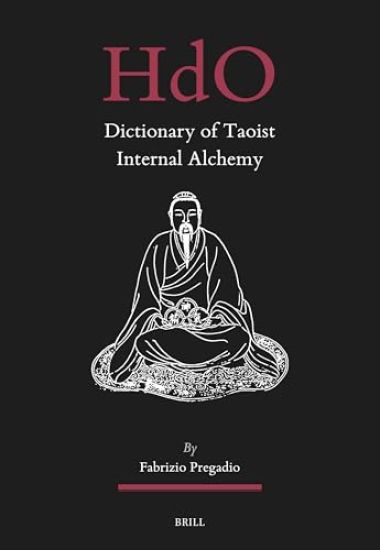
Dictionary of Taoist Internal Alchemy
This dictionary offers a unique perspective on the vast and varied terminology of Taoist Internal Alchemy (Neidan). Drawing on major original texts and premodern lexicons, it provides translations, definitions, and usage examples for over a thousand terms common throughout the tradition. A comprehensive index of English equivalents allows readers to easily locate the corresponding Chinese terms. Beyond serving as a reference for those reading, studying, or translating Neidan texts, the dictionary's entries offer glimpses into the rich imagery and poetic language of Internal Alchemy.
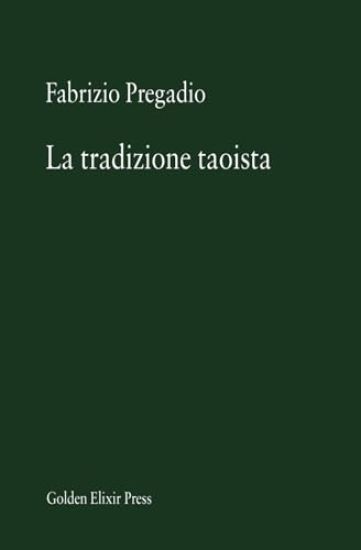
La tradizione taoista

La tradizione taoista

Fabrizio Pregadio

Golden Elixir Press
2018
pokkari
Il Taoismo una tradizione complessa ed eterogenea come il Buddhismo, l'Islam, l'Ebraismo, e il Cristianesimo. Questo libro presenta le dottrine dei taoisti sulla propria tradizione e le opinioni degli studiosi occidentali sul Taoismo. Espone in modo sintetico il pensiero e la religione taoista, senza fare alcuna distinzione fondamentale tra questi due aspetti, e soprattutto senza dare pi importanza all'uno o all'altro, proponendosi invece di indicare ogni volta possibile lo stretto rapporto che li lega. Dopo due capitoli sul pensiero di Laozi (Lao Tzu) e di Zhuangzi (Chuang Tzu), il libro descrive le origini della religione taoista e le principali scuole create durante il primo e il secondo millennio. Altri capitoli sono dedicati alla visione del Dao e del cosmo, al rituale, ai concetti di "liberazione" e "immortalit ", e alle diverse immagini del corpo umano. I capitoli finali riguardano le pratiche del "nutrire la vita", la meditazione, e l'alchimia esterna e interna.
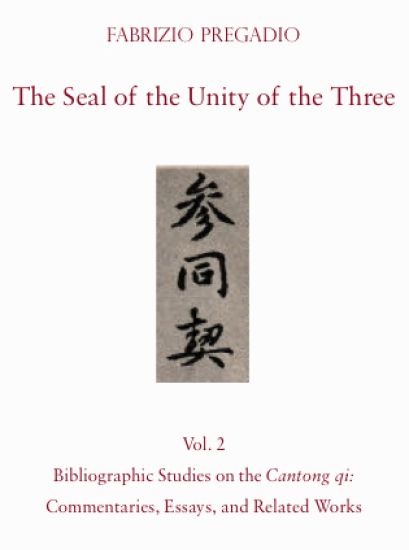
The Seal of the Unity of the Three

The Seal of the Unity of the Three

Fabrizio Pregadio

Golden Elixir Press
2012
pokkari
The Cantong qi is the main text of Taoist Internal Alchemy (Neidan). In addition to Taoist masters and adepts, it has also attracted the attention of philosophers, cosmologists, poets, literati, calligraphers, philologists, and bibliophiles. No less than 38 commentaries written through the end of the 19th century are extant, and dozens of texts found in the Taoist Canon and elsewhere are related to it. The present book is the most complete guide available in any language to this vast literature. The book is divided into two main parts. Part 1 contains a catalogue of extant and lost commentaries, essays, and related texts, listing altogether about 150 works with details on their authors, editions, and reprints. Part 2 contains a survey of the textual tradition of the Cantong qi, focused on the composition and contents of about 40 major texts. A final index of authors, editors, titles, and editions facilitates the use of the book. This book is a companion to the complete translation of the Cantong qi published by same author, entitled The Seal of the Unity of the Three: A Translation and Study of the Cantong qi, the Source of the Taoist Way of the Golden Elixir (Golden Elixir Press, 2011). Contents Preface, viiINTRODUCTION Main Works on the Cantong qi: A Short Survey, 1PART I: BIBLIOGRAPHIC CATALOGUE Introduction, 15 1. Commentaries, 21 2. Essays and Related Works, 77 3. Lost Works, 91 4. Works Attributed to Wei Boyang, 103PART II: COMMENTARIES, ESSAYS, AND RELATED WORKS Introduction, 109 1. Tang Dynasty and Five Dynasties, 111 2. Song and Yuan Dynasties, 131 3. Ming and Qing Dynasties, 159 4. The Ancient Text and Its Commentaries, 185APPENDIXES 1. The Three Books of the Cantong qi, 201 2. Main Indicators of Textual Filiation, 211 3. Chinese Text, 217Index of Names, Titles, and Editions, 233Works Quoted, 251
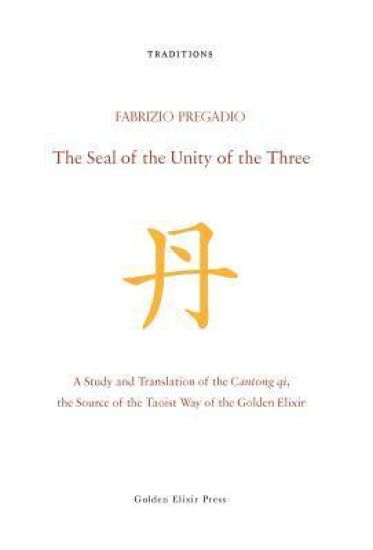
The Seal of the Unity of the Three: A Study and Translation of the Cantong Qi, the Source of the Taoist Way of the Golden Elixir
"The Cantong qi is the forefather of the scriptures on the Elixir of all times. Its words are ancient and profound, arcane and subtle. No one can fathom their meaning." Thus begins a preface found in one of the commentaries to the Cantong qi. These words express several significant features of the work translated in the present book: the charm of its verses, the depth of its discourse, its enigmatic language, and its intimate relation to Taoist alchemy (Waidan and Neidan). Under an allusive poetical language and thick layers of images and symbols, the Cantong qi hides the exposition of a doctrine that inspired a large number of commentaries and other works, and attracted the attention not only of Taoist masters and adepts, but also of philosophers, cosmologists, poets, literati, calligraphers, philologists, and bibliophiles. Neidan (Internal Alchemy) is the legacy that has shaped the dominant image and understanding of the Cantong qi in China, by placing this work at the origins of its teachings and practices. Besides this one, there has been, within the Taoist tradition, a second, less well-known way of reading the text: the Cantong qi is concerned not with one, but with three major subjects, namely Cosmology (the system of the Book of Changes), Taoism (the way of "non-doing"), and Alchemy, and joins them to one another into a single, unique doctrine. In addition to a complete translation of the Cantong qi, this book - the fruit of more than 20 years of work - contains explanations of each of its sections, notes on many of its verses, and a detailed introduction to its history and doctrines.
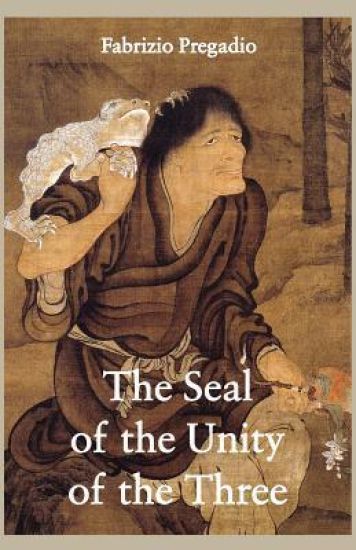
The Seal of the Unity of the Three

The Seal of the Unity of the Three

Fabrizio Pregadio

Golden Elixir Press
2011
pokkari

Halvin toimitettuna 32,00 €

Under an allusive poetical language and thick layers of images and symbols, The Seal of the Unity of the Three (Cantong qi) hides the exposition of the teachings that gave birth to Taoist Internal Alchemy, or Neidan. Traditionally attributed to Wei Boyang and dated to about 150 CE, The Seal of the Unity of the Three is concerned with three major subjects - Taoism (the way of "non-doing"), Cosmology (the system of the Book of Changes), and Alchemy - and joins them to one another into a unique doctrine. The charm of its verses, the depth of its discourse, and its enigmatic language inspired a large number of commentaries and other works, and attracted the attention not only of Taoist masters and adepts, but also of philosophers, cosmologists, and poets. In addition to a complete translation, this book contains a detailed introduction to the history and the teachings of The Seal of the Unity of the Three, explanations of each of its sections, and notes on its verses. Also included are several tables and pictures, an index of main subjects, and the complete Chinese text.
Awakening to Reality

Awakening to Reality

Fabrizio Pregadio

Golden Elixir Press
2009
pokkari
Awakening to Reality (Wuzhen pian) is one of the most important and best-known Taoist alchemical texts. Written in the eleventh century, it describes in a poetical form, and in a typically cryptic and allusive language, several facets of Neidan, or Internal Alchemy. This book contains a translation of the first part of the text, consisting of sixteen poems, which provide a concise but comprehensive exposition of Neidan. In addition to notes that intend to clarify the meaning of the more obscure points, the book also contains selections from Liu Yiming's commentary, dating from the late 18th century, which is distinguished by the use of a lucid and plain language. Table of ContentsPreface, viiIntroduction, 1Translation, 21Selections from Liu Yiming's Commentary, 75d104ual Notes, 89Glossary of Chinese Characters, 95Works Quoted, 101
Great Clarity

Great Clarity

Fabrizio Pregadio

STANFORD UNIVERSITY PRESS
2006
sidottu
This is the first book to examine extensively the religious aspects of Chinese alchemy. Its main focus is the relation of alchemy to the Daoist traditions of the early medieval period (third to sixth centuries). It shows how alchemy contributed to and was tightly integrated into the elaborate body of doctrines and practices that Daoists built at that time, from which Daoism as we know it today evolved. The book also clarifies the origins of Chinese alchemy and the respective roles of alchemy and meditation in self-cultivation practices. It contains full translations of three important medieval texts, all of them accompanied by running commentaries, making available for the first time in English the gist of the early Chinese alchemical corpus.