
Kirjojen hintavertailu – 12 903 725 kirjaa ja 27 kauppaa

Kirjailija

Faith Wallis

Kirjat ja teokset yhdessä paikassa: 3 kirjaa, julkaisuja vuosilta 2014–2025, suosituimpiin kuuluu Bede: Commentary on the Gospel of Luke. Vertaile teosten hintoja ja tarkista saatavuus suomalaisista kirjakaupoista.

3 kirjaa

Kirjojen julkaisuvuodet: 2014–2025.

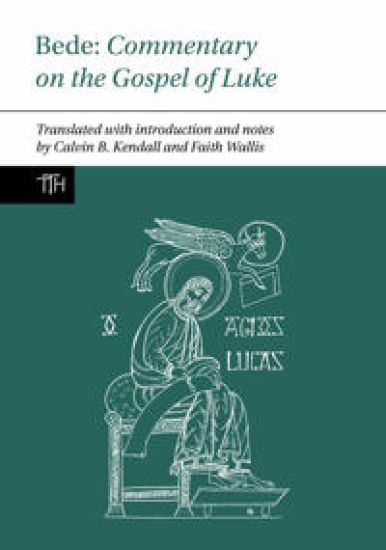
Bede: Commentary on the Gospel of Luke

Bede: Commentary on the Gospel of Luke

Faith Wallis; Calvin B. Kendall

LIVERPOOL UNIVERSITY PRESS
2025
nidottu
Commenting on the Bible was the principal way in which early medieval Christians conducted the work of theology; commentaries also open a window for modern readers onto the way in which these people strove to understand humanity, the world and history through complex acts of layered winterpretation and cross-referencing within the sacred text. Bede's commentary on Luke, composed in the first half of the 710s, is a turning point in his career as an exegete. It is ambitious in its length, but also in its subject-matter, because the life of Christ is the key to the meaning of the entire Bible. To expound a Gospel also entails engaging with a formidable body of commentary by the Church Fathers. In Bede's case, the Luke commentary marks as well the moment when he publically asserts his own intellectual authority by displaying his mastery of the Patristic tradition, and by deftly confronting criticisms of his earlier works. Finally, Bede's treatment of Luke was highly influential in the Carolingian Renaissance, and in the compilation of the Glossa Ordinaria in the twelfth century. This translation is thus an important resource for historians, as well as scholars interested in the role of the Bible in medieval culture.
Bede: Commentary on the Gospel of Luke

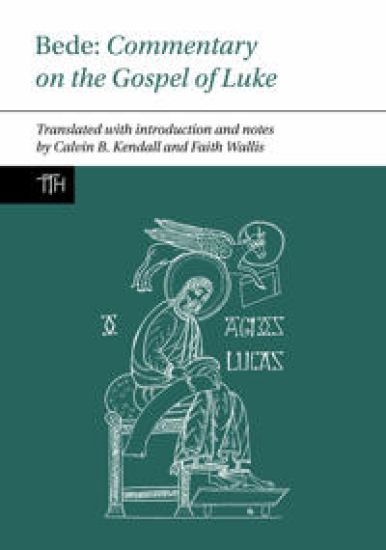
Bede: Commentary on the Gospel of Luke

Faith Wallis; Calvin B. Kendall

LIVERPOOL UNIVERSITY PRESS
2024
sidottu
Commenting on the Bible was the principal way in which early medieval Christians conducted the work of theology; commentaries also open a window for modern readers onto the way in which these people strove to understand humanity, the world and history through complex acts of layered winterpretation and cross-referencing within the sacred text. Bede's commentary on Luke, composed in the first half of the 710s, is a turning point in his career as an exegete. It is ambitious in its length, but also in its subject-matter, because the life of Christ is the key to the meaning of the entire Bible. To expound a Gospel also entails engaging with a formidable body of commentary by the Church Fathers. In Bede's case, the Luke commentary marks as well the moment when he publically asserts his own intellectual authority by displaying his mastery of the Patristic tradition, and by deftly confronting criticisms of his earlier works. Finally, Bede's treatment of Luke was highly influential in the Carolingian Renaissance, and in the compilation of the Glossa Ordinaria in the twelfth century. This translation is thus an important resource for historians, as well as scholars interested in the role of the Bible in medieval culture.
The Herbal of al-Ghafiqi

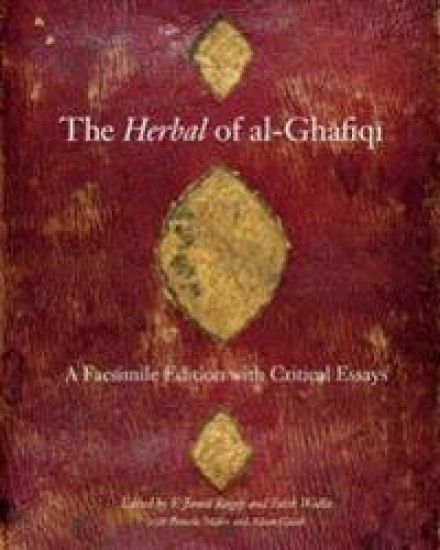
The Herbal of al-Ghafiqi

F. Jamil Ragep; Faith Wallis

McGill-Queen's University Press
2014
sidottu
"Herbals" - collections describing plants used for medicinal purposes - were among the ancient and medieval world's most valued scientific texts, synthesizing a vast treasury of medical learning to facilitate scientific edification for scholar, bibliophiles, or practical consultation by physicians. Abu Ja?far al-Ghafiqi (d. ca. 1165 CE) lived in the Arab-Islamic zone of the southern Iberian peninsula called al-Andalus, a land of many cultures, religions, and languages. His Herbal reflects the diverse milieu in which he lived, drawing from ancient Greek sources like Dioscorides and Galen as well as over thirty other works from India as well as the Hellenistic and Islamic worlds. The manuscript reproduced in this edition was purchased in 1912 by Sir William Osler and is now housed in the Osler Library of the History of Medicine at McGill University. It has entries for herbal, mineral, and animal-derived drugs, illustrated by almost 400 coloured, hand-drawn images of plants and animals. A glossary of over 2,000 secondary entries provides synonyms in Greek, Sanskrit, Syriac, Persian, Berber, Old Spanish, Latin, Coptic, and Armenian, reflecting the international character of medicine and pharmacy at the time. Essays by eminent scholars discuss the physical features and history of the manuscript, the philological complexity of the text, al-Ghafiqi's sources, the Andalusian and larger global contexts of the Herbal, and the illustrations accompanying the text. A remarkable document, The Herbal of al-Ghafiqi will be a cherished addition to the library of anyone interested in the history of pharmacological science or in the history of the Islamic world.