Kirjojen hintavertailu – 12 903 725 kirjaa ja 27 kauppaa

Kirjailija

Faria Samrin Khan

Kirjat ja teokset yhdessä paikassa: 32 kirjaa, julkaisuja vuosilta 2021–2026, suosituimpiin kuuluu Sezonowa wyst¿powalno¿¿ mszycy szafranowej Uroleucon compositae (Theobald). Vertaile teosten hintoja ja tarkista saatavuus suomalaisista kirjakaupoista.

32 kirjaa

Kirjojen julkaisuvuodet: 2021–2026.

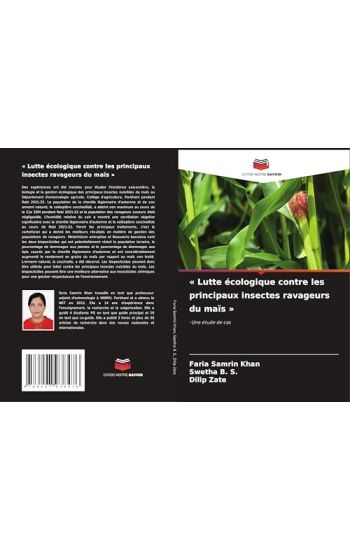
Lutte écologique contre les principaux insectes ravageurs du maïs

Lutte écologique contre les principaux insectes ravageurs du maïs

Faria Samrin Khan; Swetha B S; Dilip Zate

Editions Notre Savoir
2024
pokkari
Des exp riences ont t men es pour tudier l'incidence saisonni re, la biologie et la gestion cologique des principaux insectes nuisibles du ma s au D partement d'entomologie agricole, Coll ge d'agriculture, Parbhani pendant Rabi 2021-22. La population de la chenille l gionnaire d'automne et de son ennemi naturel, le col opt re coccinellid , a atteint son maximum au cours de la 11e SEM pendant Rabi 2021-22 et la population des ravageurs suceurs tait n gligeable. L'humidit relative du soir a montr une corr lation n gative significative avec la chenille l gionnaire d'automne et le col opt re coccinellide au cours de Rabi 2021-22. Parmi les principaux traitements, c'est le carbofuran qui a donn les meilleurs r sultats en mati re de gestion des populations de ravageurs. Metarhizium anisopliae et Beauveria bassiana sont les deux biopesticides qui ont potentiellement r duit la population larvaire, le pourcentage de dommages aux plantes et le pourcentage de dommages aux pis caus s par la chenille l gionnaire d'automne et ont consid rablement augment le rendement en grains du ma s par rapport au ma s non trait . L'ennemi naturel, la coccinelle, a t observ . Les biopesticides peuvent donc tre utilis s pour lutter contre les principaux insectes nuisibles du ma s. Les biopesticides peuvent tre une meilleure alternative aux insecticides chimiques pour une gestion respectueuse de l'environnement.
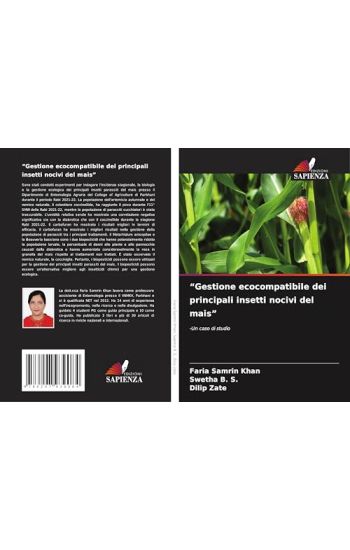
"Gestione ecocompatibile dei principali insetti nocivi del mais"

"Gestione ecocompatibile dei principali insetti nocivi del mais"

Faria Samrin Khan; Swetha B S; Dilip Zate

Edizioni Sapienza
2024
pokkari
Sono stati condotti esperimenti per indagare l'incidenza stagionale, la biologia e la gestione ecologica dei principali insetti parassiti del mais presso il Dipartimento di Entomologia Agraria del College of Agriculture di Parbhani durante il periodo Rabi 2021-22. La popolazione dell'artemisia autunnale e del nemico naturale, il coleottero coccinellide, ha raggiunto il picco durante l'11 SMW della Rabi 2021-22, mentre la popolazione di parassiti succhiatori stata trascurabile. L'umidit relativa serale ha mostrato una correlazione negativa significativa sia con la diabrotica che con il coccinellide durante la stagione Rabi 2021-22. Il carbofuran ha mostrato i risultati migliori in termini di efficacia. Il carbofuran ha mostrato i migliori risultati nella gestione della popolazione di parassiti tra i principali trattamenti. Il Metarhizium anisopliae e la Beauveria bassiana sono i due biopesticidi che hanno potenzialmente ridotto la popolazione larvale, la percentuale di danni alle piante e alle pannocchie causati dalla diabrotica e hanno aumentato considerevolmente la resa in granella del mais rispetto ai trattamenti non trattati. stato osservato il nemico naturale, la cocciniglia. Pertanto, i biopesticidi possono essere utilizzati per la gestione dei principali insetti parassiti del mais. I biopesticidi possono essere un'alternativa migliore agli insetticidi chimici per una gestione ecologica.
"Ecofriendly Management of Major Insect Pests of Maize"

"Ecofriendly Management of Major Insect Pests of Maize"

Faria Samrin Khan; Swetha B S; Dilip Zate

Lap Lambert Academic Publishing
2024
pokkari
Experiments were conducted to investigate seasonal incidence, biology and ecofriendly management of major insect pests of maize at the Department of Agricultural Entomology, College of Agriculture, Parbhani during Rabi 2021-22. The population of fall armyworm and natural enemy, coccinellid beetle peaked during the 11th SMW during Rabi 2021-22 and the population of sucking pests was negligible. Evening relative humidity showed significant negative correlation with both fall armyworm and coccinellid beetle during Rabi 2021-22. Carbofuran showed the best results in managing pest population among the main treatments. Metarhizium anisopliae and Beauveria bassiana are the two biopesticides that potentially reduced the larval population, per cent plant damage and per cent cob damage caused by fall armyworm and increased the grain yield of maize considerably compared to untreated. The natural enemy, lady bird beetle was observed. Hence, biopesticides can be used for managing major insect pests of maize. Biopesticides can be the better alternative option to chemical insecticides for eco-friendly management.
Bioefficacy of combination insecticides against major insect pest

Bioefficacy of combination insecticides against major insect pest

Faria Samrin Khan; Dilip Zate; Anita Sable

Lap Lambert Academic Publishing
2024
pokkari
The present investigation on Bioefficacy of combination insecticides against major insect pests of Bt cotton under high density planting system carried out to evaluate safety combination insecticides against beneficial insects of Bt cotton under high density planting system. The results indicated that all the insecticidal treatments were found to be significantly superior in recording minimum number of sucking pests and bollworms over untreated control. Among all insecticides thiamethoxam 12.6% + lamdacyhalothrin 9.5% ZC, indoxacarb 14.5% + acetamiprid 7.7% SC and acephate 50% + imidachloprid 1.8% SP were found to be effective in reducing aphid, jassid, and whitefly population. The insecticides thiamethoxam 12.6% + lamdacyhalothrin 9.5% ZC, indoxacarb 14.5% + acetamiprid 7.7% SC and acephate 50% + imidachloprid 1.8% SP were found to be effective against larval population, fruiting bodies, rosette flowers, green boll damage, open boll damage and locule damage due to american and pink bollworm. The highest population of natural enemies was recorded in the plots treated with thiamethoxam 12.6% + lamdacyhalothrin 9.5% ZC after each spray with highest yield and ICBR.