Kirjojen hintavertailu – 12 903 724 kirjaa ja 27 kauppaa
Kirjailija
Farzad Pour Rahimian
Kirjat ja teokset yhdessä paikassa: 12 kirjaa, julkaisuja vuosilta 2021–2025, suosituimpiin kuuluu Data-driven BIM for Energy Efficient Building Design. Vertaile teosten hintoja ja tarkista saatavuus suomalaisista kirjakaupoista.
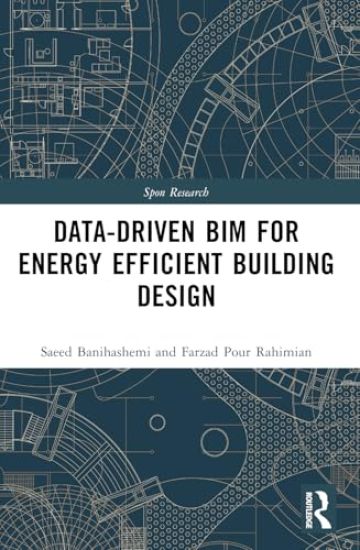
This research book aims to conceptualise the scale and spectrum of Building Information Modelling (BIM) and Artificial Intelligence (AI) approaches in energy efficient building design and to develop its functional solutions with a focus on four crucial aspects of building envelop, building layout, occupant behaviour and heating, ventilation and air-conditioning (HVAC) systems. Drawn from theoretical development on the sustainability, informatics and optimisation paradigms in built environment, the energy efficient building design will be marked through the power of data and BIM-intelligent agents during the design phase. It will be further developed via smart derivatives to reach a harmony in the systematic integration of energy efficient building design solutions, a gap that is missed in the extant literature and that this book aims to fill. This approach will inform a vision for future and provide a framework to shape and respond to our built environment and how it transforms the way we design and build. By considering the balance of BIM, AI and energy efficient outcomes, the future development of buildings will be regenerated in a direction that is sustainable in the long run. This book is essential reading for those in the AEC industry as well as computer scientists.
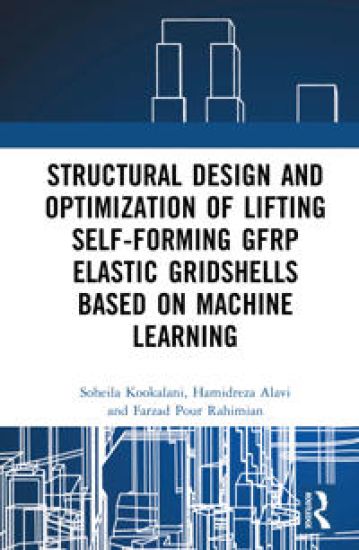
Structural Design and Optimization of Lifting Self-forming GFRP Elastic Gridshells based on Machine Learning presents the algorithms of ML that can be used for the structural design and optimization of GFRP elastic gridshells, including linear regression, ridge regression, K-nearest neighbors, decision tree, random forest, AdaBoost, XGBoost, artificial neural network, support vector machine (SVM), and six enhanced forms of SVM. It also introduces interpretable ML approaches, including partial dependence plot, accumulated local effects, and SHaply Additive exPlanations (SHAP). Also, several methods for developing ML algorithms, including K-fold cross-validation (CV), Taguchi, a technique for order preference by similarity to ideal solution (TOPSIS), and multi-objective particle swarm optimization (MOPSO), are proposed. These algorithms are implemented to improve the applications of gridshell structures using a comprehensive representation of ML models. This research introduces novel frameworks for shape prediction, form-finding, structural performance assessment, and shape optimization of lifting self-forming GFRP elastic gridshells using ML methods. The book will be of interest to researchers and academics interested in advanced design methods and ML technology in architecture, engineering and construction fields.
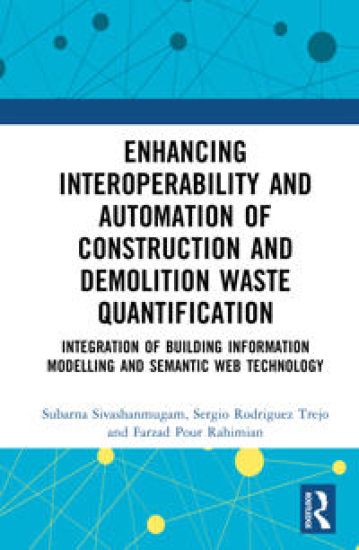
Enhancing Interoperability and Automation of Construction Waste Quantification outlines the construction waste quantification (CWQ) modelling that supports data-driven decision-making in the built environment. It presents how the functionalities of Building Information Modelling (BIM) and Semantic Web Technology are integrated to enhance the interoperability and automation of the CWQ process. The research in this book shapes the development of a semantic framework that supports the built environment in quantifying construction waste (CW) and informing optimal material choices from early design stages to minimise the quantity and diversity of waste generation. The book also demonstrates the application of the proposed framework using an ontology (PROduct CIRcularity Ontology) and a BIM-integrated digital tool (Building Waste Tool [BWT]). The PRODCIRO and BWT inform how data, standardisation, consistency, and granularity could streamline and automate the CWQ process. The book also presents the outputs of a test-case building used to validate the adaptability and accuracy of the framework. This book is a valuable resource for BIM and sustainability practitioners. It provides a comprehensive discussion on the significance of CW, its impacts on sustainability, advancements in CWQ, and data and information gaps within the existing CWQ practices. The solution proposed in the book will help the built environment to shift from reactive to proactive and preventive waste management.
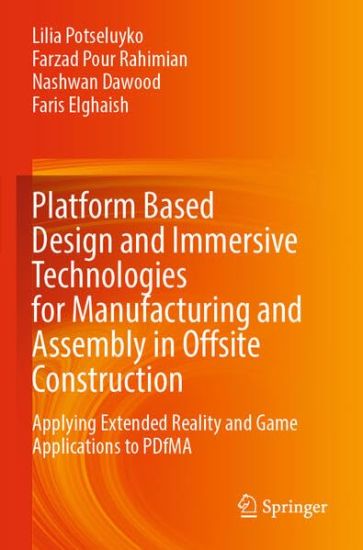
This book explores the applications of virtual reality technologies in building design and offsite construction. Its focus is on how small and medium-sized architectural and construction practices with limited budgets and time can implement innovation through visualisation creation. Virtual reality technologies, known as empathy machines, offer a productive interaction process for clients and professionals. Gaming and simulation have already proven their efficacy in solving problems in science and business. However, the next challenge is designing data-rich virtual environments that can enhance clients' spatial understanding, simplify architect-client communications, provide customisation options, consolidate quantification, and export data directly to manufacturers' software, minimizing fragmentation across the entire building information management (BIM) lifecycle. With this book, architects and construction professionals can learn how to leverage virtual reality technologies to improve their work processes and enhance client engagement. Whether you're new to virtual reality or an experienced practitioner, this book provides valuable insights and practical tips to help you harness the power of this exciting technology. With this book, architects and construction professionals can learn how to leverage virtual reality technologies to improve their work processes and enhance client engagement. Whether you're new to virtual reality or an experienced practitioner, this book provides valuable insights and practical tips to help you harness the power of this exciting technology. With this book, architects and construction professionals can learn how to leverage virtual reality technologies to improve their work processes and enhance client engagement. Whether you're new to virtual reality or an experienced practitioner, this book provides valuable insights and practical tips to help you harness the powerof this exciting technology. With this book, architects and construction professionals can learn how to leverage virtual reality technologies to improve their work processes and enhance client engagement. Whether you're new to virtual reality or an experienced practitioner, this book provides valuable insights and practical tips to help you harness the power of this exciting technology. With this book, architects and construction professionals can learn how to leverage virtual reality technologies to improve their work processes and enhance client engagement. Whether you're new to virtual reality or an experienced practitioner, this book provides valuable insights and practical tips to help you harness the power of this exciting technology. With this book, architects and construction professionals can learn how to leverage virtual reality technologies to improve their work processes and enhance client engagement. Whether you're new to virtual reality or an experienced practitioner, this book provides valuable insights and practical tips to help you harness the power of this exciting technology. With this book, architects and construction professionals can learn how to leverage virtual reality technologies to improve their work processes and enhance client engagement. Whether you're new to virtual reality or an experienced practitioner, this book provides valuable insights and practical tips to help you harness the power of this exciting technology. With this book, architects and construction professionals can learn how to leverage virtual reality technologies to improve their work processes and enhance client engagement. Whether you're new to virtual reality or an experienced practitioner, this book provides valuable insights and practical tips to help you harness the power of this exciting technology. With this book, architects and construction professionals can learn how to leverage virtual reality technologies to improve their work processes and enhance client engagement. Whether you're new to virtual reality or an experienced practitioner, this book provides valuable insights and practical tips to help you harness the power of this exciting technology. With this book, architects and construction professionals can learn how to leverage virtual reality technologies to improve their work processes and enhance client engagement. Whether you're new to virtual reality or an experienced practitioner, this book provides valuable insights and practical tips to help you harness the power of this exciting technology.
This book significantly contributes the digital transformation of construction. The book explores the capabilities of deep learning to provide smart solutions for the construction industry, particularly in areas of managing equipment, design optimization, energy optimization and detect cracks for buildings and highways. It provides conceptual solutions but also practical techniques. A new deep learning CNN-based highway cracks detection is demonstrated, and its usefulness is tested. The resulting deep learning CNN model will enable users to scan long distance of highway and detect types of cracks accurately in a very short time compared to traditional approaches. The book explores the integration of IoT and blockchain to provide practical solutions to tackle existing challenges like the endemic fragmentation in supply chain, the need for monitoring construction projects remotely and tracking equipment on the site. The Blockchain of Things (BCoT) concept has been introduced toexploit the advantages of IoT and blockchain, and different applications were developed based on this integration in leading industries such as shared economy and health care. Workable potential use cases to exploit successful utilization of BCoT for the construction industry are explored in the book’s chapters. This book will appeal to researchers in providing a comprehensive review of related literature on blockchain, the IoT and construction identify gaps and offer a springboard for future research. Construction practitioners, research and development institutes and policy makers will also benefit from its usefulness as a reference book and collection of case studies on the application of these new approaches in construction.
This book explores the applications of virtual reality technologies in building design and offsite construction. Its focus is on how small and medium-sized architectural and construction practices with limited budgets and time can implement innovation through visualisation creation. Virtual reality technologies, known as empathy machines, offer a productive interaction process for clients and professionals. Gaming and simulation have already proven their efficacy in solving problems in science and business. However, the next challenge is designing data-rich virtual environments that can enhance clients' spatial understanding, simplify architect-client communications, provide customisation options, consolidate quantification, and export data directly to manufacturers' software, minimizing fragmentation across the entire building information management (BIM) lifecycle. With this book, architects and construction professionals can learn how to leverage virtual reality technologies to improve their work processes and enhance client engagement. Whether you're new to virtual reality or an experienced practitioner, this book provides valuable insights and practical tips to help you harness the power of this exciting technology. With this book, architects and construction professionals can learn how to leverage virtual reality technologies to improve their work processes and enhance client engagement. Whether you're new to virtual reality or an experienced practitioner, this book provides valuable insights and practical tips to help you harness the power of this exciting technology. With this book, architects and construction professionals can learn how to leverage virtual reality technologies to improve their work processes and enhance client engagement. Whether you're new to virtual reality or an experienced practitioner, this book provides valuable insights and practical tips to help you harness the powerof this exciting technology. With this book, architects and construction professionals can learn how to leverage virtual reality technologies to improve their work processes and enhance client engagement. Whether you're new to virtual reality or an experienced practitioner, this book provides valuable insights and practical tips to help you harness the power of this exciting technology. With this book, architects and construction professionals can learn how to leverage virtual reality technologies to improve their work processes and enhance client engagement. Whether you're new to virtual reality or an experienced practitioner, this book provides valuable insights and practical tips to help you harness the power of this exciting technology. With this book, architects and construction professionals can learn how to leverage virtual reality technologies to improve their work processes and enhance client engagement. Whether you're new to virtual reality or an experienced practitioner, this book provides valuable insights and practical tips to help you harness the power of this exciting technology. With this book, architects and construction professionals can learn how to leverage virtual reality technologies to improve their work processes and enhance client engagement. Whether you're new to virtual reality or an experienced practitioner, this book provides valuable insights and practical tips to help you harness the power of this exciting technology. With this book, architects and construction professionals can learn how to leverage virtual reality technologies to improve their work processes and enhance client engagement. Whether you're new to virtual reality or an experienced practitioner, this book provides valuable insights and practical tips to help you harness the power of this exciting technology. With this book, architects and construction professionals can learn how to leverage virtual reality technologies to improve their work processes and enhance client engagement. Whether you're new to virtual reality or an experienced practitioner, this book provides valuable insights and practical tips to help you harness the power of this exciting technology. With this book, architects and construction professionals can learn how to leverage virtual reality technologies to improve their work processes and enhance client engagement. Whether you're new to virtual reality or an experienced practitioner, this book provides valuable insights and practical tips to help you harness the power of this exciting technology.
This research book aims to conceptualise the scale and spectrum of Building Information Modelling (BIM) and Artificial Intelligence (AI) approaches in energy efficient building design and to develop its functional solutions with a focus on four crucial aspects of building envelop, building layout, occupant behaviour and heating, ventilation and air-conditioning (HVAC) systems. Drawn from theoretical development on the sustainability, informatics and optimisation paradigms in built environment, the energy efficient building design will be marked through the power of data and BIM-intelligent agents during the design phase. It will be further developed via smart derivatives to reach a harmony in the systematic integration of energy efficient building design solutions, a gap that is missed in the extant literature and that this book aims to fill. This approach will inform a vision for future and provide a framework to shape and respond to our built environment and how it transforms the way we design and build. By considering the balance of BIM, AI and energy efficient outcomes, the future development of buildings will be regenerated in a direction that is sustainable in the long run. This book is essential reading for those in the AEC industry as well as computer scientists.
This book significantly contributes the digital transformation of construction. The book explores the capabilities of deep learning to provide smart solutions for the construction industry, particularly in areas of managing equipment, design optimization, energy optimization and detect cracks for buildings and highways. It provides conceptual solutions but also practical techniques. A new deep learning CNN-based highway cracks detection is demonstrated, and its usefulness is tested. The resulting deep learning CNN model will enable users to scan long distance of highway and detect types of cracks accurately in a very short time compared to traditional approaches. The book explores the integration of IoT and blockchain to provide practical solutions to tackle existing challenges like the endemic fragmentation in supply chain, the need for monitoring construction projects remotely and tracking equipment on the site. The Blockchain of Things (BCoT) concept has been introduced toexploit the advantages of IoT and blockchain, and different applications were developed based on this integration in leading industries such as shared economy and health care. Workable potential use cases to exploit successful utilization of BCoT for the construction industry are explored in the book’s chapters. This book will appeal to researchers in providing a comprehensive review of related literature on blockchain, the IoT and construction identify gaps and offer a springboard for future research. Construction practitioners, research and development institutes and policy makers will also benefit from its usefulness as a reference book and collection of case studies on the application of these new approaches in construction.
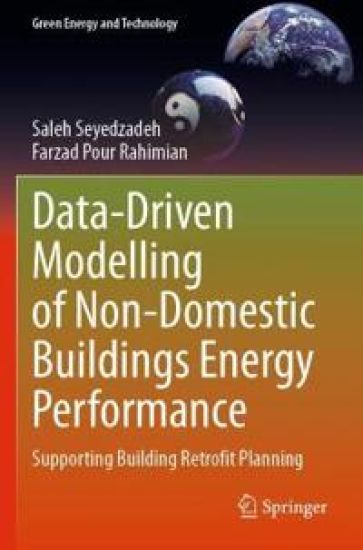
This book outlines the data-driven modelling of building energy performance to support retrofit decision-making. It explains how to determine the appropriate machine learning (ML) model, explores the selection and expansion of a reasonable dataset and discusses the extraction of relevant features and maximisation of model accuracy. This book develops a framework for the quick selection of a ML model based on the data and application. It also proposes a method for optimising ML models for forecasting buildings energy loads by employing multi-objective optimisation with evolutionary algorithms. The book then develops an energy performance prediction model for non-domestic buildings using ML techniques, as well as utilising a case study to lay out the process of model development. Finally, the book outlines a framework to choose suitable artificial intelligence methods for modelling building energy performances. This book is of use to both academics and practising energy engineers, as it provides theoretical and practical advice relating to data-driven modelling for energy retrofitting of non-domestic buildings.
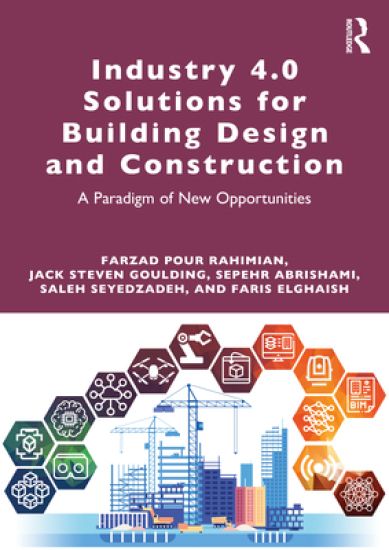
This book provides in-depth results and case studies in innovation from actual work undertaken in collaboration with industry partners in Architecture, Engineering, and Construction (AEC). Scientific advances and innovative technologies in the sector are key to shaping the changes emerging as a result of Industry 4.0. Mainstream Building Information Management (BIM) is seen as a vehicle for addressing issues such as industry fragmentation, value-driven solutions, decision-making, client engagement, and design/process flow; however, advanced simulation, computer vision, Internet of Things (IoT), blockchain, machine learning, deep learning, and linked data all provide immense opportunities for dealing with these challenges and can provide evidenced-based innovative solutions not seen before. These technologies are perceived as the “true” enablers of future practice, but only recently has the AEC sector recognised terms such as “golden key” and “golden thread” as part of BIM processes and workflows. This book builds on the success of a number of initiatives and projects by the authors, which include seminal findings from the literature, research and development, and practice-based solutions produced for industry. It presents these findings through real projects and case studies developed by the authors and reports on how these technologies made a real-world impact. The chapters and cases in the book are developed around these overarching themes: • BIM and AEC Design and Optimisation: Application of Artificial Intelligence in Design • BIM and XR as Advanced Visualisation and Simulation Tools • Design Informatics and Advancements in BIM Authoring • Green Building Assessment: Emerging Design Support Tools • Computer Vision and Image Processing for Expediting Project Management and Operations • Blockchain, Big Data, and IoT for Facilitated Project Management • BIM Strategies and Leveraged Solutions This book is a timely and relevant synthesis of a number of cogent subjects underpinning the paradigm shift needed for the AEC industry and is essential reading for all involved in the sector. It is particularly suited for use in Masters-level programs in Architecture, Engineering, and Construction.
This book provides in-depth results and case studies in innovation from actual work undertaken in collaboration with industry partners in Architecture, Engineering, and Construction (AEC). Scientific advances and innovative technologies in the sector are key to shaping the changes emerging as a result of Industry 4.0. Mainstream Building Information Management (BIM) is seen as a vehicle for addressing issues such as industry fragmentation, value-driven solutions, decision-making, client engagement, and design/process flow; however, advanced simulation, computer vision, Internet of Things (IoT), blockchain, machine learning, deep learning, and linked data all provide immense opportunities for dealing with these challenges and can provide evidenced-based innovative solutions not seen before. These technologies are perceived as the “true” enablers of future practice, but only recently has the AEC sector recognised terms such as “golden key” and “golden thread” as part of BIM processes and workflows. This book builds on the success of a number of initiatives and projects by the authors, which include seminal findings from the literature, research and development, and practice-based solutions produced for industry. It presents these findings through real projects and case studies developed by the authors and reports on how these technologies made a real-world impact. The chapters and cases in the book are developed around these overarching themes: • BIM and AEC Design and Optimisation: Application of Artificial Intelligence in Design • BIM and XR as Advanced Visualisation and Simulation Tools • Design Informatics and Advancements in BIM Authoring • Green Building Assessment: Emerging Design Support Tools • Computer Vision and Image Processing for Expediting Project Management and Operations • Blockchain, Big Data, and IoT for Facilitated Project Management • BIM Strategies and Leveraged Solutions This book is a timely and relevant synthesis of a number of cogent subjects underpinning the paradigm shift needed for the AEC industry and is essential reading for all involved in the sector. It is particularly suited for use in Masters-level programs in Architecture, Engineering, and Construction.
This book outlines the data-driven modelling of building energy performance to support retrofit decision-making. It explains how to determine the appropriate machine learning (ML) model, explores the selection and expansion of a reasonable dataset and discusses the extraction of relevant features and maximisation of model accuracy. This book develops a framework for the quick selection of a ML model based on the data and application. It also proposes a method for optimising ML models for forecasting buildings energy loads by employing multi-objective optimisation with evolutionary algorithms. The book then develops an energy performance prediction model for non-domestic buildings using ML techniques, as well as utilising a case study to lay out the process of model development. Finally, the book outlines a framework to choose suitable artificial intelligence methods for modelling building energy performances. This book is of use to both academics and practising energy engineers, as it provides theoretical and practical advice relating to data-driven modelling for energy retrofitting of non-domestic buildings.