Kirjojen hintavertailu – 12 903 725 kirjaa ja 27 kauppaa

Kirjailija

Faye J. Crosby

Kirjat ja teokset yhdessä paikassa: 6 kirjaa, julkaisuja vuosilta 1989–2020, suosituimpiin kuuluu Undoing the Gender Binary. Vertaile teosten hintoja ja tarkista saatavuus suomalaisista kirjakaupoista.

6 kirjaa

Kirjojen julkaisuvuodet: 1989–2020.

Undoing the Gender Binary

Undoing the Gender Binary

Charlotte Chucky Tate; Ella Ben Hagai; Faye J. Crosby

Cambridge University Press
2020
pokkari
The central question of this Element is this: What does it mean to be transgender - in general and in specific ways? What does the designation mean for any individual and for the groups in which the individual exists? Biologically, what occurs? Psychologically, what transpires? The Element starts with the basics. The authors question some traditional assumptions, lay out some bio-medical information, and define their terms. They then move to the question of central concern, seen first in terms of the individual and then in terms of the group or society. They conclude with some implications, urging some new approaches to research and suggest some applications in the classroom and beyond.
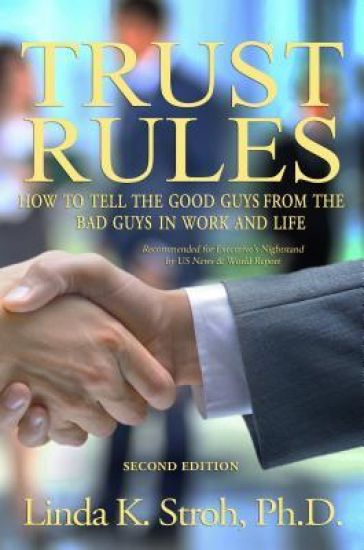
Trust Rules

Trust Rules

Linda K. Stroh; Faye J. Crosby

Praeger Publishers Inc
2015
sidottu
Trust is at the root of all positive relationships. This accessible and empowering book teaches how to form an inner circle of trusted confidants in your workplace and at home that will allow you to live a more peaceful and more effective life, reduce stress, and better deal with negative emotions. Building trust is crucial for effective leadership, and trusting others is a necessary part of working with others. But knowing whom to trust—and whom not to trust—eludes many people. A surprising number of people report that being betrayed by someone in their "inner circle" either at work or in their personal lives is one of the most devastating things they have endured. Lack of trust is also expensive in that it costs companies money to surveil employees; and in our personal lives, if we live with people we cannot trust, we expend needless amounts of energy protecting ourselves from these untrustworthy people. How do we increase trust, bounce back from betrayal, and form alliances and positive relationships with those who ARE trustworthy? This book provides a unique examination of trust and its often-overlooked importance to our work and personal lives. It identifies the characteristics of a trusting relationship, considers the decision-making process that people should make before granting individuals admission to their own "inner circle," and teaches how to tell the "good guys" from the "bad guys" in our work environments and life in general. This revised and updated edition contains new information on the negative mental and physical aspects of telling lies; how to better manage our emotions, which allows us to become "better guys" ourselves; strategies for building more trusting relationships in our families; and how trust works—and doesn't work—online in the Internet age. It also includes a useful "Family Board Meeting" tool for having family meetings in a way that encourages honest and open dialogue between family members regardless of age or family structure.
Affirmative Action is Dead; Long Live Affirmative Action
Affirmative action is a much-debated policy, in employment as well as in education, in the Supreme Court as well as on the street. Yet as this book shows, affirmative action is both sensible and effective, differing little from many other government programs that evoke no controversy. Why don’t Americans wholeheartedly support affirmative action? In this timely and accessible book, Faye J. Crosby analyzes several different explanations offered by social scientists to answer this important question. Some explanations suggest that opposition stems from a belief that affirmative action functions as a governmentally sanctioned form of reverse racism or sexism, or that it is ineffective or socially disruptive. Other explanations locate the problem in the ignorance or prejudice of the people who oppose the policy. Crosby concludes by offering a different explanation, proposing that the American failure to endorse wholeheartedly what is a fair and effective policy arises, ironically, from Americans’ infatuation with justice. Smitten with the concept of merit, says Crosby, we are perturbed by a policy that invites us to recognize the complications of social justice.
Affirmative Action

Affirmative Action

Richard F. Tomasson; Faye J. Crosby; Sharon D. Herzberger

Rowman Littlefield Publishers
2001
nidottu
Hailed at the time of its original publication as a thorough and balanced debate of one of America's most vexing political issues, Affirmative Action employs a pro and con format to provide a concise introduction to this divisive debate. In a new, substantive introduction, Richard F. Tomasson offers a short history of the affirmative action debate and addresses new developments since the book's original appearance. In Part One, authors Crosby and Herzberger draw on state and federal court decisions, federal decrees, and university practices to support affirmative action to counter racial and gender bias. In Part Two, Tomasson cites the same kinds of evidence to argue against affirmative action programs.
Affirmative Action in Perspective

Affirmative Action in Perspective

Fletcher A. Blanchard; Faye J. Crosby

Springer-Verlag New York Inc.
1989
nidottu
Racism and sexism remain prevalent in societies today. Based on this proven premise, the authors of Affirmative Action in Perspective maintain that a policy of equal opportunity as practiced in America is not a feasible, realistic solution to the "legacy of racial and sexual discrimination". Drs. Blanchard and Crosby have edited a volume which clearly displays their conviction that affirmative action as a policy has the potential to establish a society more equitable than the society we know now. Distinguished contributors to this volume discuss the policy from a level of definition to actual case studies and further, to the theoretical examination of the justice of affirmative action. Throughout the book the urgency of questioning current policies is evident; so too is the need for basic understanding of the realities of injustice which draw the line between the advantaged and the disadvantaged.