Kirjailija
Federico García Lorca
Kirjat ja teokset yhdessä paikassa: 192 kirjaa, julkaisuja vuosilta 1955–2027, suosituimpiin kuuluu Gypsy Ballads. Vertaile teosten hintoja ja tarkista saatavuus suomalaisista kirjakaupoista.
Nimi esiintyy myös muodoissa: Federico Garcia Lorca
192 kirjaa
Kirjojen julkaisuvuodet: 1955–2027.
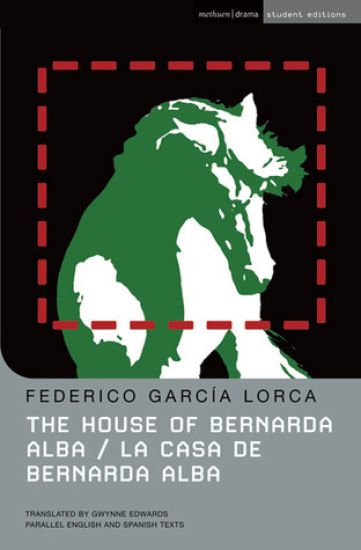
Bernarda Alba is a widow, and her five daughters are incarcerated in mourning along with her. One by one they make a bid for freedom, with tragic consequences. Lorca's tale depicts the repression of women within Catholic Spain in the years before the war. The House of Bernarda Alba is Lorca's last and possibly finest play, completed shortly before he was murdered by Nationalist sympathisers at the outbreak of the Spanish Civil War. Inspired by real characters and described by the author as 'a true record of village life', it is a tragic tale of frustration and explosive passions in a household of women rulled by a tyrannical mother. Edited with invaluable student notes - a must for students of Spanish drama
Following the gangland execution of her husband, the formidable matriarch Bernarda Alba will do anything to safeguard her family's dubious fortune and the future of her five daughters. A deal is struck - a marriage of convenience between her eldest girl and the son of a business rival. All Bernarda has to do is ensure that the wedding happens, and quickly. Five headstrong daughters cooped up in the family home in an emotionally charged atmosphere of bitter rivalry and repressed sexuality make that an epic challenge. One of the most celebrated European dramas of the 20th century, the play was finished by Lorca shortly before he was executed in Spain for his left-wing politics. He described it as a "drama of women in the villages of Spain" - a theme that is electrifyingly transposed in this version to the tough communities of Glasgow's East End. Faithfully preserving Lorca's sense of boiling tension and impending tragedy, this adaptation brings a classic text thrillingly up to date. This text was published to coincide with the world premiere of the adaptation, a production by the National Theatre of Scotland in 2009.
Selected Poems
Federico García Lorca
Oxford University Press
2009
nidottu
Halvin toimitettuna 18,90 €
'Lorca brought an understanding of the paradox that was Spain - sensuality chafing under a rigid moral code, individual desire at war with tradition.' Manuel Duran Federico García Lorca is perhaps the most celebrated of all twentieth-century Spanish writers, known not only for his plays but also for several collections of poems published both in his short lifetime and after. Lorca's poetry is steeped in the land, climate, and folklore of his native Andalusia, though he writes memorably of New York and Cuba too. Often in modernist idiom, and full of startling imagery, he evokes a world of intense feelings, silent suffering, and dangerous love. This selection balances poems from Lorca's early collections with his better-known work to give a clear vision of his poetic development. Martin Sorrell's accomplished translations are complemented by D. Gareth Walters's shrewd Introduction, with its distinctive focus on the achievements of the poet. ABOUT THE SERIES: For over 100 years Oxford World's Classics has made available the widest range of literature from around the globe. Each affordable volume reflects Oxford's commitment to scholarship, providing the most accurate text plus a wealth of other valuable features, including expert introductions by leading authorities, helpful notes to clarify the text, up-to-date bibliographies for further study, and much more.
Lament for the Death of a Bullfighter and Other Poems
A. L. Lloyd; Federico Garcia Lorca
Faber Faber
2008
pokkari
A. L. Lloyd was nothing if not versatile, ethnomusicologist, journalist, radio and television broadcaster, and translator. It is as the author of Folk Song in England, also reissued in Faber Finds, that he is best known, but, in this his centenary year (2008) Faber Finds is also celebrating him as a translator.1937 was A. L. Lloyd's annus mirabilis as a translator. In it he published both his translations of Lorca - Lament for the Death of a Bullfighter - and Kafka's Metamorphosis. There aren't many who can translate with equal facility from Spanish and German. Not only did A. L. Lloyd do that, his translations were both firsts, the first translation of Lorca into English and the first English translation of Kafka's most famous story. On first publication A. L. Lloyd's Lorca translation was widely praised with V. S. Pritchett especially commending it in The New Statesman.
`I have made a terrible discovery ... I have not yet been born ... I live off borrowed substance; what I have within me is not mine.' In his four last plays Federico García Lorca offered his disturbed and disturbing personal vision to Spanish audiences of the 1930s - unready, as he thought them, for the sexual frankness and surreal expression of his more experimental work. The ill-fated lovers of Blood Wedding, the desolate Yerma, the fading spinster Rosita, and Bernarda Alba's abused household of women all inhabit a familiar Andalusia. Their predicaments are starkly plotted, with a stagecraft rooted in classical theatrical tradition. In such figures Lorca addresses the cultural and political ferment of his time with a fiercely libertarian assault on 'old and wrong moralities', fusing the personal and the political through his virtuoso mastery of images. Yet all that mastery can barely keep at bay the anguished contradictions of these doomed human lives. Hence the authentic sense of danger - the duende, to use his own word of Lorca's theatre, finely conveyed here in John Edmunds's fluent and rhythmic new translations that lend themselves admirably to performance. ABOUT THE SERIES: For over 100 years Oxford World's Classics has made available the widest range of literature from around the globe. Each affordable volume reflects Oxford's commitment to scholarship, providing the most accurate text plus a wealth of other valuable features, including expert introductions by leading authorities, helpful notes to clarify the text, up-to-date bibliographies for further study, and much more.
Le Duende (Jouer Sa Vie): Suivi de Jeu Et Theorie Du Duende de Federico Garcia Lorca
Ignacio Garate-Martinez; Federico Garcia Lorca
Encre Marine
2008
nidottu
Le duende est le maitre du corps en Espagne sans lequel les grands artistes du sud du pays, gitans ou flamencos, qu'ils chantent ou qu'ils dansent, savent qu'aucune emotion n'est possible. Mais c'est dans les combats de taureaux qu'il acquiert ses accents les plus impressionnants car il doit lutter contre la mort.
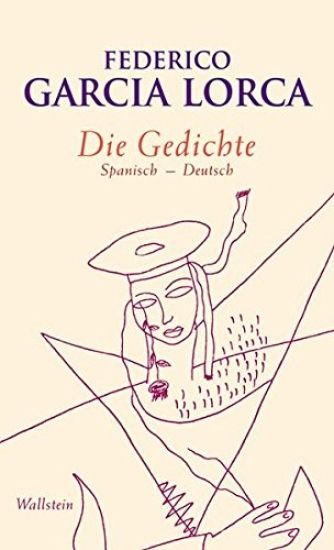
Mit Fug und Recht kann man ihn einen Mythos nennen, den bekanntesten spanischen Lyriker und Dramatiker des 20. Jahrhunderts: Federico Garc?a Lorca (1898-1936). Zu diesem Mythos haben nicht nur die Themen, die sein Werk bestimmen - der Flamenco, die Zigeuner oder die Stadt New York - beigetragen; ebenso faszinierend ist die Vielseitigkeit seines Werks, in dem in der Dramatik das experimentelle Theater neben der realistisch-prosaischen Tragödie steht, während in seiner Lyrik sowohl das impressionistische Gedicht wie auch eine kühne, sich der Interpretation verschließende Bildersprache Platz finden. Prägend für den Mythos Lorca war schließlich auch die schillernde Persönlichkeit des Dichters sowie die Tatsache, dass er kurz nach Ausbruch des Bürgerkriegs von Falangisten ermordet wurde und sein Werk in Francos Spanien verfemt war. Diese Edition ist eine Neuauflage von Heinrich Enrique Becks lange vergriffener Übersetzung der Gedichte Lorcas, die den andalusischen Dichter im deutschsprachigen Raum bekannt machte. Die zweisprachige Ausgabe lädt ein zu einer Re-Lektüre der wirkungsmächtigen, über ein halbes Jahrhundert einzig autorisierten Übertragung des Lorca'schen Werkes. Der Anhang bietet kurze Einführungen zu den einzelnen Gedichtzyklen, Kommentare zur Beck'schen Übersetzung sowie Nachwort und Register.
Drama Classics: The World's Great Plays at a Great Little Price García Lorca's passionate, lyrical tale of longing and revenge: a twentieth century masterpiece. Translated from the Spanish and introduced by one of Scotland's finest playwrights, Jo Clifford.
Endelig foreligger Lorcas litterære gjennombrudd på norsk. I 1928 kom hans Romancero gitano, en ballade-, eller kanskje heller romansesamling, med røtter tilbake til spansk gullalder som skulle selge i flere opplag i årene før den spanske borgerkrigen. Romancero er fellesbetegnelsen på en rekke dikt med episke karakter, gjerne med historiske motiver som Lorca vekket til live igjen i sitt metaforsterke og symbolladede språk. I disse diktene kan man se Lorcas dype fascinasjon for og forankring i det lokale, andalusiske. Samtidig peker diktene langt ut over dette, mot en mer eksistensiell, universell tematikk. Gjennom sin behandling av sigøynernes mytologi og tradisjon og møtet med samtidens instrumentelle "fornuft" trekker Lorca fortiden inn i nåtiden, og slik møtes også det tradisjonelle og det modernistiske. En opprivende og vakker diktsamling med et sterkt uttalt og sanselig billedspråk som igjen og igjen kretser om de menneskelige vilkår, uvegerlig knyttet til lengsel, seksualitet, vold og død.
... Den andre var en mørk elv, full av grener, en elv som kom meg i møte med sivenes sus og summende sang. ... Jeg ville det ikke, hører du; jeg ville det ikke! Din sønn var en havn, og jeg har ikke bedratt ham, men armen til den andre trakk meg med som en bråttsjø i havet, som sele-tøyet på et muldyr. ... Med røtter i antikk tragedietradisjon risser Lorca opp en klassisk konflikt mellom individ og samfunn, mellom be-gjær og plikt, mellom liv og død. Basert på en nyhetssak som verserte i pressen i datidens Andalucía, skrevet i løpet av fjorten dager og fremført på scenen i Madrid i 1933, har Lorca her levendegjort et tragisk stoff, én kvinne og to menn, en uløselig og lidenskapelig splittelse, iscenesatt på Brudens bryllupsdag. Trukket med av kref-ter som hun forsøker å stenge ute, med "en murvegg, to alen tykk", med behersket ekteskapelig samliv, for-søker hun å bekjempe det uavvendelige, men menneskets mørkere sider er for sterke, maktenes mumling umulig ikke å høre. Mytene, månen, kniven - med det andalusiske landskapet som bakteppe utspiller seg en kamp, ikke bare mellom menn, men mellom det realistiske og det oversanselige, det poetiske og det prosaiske, mellom det som var og det som er - mellom samfunnets skjøre barriere og naturens uopphørlige urkraft. Federico García Lorcas poetiske skjebnedrama fra 1932 i norsk oversettelse ved Kari Näumann. Etterord ved Elisabeth Skjervum Hole.
Yerma (meaning 'Barren') is one of three tragic plays about peasants and rural life that make up Lorca's 'rural trilogy'. It is possibly Lorca's harshest play following a woman's Herculean struggle against the curse of infertility. The woman's barrenness becomes a metaphor for her marriage in a traditional society that denies women sexual or social equality. Her desperate desire for a child drives her to commit a terrible crime at the end of the play. This Student Edition comes complete with a full introduction; plot synopsis; commentary on characters, context and themes; bibliography; chronology, and questions for study.
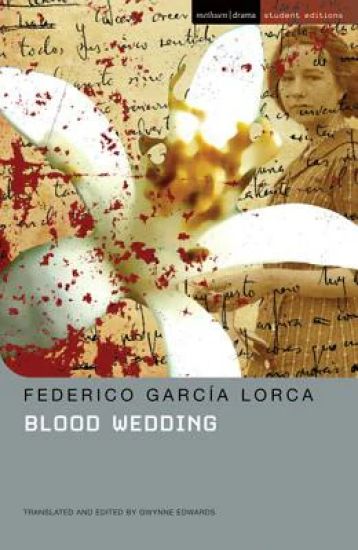
Blood Wedding is set in a village community in Lorca's Andalusia, and tells the story of a couple drawn irresistibly together in the face of an arranged marriage. This tragic and poetic play is the work on which his international reputation was founded. Like many of Lorca's passionate and intensely lyrical plays that focus on peasant life and the forces of nature, Blood Wedding combines innovatory dramatic technique with Spanish popular tradition. Methuen Drama Student Editions are expertly annotated texts of a wide range of plays from the modern and classic repertoires. As well as the complete text of the play itself, the volume contains a chronology of the playwright's life and work; an introduction giving the background to the play; a discussion of the various interpretations; notes on individual words and phrases in the text; and questions for further study.
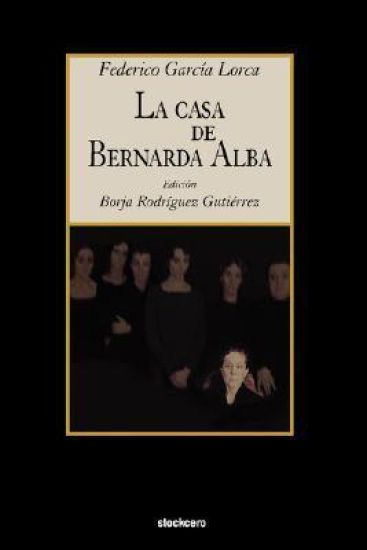
The Focus Student Editions are designed for Spanish language courses in literature and culture. Prepared with non-native Spanish speakers in mind, these editions include an introduction (in Spanish), the complete work, and linguistic and cultural notes in Spanish, a current bibliography and study questions. This Focus student edition is a Spanish drama of women in the villages of Spain. The play centers on the events of a house in Andalusia during a period of mourning, in which Bernarda Alba wields total control over her five daughters.
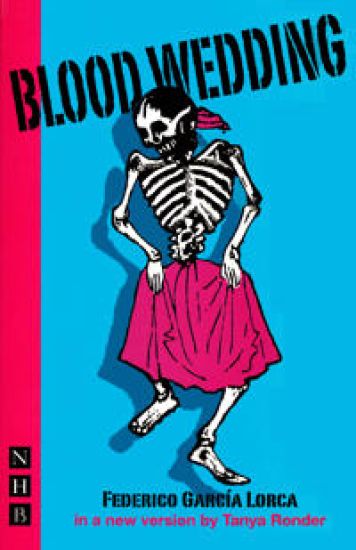
García Lorca's blood-soaked story of doomed love, in an English version by playwright Tanya Ronder. On the eve of the wedding of a young couple from rival clans, the bride-to-be elopes with a former lover. The groom's mother is torn between a desire for vengeance and the instinct to protect her son. This version of Blood Wedding by Tanya Ronder was first staged at the Almeida Theatre, London, in May 2005, in a production directed by Rufus Norris and starring Gael García Bernal.
The House of Bernarda Alba
Federico Garcia Lorca
Faber Faber
2005
pokkari
Halvin toimitettuna 19,90 €
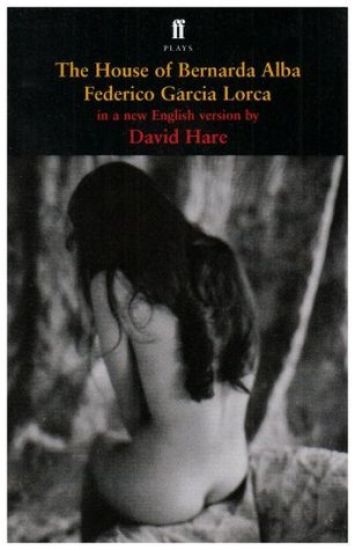
Finished just two months before the author's murder on 18 August 1936 by a gang of Franco's supporters, The House of Bernarda Alba is now accepted as Lorca's great masterpiece of love and loathing. Five daughters live together in a single household with a tyrannical mother. When the father of all but the eldest girl dies, a cynical marriage is advanced which will have tragic consequences for the whole family. Lorca's fascinatingly modern play, rendered here in an English version by David Hare, speaks as powerfully as a political metaphor of oppression as it does as domestic drama. The House of Bernarda Alba premiered at the National Theatre, London, in March 2005.