Kirjojen hintavertailu – 12 903 725 kirjaa ja 27 kauppaa

Kirjailija

Felix Dodds

Kirjat ja teokset yhdessä paikassa: 13 kirjaa, julkaisuja vuosilta 2007–2025, suosituimpiin kuuluu Only One Earth. Vertaile teosten hintoja ja tarkista saatavuus suomalaisista kirjakaupoista.

13 kirjaa

Kirjojen julkaisuvuodet: 2007–2025.

Environmental Lobbying at the United Nations

Environmental Lobbying at the United Nations

Felix Dodds; Chris Spence

TAYLOR FRANCIS LTD
2025
sidottu
This book provides a step-by-step, insiders’ guide on how to lobby and engage successfully at the United Nations. It reveals how the United Nations, which plays such a key role on issues from climate change to pollution of our air, land and sea, really works. In a world of rapid climate change, a flood of forever chemicals and plastic pollution, and the extinction of so much wildlife around the world, we need the convening power of the United Nations now more than ever. What’s more, we need individuals and organisations dedicated to making sure the United Nations has the most positive impact it can. And yet, global diplomacy can be dauntingly challenging and complex. Drawing on the authors' combined 60 years of professional experience with the United Nations system, this book contains essential information for individuals and organisations seeking to engage in this complex and confusing world. From the very basic question of how to ensure you can even attend the event, this book offers hard-to-find information to help readers through this labyrinth, including insider acronyms and language, how and when are the best times to put your issue forward to achieve maximum impact, how the negotiations really work, who are the key players and how to engage with those players. The authors reveal how stakeholders can be effective from the very first day of their first UN meeting. Drawing on interviews with other experts, as well as training materials that have been produced by the authors, this book demystifies what to many outsiders can seem like an opaque and confusing world. This book is an essential resource for individuals and organisations entering the world of the United Nations for the first time, as well as those looking to gain a deeper understanding of how the world of international diplomacy really works.
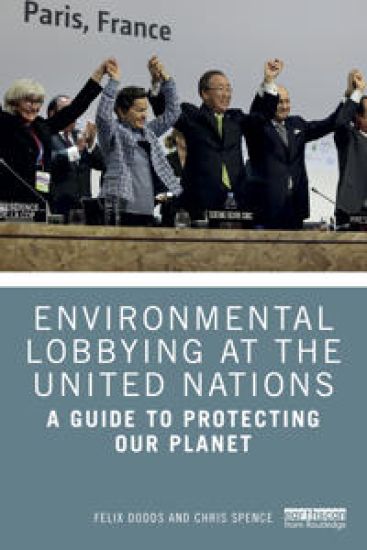
Environmental Lobbying at the United Nations

Environmental Lobbying at the United Nations

Felix Dodds; Chris Spence

TAYLOR FRANCIS LTD
2025
nidottu
This book provides a step-by-step, insiders’ guide on how to lobby and engage successfully at the United Nations. It reveals how the United Nations, which plays such a key role on issues from climate change to pollution of our air, land and sea, really works. In a world of rapid climate change, a flood of forever chemicals and plastic pollution, and the extinction of so much wildlife around the world, we need the convening power of the United Nations now more than ever. What’s more, we need individuals and organisations dedicated to making sure the United Nations has the most positive impact it can. And yet, global diplomacy can be dauntingly challenging and complex. Drawing on the authors' combined 60 years of professional experience with the United Nations system, this book contains essential information for individuals and organisations seeking to engage in this complex and confusing world. From the very basic question of how to ensure you can even attend the event, this book offers hard-to-find information to help readers through this labyrinth, including insider acronyms and language, how and when are the best times to put your issue forward to achieve maximum impact, how the negotiations really work, who are the key players and how to engage with those players. The authors reveal how stakeholders can be effective from the very first day of their first UN meeting. Drawing on interviews with other experts, as well as training materials that have been produced by the authors, this book demystifies what to many outsiders can seem like an opaque and confusing world. This book is an essential resource for individuals and organisations entering the world of the United Nations for the first time, as well as those looking to gain a deeper understanding of how the world of international diplomacy really works.
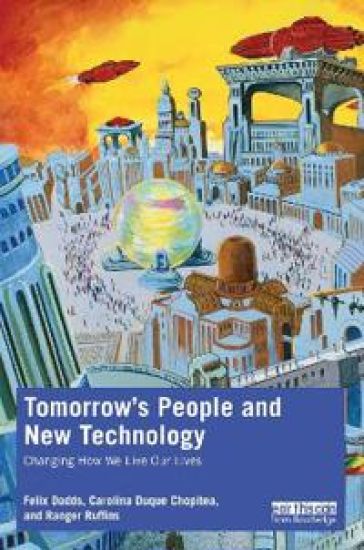
Tomorrow's People and New Technology

Tomorrow's People and New Technology

Felix Dodds; Carolina Duque Chopitea; Ranger Ruffins

Routledge
2021
nidottu
As we witness a series of social, political, cultural, and economic changes/disruptions this book examines the Fourth Industrial Revolution and the way emerging technologies are impacting our lives and changing society. The Fourth Industrial Revolution is characterised by the emergence of new technologies that are blurring the boundaries between the physical, the digital, and the biological worlds. This book allows readers to explore how these technologies will impact peoples’ lives by 2030. It helps readers to not only better understand the use and implications of emerging technologies, but also to imagine how their individual life will be shaped by them. The book provides an opportunity to see the great potential but also the threats and challenges presented by the emerging technologies of the Fourth Industrial Revolution, posing questions for the reader to think about what future they want. Emerging technologies, such as robotics, artificial intelligence, big data and analytics, cloud computing, nanotechnology, biotechnology, the Internet of Things, fifth-generation wireless technologies (5G), and fully autonomous vehicles, among others, will have a significant impact on every aspect of our lives, as such this book looks at their potential impact in the entire spectrum of daily life, including home life, travel, education and work, health, entertainment and social life. Providing an indication of what the world might look like in 2030, this book is essential reading for students, scholars, professionals, and policymakers interested in the nexus between emerging technologies and sustainable development, politics and society, and global governance.
Tomorrow's People and New Technology

Tomorrow's People and New Technology

Felix Dodds; Carolina Duque Chopitea; Ranger Ruffins

Routledge
2021
sidottu
As we witness a series of social, political, cultural, and economic changes/disruptions this book examines the Fourth Industrial Revolution and the way emerging technologies are impacting our lives and changing society. The Fourth Industrial Revolution is characterised by the emergence of new technologies that are blurring the boundaries between the physical, the digital, and the biological worlds. This book allows readers to explore how these technologies will impact peoples’ lives by 2030. It helps readers to not only better understand the use and implications of emerging technologies, but also to imagine how their individual life will be shaped by them. The book provides an opportunity to see the great potential but also the threats and challenges presented by the emerging technologies of the Fourth Industrial Revolution, posing questions for the reader to think about what future they want. Emerging technologies, such as robotics, artificial intelligence, big data and analytics, cloud computing, nanotechnology, biotechnology, the Internet of Things, fifth-generation wireless technologies (5G), and fully autonomous vehicles, among others, will have a significant impact on every aspect of our lives, as such this book looks at their potential impact in the entire spectrum of daily life, including home life, travel, education and work, health, entertainment and social life. Providing an indication of what the world might look like in 2030, this book is essential reading for students, scholars, professionals, and policymakers interested in the nexus between emerging technologies and sustainable development, politics and society, and global governance.
Stakeholder Democracy

Stakeholder Democracy

Felix Dodds

CRC Press Inc
2019
sidottu
In the context of sustainable development, this book describes how we are moving from representative to participatory democracy, and how we are now in a "stakeholder democracy," which is working to strengthen represented democracy in a time of fear. Since the 1992 Rio Earth Summit the idea of stakeholder democracy has grown, with stakeholders engaged in helping governments and intergovernmental bodies make better decisions, and in helping them to deliver those decisions in partnerships amongst various stakeholders, with and without government. Seen through a multi-stakeholder, sector and level lens, this book describes the history of the development of stakeholder democracy, particularly in the area of sustainable development. The authors draw on more than twenty-five years of experience to review, learn from and make recommendations on how best to engage stakeholders in policy development. The book illustrates successful practical examples of multi-stakeholder partnerships (MSPs) to implement agreements and outline elements of an MSP Charter. This will provide a benchmark for partnerships, enabling those being developed to understand what the necessary quality standards are and to understand what is expected in terms of transparency, accountability, financial reporting, impact and governance. The book is essential reading for professionals and trainees engaging in multi-stakeholder processes for policy development and to implement agreements. It will also be useful for students of sustainable development, politics and international relations.
Stakeholder Democracy

Stakeholder Democracy

Felix Dodds

CRC Press Inc
2019
nidottu
In the context of sustainable development, this book describes how we are moving from representative to participatory democracy, and how we are now in a "stakeholder democracy," which is working to strengthen represented democracy in a time of fear. Since the 1992 Rio Earth Summit the idea of stakeholder democracy has grown, with stakeholders engaged in helping governments and intergovernmental bodies make better decisions, and in helping them to deliver those decisions in partnerships amongst various stakeholders, with and without government. Seen through a multi-stakeholder, sector and level lens, this book describes the history of the development of stakeholder democracy, particularly in the area of sustainable development. The authors draw on more than twenty-five years of experience to review, learn from and make recommendations on how best to engage stakeholders in policy development. The book illustrates successful practical examples of multi-stakeholder partnerships (MSPs) to implement agreements and outline elements of an MSP Charter. This will provide a benchmark for partnerships, enabling those being developed to understand what the necessary quality standards are and to understand what is expected in terms of transparency, accountability, financial reporting, impact and governance. The book is essential reading for professionals and trainees engaging in multi-stakeholder processes for policy development and to implement agreements. It will also be useful for students of sustainable development, politics and international relations.
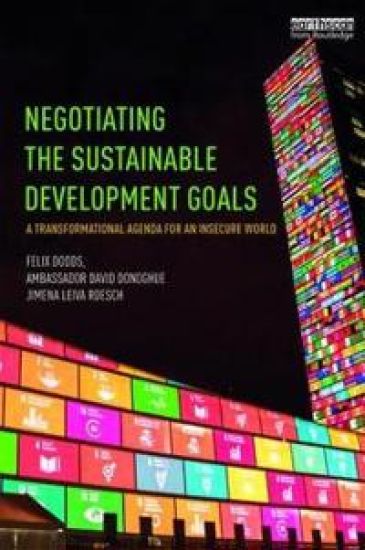
Negotiating the Sustainable Development Goals

Negotiating the Sustainable Development Goals

Felix Dodds; Ambassador David Donoghue; Jimena Leiva Roesch

Routledge
2016
sidottu
The Sustainable Development Goals (SDGs) are a universal set of seventeen goals and 169 targets, with accompanying indicators, which were agreed by UN member states to frame their policy agendas for the fifteen-year period from 2015 to 2030. Written by three authors who have been engaged in the development of the SDGs from the beginning, this book offers an insider view of the process and a unique entry into what will be seen as one of the most significant negotiations and global policy agendas of the twenty-first century. The book reviews how the SDGs were developed, what happened in key meetings and how this transformational agenda, which took more than three years to negotiate, came together in September 2015. It dissects and analyzes the meetings, organizations and individuals that played key roles in their development. It provides fascinating insights into the subtleties and challenges of high-level negotiation processes of governments and stakeholders, and into how the SDGs were debated, formulated and agreed. It is essential reading for all interested in the UN, sustainable development and the future of the planet and humankind.
Negotiating the Sustainable Development Goals

Negotiating the Sustainable Development Goals

Felix Dodds; Ambassador David Donoghue; Jimena Leiva Roesch

Routledge
2016
nidottu
The Sustainable Development Goals (SDGs) are a universal set of seventeen goals and 169 targets, with accompanying indicators, which were agreed by UN member states to frame their policy agendas for the fifteen-year period from 2015 to 2030. Written by three authors who have been engaged in the development of the SDGs from the beginning, this book offers an insider view of the process and a unique entry into what will be seen as one of the most significant negotiations and global policy agendas of the twenty-first century. The book reviews how the SDGs were developed, what happened in key meetings and how this transformational agenda, which took more than three years to negotiate, came together in September 2015. It dissects and analyzes the meetings, organizations and individuals that played key roles in their development. It provides fascinating insights into the subtleties and challenges of high-level negotiation processes of governments and stakeholders, and into how the SDGs were debated, formulated and agreed. It is essential reading for all interested in the UN, sustainable development and the future of the planet and humankind.
From Rio+20 to a New Development Agenda

From Rio+20 to a New Development Agenda

Felix Dodds; Jorge Laguna-Celis; Liz Thompson

Routledge
2014
sidottu
Twenty years after the United Nations Conference on Environment and Development, "The Earth Summit", the Rio+20 conference in 2012 brought life back to sustainable development by putting it at the centre of a new global development partnership, one in which sustainable development is the basis for eradicating poverty, upholding human development and transforming economies. Written by practitioners and participants involved in the multilateral process of negotiations, this book presents a unique insider analysis of not only what happened and why, but also where the outcomes might impact in the future, particularly in the UN development agenda beyond 2015. The book throws light on the changing nature of multilateralism and questions frequent assumptions on how policy is defined within the UN. It shows that Rio+20 was more than an international meeting; it represented a culminating point of decades of successes and failures and a watershed moment for seminal concepts, ideas and partnerships including the Green Economy, zero tolerance on land degradation, the introduction of Sustainable Development Goals, the creation of national measurements of consumption, production and well-being that are intended to go beyond GDP, the introduction of national green accounting and the commitment of billions of dollars for sustainable development partnerships, including Sustainable Energy for All. The authors conclude by mapping out a new agenda for development in 2015, when the current Millennium Development Goals framework is due to expire. An agenda that will restore faith in the UN and inspire a global response to the demographic, economic and environmental challenges that will define our future in the decades to come.
From Rio+20 to a New Development Agenda

From Rio+20 to a New Development Agenda

Felix Dodds; Jorge Laguna-Celis; Liz Thompson

Routledge
2014
nidottu
Twenty years after the United Nations Conference on Environment and Development, "The Earth Summit", the Rio+20 conference in 2012 brought life back to sustainable development by putting it at the centre of a new global development partnership, one in which sustainable development is the basis for eradicating poverty, upholding human development and transforming economies. Written by practitioners and participants involved in the multilateral process of negotiations, this book presents a unique insider analysis of not only what happened and why, but also where the outcomes might impact in the future, particularly in the UN development agenda beyond 2015. The book throws light on the changing nature of multilateralism and questions frequent assumptions on how policy is defined within the UN. It shows that Rio+20 was more than an international meeting; it represented a culminating point of decades of successes and failures and a watershed moment for seminal concepts, ideas and partnerships including the Green Economy, zero tolerance on land degradation, the introduction of Sustainable Development Goals, the creation of national measurements of consumption, production and well-being that are intended to go beyond GDP, the introduction of national green accounting and the commitment of billions of dollars for sustainable development partnerships, including Sustainable Energy for All. The authors conclude by mapping out a new agenda for development in 2015, when the current Millennium Development Goals framework is due to expire. An agenda that will restore faith in the UN and inspire a global response to the demographic, economic and environmental challenges that will define our future in the decades to come.
Only One Earth

Only One Earth

Felix Dodds; Michael Strauss; with Maurice F. Strong

Routledge
2012
sidottu
Forty years after the United Nations Conference on the Human Environment in Stockholm, the goal of sustainable development continues via the Rio+20 conference in 2012. This book will enable a broad readership to understand what has been achieved in the past forty years and what hasn’t. It shows the continuing threat of our present way of living to the planet. It looks to the challenges that we face twenty years from the United Nations Conference on Environment and Development, "The Earth Summit," in Rio, in particular in the areas of economics and governance and the role of stakeholders. It puts forward a set of recommendations that the international community must address now and in the the future. It reminds us of the planetary boundaries we must all live within and and what needs to be addressed in the next twenty years for democracy, equity and fairness to survive. Finally it proposes through the survival agenda a bare minimum of what needs to be done, arguing for a series of absolute minimum policy changes we need to move forward.
NGO Diplomacy

NGO Diplomacy

Felix Dodds

MIT Press
2007
pokkari
Provides an analytical framework for assessing the impact of NGOs on intergovernmental negotiations on the environment and identifying the factors that determine the degree of NGO influence, with case studies that apply the framework to negotiations on climate change, biosafety, desertification, whaling, and forests. Over the past thirty years nongovernmental organizations (NGOs) have played an increasingly influential role in international negotiations, particularly on environmental issues. NGO diplomacy has become, in the words of one organizer, an "international experiment in democratizing intergovernmental decision making." But there has been little attempt to determine the conditions under which NGOs make a difference in either the process or the outcome of international negotiations. This book presents an analytic framework for the systematic and comparative study of NGO diplomacy in international environmental negotiations. Chapters by experts on international environmental policy apply this framework to assess the effect of NGO diplomacy on specific negotiations on environmental and sustainability issues. The proposed analytical framework offers researchers the tools with which to assess whether and how NGO diplomats affect negotiation processes, outcomes, or both, and through comparative analysis the book identifies factors that explain variation in NGO influence, including coordination of strategy, degree of access, institutional overlap, and alliances with key states. The empirical chapters use the framework to evaluate the degree of NGO influence on the first phase of the Kyoto Protocol negotiations on global climate change, the Cartagena Protocol on Biosafety, the United Nations Convention to Combat Desertification, negotiations within the International Whaling Commission that resulted in new management procedures and a ban on commercial whaling, and international negotiations on forests involving the United Nations, the International Tropical Timber Organization, and the World Trade Organization. ContributorsSteinar Andresen, Michele M. Betsill, Stanley W. Burgiel, Elisabeth Corell, David Humphreys, Tora Skodvin