Kirjojen hintavertailu – 12 859 824 kirjaa ja 27 kauppaa

Kirjailija

Feng Wang

Kirjat ja teokset yhdessä paikassa: 16 kirjaa, julkaisuja vuosilta 1997–2026, suosituimpiin kuuluu Collagen-Derived Materials. Vertaile teosten hintoja ja tarkista saatavuus suomalaisista kirjakaupoista.

16 kirjaa

Kirjojen julkaisuvuodet: 1997–2026.

Triangle Mesh Watermarking and Steganography

Triangle Mesh Watermarking and Steganography

Hang Zhou; Kejiang Chen; Zehua Ma; Feng Wang; Weiming Zhang

SPRINGER VERLAG, SINGAPORE
2024
nidottu
This book provides a systematic overview of watermarking and steganography methods for triangle meshes related to computer graphics and security. The significance of this research has been well recognized by the growing body of work on watermarking, steganography and steganalysis of 3D meshes. With the evolution of the CAD industry and real-world end-user applications such as virtual reality (VR) and 3D printing, 3D meshes have attracted world-wide attention. Besides, the flexible data structure of 3D geometry provides enough space to embed secret information, making it ideal for applications such as copyright protection and covert communication. Our goal of the book is to allow readers to systematically understand 3D mesh information hiding technology and its applications as a whole. The book outlines comprehensive techniques, including handcrafted and deep learning-based techniques, digital and physical techniques in the literature and provides standard evaluation metricsfor triangle meshes. The up-to-date geometrical deep learning and 3D printing-related algorithms are also covered. Offering a rich blend of ideas and algorithms, the book is up-to-date and self-contained. It is an excellent reference resource for users who are seeking 3D mesh watermarking and steganography algorithms, as well as for graduate students and researchers wanting to grasp the frontiers of triangular mesh processing on data hiding.
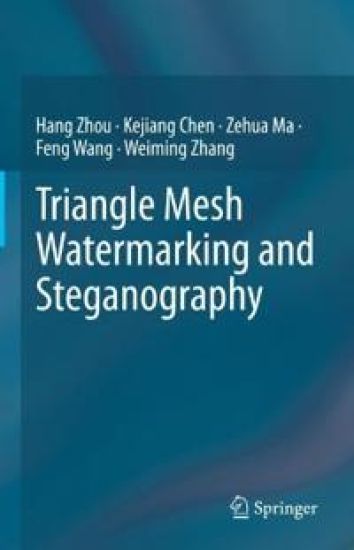
Triangle Mesh Watermarking and Steganography

Triangle Mesh Watermarking and Steganography

Hang Zhou; Kejiang Chen; Zehua Ma; Feng Wang; Weiming Zhang

SPRINGER VERLAG, SINGAPORE
2023
sidottu
This book provides a systematic overview of watermarking and steganography methods for triangle meshes related to computer graphics and security. The significance of this research has been well recognized by the growing body of work on watermarking, steganography and steganalysis of 3D meshes. With the evolution of the CAD industry and real-world end-user applications such as virtual reality (VR) and 3D printing, 3D meshes have attracted world-wide attention. Besides, the flexible data structure of 3D geometry provides enough space to embed secret information, making it ideal for applications such as copyright protection and covert communication. Our goal of the book is to allow readers to systematically understand 3D mesh information hiding technology and its applications as a whole. The book outlines comprehensive techniques, including handcrafted and deep learning-based techniques, digital and physical techniques in the literature and provides standard evaluation metricsfor triangle meshes. The up-to-date geometrical deep learning and 3D printing-related algorithms are also covered. Offering a rich blend of ideas and algorithms, the book is up-to-date and self-contained. It is an excellent reference resource for users who are seeking 3D mesh watermarking and steganography algorithms, as well as for graduate students and researchers wanting to grasp the frontiers of triangular mesh processing on data hiding.
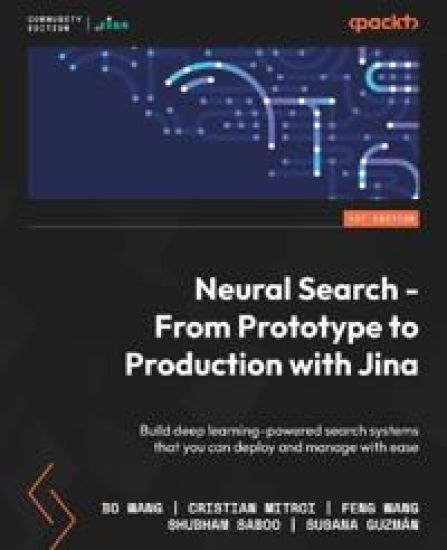
Neural Search - From Prototype to Production with Jina

Neural Search - From Prototype to Production with Jina

Bo Wang; Cristian Mitroi; Feng Wang; Shubham Saboo; Susana Guzman

PACKT PUBLISHING LIMITED
2022
nidottu
Implement neural search systems on the cloud by leveraging Jina design patternsKey FeaturesIdentify the different search techniques and discover applications of neural searchGain a solid understanding of vector representation and apply your knowledge in neural searchUnlock deeper levels of knowledge of Jina for neural searchBook DescriptionSearch is a big and ever-growing part of the tech ecosystem. Traditional search, however, has limitations that are hard to overcome because of the way it is designed. Neural search is a novel approach that uses the power of machine learning to retrieve information using vector embeddings as first-class citizens, opening up new possibilities of improving the results obtained through traditional search. Although neural search is a powerful tool, it is new and finetuning it can be tedious as it requires you to understand the several components on which it relies. Jina fills this gap by providing an infrastructure that reduces the time and complexity involved in creating deep learning–powered search engines. This book will enable you to learn the fundamentals of neural networks for neural search, its strengths and weaknesses, as well as how to use Jina to build a search engine. With the help of step-by-step explanations, practical examples, and self-assessment questions, you'll become well-versed with the basics of neural search and core Jina concepts, and learn to apply this knowledge to build your own search engine. By the end of this deep learning book, you'll be able to make the most of Jina's neural search design patterns to build an end-to-end search solution for any modality. What you will learnUnderstand how neural search and legacy search workGrasp the machine learning and math fundamentals needed for neural searchGet to grips with the foundation of vector representationExplore the basic components of JinaAnalyze search systems with different modalitiesUncover the capabilities of Jina with the help of practical examplesWho this book is forIf you are a machine learning, deep learning, or artificial intelligence engineer interested in building a search system of any kind (text, QA, image, audio, PDF, 3D models, or others) using modern software architecture, this book is for you. This book is perfect for Python engineers who are interested in building a search system of any kind using state-of-the-art deep learning techniques.
Collagen-Derived Materials

Collagen-Derived Materials

Feng Wang; Yaqin Huang; Jin Niu

Wiley-VCH Verlag GmbH
2022
sidottu
>Collagen-Derived Materials Comprehensive Resource for Current Ideas and Strategies for the Synthesis and Characterization of Advanced Collagen-Derived Materials This book presents and summarizes new synthetic strategies and multi-functional applications of collagen-derived materials in electrochemical energy storage and conversion. Through easily-comprehensible illustrations and images, the book presents basic knowledge for collagen-derived materials (including gelatin and collagen-derived carbons) and their typical synthesis and applications, thus enabling students and new researchers to obtain a thorough understanding of different materials and corresponding application areas. This book also serves as an important reference book for scientists and engineers in different research fields. It presents the up-to-date ideas and strategies for the synthesis and characterization of advanced collagen-derived materials, as well as multi-functional applications (especially in energy-related areas). Sample topics covered within the book include: Structural compositions, properties, and extraction of collagen and gelatinPrecursors, structural compositions, and synthesis of collagen-derived carbonsApplications of collagen-derived materials in electrochemical energy storage and conversionApplications of collagen-derived materials as electrode and supporting materials in the electrochemical energy storage and conversion systems, including capacitors, batteries, and electrocatalystsChallenges and opportunities for the design and synthesis of different collagen-derived materials For electrochemists, materials scientists, chemical engineers and students in related programs of study who are interested in the topic of collagen-derived materials, Collagen-Derived Materials: Synthesis and Applications in Electrochemical Energy Storage and Conversion serves as an important resource for gaining a holistic understanding of the field and learning about the state of the art based on promising energy-related applications.
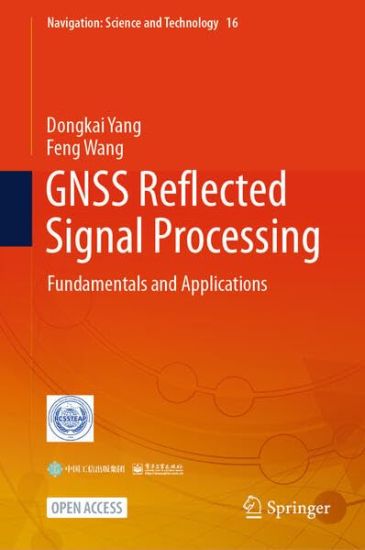
GNSS Reflected Signal Processing

GNSS Reflected Signal Processing

Dongkai Yang; Feng Wang

Springer Nature Switzerland AG
2025
sidottu
This open access book presents the fundamental methods and applications of GNSS-reflected signal reception processing. On the basis of systematic analysis of GNSS signals, it delves into the typical characteristics of signals after reflection, discussing the software and hardware design of GNSS-reflected signal receivers from different perspectives, including RF reception, IF processing, and extraction of observations. It offers a comprehensive introduction and exploration of ocean remote sensing, land remote sensing, and several new applications (such as airborne moving target detection, river boundary monitoring, and surface water body identification). The content covers a variety of different configuration modes such as shore-based, ground-based, airborne, and satellite-based and also includes two signal processing methods: single-antenna interferometry and dual-antenna cooperative method. The data used in the theoretical modeling and algorithm performance simulation validation are both from experiments conducted by the authors' research team and from experiments carried out with partners, as well as results processed from publicly available datasets domestically and internationally. This book is suitable for faculty and students in the fields related to satellite navigation (such as electronic communication, radar remote sensing, aerospace, and computer), earth observation, and also serves as a reference book for engineers and scientific management personnel engaged in application research in the fields of oceanography, meteorology, agriculture, water conservancy, and environment studies.
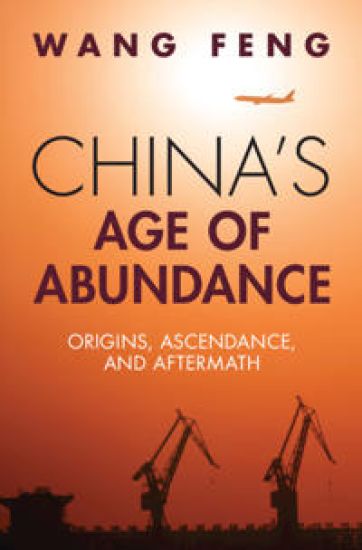
China's Age of Abundance

China's Age of Abundance

Feng Wang

Cambridge University Press
2024
pokkari

Halvin toimitettuna 35,10 €

Between the 1980s and the present day, China has experienced one of the most consequential economic transformations in world history. One-fifth of the Earth's population has left behind a life of scarcity and subsistence for one of abundance and material comfort, while their nation has emerged as a preeminent economic and political power. In a systematic historical and sociological analysis of this unique juncture, Wang Feng charts the origins, forces, and consequences of this meteoric rise in living standards. He shifts the focus away from institutions and policies to offer new perspectives based on consumption among poorer, rural populations as a driver of global economic change. But is this 'Age of Abundance' coming to an end? Anticipating potential headwinds, including an aging population, increasing inequality, and intensifying political control, Wang explores whether this preeminence could be coming to a close.
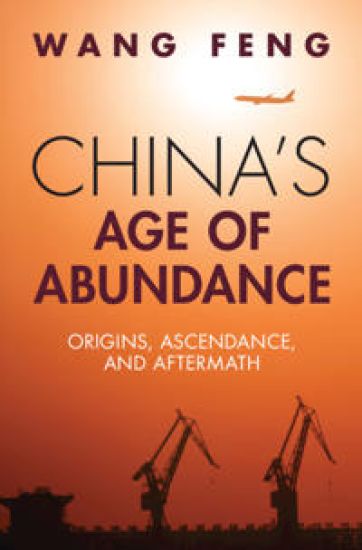
China's Age of Abundance

China's Age of Abundance

Feng Wang

Cambridge University Press
2024
sidottu
Between the 1980s and the present day, China has experienced one of the most consequential economic transformations in world history. One-fifth of the Earth's population has left behind a life of scarcity and subsistence for one of abundance and material comfort, while their nation has emerged as a preeminent economic and political power. In a systematic historical and sociological analysis of this unique juncture, Wang Feng charts the origins, forces, and consequences of this meteoric rise in living standards. He shifts the focus away from institutions and policies to offer new perspectives based on consumption among poorer, rural populations as a driver of global economic change. But is this 'Age of Abundance' coming to an end? Anticipating potential headwinds, including an aging population, increasing inequality, and intensifying political control, Wang explores whether this preeminence could be coming to a close.
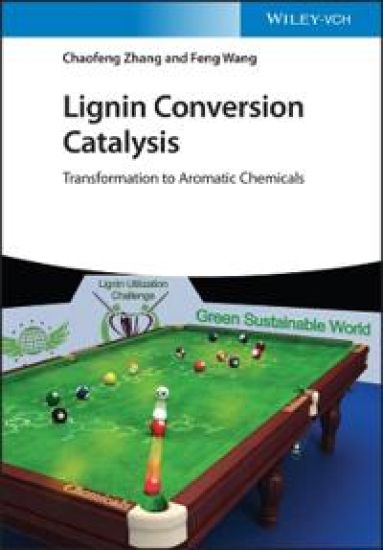
Lignin Conversion Catalysis

Lignin Conversion Catalysis

Chaofeng Zhang; Feng Wang

Wiley-VCH Verlag GmbH
2022
sidottu
Lignin Conversion Catalysis Authoritative reference providing comprehensive knowledge on the lignin conversion process with recent developments of mechanisms and techniques Lignin Conversion Catalysis: Transformation to Aromatic Chemicals covers the strategy, catalysis, and mechanisms of cleaving lignin linkages to aromatic chemicals and crucially elaborates on the specifics of multiple original lignins. Sample topics covered in the work include: Lignin depolymerization, models, and techniques of various lignins by heterogeneous substrates (such as native lignins, Kraft lignins, and organosolv lignins)Cleavage methods for lignins (such as oxidation and hydrogenation) as well as their main products (such as arenes, phenol, and acid)Relationships among the strategy/method, catalyst, and mechanism when viewed from the cleavage order and the type of corresponding chemical bondsCommercial components of lignin, a globally available raw material with many applications in drug design, polymers, and more Organic chemists, polymer chemists, and chemical engineers can use the valuable information contained in Lignin Conversion Catalysis: Transformation to Aromatic Chemicals to get up to date on this new raw material and understand the various developments that have been made in the field to make it viable for industrial purposes.
Modeling Information Diffusion in Online Social Networks with Partial Differential Equations

Modeling Information Diffusion in Online Social Networks with Partial Differential Equations

Haiyan Wang; Feng Wang; Kuai Xu

Springer Nature Switzerland AG
2020
nidottu
The book lies at the interface of mathematics, social media analysis, and data science. Its authors aim to introduce a new dynamic modeling approach to the use of partial differential equations for describing information diffusion over online social networks. The eigenvalues and eigenvectors of the Laplacian matrix for the underlying social network are used to find communities (clusters) of online users. Once these clusters are embedded in a Euclidean space, the mathematical models, which are reaction-diffusion equations, are developed based on intuitive social distances between clusters within the Euclidean space. The models are validated with data from major social media such as Twitter. In addition, mathematical analysis of these models is applied, revealing insights into information flow on social media. Two applications with geocoded Twitter data are included in the book: one describing the social movement in Twitter during the Egyptian revolution in 2011 and another predicting influenza prevalence. The new approach advocates a paradigm shift for modeling information diffusion in online social networks and lays the theoretical groundwork for many spatio-temporal modeling problems in the big-data era.
Illegality in Marine Insurance Law
Illegality in Marine Insurance Law is the first book to deal specifically with illegality in the context of marine insurance law. Previously, this issue has only ever been partially covered within analysis and criticism of Section 41 of the Marine Insurance Act 1906 and warranties. However, Dr Wang Feng goes much further than this by considering its impact on the common law relevant to marine insurance in many jurisdictions worldwide. The book addresses whether the existing law represents an accurate codification of the former authorities and whether Section 41 truly reflects existing legal principles. As well as this, the book examines how correctly to approach illegality within the context of marine insurance, considering the fundamental changes to the rule of breach of warranty introduced by the Insurance Act 2015. Of interest to academic researchers and practitioners in common law and civil law jurisdictions, this book provides rigorous analysis of the illegality issue and a conceptual approach for various approaches to reform marine insurance law. It is a unique and comprehensive guide to illegality in marine insurance law.
Convergence to Very Low Fertility in East Asia: Processes, Causes, and Implications

Convergence to Very Low Fertility in East Asia: Processes, Causes, and Implications

Noriko O. Tsuya; Minja Kim Choe; Feng Wang

Springer Verlag, Japan
2019
nidottu
This book examines the trends, underlying factors, and policy implications of fertility declines in three East Asian countries: Japan, South Korea, and China. In contrast to Western countries that have also experienced fertility declines to below-replacement levels, fertility decline in these East Asian countries is most notable in its rapidity and sheer magnitude. After a rapid decline shortly after the war, in which fertility was halved in one decade from 4.5 children per woman in 1947 to 2.1 in 1957, Japan's fertility started to decline to below-replacement levels in the mid-1970s, reaching 1.3 per woman in the early 2000s. Korea experienced one of the most spectacular declines ever recorded, with fertility falling continuously from very high (6.0 per woman) to a below-replacement level (1.6 per woman) between the early 1960s and mid-1980s, reaching 1.1 per woman in 2005. Similarly, after a dramatic decline from very high to low levels in one decade from the early 1970s to early 1980s, China's fertility reached around 1.5 per woman by 2005. Despite differences in timing, tempo, and scale of fertility declines, dramatic fertility reductions have resulted in extremely rapid population aging and foreshadow a long-term population decline in all three countries. This monograph provides a systematic comparison of fertility transitions in these East Asian countries and discusses the economic, social, and cultural factors that may account for their similarities and differences. After an overview of cultural backgrounds, economic transformations, and the evolution of policies, the trends and age patterns of fertility are examined. The authors then investigate changes in women's marriage and childbearing within marriage, the two major direct determinants of fertility, followed by an analysis of the social and economic factors underlying fertility and nuptiality changes, such as education, women's employment, and gender relations at home.
Illegality in Marine Insurance Law
Illegality in Marine Insurance Law is the first book to deal specifically with illegality in the context of marine insurance law. Previously, this issue has only ever been partially covered within analysis and criticism of Section 41 of the Marine Insurance Act 1906 and warranties. However, Dr Wang Feng goes much further than this by considering its impact on the common law relevant to marine insurance in many jurisdictions worldwide. The book addresses whether the existing law represents an accurate codification of the former authorities and whether Section 41 truly reflects existing legal principles. As well as this, the book examines how correctly to approach illegality within the context of marine insurance, considering the fundamental changes to the rule of breach of warranty introduced by the Insurance Act 2015. Of interest to academic researchers and practitioners in common law and civil law jurisdictions, this book provides rigorous analysis of the illegality issue and a conceptual approach for various approaches to reform marine insurance law. It is a unique and comprehensive guide to illegality in marine insurance law.
Design of Modulators for Oversampled Converters

Design of Modulators for Oversampled Converters

Feng Wang; Ramesh Harjani

Springer-Verlag New York Inc.
2012
nidottu
Oversampled A/D converters have become very popular in recent years. Some of their advantages include relaxed requirements for anti-alias filters, relaxed requirements for component matching, high resolution and compatibility with digital VLSI technology. There is a significant amount of literature discussing the principle, theory and implementation of various oversampled converters. Such converters are likely to continue to proliferate in the foreseeable future. Additionally, more recently there has been great interest in low voltage and low power circuit design. New design techniques have been proposed for both the digital domain and the analog domain. Both trends point to the importance of the low-power design of oversampled A/D converters. Unfortunately, there has been no systematic study of the optimal design of modulators for oversampled converters. Design has generally focused on new architectures with little attention being paid to optimization. The goal of Design of Modulators for Oversampled Converters is to develop a methodology for the optimal design of modulators in oversampled converters. The primary focus of the presentation is on minimizing power consumption and understanding and limiting the nonlinearities that result in such converters. Design of Modulators for Oversampled Converters offers a quantitative justification for the various design tradeoffs and serves as a guide for designing low-power highly linear oversampled converters. Design of Modulators for Oversampled Converters will serve as a valuable guide for circuit design practitioners, university researchers and graduate students who are interested in this fast-moving area.
Boundaries and Categories

Boundaries and Categories

Feng Wang

Stanford University Press
2007
sidottu
In the last two decades of the twentieth century, following the worldwide collapse of communism, China ascended from being one of the most egalitarian societies in the world to one of the more unequal. Wang Feng documents the process of rising inequality in urban China during this period, and explores the underlying structural forces that define China's emerging social landscape. By treating social categories created under socialism, such as cities and work organizations, as explicit forces generating inequality, the author reveals a pattern that embodies both enlarging inequality between social categories and persistent equality within them. This pattern is traced to China's post-socialist political economy and to a long-existing cultural tradition that places a premium on harmony and group solidarity. China's great reversal from equality to inequality is a powerful example of how social categories, not individual traits and preferences, structure and maintain inequality.
Design of Modulators for Oversampled Converters

Design of Modulators for Oversampled Converters

Feng Wang; Ramesh Harjani

Springer
1997
sidottu
Oversampled A/D converters have become very popular in recent years. Some of their advantages include relaxed requirements for anti-alias filters, relaxed requirements for component matching, high resolution and compatibility with digital VLSI technology. There is a significant amount of literature discussing the principle, theory and implementation of various oversampled converters. Such converters are likely to continue to proliferate in the foreseeable future. Additionally, more recently there has been great interest in low voltage and low power circuit design. New design techniques have been proposed for both the digital domain and the analog domain. Both trends point to the importance of the low-power design of oversampled A/D converters. Unfortunately, there has been no systematic study of the optimal design of modulators for oversampled converters. Design has generally focused on new architectures with little attention being paid to optimization. The goal of Design of Modulators for Oversampled Converters is to develop a methodology for the optimal design of modulators in oversampled converters. The primary focus of the presentation is on minimizing power consumption and understanding and limiting the nonlinearities that result in such converters. Design of Modulators for Oversampled Converters offers a quantitative justification for the various design tradeoffs and serves as a guide for designing low-power highly linear oversampled converters. Design of Modulators for Oversampled Converters will serve as a valuable guide for circuit design practitioners, university researchers and graduate students who are interested in this fast-moving area.