
Kirjailija
Ferdinand Christian Baur
Kirjat ja teokset yhdessä paikassa: 66 kirjaa, julkaisuja vuosilta 1963–2026, suosituimpiin kuuluu Das Manichäische Religionssystem Nach Den Quellen Neu Untersucht Und Entwikelt. Vertaile teosten hintoja ja tarkista saatavuus suomalaisista kirjakaupoista.
66 kirjaa
Kirjojen julkaisuvuodet: 1963–2026.
Lehrbuch der christlichen Dogmengeschichte
Ferdinand Christian Baur
Salzwasser-Verlag GmbH
2021
sidottu

Lehrbuch der christlichen Dogmengeschichte
Ferdinand Christian Baur
Salzwasser-Verlag GmbH
2021
pokkari
Baur's Paul, the Apostle of Jesus Christ was the major study of Paul published in the nineteenth century, and it is one of the greatest works of all time on Paul. It lays the basis for modern Pauline scholarship. The first part, "The Life and Activity of the Apostle Paul," consists of a thoroughgoing deconstruction of the account of Paul found in the Acts of the Apostles. While the author of Acts passed on historical traditions about Paul, he greatly embellished them with stories about the miraculous feats of the apostles, and constructed the entire account to show fictitious parallels between the apostles Peter and Paul. The second part, "The Epistles of the Apostle Paul," is divided into three main sections: the authentic epistles of Paul (Galatians, 1 and 2 Corinthians, Romans), the deutero-Pauline epistles (Ephesians, Colossians, Philippians, Thessalonians, Philemon), and the Pastoral Epistles (1 and 2 Timothy, Titus). In the first two parts Baur's historical-critical skills are at their finest. The third part, "The Apostle's Theological Framework," draws the elements of Pauline theology into a magnificent synthesis, where the influence of Hegel and Schleiermacher is evident. The earlier English translation is no longer adequate. Our new translation presents a very readable text with critical annotations and translations of all the scriptural passages quoted in Greek. Baur on Paul truly becomes available in English for the first time.
Baur's Paul, the Apostle of Jesus Christ was the major study of Paul published in the nineteenth century, and it is one of the greatest works of all time on Paul. It lays the basis for modern Pauline scholarship. The first part, "The Life and Activity of the Apostle Paul," consists of a thoroughgoing deconstruction of the account of Paul found in the Acts of the Apostles. While the author of Acts passed on historical traditions about Paul, he greatly embellished them with stories about the miraculous feats of the apostles, and constructed the entire account to show fictitious parallels between the apostles Peter and Paul. The second part, "The Epistles of the Apostle Paul," is divided into three main sections: the authentic epistles of Paul (Galatians, 1 and 2 Corinthians, Romans), the deutero-Pauline epistles (Ephesians, Colossians, Philippians, Thessalonians, Philemon), and the Pastoral Epistles (1 and 2 Timothy, Titus). In the first two parts Baur's historical-critical skills are at their finest. The third part, "The Apostle's Theological Framework," draws the elements of Pauline theology into a magnificent synthesis, where the influence of Hegel and Schleiermacher is evident. The earlier English translation is no longer adequate. Our new translation presents a very readable text with critical annotations and translations of all the scriptural passages quoted in Greek. Baur on Paul truly becomes available in English for the first time.
Christianity and the Christian Church of the First Three Centuries
Ferdinand Christian Baur
James Clarke Co Ltd
2020
nidottu
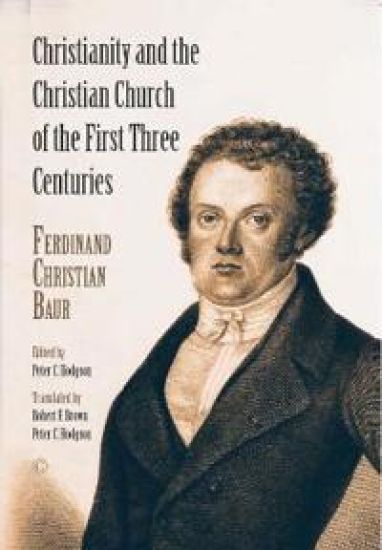
Christianity and the Christian Church of the First Three Centuries is the first volume in Baur's five-volume history of the Christian Church. It and the last volume, Church and Theology in the Nineteenth Century, are being published in new translations. This book, based on the second German edition of 1860, is the most influential and best known of Baur's many groundbreaking publications in New Testament, early Christianity, church history, and historical theology. It is divided into six main parts and discusses such matters as the entrance of Christianity into world history, the teaching and person of Jesus, the tension between Jewish Christian and Gentile Christian (Pauline) interpretations and their resolution in the idea of the Catholic Church, the opposition of gnosticism and Montanism to Catholicism, the development of dogma or doctrine in the first three centuries, Christianity's relation to the pagan world and the Roman state, and Christianity as a moral and religious principle.
Baur published Die christliche Gnosis in 1835. It was his first great religio-historical study and the most important book on Gnosticism published in the nineteenth century. It is now recognized as having a pivotal status in Baur studies. In it Baur offers a unique thesis about a link between ancient and modern religious philosophy. Gnosis is a type of religious philosophy that contains ideas about the relationship between God, world, and human beings, as expressed in concrete religious traditions and practices. As such, it makes an important contribution to Christian theology. In the first part, Baur develops a concept of gnosis in dialogue with his predecessors and contemporaries. He classifies the gnostic systems in terms of how they conceive the relationship of Christianity to Judaism and paganism, and then describes them in detail (Valentinus, Ophites, Bardesanes, Saturninus, Basilides, Marcion, Pseudo-Clementines). Following transitional sections on the criticism of and reaction to gnosis in church history, the book ends with modern religious philosophy (Boehme, Schelling, Schleiermacher, and Hegel--Baur's first discussion of these major thinkers). This book was written over a hundred years before the manuscript discovery at Nag Hammadi, which awakened a lively interest in Gnosticism that continues to the present day.
Baur published Die christliche Gnosis in 1835. It was his first great religio-historical study and the most important book on Gnosticism published in the nineteenth century. It is now recognized as having a pivotal status in Baur studies. In it Baur offers a unique thesis about a link between ancient and modern religious philosophy. Gnosis is a type of religious philosophy that contains ideas about the relationship between God, world, and human beings, as expressed in concrete religious traditions and practices. As such, it makes an important contribution to Christian theology. In the first part, Baur develops a concept of gnosis in dialogue with his predecessors and contemporaries. He classifies the gnostic systems in terms of how they conceive the relationship of Christianity to Judaism and paganism, and then describes them in detail (Valentinus, Ophites, Bardesanes, Saturninus, Basilides, Marcion, Pseudo-Clementines). Following transitional sections on the criticism of and reaction to gnosis in church history, the book ends with modern religious philosophy (Boehme, Schelling, Schleiermacher, and Hegel--Baur's first discussion of these major thinkers). This book was written over a hundred years before the manuscript discovery at Nag Hammadi, which awakened a lively interest in Gnosticism that continues to the present day.
Paul, the apostle of Jesus Christ, his life and work, his epistles and his doctrine. A contribution to the critical history of primitive Christianity (Volume I)
Ferdinand Christian Baur
Alpha Edition
2020
pokkari
This book has been considered by academicians and scholars of great significance and value to literature. This forms a part of the knowledge base for future generations. So that the book is never forgotten we have represented this book in a print format as the same form as it was originally first published. Hence any marks or annotations seen are left intentionally to preserve its true nature.
Paul, the apostle of Jesus Christ, his life and work, his epistles and his doctrine. A contribution to the critical history of primitive Christianity (Volume II)
Ferdinand Christian Baur
Alpha Edition
2020
pokkari
This book has been considered by academicians and scholars of great significance and value to literature. This forms a part of the knowledge base for future generations. So that the book is never forgotten we have represented this book in a print format as the same form as it was originally first published. Hence any marks or annotations seen are left intentionally to preserve its true nature.
Drei Abhandlungen zur Geschichte der alten Philosophie und ihres Verhältnisses zum Christentum
Ferdinand Christian Baur
Literaricon Verlag
2019
nidottu
Christianity and the Christian Church of the First Three Centuries
Ferdinand Christian Baur
Cascade Books
2019
pokkari
Christianity and the Christian Church of the First Three Centuries is the first volume in Baur's five-volume history of the Christian Church. It and the last volume, Church and Theology in the Nineteenth Century, are being published in new translations. This book, based on the second German edition of 1860, is the most influential and best known of Baur's many groundbreaking publications in New Testament, early Christianity, church history, and historical theology. It is divided into six main parts and discusses such matters as the entrance of Christianity into world history, the teaching and person of Jesus, the tension between Jewish Christian and gentile Christian (Pauline) interpretations and their resolution in the idea of the Catholic Church, the opposition of Gnosticism and Montanism to Catholicism, the development of dogma or doctrine in the first three centuries, Christianity's relation to the pagan world and the Roman state, and Christianity as a moral and religious principle. ""No historical theologian has contributed more than Baur to a rational understanding of Christian origins and history . . . Professor Hodgson is his outstanding English-language interpreter. His introduction and, with Robert Brown, lucid translation of this most important synthesis invites fresh assessments of modern New Testament scholarship by revisiting the origins of that discipline's dominant paradigm."" --Robert Morgan, University of Oxford ""Long neglected or dismissed, Ferdinand Christian Baur is re-emerging as one of the most important Christian theologians of the nineteenth century. Christianity and the Christian Church of the First Three Centuries is the book that showcases Baur's diverse theological interests most poignantly and powerfully. Peter Hodgson and Robert Brown have breathed new life into this important text with their definitive English translation. A masterful accomplishment, and a gift to students of Baur and of early Christianity "" --John A. O'Brien, University of Notre Dame Ferdinand Christian Baur (1792-1860) was Professor of Theology at the University of Tubingen. The Editor's Foreword introduces the work, and the translators have added critical footnotes. Peter C. Hodgson is Charles G. Finney Professor of Theology Emeritus at the Divinity School of Vanderbilt University. He has specialized in works by Baur and Hegel, as well as in contemporary issues of constructive theology. Robert F. Brown is Professor of Philosophy Emeritus at the University of Delaware. He has specialized in the history of philosophy and the philosophy of religion, with a focus on German idealism.
Christianity and the Christian Church of the First Three Centuries
Ferdinand Christian Baur
Cascade Books
2019
sidottu

Paulus, Der Apostel Jesu Christi, ERSTER THEIL
Ferdinand Christian Baur
Wentworth Press
2018
pokkari

This work has been selected by scholars as being culturally important, and is part of the knowledge base of civilization as we know it. This work was reproduced from the original artifact, and remains as true to the original work as possible. Therefore, you will see the original copyright references, library stamps (as most of these works have been housed in our most important libraries around the world), and other notations in the work. This work is in the public domain in the United States of America, and possibly other nations. Within the United States, you may freely copy and distribute this work, as no entity (individual or corporate) has a copyright on the body of the work. As a reproduction of a historical artifact, this work may contain missing or blurred pages, poor pictures, errant marks, etc. Scholars believe, and we concur, that this work is important enough to be preserved, reproduced, and made generally available to the public. We appreciate your support of the preservation process, and thank you for being an important part of keeping this knowledge alive and relevant.
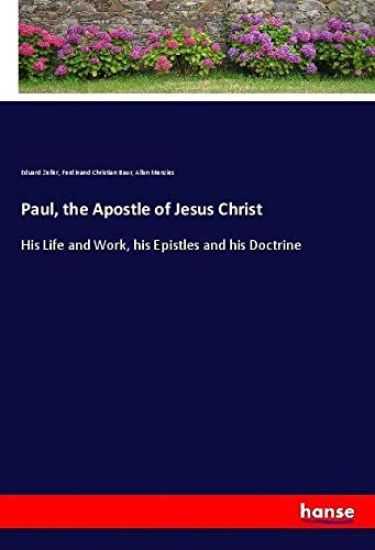
Paul, the Apostle of Jesus Christ
Eduard Zeller; Ferdinand Christian Baur; Allan Menzies
Hansebooks
2018
nidottu